
A typical tractor detailing job in the United States can vary widely depending on the work involved, from a quick exterior wash costing under $100 to a full degrease, cab clean, and paint prep job that can cost several hundred dollars. Where your tractor lands in that range depends mostly on how dirty it is, whether it pulls a trailer or tanker attachment, and whether the detailer has to come to your farm instead of you bringing it to a shop.
TL;DR:
- Even heavily soiled tractors can be aggressively cleaned with acid or degreasing, which significantly increases the final cost beyond basic washing fees.
- Prices generally range from around $52.50 for a simple exterior wash to several hundred dollars for full degreasing and paint prep jobs, depending on contamination.
- Heavy buildup of grease, chemicals, or paint residue, especially on older equipment, significantly raises labor time and cost, not just material expenses.
- Mobile detailing usually costs more than shop visits due to travel, setup, and utility requirements, but is preferable for large or multiple pieces.
- Accurate quotes depend on detailed photos and clear scope discussing contamination, attachments, and desired outcomes upfront to avoid surprise charges.
Table of Contents
- Typical price ranges and example line-item prices for tractor detailing
- Primary factors that change cost
- Common services and add-ons and their typical incremental cost
- Mobile detailing vs shop detailing: site requirements and cost trade-offs
- How to get an accurate quote: checklist and questions to give a detailer
- What CDC Auto Detailing brings to tractor and fleet work
- What the pricing data actually tells you
- Ready to book tractor or fleet detailing
- Where these price estimates come from
- Sources
- FAQ
Typical price ranges and example line-item prices for tractor detailing
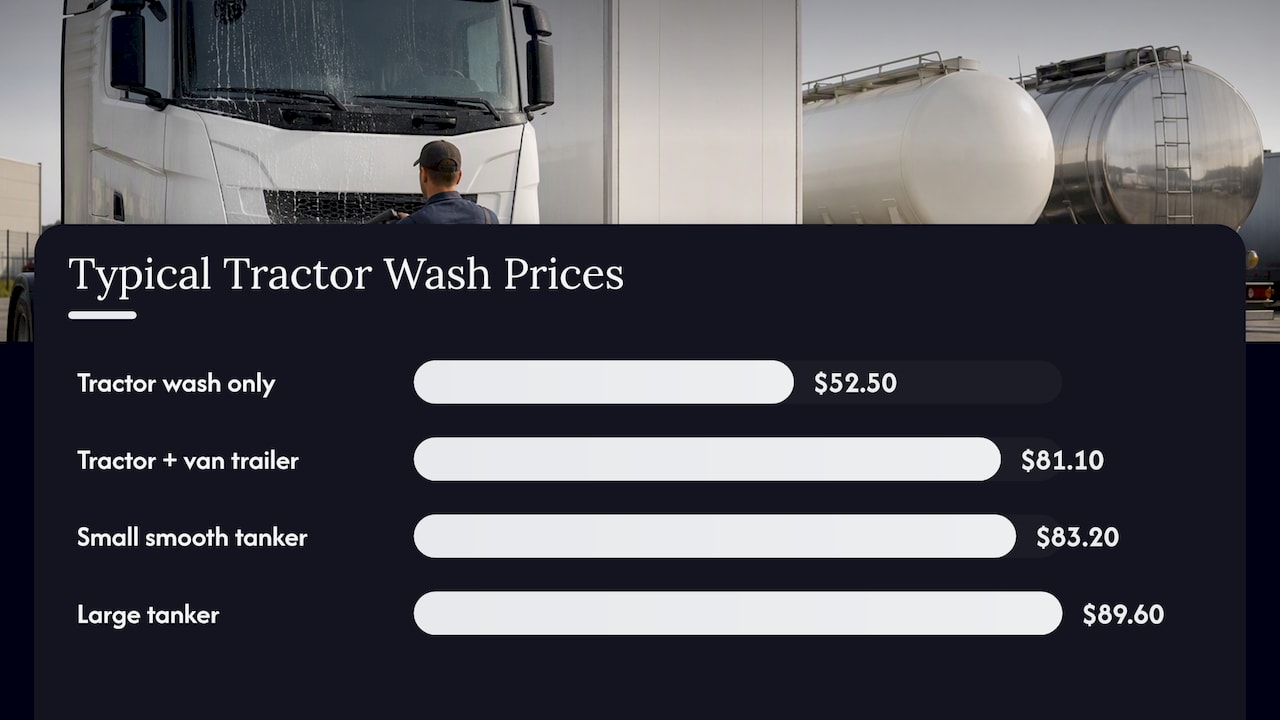
Published commercial wash sheets give the clearest starting point, since most independent detailers price around similar benchmarks. Blue Beacon’s tractor standard price list lists a tractor wash only at $52.50, a tractor with van trailer at $81.10, a small tanker with smooth sides at $83.20, and a large tanker at $89.60. Those figures are for commercial rig washing, but they show the pattern every tractor owner should expect: the base machine costs less than the machine plus whatever it hauls.
Pricing methods vary by shop. Some quote a flat base price and add surcharges for trailers, tankers, or heavy soil. Others bill hourly, especially for farm equipment where soil buildup and attachment count make time hard to predict up front. A few forum-reported jobs land at $150 to $175 for a standard cab and exterior detail, though rates swing widely by region and detailer experience.
Three scenarios illustrate the spread:
- A light wash on a tractor used mostly for mowing or light field work, with no trailer, typically falls near the lower end of the range, similar to the base tractor wash pricing published by commercial wash operators.
- A standard detail covering exterior wash, cab wipe-down, and light degrease on a working farm tractor usually lands in the middle of the range, closer to the tractor-plus-trailer figures.
- A heavy degrease and paint prep job on equipment with years of caked mud, grease, or chemical residue pushes toward the top of the range, since acid cleaning and repeated degrease passes add labor time rather than material cost.
Primary factors that change cost
Condition drives most of the price swing. A tractor with light dust washes fast; one with baked-on grease, fertilizer residue, or chemical staining needs repeated degreasing cycles and dwell time that a detailer cannot fully estimate without seeing it.
- Contamination type: grease and tar need solvent-based degreasers, while mineral or fertilizer staining sometimes calls for acid cleaning, which detailers price as a separate line item.
- Size and attachments: a tractor pulling a trailer, tanker, or loader arm adds surface area and joints that trap dirt, increasing labor time.
- Accessibility and transport: equipment that cannot leave the property, or that sits on uneven ground far from water and power, adds travel and setup time to the job.
- Site utilities: a detailer arriving without on-site water or power will either bring their own supply at a cost or ask you to provide it.
Common surcharges show up for acid cleaning, heavy degreasing, cab interior shampoo, and odor treatment when a cab has been used to store feed, fuel, or chemicals.
Pro Tip: Take close-up photos of the worst areas (undercarriage, wheel wells, cab floor) before you call for a quote. Detailers price contamination, not just size, and photos cut down on guesswork.
Common services and add-ons and their typical incremental cost
Most tractor details include a few things as standard, then charge separately for anything beyond a basic wash.
- Included in a base detail: exterior wash, light degrease on visible surfaces, and a cab wipe-down.
- Billed separately in most cases: engine bay degrease, undercarriage cleaning, and a polish or wax pass on painted panels.
- Higher-end protection work: paint correction to remove oxidation and scratches, ceramic coating for long-term shine and easier future cleaning, and paint protection film (PPF) on high-wear panels.
The gap between a wash and a full detail is mostly labor, not chemicals: a caravan or large-body cleaning routine makes the same point for other big equipment. Owners often assume paint restoration cost sits in the coating material, when the bulk of it is actually the hours spent prepping the surface before any product goes on.
Mobile detailing vs shop detailing: site requirements and cost trade-offs
Most tractors get detailed on-site because moving a several-ton machine on a trailer is impractical for most owners. Mobile service almost always costs more than a shop visit because the detailer has to bring water, power, and every tool needed for the job.
- Choose mobile when the tractor is too large to transport easily or when you have several machines to do in one visit.
- Provide a flat, stable surface, access to water and power if possible, and shelter from wind or direct sun if paint correction is planned.
- A shop visit can lower cost when you can batch multiple smaller pieces of equipment together or when the job needs controlled indoor conditions for paint work.
How to get an accurate quote: checklist and questions to give a detailer
A detailer can only quote accurately with real information, so send specifics before asking for a number.
- Send clear photos of the exterior, cab interior, undercarriage, and any known stains or contamination.
- List the make, model, and any attachments (loader, trailer, tanker) that will be included in the job.
- State your desired outcome: a basic wash, a full detail, or paint restoration and protection.
- Ask whether pricing is flat or hourly, whether travel fees apply, and exactly what is included versus billed as an add-on.
Pro Tip: Be wary of a very low flat quote with no itemized scope. A price that seems too good for a heavily soiled tractor usually means degrease or acid work will get added later as a surprise charge.
What CDC Auto Detailing brings to tractor and fleet work
CDC Auto Detailing offers fleet washing and agricultural vehicle detailing as part of its mobile service lineup, alongside interior and exterior detail packages, ceramic coatings, and paint protection film. This company emphasizes transparent, published package pricing and mobile coverage so owners are not stuck guessing at a number before booking.
For larger equipment, the typical process starts with a look at the machine’s condition and site, followed by an itemized quote before any work begins, then scheduling around the owner’s availability. That structure mirrors what any detailer should offer: a real look before a real number.
What the pricing data actually tells you
The published price sheets are useful, but they are built for commercial trucking fleets, not farm tractors, so treat them as a floor rather than a ceiling. The real driver of cost on a working farm tractor is almost never size. It is accumulated grease, chemical residue, and however many seasons have passed since the last real cleaning.
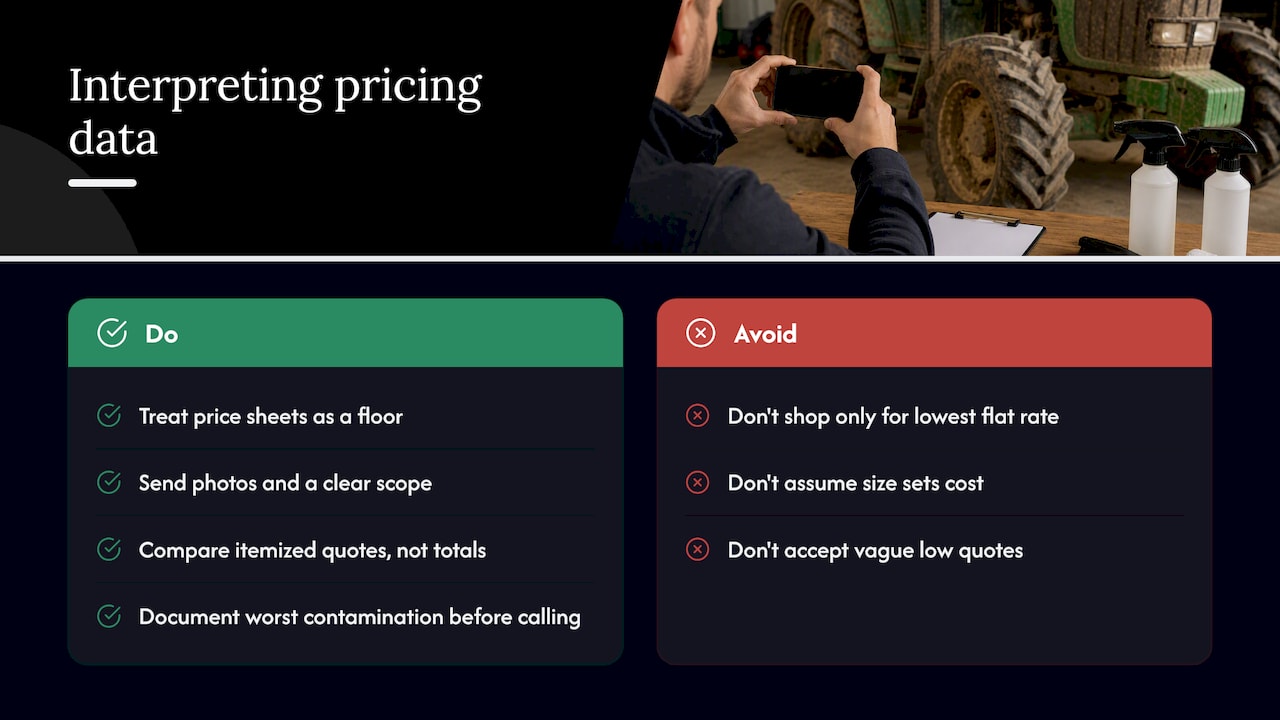
Conventional advice tells owners to shop around for the lowest flat rate. That approach backfires on heavily soiled equipment, where a suspiciously low quote usually means degrease or acid work gets billed separately later. The better move is to send photos and a clear scope up front, then compare itemized quotes rather than bottom-line numbers.
If you only do one thing before calling a detailer, document the worst contamination with photos. It does more to get an accurate number than any amount of price-sheet research, including this one.
— Charles
Ready to book tractor or fleet detailing
Mobile and fleet auto detailing work can be handled directly, with published packages instead of vague estimates. That means you know the detail packages structure before a truck ever shows up, whether you need a single tractor cleaned or a full fleet on a recurring schedule.

- Mobile service comes to a property, with fleet washing and agricultural detailing built into the standard lineup.
- Ceramic coating and paint protection film options may be available for owners who want long-term protection, not just a one-time clean.
- Request a quote with photos and equipment details, and the detailer will scope the job before setting a price.
Call ahead if your equipment has heavy contamination or unusual attachments so the visit gets scheduled with the right time and tools. Reach out through the detail packages page to start a quote for tractor, fleet, or agricultural equipment work.
Where these price estimates come from
The sample figures in this guide come from published commercial wash pricing and a real business listing, not guesswork.
- A BBB profile for an auto-detailing provider shows that agricultural and tractor detailing is a real, listed service among local detailing businesses.
Sources
FAQ
How much should you tip on a $200 tractor or vehicle detail?
Tipping on detailing work is optional and varies by region and personal budget, so there is no fixed industry standard. Many owners tip 10% to 20% for exceptional work on a job that size, similar to other service trades, but it comes down to what you feel the work deserves.
Is a full tractor detail worth the cost?
A full detail is worth it when it prevents long-term paint damage or corrosion from grease, fertilizer, or chemical residue sitting on metal surfaces for seasons at a time. For equipment that only sees light seasonal use, a basic wash on the schedule shown in the Blue Beacon price list may be enough.
How much does it cost to transport a tractor for detailing?
Transport cost depends on distance, trailer rental, and whether you need a professional hauler, and none of that is standardized. Most owners find it cheaper and easier to book mobile detailing service instead of arranging transport for a machine that size.
How much does it cost to have a tractor painted?
Tractor paint jobs vary widely based on surface prep, rust removal, and paint quality, and no single published rate covers all of it. The bulk of the cost typically comes from labor to prep the surface rather than the paint itself, so get a custom quote after an on-site assessment.