
TL;DR:
- Regular professional detailing enhances equipment longevity, safety, and reduces costly repairs.
- A structured cleaning process includes pressure washing, undercarriage cleaning, wheel detailing, interior vacuuming, and inspection.
- Regional factors like humidity and soil conditions require tailored techniques and frequent maintenance for South Jersey farms.
Skipping regular detailing on your agricultural fleet isn’t just a cosmetic oversight. It’s a direct hit to your bottom line. Preventive maintenance extends equipment life 20 to 30%, cuts fuel use up to 15%, and unplanned repairs cost 3 to 5 times more than scheduled ones. For South Jersey farm operations running tractors, sprayers, and utility trucks through mud, humidity, and crop dust all season long, a professional detailing checklist isn’t optional. It’s the difference between a fleet that performs and one that drains your budget. This guide walks you through every step of a high-quality agricultural vehicle detailing process, from pressure washing to documentation, so your equipment stays road-ready and field-ready year-round.
Table of Contents
- Checklist essentials: What every agricultural vehicle detailing process needs
- Step-by-step process: Professional methods for each detailing stage
- Beyond clean: Advanced strategies for protecting ag fleets in South Jersey
- Inspection, documentation, and compliance: Closing the loop
- Expert perspective: Why checklists are only half the battle
- Get expert results with professional agricultural vehicle detailing
- Frequently asked questions
Key Takeaways
| Point | Details |
|---|---|
| Prioritize undercarriage cleaning | Thorough undercarriage cleaning is vital for preventing rust and costly repairs in ag vehicles. |
| Use industry-approved methods | Following a professional, step-by-step checklist ensures deep cleaning and protects equipment investment. |
| Document for compliance | Using digital checklists streamlines inspections and supports insurance and regulatory requirements. |
| Adapt to local conditions | Increase detailing frequency in humid, dusty, or muddy South Jersey environments for best results. |
Checklist essentials: What every agricultural vehicle detailing process needs
Now that you know why diligent detailing matters, let’s break down exactly what your service checklist must deliver to meet professional standards.
A quality agricultural vehicle detailing checklist isn’t a quick rinse and wipe. It’s a structured process designed to protect equipment that works harder than almost any other vehicle type. Professional detailing checklists for agricultural vehicles emphasize five core stages: exterior pressure washing, undercarriage cleaning, wheel and tire detailing, cab interior vacuuming and surface wiping, and a final inspection for streaks or residue.
Here’s what each step actually does for your fleet:
- Exterior pressure washing blasts away caked mud, crop residue, and chemical buildup before they bond to paint or metal surfaces and accelerate corrosion.
- Undercarriage cleaning targets the most vulnerable area of any farm vehicle. Mud packed under frames traps moisture and causes rust from the inside out.
- Wheel and tire detailing removes debris from lug nut recesses and sidewalls, which matters both for safety and for catching early signs of tire wear or damage.
- Cab interior cleaning covers vacuuming floors and seats, wiping control panels, and clearing vents of dust and allergens that affect operator health and visibility.
- Final inspection checks for missed spots, streaks, fluid leaks exposed by cleaning, and any components that need attention before the vehicle goes back to work.
The gap between an ordinary wash and performance-focused detailing comes down to intent. A basic cleaning removes visible dirt. A professional detailing process removes everything that threatens the vehicle’s function, appearance, and longevity. For agricultural vehicle detailing tips specific to South Jersey conditions, the approach has to account for high humidity, sandy soil, and seasonal crop chemicals that are harder on finishes than typical road grime.
Using a commercial vehicle cleaning checklist keeps every technician on the same page and every vehicle held to the same standard.
Pro Tip: Keep both a fleet-wide log and individual vehicle records. Fleet logs show patterns across your operation. Individual logs catch recurring issues on specific machines before they become expensive problems.
Step-by-step process: Professional methods for each detailing stage
Having outlined the key components that belong on every checklist, let’s look at exactly how each should be handled, step by step.
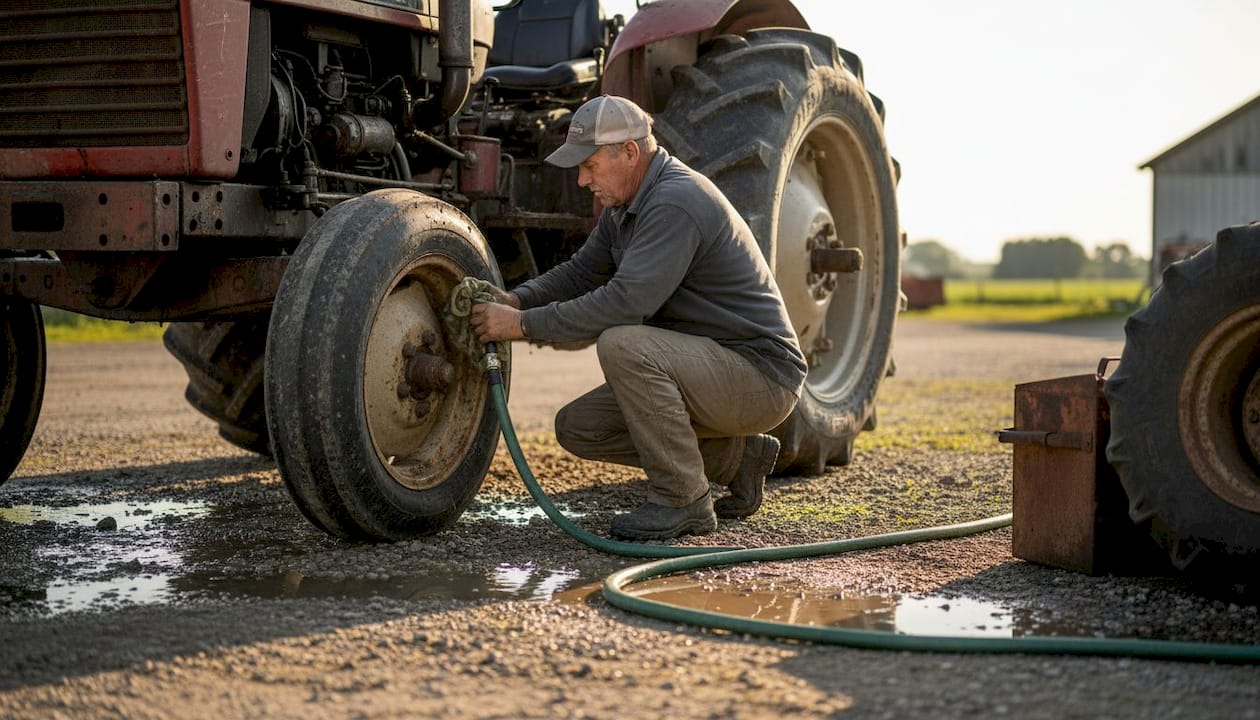
Knowing what to clean is only half the job. How you clean it determines whether you protect the equipment or accidentally damage it. Professional ag equipment washing follows a specific sequence for good reason: pre-rinse first to remove loose dirt, apply a commercial degreaser and allow dwell time, scrub stubborn areas with a brush, use a low-pressure rinse to flush residue, and finish with thorough drying.
Here’s the full professional sequence:
- Pre-rinse the entire vehicle with a high-volume, moderate-pressure spray to knock off loose mud and debris before applying any product.
- Apply degreaser to the undercarriage, wheel wells, and any heavily soiled panels. Let it dwell for 3 to 5 minutes to break down grease and crop chemical residue.
- Scrub stubborn areas with a stiff-bristle brush, especially around axles, hitch points, and tire sidewalls where buildup is thickest.
- Low-pressure rinse all surfaces, especially around seals, electrical connections, and painted panels where high pressure can force water into sensitive components or lift paint edges.
- Dry thoroughly using air blowers or microfiber towels to prevent water spots and stop moisture from sitting in crevices that rust quickly.
- Vacuum the cab completely, including under seats, around pedals, and inside storage compartments where dust and debris accumulate.
- Wipe all interior surfaces with appropriate cleaners for each material: vinyl, rubber, glass, and digital display panels each need different products to avoid damage.
Steam cleaning is one of the most effective tools for heavy grease on farm equipment. It lifts stubborn buildup using heat rather than harsh chemicals, which protects rubber seals and is safer for operators and the environment.
Pro Tip: Use digital checklist apps like Whip Around to document each stage in real time. For large fleets, digital records create an audit trail that supports compliance and makes it easy to spot which vehicles are falling behind on service.
Beyond clean: Advanced strategies for protecting ag fleets in South Jersey
After mastering the standard steps, regional challenges demand extra care and strategy. Here’s how to elevate your fleet’s detailing to the next level.
South Jersey’s climate creates a specific set of problems for agricultural fleets. High summer humidity accelerates rust. Sandy soil works into joints and seals. Pesticide and fertilizer residue is chemically aggressive on metal and paint. Standard cleaning products aren’t always enough.
Biodegradable and ag-safe soaps are the right choice here. They clean effectively without leaving chemical residue that could contaminate soil or water runoff near fields. After washing, applying a quality protectant to painted surfaces and exposed metal creates a barrier against humidity and corrosion. Steam cleaning, as mentioned earlier, handles grease without introducing harsh solvents near crop areas.
For South Jersey fleets, cleaning frequency matters as much as method:
- Weekly cleaning during peak planting and harvest seasons when mud and chemical exposure are highest
- Biweekly cleaning during lighter use periods to prevent buildup without over-scheduling labor
- Post-storm cleaning after heavy rain events that push mud and debris into undercarriage areas
- Seasonal deep cleans at the start and end of each major season to reset the fleet’s condition
One underrated benefit of regular detailing is early detection. Cleaning exposes what’s hiding underneath. A thorough wash often reveals fluid leaks, cracked hoses, worn seals, or rust patches that would otherwise go unnoticed until they cause a breakdown. Integrating this into your cab cleaning workflow turns every detail session into a light inspection.
| Factor | DIY detailing | Professional detailing |
|---|---|---|
| Cost per session | Lower upfront | Higher upfront, lower long-term |
| Time required | 2 to 4 hours per vehicle | 1 to 2 hours with specialized equipment |
| Risk of damage | Higher (wrong products/pressure) | Lower (trained technicians) |
| Inspection quality | Basic visual check | Systematic, documented inspection |
| Product quality | Consumer-grade | Commercial-grade protectants |
| Compliance documentation | Rarely included | Standard practice |
Inspection, documentation, and compliance: Closing the loop
With cleaning and protection addressed, the last critical element is a reliable inspection and documentation process. Here’s how to finish strong.
A detailing session that ends without a formal inspection is an incomplete service. The final check is where you confirm the work actually met the standard and catch anything the cleaning process uncovered.
During a final inspection, look for:
- Streaks or residue on glass, mirrors, and painted panels
- Standing water in cab floor areas or storage compartments
- Fluid leaks on the ground or on undercarriage components
- Visible rust or corrosion exposed by cleaning
- Worn or damaged parts flagged for follow-up maintenance
- Confirmation that all log entries are complete and accurate
Here’s a quick reference for inspection benchmarks:
| Inspection item | Acceptable standard |
|---|---|
| Exterior glass | Streak-free, no residue |
| Undercarriage | No mud pockets, no active leaks |
| Cab interior | Dust-free, surfaces wiped clean |
| Tires and wheels | Clean sidewalls, no debris in lug recesses |
| Fluid check | No new leaks identified |
| Log entry | Completed with date, technician, and notes |
Documenting inspections via apps creates audit-ready records that matter more than most fleet managers realize. Insurance claims, warranty disputes, and regulatory reviews all go more smoothly when you can show a consistent maintenance history. Knowing when your fleet needs detailing and documenting it properly protects your investment on multiple levels.
Expert perspective: Why checklists are only half the battle
We work with agricultural fleet managers across South Jersey, and here’s something we see constantly: a beautifully designed checklist sitting in a binder while vehicles come back from the field looking like they haven’t been touched in weeks. The checklist wasn’t the problem. The culture around it was.
Real fleet performance improvement comes from three things that no checklist can provide on its own: specialized expertise, local knowledge, and accountability. A technician who knows South Jersey’s soil types, seasonal chemical exposure, and humidity patterns will catch things a generic checklist never flags. Staff training that goes beyond “follow the steps” and builds genuine understanding of why each step matters creates consistency that checklists alone can’t enforce.
The most successful agricultural operations we’ve seen treat detailing as a performance discipline, not a cleaning task. They partner with local ag detailing experts who know the region, invest in training, and hold their teams accountable to results rather than just completion. That mindset shift is what separates fleets that run well from fleets that just look clean occasionally.
Get expert results with professional agricultural vehicle detailing
Ready to move beyond just checklists? Let’s connect you with detailing experts who can implement it flawlessly.
For large or high-stakes agricultural fleets, outsourcing to local South Jersey professionals isn’t an added expense. It’s a smarter use of your team’s time and a direct investment in fleet longevity. CDC Auto Detailing brings specialized equipment, commercial-grade products, and regional expertise directly to your operation.
Explore auto detailing service examples to see the full range of what professional detailing covers, learn how to implement mobile detailing for your fleet without disrupting operations, and discover how consistent care can enhance your fleet image and protect your business reputation. Book fast and local with a team that knows South Jersey agriculture.
Frequently asked questions
How often should agricultural vehicles be detailed in South Jersey?
Weekly or biweekly detailing is ideal for fleets exposed to muddy, dusty, or humid conditions common in South Jersey. Frequency should increase during peak planting and harvest seasons when exposure is highest.
What’s the difference between professional and DIY ag vehicle detailing?
Professional services use specialized products, low-pressure techniques, and systematic inspections that DIY approaches typically miss. Professional fleet detailing can save 3 to 5 times the cost of unplanned repairs compared to inconsistent DIY maintenance.
Why is undercarriage cleaning so important for farm equipment?
It removes corrosive mud and debris that trap moisture against metal, causing rust from the inside out. Power washing the undercarriage is especially critical in South Jersey’s humid climate where corrosion accelerates quickly.
Does interior detailing benefit operator health?
Yes, vacuuming cabs and wiping surfaces reduces dust and allergens that build up in enclosed operator spaces, improving air quality and reducing respiratory exposure during long work days.
How does checklist documentation support compliance?
Digital apps and thorough logs make inspection and maintenance records easily auditable for insurance claims, warranty reviews, and regulatory requirements, protecting your business when it matters most.