
TL;DR:
- Automatic car washes are quick and cost-effective but may risk paint damage with brush systems; touchless washes are safer for long-term finish preservation. Professional detailing involves restoration and protection, with prices starting around $150, complemented by eco-friendly options that use less water and reduce runoff. Mobile detailing provides convenient, at-location services for thorough cleaning and restoration, suitable for busy schedules and vehicle maintenance needs.
Types of car wash services include automatic tunnels, touchless washes, hand washes, mobile detailing, and eco-friendly options, each delivering a different level of care, speed, and environmental impact. Choosing the wrong type costs you money and can damage your paint over time. The industry term for the full spectrum of vehicle cleaning is “auto care services,” and understanding where each method fits helps you protect your investment. This guide covers every major category so you can match the right service to your vehicle, budget, and schedule.
1. What are the most popular types of automatic car wash services?
Automatic car washes are the fastest option available, with tunnel washes completing a full cycle in just 5–7 minutes. That speed makes them the go-to choice for drivers who need a clean car without rearranging their day.
There are three main automatic car wash styles worth knowing:
- Tunnel washes: Your car moves through a conveyor belt system while fixed equipment cleans it. These are the most common format at gas stations and standalone wash facilities.
- In-bay automatics: Your car stays stationary while the equipment moves around it. These are typically found at smaller locations and handle one car at a time.
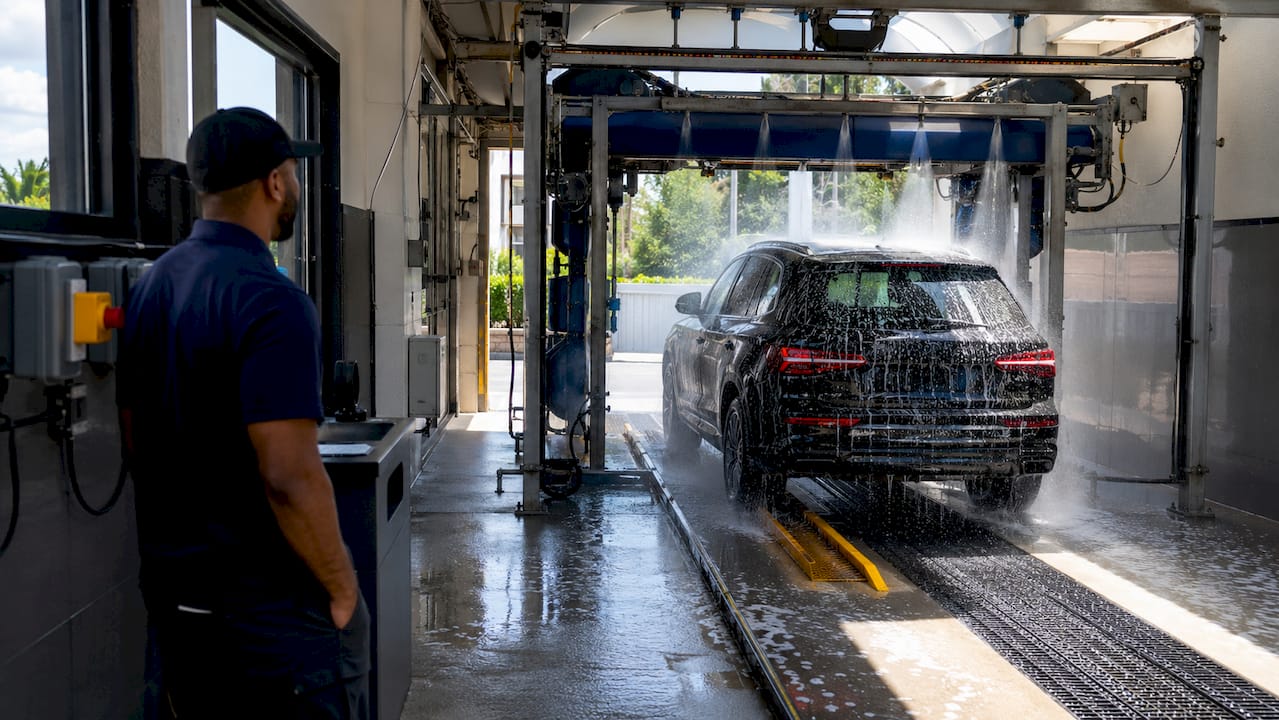
- Touchless washes: High-pressure water jets and chemical solutions clean the car without any physical contact. This format eliminates the risk of brush-induced scratches entirely.
The brush vs. touchless debate matters more than most drivers realize. Soft cloth and foam brush systems can trap grit from previous vehicles and drag it across your paint, creating swirl marks over time. Brush systems can damage paint with repeated use, making touchless the safer automatic option for anyone who cares about long-term finish quality.
Cost for automatic washes ranges from a few dollars for a basic rinse to $20–$30 for a full-service tunnel package with tire shine and undercarriage spray. The price is low, but so is the depth of cleaning. Automatic washes handle surface dirt well. They do not address interior grime, paint contamination, or oxidation.
Pro Tip: If you use automatic washes regularly, choose a touchless format and avoid any facility that still uses stiff bristle brushes. The few extra dollars for a touchless tunnel are worth it every time.
2. How do hand wash and professional detailing services differ?
Hand washing is the safest regular maintenance method for vehicle paint, using microfiber mitts and pH-balanced soap to lift dirt without scratching the clear coat. Professional detailing goes several steps further. The two are related but serve very different purposes, and many vehicle owners confuse them.
A standard hand wash service covers exterior washing, wheel cleaning, window wiping, and a basic interior vacuum. It takes roughly 30–45 minutes and leaves your car clean without addressing deeper paint issues. Think of it as regular upkeep, not restoration.
Professional car detailing services involve restoration and long-term protection beyond surface dirt removal. A full detail typically follows this sequence:
- Triple decontamination wash: Iron remover, chemical decontamination, and a thorough rinse prepare the surface for treatment.
- Clay bar treatment: A clay bar pulls bonded contaminants from the paint that washing alone cannot remove.
- Paint correction: Machine polishing removes swirl marks, light scratches, and oxidation to restore gloss.
- Protective coating application: Ceramic coating, paint protection film, or a quality sealant locks in the corrected finish.
- Interior deep clean: Steam cleaning, leather conditioning, and odor treatment address the cabin thoroughly.
The difference between express and executive packages is significant. Express detailing focuses on routine basics: hand wash, vacuum, and surface wipe-down. Executive packages add paint decontamination, correction, and a ceramic sealer for vehicles needing deeper restoration or advanced protection.
Professional detailing starts at approximately $150 for maintenance-focused packages, with costs rising for paint correction and ceramic coatings. A full executive detail on a neglected vehicle can run several hundred dollars. That price reflects hours of skilled labor and materials that protect your paint for months or years.
Pro Tip: Book a full detail once or twice a year and maintain the results with monthly hand washes. That combination gives you professional-grade protection without the cost of frequent full details.
3. What eco-friendly car wash options are available?
Eco-friendly car washing is no longer a niche preference. It is a measurable improvement over traditional DIY washing in both water use and chemical runoff. Professional car washes with reclamation systems use as little as 24 gallons per vehicle. A typical driveway wash uses 80–140 gallons. That gap is significant, especially in drought-prone regions.
The main eco-friendly options available today include:
- Reclamation system washes: Professional facilities that capture, filter, and reuse wash water. These are the most water-efficient fixed-location option.
- Waterless car wash products: Spray-on solutions that encapsulate dirt and wipe clean without running water. Best suited for lightly soiled vehicles or indoor use.
- Rinse-free wash methods: A small amount of water mixed with a concentrated solution cleans the car in sections without a full rinse. Waterless and rinse-free methods conserve water and reduce runoff, making them ideal for eco-conscious customers.
- Mobile eco-friendly detailing: Mobile detailers using biodegradable products and contained waste treatment bring green cleaning directly to your location.
Professional eco-conscious facilities also use contained drainage systems with multi-stage filtration and oil separators that prevent chemical runoff from reaching storm drains. Washing your car in a driveway sends soap, oil residue, and road grime directly into the local watershed. A professional eco wash eliminates that entirely.
| Method | Water Use | Chemical Runoff Risk | Best For |
|---|---|---|---|
| DIY driveway wash | 80–140 gallons | High | Budget-conscious, infrequent |
| Reclamation system wash | ~24 gallons | Low | Regular maintenance |
| Waterless wash | Near zero | Very low | Light dirt, indoor use |
| Mobile eco detailing | Minimal | Very low | Convenience + green values |
4. What are mobile car wash and detailing services?
Mobile car wash and detailing services bring professional-grade cleaning directly to your driveway, office parking lot, or any location you choose. Mobile detailers operate self-sufficiently with their own water and power supply, so they do not need access to your outdoor spigot or electrical outlet. This makes them genuinely flexible in a way that fixed-location services cannot match.
The service range available through mobile providers covers more ground than most drivers expect:
- Express mobile wash: Hand wash, tire dressing, and window cleaning. Typically completed in under an hour.
- Interior detail: Deep vacuum, surface wipe-down, and odor treatment without a full exterior service.
- Full mobile detail: Combines exterior hand wash, interior deep clean, and protective treatment in one visit.
- Premium packages: Paint correction, ceramic coating application, and paint protection film installation at your location.
Mobile detailing often exceeds fixed-location automatic wash quality for vehicles needing thorough restoration. The technician focuses entirely on your vehicle for the full duration of the appointment. That level of attention is impossible in a tunnel wash.
Mobile services cost more than automatic washes and sometimes more than fixed-location hand washes, but the convenience factor is real. You do not drive anywhere, wait in line, or adjust your schedule. For busy professionals, fleet managers, or anyone with a vehicle that needs regular care, mobile detailing is often the most practical option. Cdcautodetailing, based in Pitman, New Jersey, operates exactly this model across South Jersey, bringing full-service detailing to clients at their preferred location.
5. How do different car wash services compare?
Choosing between car wash types comes down to four factors: time, cost, paint safety, and environmental impact. This table gives you a direct comparison across the most common options.
| Service Type | Avg. Duration | Cost Range | Paint Safety | Water Use | Best For |
|---|---|---|---|---|---|
| Automatic brush tunnel | 5–7 minutes | $8–$20 | Moderate risk | High | Quick exterior clean |
| Touchless automatic | 5–7 minutes | $10–$25 | Low risk | High | Speed with less paint risk |
| Hand wash service | 30–45 minutes | $25–$60 | Very safe | Moderate | Regular maintenance |
| Express detailing | 45–90 minutes | $75–$150 | Very safe | Low | Upkeep and surface care |
| Full mobile detail | 2–4 hours | $150+ | Safest | Minimal | Restoration and protection |
| Eco-friendly wash | Varies | $10–$30 | Low risk | Very low | Green-conscious drivers |
Industry experts recommend mixing car wash methods for optimal upkeep, such as monthly hand washes supplemented by quick automatic washes between appointments. That approach balances cost, convenience, and paint safety without committing to one method exclusively.
Key takeaways
The safest and most thorough vehicle care combines professional detailing for restoration with regular hand washes for maintenance, supplemented by eco-friendly options when water conservation matters.
| Point | Details |
|---|---|
| Automatic washes prioritize speed | Tunnel and touchless washes finish in 5–7 minutes but do not address paint correction or interior cleaning. |
| Hand wash is the safest routine method | Microfiber mitts and pH-balanced soap minimize swirl marks compared to brush systems. |
| Detailing starts at $150 and scales up | Express packages cover basics; executive packages add paint correction and ceramic coating for full restoration. |
| Eco-friendly washes save significant water | Professional reclamation systems use as little as 24 gallons versus 80–140 gallons for a typical driveway wash. |
| Mobile detailing offers the most convenience | Self-sufficient mobile detailers bring full-service care to your location without requiring utilities on-site. |
What I actually tell people when they ask me which service to choose
Most people ask me this question expecting a single answer. The honest answer is that no one car wash type wins across every situation. What matters is matching the method to the moment.
For daily drivers that see highway miles and road grime every week, a monthly hand wash with a quarterly express detail keeps the paint in solid shape without breaking the budget. For newer vehicles or anything with a fresh ceramic coating, I would not run it through a brush tunnel at all. The risk simply is not worth the convenience.
Eco-friendly options deserve more attention than they get. If you live in South Jersey or anywhere that sees dry summers, the water savings from a reclamation system wash or a waterless wash solution add up fast. It is not just an environmental choice. It is a practical one.
The biggest mistake I see is treating a car wash as a substitute for detailing. They are not the same thing. A wash removes surface dirt. Detailing removes contamination, corrects paint, and applies protection that lasts months. If your car has not had a full detail in over a year, no amount of tunnel washes will fix the oxidation building up on your clear coat. You need paint correction to address that, and a wash will not get you there.
My practical recommendation: use automatic touchless washes for convenience between appointments, schedule a hand wash monthly, and book a full professional detail twice a year. That mix covers every scenario without overspending.
— Charles
Explore professional detailing services from Cdcautodetailing
Cdcautodetailing serves vehicle owners across South Jersey with mobile detailing packages ranging from express maintenance washes to full executive details with ceramic coating and paint correction. Every service is performed at your location, using professional-grade products and techniques that fixed-location washes simply cannot replicate. Whether your vehicle needs a quick refresh or a complete restoration, the right package is available. Explore detailing service examples to see exactly what each level of care includes, or book mobile detailing directly through the site to schedule your appointment.
FAQ
What is the safest type of car wash for paint?
Hand washing with microfiber mitts and pH-balanced soap is the safest regular method for vehicle paint, minimizing swirl marks and clear coat damage compared to brush-based automatic systems.
How long does professional detailing take?
Professional detailing ranges from 45 minutes for an express package to over 3.5 hours for a full executive detail that includes paint correction and ceramic coating application.
Are eco-friendly car washes as effective as standard washes?
Yes. Professional eco-friendly washes using reclamation systems and biodegradable products clean as thoroughly as standard washes while using significantly less water and preventing chemical runoff.
What is the difference between a car wash and car detailing?
A car wash removes surface dirt from the exterior. Car detailing includes deep interior cleaning, paint decontamination, correction, and protective coating application to restore and preserve vehicle value.
When does mobile detailing make more sense than an automatic wash?
Mobile detailing makes sense when your vehicle needs thorough restoration, you cannot easily visit a fixed-location facility, or you want professional-grade results delivered at your home or office.