
TL;DR:
- Vehicle-specific and manufacturer-guided maintenance routines are essential for long-term vehicle health.
- Monthly checks like tire pressure, lights, wipers, and fluid levels prevent costly repairs.
- Proper documentation and consistency in maintenance extend vehicle lifespan and preserve resale value.
Vehicle maintenance doesn’t have to be a guessing game, but for most car owners in South Jersey, that’s exactly what it feels like. Between conflicting advice from quick-lube shops, outdated rule-of-thumb schedules, and the real-world demands of local weather like road salt, freezing temperatures, and spring humidity, figuring out what actually needs attention and when can feel like a moving target. This guide cuts through the noise with expert-backed, seasonally relevant best practices that protect your car’s performance, appearance, and long-term value no matter where you are on your ownership journey.
Table of Contents
- What makes a maintenance routine ‘best practice’?
- Monthly essentials: The walkaround checklist
- Interval secrets: Oil, filters, fluids, and battery care
- Don’t ignore the transmission—and why details matter
- Detailing and appearance: Preserving value and protection
- A reality check: What most owners get wrong—and how to truly protect your investment
- Protect your routine—and your ride—with professional detailing support
- Frequently asked questions
Key Takeaways
| Point | Details |
|---|---|
| Follow owner’s manual | Always use your vehicle’s specific maintenance schedule instead of generic mileages for best reliability. |
| Do monthly checks | A simple walkaround catches tire, light, or fluid issues before they cause trouble. |
| Customize intervals | Understand that oil, filter, and transmission service timing depends on your make, model, and conditions. |
| Detail for protection | Professional detailing and smart cleaning prevent rust, preserve finishes, and boost resale value. |
| Document and communicate | Keep records and photos to help professionals spot patterns and prevent expensive repairs. |
What makes a maintenance routine ‘best practice’?
Not all maintenance advice is created equal. The difference between a routine that actually protects your vehicle and one that just gives you the feeling of being responsible often comes down to three things: specificity, evidence, and seasonal relevance.
Best practices are vehicle-specific. Your neighbor’s oil change schedule for their diesel truck has nothing to do with your four-cylinder commuter sedan. What works for one engine, climate, or driving pattern may actively hurt another. Always start with your owner’s manual, not what a shop recommends based on generic charts.
Evidence matters more than habit. A lot of drivers follow intervals they learned from their parents or picked up at a drive-through oil change. The reality is that essential maintenance recommendations have evolved significantly with modern engine technology, synthetic lubricants, and computer-monitored systems. Following outdated rules can mean paying for services you don’t need or missing critical ones you do.
Here are the core traits of a legitimate best-practice maintenance routine:
- Tied to your specific vehicle make, model, and year
- Grounded in manufacturer guidelines, not generic shop upsells
- Adjusted for your actual driving conditions (short trips, highway, towing)
- Layered across daily, monthly, and mileage-based intervals
- Documented so you can spot patterns over time
“Use a recurring owner checklist plus your vehicle’s manufacturer maintenance schedule (not generic quick-lube intervals) to maintain safety and reliability.” Maintenance guide
Building your routine around an owner maintenance checklist is one of the smartest moves you can make. It gives you a repeatable structure without relying on memory or impulse.
Monthly essentials: The walkaround checklist
Now that you know what best practices should look like, here’s your go-to monthly routine every South Jersey car owner needs.
A monthly walkaround takes less than 15 minutes, but it catches the small issues before they become expensive ones. Think of it as your car’s monthly physical. You’re not diagnosing anything complicated. You’re looking for changes, wear, and warning signs.
Here’s how to do it right, in order:
- Check tire pressure and tread depth. Cold mornings in South Jersey can drop pressure by one PSI for every 10 degrees of temperature change. Low pressure causes uneven wear, poor fuel economy, and handling problems. Use a simple gauge and compare to the sticker inside your driver’s door, not the number on the sidewall.
- Inspect all lights. Walk around with the car on, check headlights, taillights, brake lights, and turn signals. Don’t forget the backup lights. A burned bulb is a fixable five-dollar problem until it gets you a ticket.
- Look at your wipers. Worn blades leave streaks that genuinely impair visibility in rain or snow. South Jersey gets both. Replace blades at least once a year, or whenever they start smearing instead of clearing.
- Top off fluids. Check windshield washer fluid, coolant overflow, and brake fluid reservoir levels visually. Low brake fluid can indicate worn pads, not just a need for a refill.
- Scan the paint for rock chips. Winter roads coated in salt and gravel are brutal on your vehicle’s finish. A chip left untreated turns into rust within weeks in wet weather. Catching it early is the difference between a $5 touch-up pen and a $500 body shop visit.
According to AAA’s maintenance tips, monthly walkaround checks should include tire pressure and tread, lights, wipers, and top-off of key fluids.
Tires and wipers deserve special emphasis in our region. Consumer Reports notes that tires and wipers are safety-critical weather multipliers. When conditions get bad, these two components either save you or fail you. There’s no middle ground.
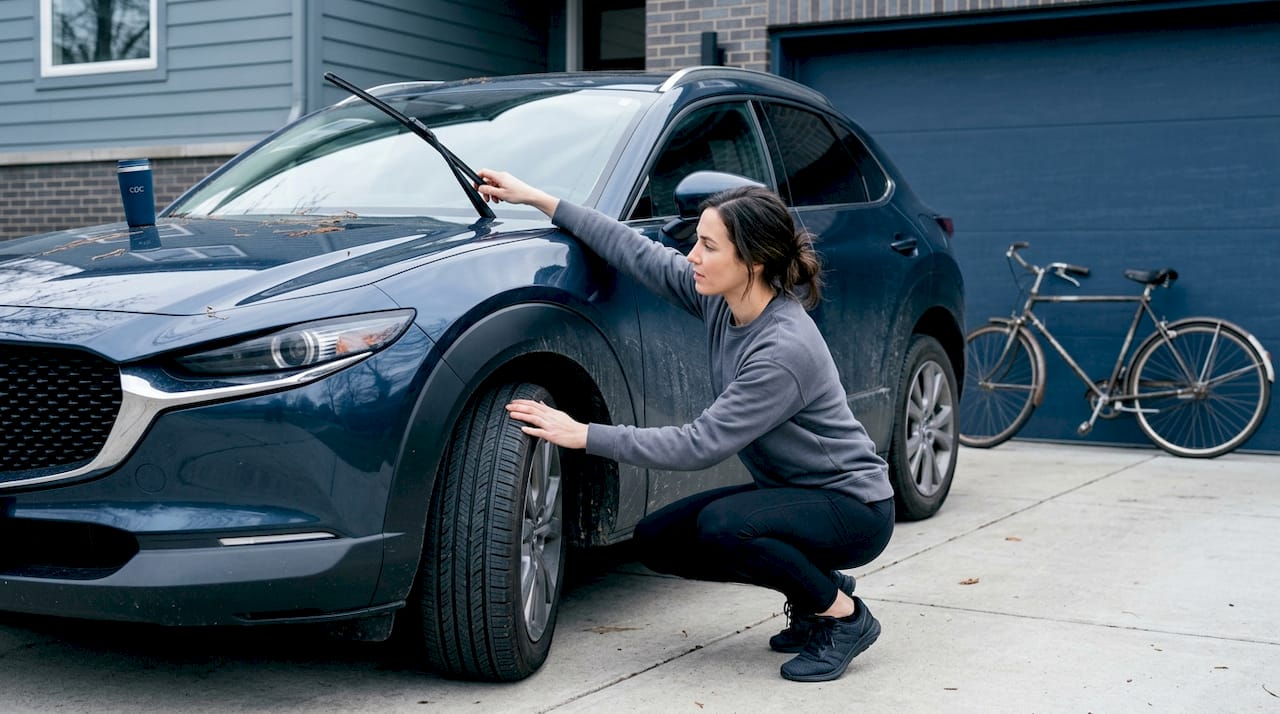
Pro Tip: Set a maintenance reminder on your phone for the first Saturday of each month. Pair the walkaround with a quick interior vacuum and you’ve built a habit that adds years to your car’s life.
For a more complete breakdown of what to inspect and when, the detailed maintenance checklist on our site is a useful reference. And if you want to go deeper on keeping your wheels in top shape, the wheel and tire maintenance tips page covers it thoroughly.
Interval secrets: Oil, filters, fluids, and battery care
Monthly checks are your foundation, but interval-based maintenance is where many owners lose ground on value, efficiency, and longevity.
Oil change intervals are one of the most misunderstood topics in auto care. The old “every 3,000 miles” advice is largely outdated. Most modern vehicles with full synthetic oil can go 7,500 to 10,000 miles or more between changes. According to AAA, oil change intervals are vehicle and oil dependent, with no one-size-fits-all rule. Always check your owner’s manual and review the car maintenance guide relevant to your model.
| Service | Typical interval | Notes |
|---|---|---|
| Conventional oil | 3,000 to 5,000 miles | Mostly older vehicles |
| Synthetic blend oil | 5,000 to 7,500 miles | Moderate performance driving |
| Full synthetic oil | 7,500 to 10,000+ miles | Modern engines, check manual |
| Engine air filter | 15,000 to 30,000 miles | More often in dusty conditions |
| Cabin air filter | 12,000 to 15,000 miles | Replace more often with allergies |
| Battery test | Every 6 months | Essential before winter and summer |
Engine and cabin air filters are easy to overlook because they fail gradually. A clogged engine filter reduces fuel economy and can strain your engine under load. A dirty cabin filter doesn’t just smell bad. It circulates allergens and reduces airflow to your HVAC system, shortening the blower motor’s life. Oregon AAA recommends keeping air filters on schedule and inspecting them during every oil service interval.
Batteries are where South Jersey owners often get caught off guard. Heat in summer and cold in winter are the two biggest killers of car batteries. Consumer Reports notes that battery upkeep is a key best practice for avoiding roadside failures, recommending testing about twice per year and addressing corrosion or connectivity issues immediately. Look for a white or bluish crust around the terminals. That’s corrosion, and it reduces your battery’s ability to deliver current when you need it most.
Pro Tip: Keep a simple log in your glove compartment or a notes app on your phone. Write down every service date and mileage. This habit pays off in two ways: you catch patterns before they become failures, and you build a documented service history that adds real value when you sell the vehicle. The regular maintenance benefits this kind of consistency creates are both mechanical and financial. For businesses with multiple vehicles, applying these principles at scale is exactly what fleet maintenance best practices are built around.
Don’t ignore the transmission—and why details matter
Beyond oil and filters, your transmission requires attention. For some vehicles, much less often than you’d think, but overlooking it can shorten vehicle life or void warranties.
Transmission fluid service is probably the most variable item on any maintenance list. Depending on your vehicle, service intervals can range from 30,000 miles all the way up to 100,000 miles or beyond. Some manufacturers even call certain transmissions “sealed for life,” meaning no scheduled fluid change at all.
Here’s what that variability looks like in practice:
- 30,000 to 60,000 miles: Older models, severe duty driving, frequent towing
- 60,000 to 90,000 miles: Most standard automatic transmissions, moderate use
- 100,000+ miles or “sealed for life”: Some modern DCTs and CVTs per manufacturer specs
| Scenario | Recommended action |
|---|---|
| Normal driving, newer vehicle | Follow manufacturer interval exactly |
| Heavy towing or stop-and-go daily | Consider earlier inspection |
| High-mileage vehicle, unknown history | Inspect fluid condition, consult a tech |
| Shop recommends a “flush” | Ask them to show you the automaker spec |
Consumer Reports points out that transmission service is interval-specific and widely variable, and that unnecessary flushes can actually do harm. The pressure involved in a full flush can dislodge debris that, in an aging transmission, was essentially acting as a seal. If a shop recommends a flush, ask them to point to the automaker’s spec that supports it. If they can’t, that’s your answer. Review recommended maintenance guidance for your specific vehicle before agreeing to any transmission service.
Detailing and appearance: Preserving value and protection
Alongside mechanical care, how you clean and maintain your car’s surfaces has a bigger impact on value and comfort than many drivers realize.
Most people think of detailing as cosmetic. It’s not. A properly detailed vehicle is protected from the inside out. Salt from South Jersey roads in January works into paint, seams, and undercarriage components. Leaving it there corrodes metal and degrades rubber seals over months of exposure. A good spring detailing appointment isn’t vanity. It’s prevention.
Here are the core appearance-care best practices:
- Use automotive-specific products only. Dish soap strips protective wax. Household glass cleaner contains ammonia, which deteriorates tinted windows and dashboard materials.
- Never skip the interior. UV rays fade dashboards and crack leather. Protect surfaces with conditioners and UV-blocking window film for vehicles parked outside regularly.
- Address paint chips fast. Every chip is a rust starting point. Touch-up paint costs a few dollars and takes five minutes.
- Schedule a professional detail at least twice a year. Once in spring after salt season, once in fall before it starts.
Consumer Reports confirms that professional detailing is most effective when paired with correct consumer cleaning practices, specifically warning against household chemicals that can damage interior finishes.
Pro Tip: After any winter detailing session, apply a fresh coat of wax or a spray sealant to your paint. It creates a barrier that makes the next washing faster and protects against early oxidation. Check out our spring exterior detailing tips for a full seasonal approach, and review the interior detailing steps to make sure you’re not missing critical surfaces inside. The evidence is clear that consistent detailing preserves value in a very measurable way when it comes time to trade in or sell. For tracking everything together, an auto maintenance tracker helps keep both mechanical and appearance care on schedule.
A reality check: What most owners get wrong—and how to truly protect your investment
Having run through the essential lists and schedules, let’s step back and cut through the noise with an honest look at what really works for long-term vehicle health.
Here’s something most maintenance content won’t tell you: the biggest threat to your vehicle isn’t a skipped oil change or a worn wiper blade. It’s inconsistency paired with silence. Owners who do some things right but never document anything, never communicate patterns to their technician, and never revisit what’s actually working for their specific car and driving style end up spending more money, not less.
The myth is that maintenance is a checklist you complete. The reality is that it’s a conversation between you, your car, and the people who work on it. Your car gives you signals. A slight pull to the left. A smell after long highway drives. A rattle that only appears when it’s cold. These are data points. If you don’t write them down, they vanish. And when something finally fails, you’ve lost the context that would have made the diagnosis faster and cheaper.
Safety Culture’s car maintenance checklist makes a point worth taking seriously: keep notes and photos of recurring issues from your inspections so that when something starts failing, such as leaks, fluid contamination, or uneven tire wear, you can better communicate patterns to a technician. That documentation is leverage. It shortens diagnostic time, reduces the chance of misdiagnosis, and builds trust with whoever services your vehicle.
We’ve seen this play out with vehicle owners who pair their mechanical care with consistent appearance maintenance. Their cars simply last longer, look better, and command higher resale prices. The real-life maintenance impact data backs this up. Customization, documentation, and consistency are the true differentiators, not just following a schedule you found online.
Protect your routine—and your ride—with professional detailing support
When you’re already committed to doing the mechanical side right, pairing it with professional detailing makes the whole system work better.

CDC Auto Detailing serves South Jersey drivers with mobile detailing that comes directly to your home or workplace. That means no scheduling conflicts, no waiting rooms, and no excuses for skipping your spring salt removal or fall protection treatment. Our services cover everything from basic exterior washes to ceramic coating and paint protection film, and we work around your schedule, not the other way around.
Explore auto detailing examples to see what professional-grade care looks like for vehicles just like yours, then take the next step and book mobile detailing for a service that fits your routine. Keeping your car in top condition has never been easier for busy South Jersey residents.
Frequently asked questions
How often should I really change my oil with synthetic blends?
Synthetic blend oil change intervals are usually every 6,000 miles, but always follow your owner’s manual or dealer recommendation since intervals vary by vehicle and usage. AAA confirms that oil intervals are vehicle and oil dependent with no universal rule.
Does detailing actually prevent rust and long-term damage?
Professional detailing with regular washing and waxing creates a barrier against road salt and debris, directly reducing the risk of rust and surface damage on your vehicle’s paint and metal. Consumer Reports notes that professional detailing is most effective when paired with correct home cleaning practices.
Is there a difference between a flush and a drain/refill for transmission service?
A flush replaces all fluid under pressure and is not appropriate for every vehicle, while a drain and refill is a more conservative option; always check your manual before agreeing to either service. Consumer Reports warns against unnecessary flushes and recommends following automaker-specified intervals.
How does South Jersey weather affect what’s on my maintenance list?
Frequent seasonal changes and heavy road salt use mean that tire pressure checks, wiper condition, undercarriage washing, and paint protection are far more critical here than in milder climates. Spring car maintenance guidance for salt and temperature swing regions specifically prioritizes tires, coolant, rock chip inspection, and cabin filter checks.