
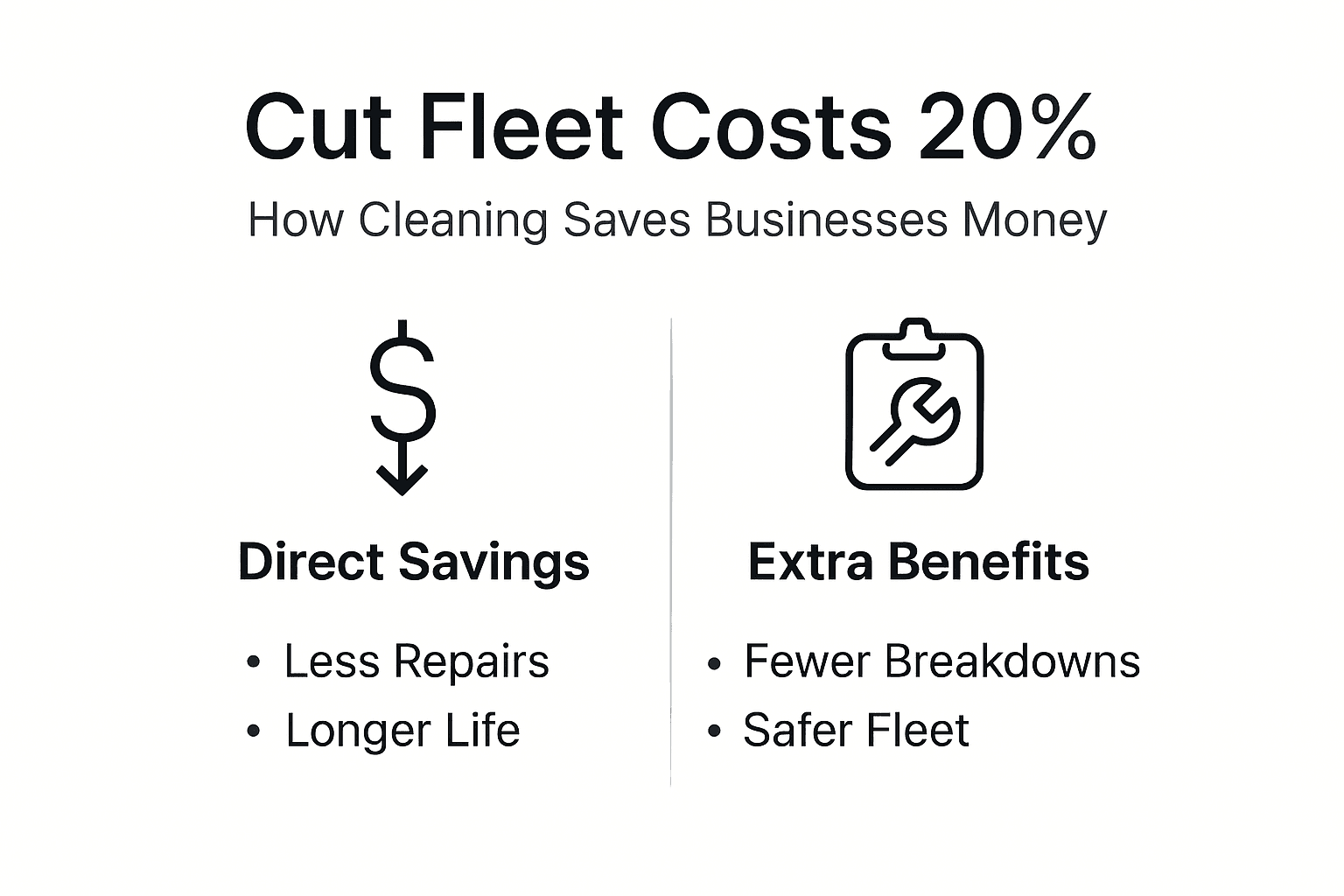
Regular vehicle cleaning can cut fleet maintenance costs by up to 20%, a figure that surprises many South Jersey business owners who view cleaning as purely cosmetic. Beyond appearances, strategic vehicle maintenance through consistent cleaning protects your operational budget, enhances driver safety, and strengthens customer trust. This guide reveals the full spectrum of overlooked benefits that transform vehicle cleaning from an expense into a smart investment for fleet managers facing budget constraints and competitive pressure.
Table of Contents
- Understanding The Business Case For Vehicle Cleaning
- How Vehicle Cleaning Enhances Fleet Efficiency And Safety
- Vehicle Cleaning’s Impact On Brand Image And Customer Trust
- Mobile Vs. Traditional In-Shop Vehicle Cleaning: What Businesses Should Know
- Common Misconceptions About Vehicle Cleaning In Business Fleets
- Implementing An Effective Vehicle Cleaning Program For South Jersey Fleets
- Summary: Making The Case For Professional Vehicle Cleaning Services
- Discover Expert Mobile Vehicle Cleaning With Cdc Detailing South Jersey
- Frequently Asked Questions About Vehicle Cleaning For Business Fleets
Key takeaways
| Point | Details |
|---|---|
| Cost reduction | Regular cleaning cuts maintenance expenses by 15 to 20% through corrosion prevention and early issue detection. |
| Safety improvement | Clean vehicles enhance driver visibility, reducing accident risks by 10 to 12% across fleet operations. |
| Brand protection | Vehicle cleanliness directly influences customer trust, with 70% of consumers associating clean fleets with professionalism. |
| Operational efficiency | Mobile cleaning services reduce downtime by 30% compared to traditional in-shop methods. |
| Asset longevity | Consistent interior cleaning extends component lifespan by 25 to 30%, maximizing fleet investment returns. |
Understanding the business case for vehicle cleaning
South Jersey’s coastal climate exposes business vehicles to salt, moisture, and road grime that accelerate corrosion and mechanical wear. Cleaning reduces corrosion and maintenance costs by 15 to 20% by removing corrosive contaminants before they damage paint, undercarriages, and mechanical components. These savings compound over time as vehicles require fewer repairs and replacements.
Beyond cost reduction, regular cleaning delivers measurable safety improvements. Studies show that cleaning improves driver safety by enhancing visibility, reducing accident risks by 10 to 12% through cleaner windows, mirrors, and lights. This reduction translates to fewer insurance claims, less vehicle downtime, and improved driver confidence on the road.
The financial benefits extend to asset management. Clean vehicles maintain higher resale values and operate more efficiently throughout their service life. Salt accumulation from winter road treatments causes particular damage in South Jersey, making seasonal cleaning schedules essential for protecting your investment.
Key business advantages include:
- Prevention of rust and paint degradation from environmental contaminants
- Early detection of mechanical issues during cleaning inspections
- Reduced fuel consumption from cleaner aerodynamic surfaces
- Extended warranty compliance through documented maintenance
- Lower insurance premiums from improved safety records
Pro Tip: Schedule vehicle cleaning immediately after winter months when salt exposure peaks to prevent long-term corrosion damage that compounds maintenance costs.
Understanding fleet longevity benefits helps you calculate the true return on investment for regular cleaning programs. The initial expense pays dividends through extended vehicle life, fewer emergency repairs, and consistent operational availability.
How vehicle cleaning enhances fleet efficiency and safety
Operational downtime costs businesses significantly more than the cleaning itself. Research indicates that unclean vehicles face 12% more downtime due to neglected maintenance issues that escalate into major repairs. Regular cleaning allows technicians to spot problems early, converting potential breakdowns into scheduled maintenance.
Interior cleanliness protects expensive dashboard electronics, upholstery, and climate control systems. Data shows clean interiors extend component lifespan by 25 to 30% by preventing dust accumulation, moisture damage, and premature wear. This protection matters especially for fleet vehicles that log high mileage and constant use.
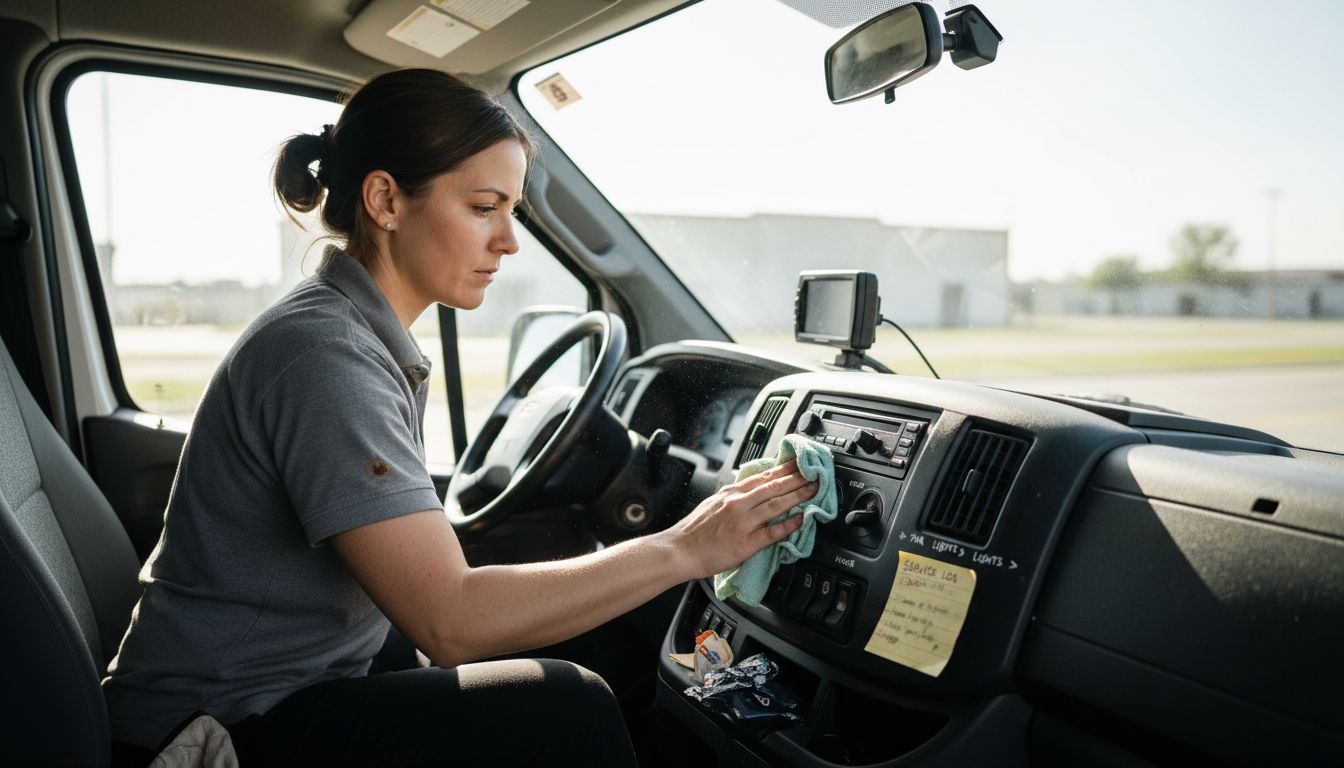
Driver safety improves dramatically with proper vehicle maintenance. Improved visibility decreases accident risk by 10 to 12% because clean windshields, mirrors, and headlights allow drivers to see hazards sooner and react appropriately. This reduction protects both your team and your liability exposure.
Top operational benefits of regular fleet cleaning:
- Reduced emergency repair costs through early problem identification
- Improved fuel efficiency from cleaner aerodynamic surfaces and proper tire pressure detection
- Extended vehicle lifespan through corrosion prevention and component protection
- Higher employee morale from driving clean, well-maintained vehicles
- Better route efficiency with reliable vehicles that minimize unexpected breakdowns
Critical stat: Fleet managers report 30% fewer unscheduled maintenance events after implementing consistent cleaning protocols.
Pro Tip: Coordinate cleaning appointments with scheduled maintenance checks to maximize efficiency and ensure technicians can thoroughly inspect vehicles during the cleaning process.
Exploring commercial fleet detailing benefits reveals how systematic cleaning programs integrate seamlessly with existing maintenance schedules. You create predictable costs while reducing unpredictable breakdowns that disrupt operations and customer service.
Vehicle cleaning’s impact on brand image and customer trust
The correlation between cleanliness and customer satisfaction proves substantial. Fleet managers report 85% saw increased customer satisfaction after implementing regular cleaning programs. Customers notice details, and a well-maintained vehicle communicates respect for their business and attention to quality standards.
Ways vehicle appearance influences customer trust:
- Clean exteriors signal operational excellence and attention to detail
- Organized interiors demonstrate professional standards and respect for equipment
- Company branding visibility increases on clean surfaces versus grimy ones
- New customer acquisition improves when vehicles project quality during initial impressions
- Employee pride strengthens when they drive vehicles that reflect company values
70% of consumers associate clean business vehicles with reliability and trustworthiness, directly impacting their purchasing decisions and vendor selections.
Investment in professional fleet appearances protects your marketing budget by ensuring every vehicle interaction reinforces rather than undermines your brand message. The marginal cost of regular cleaning prevents substantial losses from damaged reputation and lost contracts.
Mobile vs. traditional in-shop vehicle cleaning: what businesses should know
Location flexibility transforms how fleets manage cleaning schedules. Mobile cleaning saves 30% vehicle downtime by bringing services to your facility instead of removing vehicles from service for travel time and waiting. This efficiency multiplies across larger fleets where coordinating off-site visits becomes logistically complex.
Schedule reliability improves significantly with mobile options. Data indicates mobile cleaning improves adherence to schedules by 40% because services occur at your facility on predictable intervals without weather delays or facility backlogs. You maintain operational control while ensuring consistent vehicle presentation.
Environmental considerations favor modern mobile cleaning methods. Research shows mobile eco-friendly cleaning reduces water use by 70% through advanced techniques and biodegradable products. This reduction supports sustainability goals while meeting regulatory requirements for water conservation.
| Factor | Mobile Cleaning | In-Shop Cleaning |
|---|---|---|
| Vehicle Downtime | 30% less with on-site service | Requires travel time and waiting |
| Cost Efficiency | Lower total cost including labor | Higher with transport and waiting costs |
| Schedule Flexibility | Services at your facility on demand | Limited by shop hours and availability |
| Environmental Impact | 70% less water with eco-friendly methods | Traditional water use and runoff |
| Consistency | Same technicians know your fleet | Variable quality with different shops |
Mobile cleaning advantages for South Jersey fleets:
- No vehicle removal from service during business hours
- Technicians become familiar with your specific fleet needs
- Weather-protected cleaning at your covered facility
- Flexible scheduling around peak operational demands
- Reduced fuel costs and mileage from eliminating shop trips
Comparing mobile vs. in-shop vehicle cleaning options reveals how operational priorities determine the best approach. Most South Jersey fleet managers choose mobile services for the convenience and cost advantages that directly improve bottom-line performance.
Common misconceptions about vehicle cleaning in business fleets
Many business owners mistakenly view cleaning as superficial. The reality is cleaning affects maintenance costs and brand trust fundamentally, preventing expensive repairs while protecting customer relationships. This misconception costs businesses thousands in avoidable maintenance and lost contracts.
Another myth suggests mobile cleaning delivers inferior results. Evidence shows mobile cleaning matches in-shop thoroughness while saving time through specialized equipment and trained technicians who understand fleet needs. Professional mobile services use the same quality products and techniques as traditional facilities.
Some managers believe cleanliness does not impact reputation significantly. Data contradicts this assumption, with nearly one-fifth of contracts at risk when vehicles appear poorly maintained. Customers make snap judgments based on vehicle condition, affecting their confidence in your ability to deliver quality service.
Common myths and factual corrections:
- Myth: Cleaning is just about looks. Fact: Regular cleaning prevents corrosion, extends component life by 25 to 30%, and reduces maintenance costs by up to 20%.
- Myth: Mobile cleaning cannot match shop quality. Fact: Mobile services use professional-grade equipment and save 30% downtime while delivering equivalent results.
- Myth: Vehicle appearance does not affect business. Fact: 70% of customers judge professionalism by vehicle condition, and poor cleanliness risks 18% contract loss.
- Myth: Cleaning frequency does not matter. Fact: Consistent schedules prevent compound damage and maintain optimal resale values.
- Myth: Any cleaning method works equally well. Fact: Professional techniques prevent paint damage and use appropriate products for different surfaces.
Debunking fleet cleaning myths helps managers make informed decisions based on evidence rather than assumptions. The cost of believing these misconceptions far exceeds the investment in proper cleaning programs.
Implementing an effective vehicle cleaning program for South Jersey fleets
Start by assessing your current fleet composition and usage patterns. Different vehicles require varying cleaning frequencies based on mileage, environment exposure, and customer interaction levels. Document each vehicle’s specific needs to create targeted cleaning schedules.
Select cleaning service types based on your operational constraints. Mobile services minimize downtime for active fleets, while in-shop cleaning may suit vehicles with scheduled maintenance windows. Cost-benefit analysis should include hidden expenses like fuel, labor, and lost productivity from vehicle unavailability.
Establish cleaning schedules that match South Jersey’s seasonal challenges. Winter salt exposure demands more frequent cleaning, while summer dust and pollen require different attention.
Steps to implement your fleet cleaning program:
- Audit your fleet to identify high-priority vehicles based on customer visibility and condition
- Calculate total cost of ownership including maintenance, downtime, and brand impact
- Select mobile or in-shop services based on operational efficiency analysis
- Establish baseline cleaning schedules with seasonal adjustments for South Jersey climate
- Choose eco-friendly products that support sustainability goals and regulatory compliance
- Create monitoring systems to track vehicle condition and customer feedback
- Review program effectiveness quarterly and adjust frequencies as needed
Pro Tip: Coordinate cleaning appointments with scheduled maintenance checks to consolidate downtime and allow technicians to inspect vehicles thoroughly during the cleaning process.
Resources for implementing mobile detailing effectively provide frameworks for launching programs that deliver measurable results. South Jersey businesses benefit from fleet washing services designed specifically for regional environmental challenges and operational needs.
Summary: making the case for professional vehicle cleaning services
Regular professional vehicle cleaning delivers quantifiable benefits that directly improve business performance. The 15 to 20% reduction in maintenance costs comes from preventing corrosion and catching mechanical issues early. Vehicle downtime drops by 12% when cleaning occurs consistently, keeping your fleet operational and revenue-generating.
Safety improvements protect both employees and your liability exposure. The 10 to 12% reduction in accident risk from improved visibility translates to lower insurance premiums and fewer injury claims. These savings compound over time while creating a safer work environment.
Brand protection through clean vehicles maintains customer trust and contract retention. With 70% of consumers judging professionalism by vehicle appearance, cleaning becomes a marketing investment rather than a maintenance expense. The 18% contract risk from poor vehicle condition makes cleaning programs essential for competitive positioning.
Core benefits summary:
- Reduced maintenance costs through corrosion prevention and early issue detection
- Improved operational efficiency with 30% less downtime using mobile services
- Enhanced driver safety from better visibility and vehicle condition
- Protected brand reputation and customer trust through professional appearance
- Extended vehicle lifespan and higher resale values from consistent care
Discover expert mobile vehicle cleaning with CDC Detailing South Jersey
CDC Detailing specializes in professional mobile vehicle cleaning for South Jersey business fleets, delivering the cost savings and brand benefits outlined throughout this guide. Our eco-friendly mobile services reduce downtime by up to 30% while protecting your vehicles from regional environmental challenges like salt exposure and coastal moisture.
Fleet managers customize cleaning schedules that align with operational demands and seasonal requirements. We help you implement mobile detailing programs that maximize efficiency and maintain the professional appearance customers expect.
Explore our fleet detailing types to find services matching your specific vehicle needs and budget constraints. Learn practical strategies through our comprehensive auto detailing services guide designed for South Jersey business owners.
Frequently asked questions about vehicle cleaning for business fleets
How often should business fleets schedule professional cleaning?
Cleaning frequency depends on vehicle usage and environmental exposure, but most South Jersey fleets benefit from monthly exterior cleaning and quarterly interior detailing. High-visibility vehicles serving customers directly require more frequent cleaning, while warehouse vehicles can extend intervals. Winter months demand increased frequency due to salt exposure that accelerates corrosion.
What cost savings can fleets expect from regular cleaning programs?
Fleets typically see 15 to 20% reduction in maintenance costs through corrosion prevention and early problem detection. Mobile cleaning saves an additional 30% in downtime costs compared to in-shop services. These savings accumulate over vehicle lifespans, with clean interiors extending component life by 25 to 30%.
Does vehicle cleanliness really impact customer decisions?
Research confirms 70% of consumers associate clean vehicles with professionalism and reliability. Fleet managers report 85% increased customer satisfaction after implementing regular cleaning programs. Poor vehicle appearance risks up to 18% contract loss as customers question service quality based on fleet condition.
Why choose mobile cleaning over traditional in-shop services?
Mobile cleaning eliminates travel time and waiting, reducing vehicle downtime by 30% while maintaining equivalent quality standards. Schedule adherence improves by 40% because services occur at your facility on predictable intervals. Mobile options also reduce water use by 70% through eco-friendly methods that support sustainability goals.
How does cleaning improve fleet safety?
Clean windows, mirrors, and lights improve driver visibility, reducing accident risks by 10 to 12%. Regular cleaning allows early detection of mechanical issues during inspection, preventing breakdowns that create safety hazards. Maintained vehicles also perform more reliably in adverse weather conditions common in South Jersey.
What environmental benefits do modern cleaning methods provide?
Professional mobile cleaning uses biodegradable products and water-saving techniques that reduce consumption by 70% compared to traditional methods. These eco-friendly approaches minimize runoff pollution while meeting environmental regulations. Sustainable practices also appeal to environmentally conscious customers and support corporate responsibility goals.