
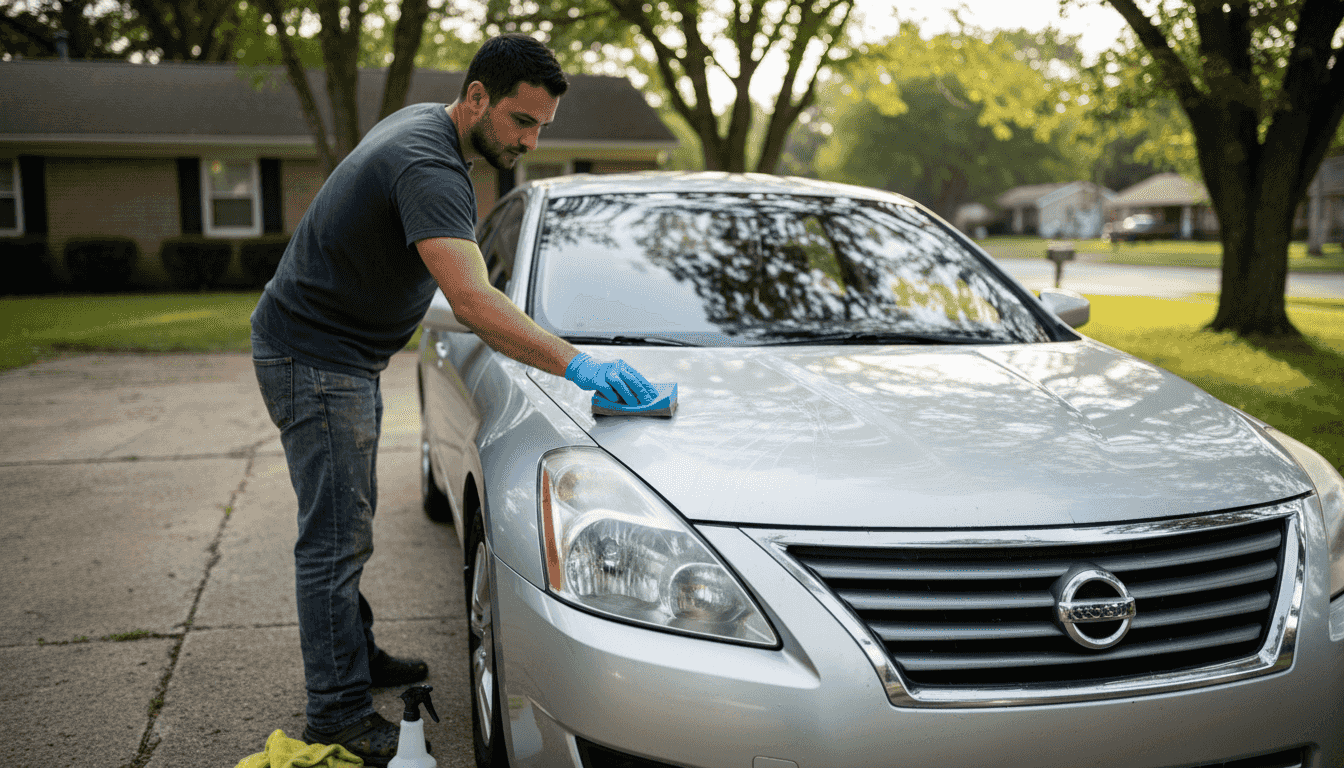
Busy schedules in South Jersey leave little room for tackling stubborn paint contaminants that regular washes simply cannot remove. Between industrial fallout, brake dust, and tree sap, your vehicle’s appearance can quickly lose its shine despite routine care. Discover how detailing clay harnesses the unique properties of fine clay minerals to pull out embedded particles, offering a smooth, flawless surface and setting the stage for high-quality protection and lasting results.
Table of Contents
- What Is Detailing Clay and How It Works
- Types of Clay Bars and Their Best Uses
- Key Benefits for Professional-Grade Results
- Common Mistakes and How to Avoid Them
- Comparing Detailing Clay With Other Solutions
Key Takeaways
| Point | Details |
|---|---|
| Detailing Clay Effectiveness | Detailing clay is essential for removing bonded contaminants that regular washing cannot tackle, such as industrial fallout and brake dust. |
| Proper Application Technique | Follow a systematic application process using adequate lubrication to ensure effective results without damaging your vehicle’s paint. |
| Choosing the Right Clay Bar | Select a clay bar based on the level of contamination and paint sensitivity to prevent damage and ensure thorough cleaning. |
| Preparation for Protective Coatings | Clay detailing prepares the paint surface for superior bonding with protective coatings, enhancing their effectiveness and longevity. |
What Is Detailing Clay and How It Works
Detailing clay is a specialized tool that removes contaminants your regular car wash simply cannot touch. It works by using the natural properties of clay minerals to extract embedded particles from your vehicle’s paint surface, leaving it smooth and ready for the next step in your detailing routine.
How Detailing Clay Actually Works
Clay bars rely on a simple but effective principle: fine-grained clay minerals have a strong attraction to impurities and bonded contaminants. When you glide a clay bar across your paint with proper lubrication, it gently lifts away particles that have fused to the surface over time.
These particles include industrial fallout, brake dust, tree sap, and overspray. Your regular wash removes loose dirt, but these bonded contaminants stay embedded in the clear coat.
The clay’s structure works mechanically on the paint surface. Its plasticity allows it to mold slightly as it moves across your vehicle, ensuring full contact with embedded particles without scratching the paint.
What Makes Clay Different From Regular Washing
Standard car washing only addresses loose surface dirt. Here’s what clay tackles that soap and water cannot:
- Industrial fallout from factories and highway traffic
- Brake dust bonded to the clear coat
- Tree sap residue that hardens over days
- Overspray from nearby paint jobs
- Water spot mineral deposits
- Contamination invisible to the naked eye
These particles are essentially stuck to your paint. A wash mitt or sponge cannot dislodge them, no matter how much pressure you apply.
The Clay Bar Application Process
Using clay is straightforward once you understand the technique. The process typically follows these steps:
- Wash your vehicle thoroughly first to remove loose dirt
- Apply clay lubricant to a small section of paint
- Glide the clay bar gently across the lubricated area using light pressure
- Fold the clay regularly to expose a fresh surface
- Wipe the treated area with a microfiber towel
- Move to the next section and repeat
The lubrication is critical—without it, the clay can grip too hard and potentially damage the clear coat. Professional detailers use specialized clay lubricants designed to work with clay’s texture.
Why This Matters for South Jersey Vehicle Owners
If you’re driving in South Jersey, your vehicle faces specific environmental challenges. The proximity to industrial areas, salt air, and heavy highway traffic means your paint collects contaminants faster than in rural regions.
These bonded particles degrade your paint’s appearance and prevent coatings from adhering properly. Before applying protective treatments, clay preparation is essential.
Clay detailing removes bonded contaminants that regular washing misses, creating a perfectly smooth surface for polishing or ceramic coatings.
A smooth surface allows ceramic coatings and protective products to bond more effectively, extending their lifespan and improving their performance. This is why professional detailers always use clay before applying premium finishes.
The Result You’ll Feel and See
After clay treatment, your paint will feel noticeably smoother. Run your hand across the surface—you’ll detect the difference immediately. Visually, the paint often looks more lustrous and vibrant because light reflects more evenly across the now-smooth surface.
This is why clay treatment is a standard step in professional detailing workflows. It’s not optional for achieving a flawless finish; it’s foundational.
Pro tip: Keep your clay bar in a sealed container when not in use, and always knead it to expose fresh surface before each use—this prevents contamination transfer between sections.
Types of Clay Bars and Their Best Uses
Not all clay bars are created equal. Different types are engineered for different levels of contamination severity and paint sensitivity. Choosing the right clay bar for your vehicle ensures you remove contaminants effectively without risking paint damage.
Understanding Clay Bar Varieties
Clay bars vary based on their mineral composition, hardness, and texture. Several clay mineral varieties serve different purposes in automotive detailing, each offering distinct advantages depending on your vehicle’s needs.
The type you choose depends on two factors: how contaminated your paint is and how sensitive your clear coat may be. Using the wrong clay bar can either leave contaminants behind or potentially damage your finish.
Soft Clay Bars: For Delicate Paint
Soft clay bars use gentler mineral compositions ideal for vehicles with sensitive or newer paint. These work best for light contamination removal when your paint hasn’t been exposed to harsh conditions.
Soft clay is your choice when:
- Your vehicle has a fresh paint job
- You’re dealing with light dust and minimal fallout
- Your clear coat is thin or delicate
- You haven’t driven in heavy industrial areas
Soft clay bars take longer to work with because they require more passes over the same area, but they provide the safest option for paint protection.
Medium Clay Bars: The Everyday Solution
Medium clay bars offer the best balance between effectiveness and safety for most drivers. They handle typical South Jersey contamination without aggressive scrubbing.
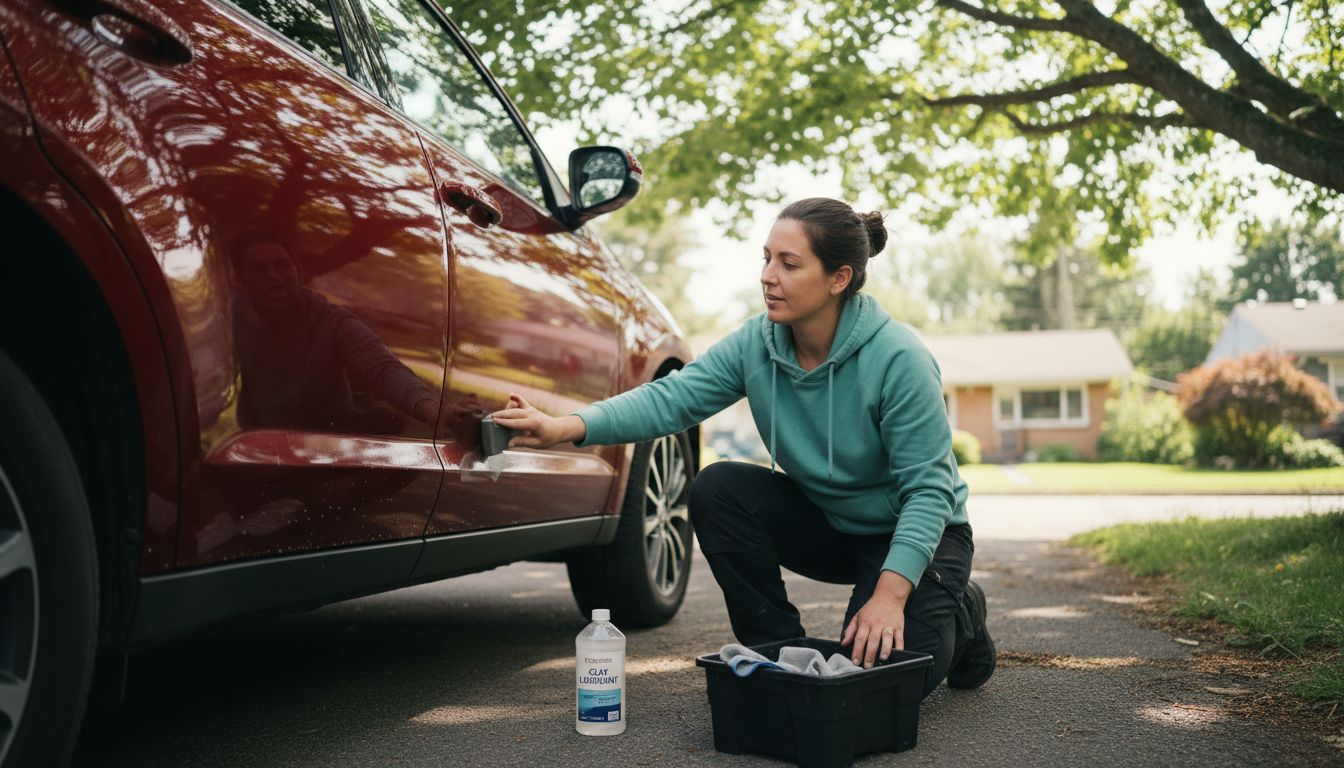
Use medium clay bars for routine maintenance every 6 to 12 months. They’ll tackle brake dust, light fallout, and environmental contaminants without requiring extreme caution.
This is what most professional detailers recommend for standard vehicles that see regular driving but aren’t subjected to extreme conditions.
Heavy or Aggressive Clay Bars: For Severe Contamination
Heavy clay bars contain more abrasive properties designed to combat severe surface contamination. These tackle stubborn overspray, heavy industrial fallout, and years of accumulated bonded contaminants.
However, aggressive clay bars demand careful technique. Excessive pressure or extended contact can scratch or dull the clear coat if you’re not experienced.
Heavy clay bars suit severe contamination situations but require controlled application and proper lubrication.
Quick Comparison Chart
| Clay Bar Type | Best For | Frequency | Caution Level |
|---|---|---|---|
| Soft | Light contamination, delicate paint | Every 12 months | Low |
| Medium | Routine maintenance | Every 6-12 months | Low |
| Heavy | Severe fallout, overspray | As needed | High |
Matching Clay to Your Situation
If you’re unsure which clay bar type suits your vehicle, consider your driving environment. Highway commuters in South Jersey encounter more brake dust and industrial fallout than local surface street drivers.
When in doubt, start with medium clay. You can always upgrade to heavy clay if needed, but you cannot undo damage from using clay that was too aggressive.
Selecting the correct clay bar type prevents unnecessary paint damage while ensuring complete contamination removal.
Your vehicle’s paint condition and contamination level should guide your choice, not brand popularity or cost alone.
Pro tip: Start with a test patch on an inconspicuous area before committing to your entire vehicle—this confirms the clay bar works safely with your specific paint type.
Key Benefits for Professional-Grade Results
Detailing clay delivers results that go beyond what traditional washing alone can achieve. When you use clay properly, you’re investing in paint restoration that shows immediately and lasts through future treatments.
Superior Contamination Removal
Clay bars remove embedded particles that regular washing leaves behind. Clay minerals effectively remove brake dust, industrial fallout, and overspray that bond to your clear coat over time.
These contaminants don’t just look bad—they actively degrade your paint’s protective qualities. Once removed, your finish breathes again.
Restored Paint Smoothness
After clay treatment, your paint surface feels noticeably smoother. This isn’t cosmetic; the fine structure of clay conforms to microscopic irregularities, creating a genuinely cleaner surface.
Smooth paint reflects light more evenly, which is why vehicles look glossier and more vibrant immediately after clay treatment. Light no longer scatters across rough contaminated surfaces.
Enhanced Gloss and Clarity
Once contaminants are removed, your paint’s true color returns. The gloss appears richer because light reflection is no longer blocked by bonded particles.
This clarity improvement happens before any polish or wax is applied. You’re simply revealing what’s underneath the contamination layer.
Preparation for Protective Coatings
This is where clay’s real value emerges for busy South Jersey professionals. A clay-treated surface accepts ceramic coatings, waxes, and sealants far more effectively.
Proper surface preparation with clay means:
- Coatings bond more securely to the paint
- Protective products last significantly longer
- Water beading and sheeting improves noticeably
- Results look more professional and polished
Skipping clay before applying protective treatments wastes product and reduces longevity.
Prevention of Future Damage
Removing bonded contaminants prevents them from causing deeper paint damage over time. Brake dust contains iron particles that can oxidize and etch into clear coat if left untreated.
Industrial fallout and tree sap similarly deteriorate paint when left bonded to the surface. Clay removal stops this degradation cycle before it accelerates.
Professional Results Without Professional Pricing
Mobile detailing services in South Jersey use clay as a standard step because it delivers measurable, visible improvements. The technique requires practice but no expensive equipment.
Clay detailing creates the perfect foundation for all subsequent paint protection and enhancement products.
You’re not paying for a mysterious process; you’re paying for the knowledge of which clay bar to use and the technique to apply it safely.
The Compounding Effect
Claying prepares your paint for the next step. Whether that’s polishing, ceramic coating, or premium wax, clay ensures maximum effectiveness.
Over a year, this compounds. A properly prepared surface with quality protection outlasts rushed detailing that skips the clay step entirely.
Pro tip: Schedule clay treatment before applying any ceramic coating or paint protection film—this maximizes bonding strength and extends your investment’s lifespan.
Common Mistakes and How to Avoid Them
Clay detailing requires proper technique. Small mistakes compound quickly, turning a beneficial treatment into potential paint damage. Learn what professionals watch for to keep your finish protected.
Skipping or Skimping on Lubrication
This is the biggest mistake. Without adequate lubricant, clay grips the paint instead of gliding smoothly, causing scratches or dull spots. Proper lubrication prevents the clay from sticking and damaging paint during application.
Always apply lubricant generously to each section before introducing the clay bar. Re-apply lubricant frequently. Skimping here defeats the entire purpose of using clay.
Using Clay That Is Too Aggressive
Choosing heavy clay for light contamination is overkill. You risk unnecessary abrasion and potential clear coat damage when a softer option would work.
Match your clay bar type to your contamination level:
- Light contamination: soft clay
- Typical maintenance: medium clay
- Heavy fallout: heavy clay only
When unsure, default to softer clay and make additional passes rather than risk damage.
Applying Uneven Pressure
Too much pressure in one spot causes scratches. Too little pressure leaves contaminants behind. Consistent, gentle pressure across each section is essential.
Think of it like a paint roller—smooth and even, not pressing down hard. Let the clay’s adhesive properties do the work; your hands guide, not force.
Reusing Contaminated Clay
Dirty clay embeds contaminants back into your paint. Failing to knead clay properly or reuse contaminated clay causes scratches and embeds debris rather than removing it.
Always knead your clay to expose a fresh surface between sections. Fold it regularly to keep a clean side facing your paint. Once clay becomes visibly dirty, discard it.
Working Too Fast
Rushing through sections means you miss contamination and lose control of pressure. Clay detailing requires patience, not speed.
Work in small 2×2 foot sections. Give each area proper attention. Take breaks if your hand gets tired—fatigue leads to poor technique and potential mistakes.
Neglecting Manufacturer Instructions
Each clay bar brand has specific recommendations for lubrication type and pressure. Ignoring these instructions leads to incompatibility issues or technique problems.
Read the instructions before opening the clay bar. Some products pair with specific lubricants that work better than generic options.
Proper clay technique means consistent pressure, adequate lubrication, and clean clay surfaces throughout the process.
You cannot rush clay detailing. The process itself prevents mistakes when you work methodically and patiently.
Use this table to identify the main mistakes when claying and their prevention tips:
| Common Mistake | Outcome | How to Prevent |
|---|---|---|
| Insufficient Lubrication | Scratches or dull paint | Use generous lubricant |
| Aggressive Clay on Soft Paint | Unnecessary clear coat damage | Match clay type to paint needs |
| Reusing Dirty Clay | Swirls, embeds new contaminants | Knead/fold often, replace clay |
| Working Too Quickly | Missed contaminants and uneven results | Work slowly in small sections |
Common Setup Mistakes
Working in direct sunlight causes lubricant to dry too quickly. Working in cold temperatures makes clay stiff and harder to control.
Ideal conditions are mild temperature and shade. Plan your clay session for morning or late afternoon when conditions cooperate.
Pro tip: Test your technique on a hidden panel like the gas door first—this builds confidence and prevents accidents on visible surfaces before committing to your entire vehicle.
Comparing Detailing Clay With Other Solutions
Detailing clay isn’t the only way to clean your paint, but it stands apart from other methods. Understanding how clay compares to alternatives helps you choose the right approach for your vehicle’s needs.
Clay vs. Regular Car Washing
Your weekly car wash removes loose dirt and surface contaminants. It cannot touch bonded particles that have fused to your clear coat over weeks or months.
Washing leaves behind:
- Industrial fallout particles
- Brake dust buildup
- Tree sap residue
- Overspray deposits
- Oxidation marks
Clay tackles what washing cannot. This is why professional detailers always use clay before applying protective treatments.
Clay vs. Chemical Cleaners
Chemical paint cleaners dissolve certain contaminants, but they’re inconsistent. Some particles dissolve; others remain bonded to the paint surface.
Chemical cleaners may not remove bonded particles effectively compared to clay’s mechanical removal method. Chemicals also often require multiple applications and stronger formulations that can affect your clear coat.
Clay removes contaminants physically, guaranteeing complete removal in one pass when done correctly.
Clay vs. Machine Polishing
Machine polishing removes a thin layer of paint along with contaminants. This works, but it permanently reduces your clear coat thickness.
Repeat machine polishing multiple times over your vehicle’s life, and you’ll eventually compromise the protective layer. Your paint becomes thinner, less protective, and more vulnerable to future damage.
Detailing clay provides surface preparation without removing paint, preserving your clear coat’s integrity and extending its lifespan.
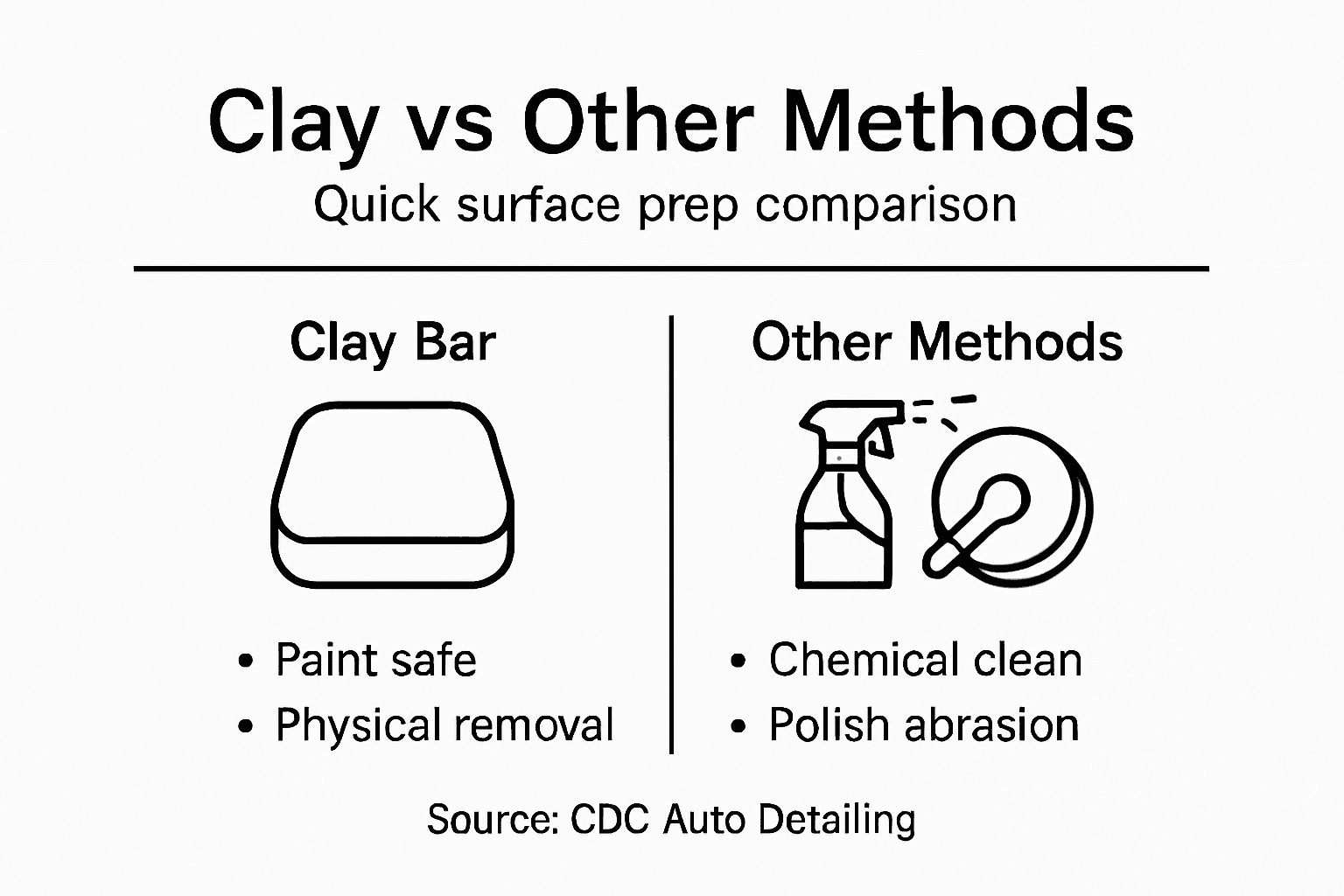
Clay is the gentler option that achieves professional results without sacrificing paint thickness.
Here’s how detailing clay compares to other common paint-cleaning methods:
| Method | Paint Preservation | Contaminant Removal | Time Efficiency |
|---|---|---|---|
| Detailing Clay | Does not remove paint | Removes bonded particles | 30-45 minutes per vehicle |
| Chemical Cleaners | May affect clear coat | Dissolves some particles | Varies, often repeated |
| Machine Polishing | Removes thin paint layer | Removes via abrasion | 60+ minutes, more steps |
| Compounds & Polishes | Removes micro-layer | Corrects defects | 60+ minutes with prep |
Clay vs. Compound and Polish
Compounds and polishes smooth the paint surface by removing a micro-layer. They’re designed for correcting swirls, scratches, and oxidation.
Clay doesn’t correct paint defects—it removes contamination. For vehicles with bonded contaminants but no paint damage, clay alone is the right choice.
If your paint has both contamination and visible defects, use clay first, then polish. The two work together, not as replacements.
The Efficiency Factor
Clay works fast. A trained person can clay a full vehicle in 30 to 45 minutes. Most other methods take significantly longer or require multiple applications.
For busy South Jersey professionals, clay detailing offers maximum results with minimal time investment. This efficiency extends to cost as well.
When to Choose Clay Alone
Use clay when your paint is contaminated but not damaged. The surface doesn’t have swirls, scratches, or oxidation—just bonded contaminants.
This describes most vehicles that receive regular washing. Clay addresses your actual problem without unnecessary additional steps.
Detailing clay removes bonded contaminants without paint removal, making it the safest and most efficient maintenance option.
You’re not paying for overkill solutions. You’re paying for the exact treatment your paint needs.
When to Combine Methods
If your paint has both contamination and damage, start with clay. Then follow with machine polishing if swirls or scratches are visible.
This sequence respects the paint: clean it first, then correct it. Skipping clay wastes polish and extends the correction process.
Pro tip: Use clay as your go-to maintenance treatment every 6 to 12 months, then add polish or machine correction only when you notice visible paint defects between clay sessions.
Unlock a Flawless Finish with Professional Detailing Clay Services
The article highlights the challenge of removing bonded contaminants like industrial fallout and brake dust that regular washing simply cannot eliminate. Achieving a truly smooth, glossy paint surface requires the right clay bar type combined with expert technique and proper lubrication. Without this, paint damage or uneven results can occur. If you want your vehicle to feel and look its absolute best across South Jersey roads, addressing these hidden contaminants is essential.
At CDC Auto Detailing, we specialize in precisely this step of paint preparation. Our mobile services in Pitman, New Jersey offer expert clay bar treatments tailored to your vehicle’s paint sensitivity and contamination level. This ensures a pristine surface ready for ceramic coatings or paint protection film that will last longer and perform better. Experience superior gloss, enhanced clarity, and paint protection built on a flawless foundation.

Discover how our skilled team can bring out the true brilliance of your vehicle’s finish by visiting our professional mobile detailing services. Take control of your car’s appearance today and schedule your clay detailing appointment with CDC Auto Detailing. Don’t wait for contaminants to dull your paint. Act now to protect your investment and enjoy a mirror-like finish that turns heads every time.
Frequently Asked Questions
What is detailing clay and how does it work?
Detailing clay is a specialized tool made of clay minerals designed to remove bonded contaminants from your vehicle’s paint surface that regular washing cannot remove. It works by gliding over the lubricated surface, lifting away particles like industrial fallout, brake dust, and tree sap.
How do I properly use a clay bar on my car?
To use a clay bar effectively, first wash your vehicle to remove loose dirt. Then, apply a clay lubricant to a small section of the paint. Gently glide the clay bar across the lubricated area with light pressure, folding it to expose fresh surfaces regularly. Finally, wipe the area with a microfiber towel before moving on to the next section.
What are the different types of clay bars and when should I use them?
Clay bars come in three main types: soft, medium, and heavy. Soft clay is best for delicate or newer paint with light contamination. Medium clay is suitable for routine maintenance, while heavy clay is designed for severe contamination such as heavy overspray or industrial fallout. Choose based on the level of contamination and the sensitivity of your vehicle’s paint.
Why is it important to use detailing clay before applying protective coatings?
Using detailing clay before applying protective coatings ensures that the paint surface is completely clean and smooth, allowing the coatings to bond effectively. This improves their longevity, enhances their performance, and helps achieve a high-quality, professional finish.