
Most car window tint lasts somewhere between 5 and 15 years, and the film itself is the biggest reason for the gap. Kelley Blue Book reports that standard aftermarket tint lasts up to five years, while high-quality multiple-ply ceramic film can last 10 to 15 years. Installation quality, sun exposure and how you clean the glass decide where your car lands inside that range.
This guide explains what to expect from each type of film, why tint fades or turns purple, how to spot a failing film before it becomes an eyesore, and what to do in the first days after installation so the film gets the best possible start.
TL;DR
- Standard tint lasts up to about five years. Higher-quality ceramic film can last 10 to 15 years.
- Film type, installation quality, sun exposure and cleaning habits all change the real number. Age alone does not tell you when to replace tint.
- Purple color, bubbling, peeling edges and haze are the signs of a film that is failing.
- Skip ammonia cleaners and abrasive cloths, and leave the windows alone during the cure period.
- A carbon or ceramic film installed carefully is the long-life choice for most daily drivers in South Jersey.
Table of Contents
- How long window tint lasts by film type
- What decides how long your tint lasts
- Does window tint fade?
- Signs your window tint is failing
- How to make window tint last longer
- What we think about tint lifespan
- Choosing a film built to last
- Book window tinting in South Jersey
- FAQ
- Sources
How long window tint lasts by film type
There is no single number, and any page that gives you one is simplifying. What you can say is that cheaper dyed film sits at the short end and carbon and ceramic films sit at the long end. Here is how the main sources line up.
| Film | Typical lifespan | Source |
|---|---|---|
| Standard aftermarket tint | Up to 5 years | Kelley Blue Book |
| High-quality multiple-ply ceramic | 10 to 15 years, often with a lifetime warranty | Kelley Blue Book |
| Carbon and ceramic films | Upwards of 5 to 10 years | Madico |
| Lower-quality film | Color fading within months in some cases | Madico |
Two things stand out. First, the spread inside each category is wide, because a film is more than its label. A well-made film of a simpler type can outlast a poorly made premium one, which is why the written warranty and spec sheet for the exact film series matter more than the category name. ARI recommends treating the manufacturer’s warranty and care instructions for the specific film as your reference point, not a general rule of thumb.
Second, the figures describe typical service life, not a promise. Treat them as planning ranges. If a shop quotes you a lifespan, ask which film series it is and what the warranty says about fading, bubbling and peeling.
Dyed, carbon and ceramic in plain terms
Dyed film uses dye to absorb light. It is the least expensive option and the one most likely to fade and shift color over time.
Carbon film uses carbon particles in the film rather than relying only on dye. It tends to hold its color better and gives a deeper, matte-looking tint.
Ceramic film uses ceramic particles to block heat and UV without needing to be very dark. It sits at the top of the range for durability and comfort. If you want the details, see our explainer on what ceramic window tint is and why it works, and our look at heat rejection and what it really depends on.
What decides how long your tint lasts
The film is only one piece. ARI explains that the effective service life of automotive window film depends on film construction, environmental exposure, installation quality and maintenance habits. Here is what each of those means for a car that lives outdoors in New Jersey.
Film quality and construction
A better film has better dyes or particles, better adhesive and a protective layer that resists scratches and UV. You cannot see most of this on the sample card, so the brand, the series and the warranty are your clues. Our two GeoShield options, carbon and ceramic, are described further down.
Installation quality
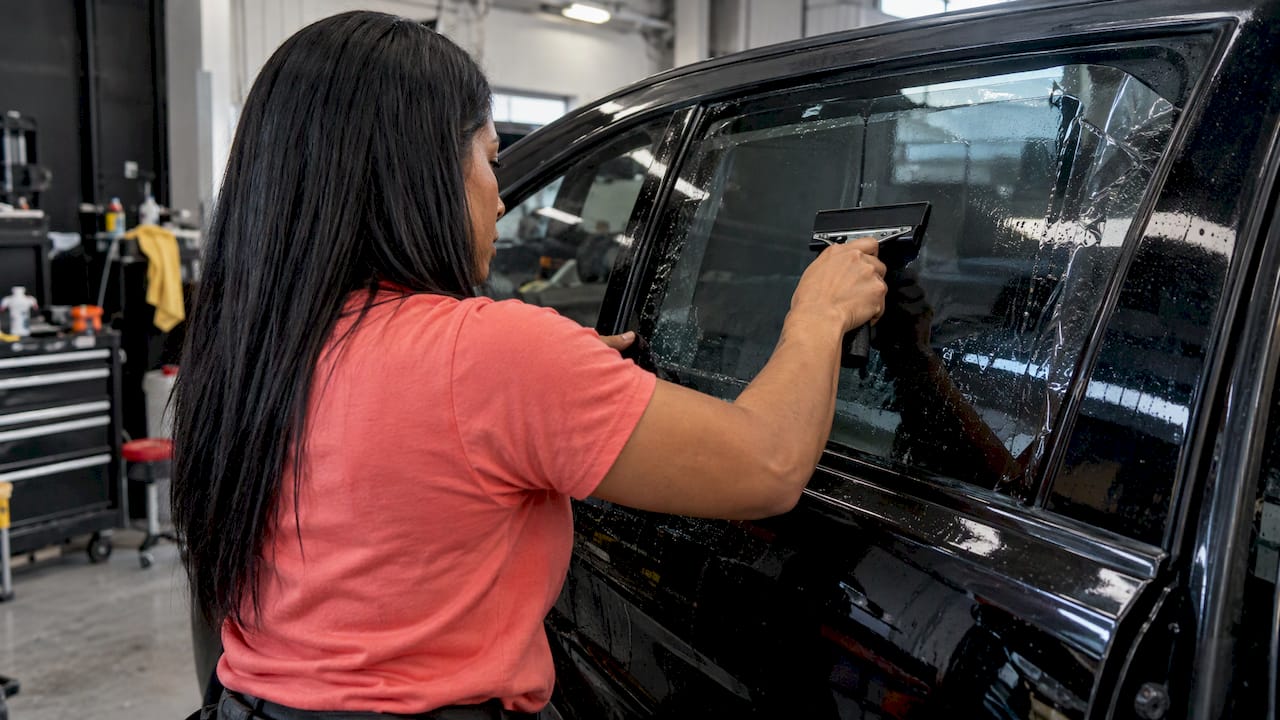
Installation is where many early failures begin. Dust trapped under the film, poor glass prep, edges that are not sealed cleanly and uneven squeegee work can all show up months later as bubbles, lifted corners or hazy patches. A clean, controlled application is part of what you pay for, and it is one reason a mobile installer who prepares the glass carefully and works methodically is worth more than the cheapest quote.
Sun exposure and parking habits
UV and heat age tint. A car parked outside all day, every day, takes more punishment than one that sleeps in a garage. Windows that face the sun for most of the day, such as the driver side in a west-facing driveway, see the most exposure. You cannot change the sun, but you can park in shade or a garage when it is practical, and you can choose a film built for UV and heat resistance. For more on how film handles sunlight, read our guide to window tint UV protection.
Cleaning and maintenance
How you clean matters every week for the life of the film. Ammonia-based glass cleaners and rough towels are the usual culprits. We cover the safe routine below.
Does window tint fade?
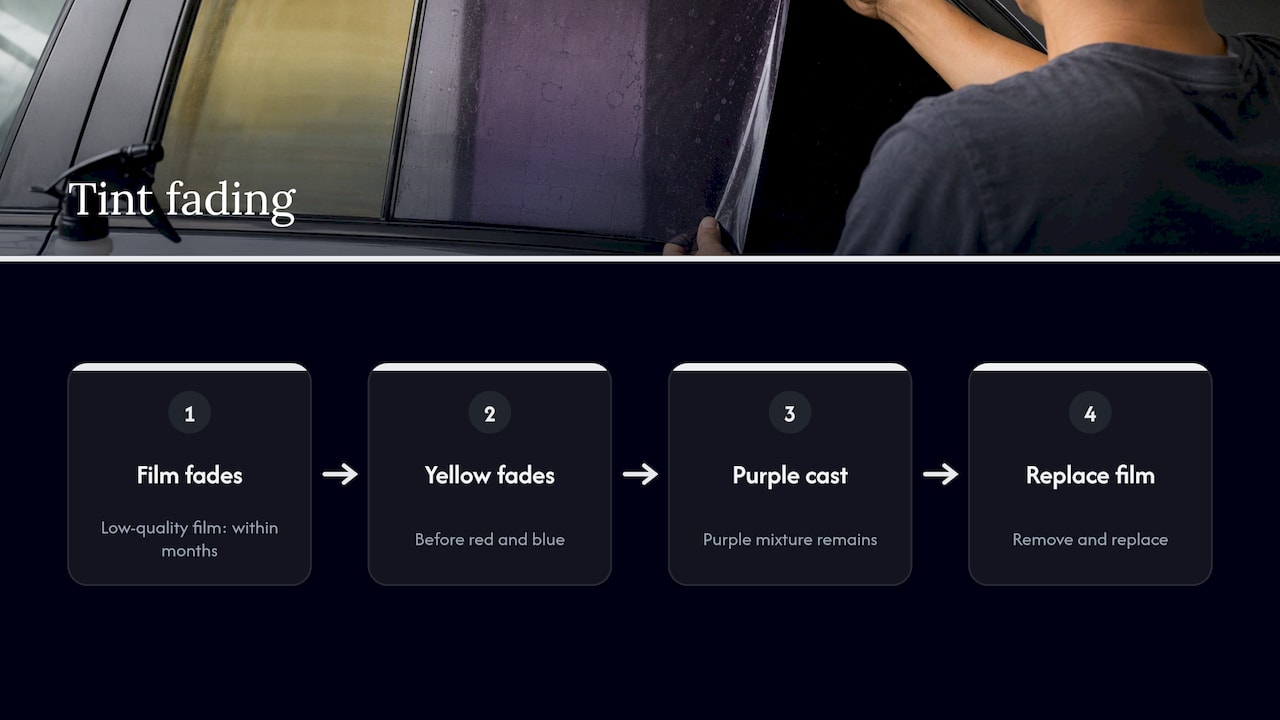
Yes, tint can fade, and the speed depends mostly on the film. Lower-quality film can show color fading within months, according to Madico, while better-quality films hold their color far longer.
The familiar purple look comes from the dyes. As Madico describes it, the yellow dye in dyed film is more volatile than the red and blue pigments, so it fades first and leaves a purple mixture behind. Quality manufacturers match the fade rates of the individual dyes so all the colors fade slowly together. This is a big part of why carbon and ceramic films are popular with owners who want the tint to look the same in year seven as it did on day one.
A purple cast does not clean off and does not polish out. Once the film itself has changed color, the fix is removal and replacement. If you are dealing with that now, our guide to safe tint removal on rear windows explains why scraping and heat guns go wrong, and why rear glass with defroster lines needs particular care.
Signs your window tint is failing
Do not judge by age alone. ARI advises having an installer inspect bubbling, edge lift, haze or color change instead of replacing film just because it has passed a certain number of years. These are the signs worth looking for.
- Purple or brownish color. The dye is breaking down. This is the clearest sign of a film at the end of its life.
- Bubbles or blisters. Small bubbles in the first days are normal during curing. Bubbles that appear later, or that keep growing, point to adhesive failure or a poor install.
- Peeling or lifting edges. Corners and the edges near the window seals lift first. Left alone, the lift spreads.
- Haze or a milky look. A cloudy film that does not clear is a sign of film or adhesive breakdown.
- Scratches and wear lines. These show up most along the window path where the glass slides in the door, and they are a sign of abrasion rather than UV failure.
- Uneven color between windows. If one pane looks different from the others, check the film and also the glass. Differences in the color of vehicle glass can make the same film look different from one window to the next, and this explanation of color differences in vehicle glass covers the causes.
If you see one early sign and the film is under warranty, take photos and contact the installer before you try to fix anything yourself. Peeling film pulled off the wrong way can leave adhesive residue that takes real work to remove. Our article on what a tint warranty covers and what you must do walks through the cure period and how to protect your coverage.
How to make window tint last longer
Good habits cost nothing and add real years. The first two weeks matter most, and the routine after that is simple.
The first days after installation
Right after installation, a thin layer of application solution stays trapped between the film and the glass. ARI notes that curing can take anywhere from several days to a few weeks, depending on the film type, the weather and the size and shape of the glass. Small hazy patches or water pockets during this time are usually part of the cure. They go away as the moisture evaporates.
For care right after installation, 3M advises that you should avoid winding down the windows for the first 48 hours and wait at least seven days before cleaning. In practice:
- Leave the windows up for at least two days.
- Do not touch, press or pick at bubbles. Do not try to push them out.
- Hold off cleaning the inside of the glass for a full week.
- Expect it to take longer to clear in cool, damp weather, which is common in a New Jersey fall and winter.
Our window tint maintenance plan for the cure period lays out the first 30 days step by step, and if your installation day turns rainy, read what to do about rain after window tinting.
Cleaning tinted windows for the long haul
After the cure, clean tinted glass the gentle way. 3M recommends synthetic sponges, squeegees or a soft cloth rather than abrasive agents. A few rules of thumb:
- Use an ammonia-free glass cleaner or a mild soap-and-water mix.
- Use a clean microfiber towel, and use a different towel for each side of the car so grit does not travel.
- Do not use razor blades or scouring pads on the inside of the glass.
- Be careful with seat belts, bags and tools that can scratch the film near the edge of the glass.
- Keep the inside of the cabin clean, since dirt and sticky residue on the glass tend to get wiped around the film.
A professional interior detail takes care of the glass without the risk of the wrong product. You can see what we offer on our interior detail page.
Parking and heat
When you can, park in a garage or shade. A windshield sunshade does not protect the side and rear glass, but it lowers cabin heat, which is easier on everything inside the car. Do not stack anything against the glass that can trap heat or rub the film.
What we think about tint lifespan
Customers ask us how long tint lasts as if it were a fixed number on a label. It is not. It is the outcome of three decisions you make on day one: the film, the installer and the care routine.
We lean toward carbon and ceramic film for most daily drivers, because the whole point of paying for tint is that it should look the same and keep working for years. A cheap film that purples in year three is not a saving, it is a second tint job. The same goes for installation. Clean glass, careful trimming and a patient cure period are what keep a good film from bubbling.
Because we are a mobile service, we bring the work to your driveway or workplace. That means you do not have to leave your car at a shop, and it means we can talk through the aftercare with you on the spot. We would rather tell you how to leave the windows alone for a week than have you fight bubbles you caused yourself.
Pick the film for the exact series, read the warranty, and treat the glass gently. Do those three things and you are giving the tint the best chance at a long life.
Charles
Choosing a film built to last
If longevity is your goal, the choice usually comes down to carbon or ceramic. We install GeoShield film in both types, and our published prices are as follows.
| Film | Price |
|---|---|
| GeoShield CARBON TINT | $350 |
| GeoShield CERAMIC TINT | $500 |
Carbon is a strong value for owners who want a durable, good-looking tint. Ceramic is the pick if heat rejection and comfort are priorities along with longevity, which is common for commuters, families with kids in the back seat and anyone who parks outside through a South Jersey summer. For a broader view of what tint costs and what drives price, see our 2026 window tinting pricing guide. For a reminder of why the investment pays off, read the real benefits of tinting car windows.
Whatever film you choose, keep the paperwork from your installation, because the warranty terms for the film you chose are what you rely on if something goes wrong.
Book window tinting in South Jersey
We are a mobile detailing and protection service based in Pitman, New Jersey, and we serve vehicle owners across South Jersey. If you want tint installed with the cure period explained and the care routine laid out in advance, our window tinting page lists the GeoShield carbon and ceramic options. We come to you, so you can schedule the appointment around your day.

If you are also thinking about paint and interior protection at the same visit, you can see our detail packages and ceramic coating options, and ask about combining services when you book.
FAQ
How long does window tint last on a car?
Standard aftermarket tint lasts up to about five years, and high-quality multiple-ply ceramic film can last 10 to 15 years, according to Kelley Blue Book. Your result depends on the film, the installation, sun exposure and how you clean it. The manufacturer’s warranty for the exact film is the best guide.
Does window tint fade over time?
It can. Lower-quality dyed film can show color change within months, and the common result is a purple cast as the dyes break down, per Madico. Carbon and ceramic films are designed to hold their color for longer. Faded purple film cannot be cleaned or repaired, only replaced.
When should I replace my window tint?
Replace it when you see purple color, persistent bubbling, peeling edges or haze that does not clear, rather than going by age alone. ARI suggests having an installer inspect the film. If it is still under warranty, contact the installer before attempting any repair.
How should I clean tinted windows?
Wait at least seven days after installation, then use a synthetic sponge, a squeegee or a soft cloth, as 3M advises. Avoid abrasive products. Ammonia-free glass cleaner and a clean microfiber towel are the safe everyday choice.
Sources
- Car Window Tinting: 7 Things You Need to Know, Kelley Blue Book
- Does Car Window Tint Fade Over Time? Madico
- Automotive Window Film Care and Lifespan Guide, ARI
- Car Window Tint After Installation Care, 3M
- Écart de teinte sur un vitrage auto : causes et solutions