
Premium window films carry an abrasion-resistant top coat and hold up well under laboratory testing standards like ASTM D1044, but no film is truly scratch-proof. The difference between a tint that lasts a decade and one that looks ruined in a year comes down to film grade, installation quality, and how you clean it. Pick a higher-grade film, respect the cure period, and keep abrasive contact away from the surface.
TL;DR:
- Premium films typically resist haze buildup of less than 5% after standardized abrasion tests, indicating strong scratch resistance under uniform conditions.
- Most scratches on tinted windows originate from routine contact with jewelry, seatbelts, pet claws, or improper cleaning, not the film itself.
- The top coat quality, not the film’s ceramic content, determines scratch durability, with thicker safety films generally offering better resistance.
- Proper cleaning routines, including waiting at least 48 hours for curing and using microfiber and pH-neutral cleaners, significantly reduce chance of surface damage.
- Light surface haze may sometimes be softened with gentle polishing, but deep scratches require professional repair or tint replacement to avoid further damage.
Table of Contents
- What scratch resistance actually means in lab terms
- What actually causes most tint scratches
- How film type changes how well tint resists scratching
- Cleaning and maintenance that actually prevent scratches
- Do scratch repair kits and polishes actually work
- When a scratch means it’s time to replace the tint
- What installers do differently to prevent scratches
- How CDC Auto Detailing handles tint durability and care
- Primary sources on tint testing, care, and durability
- Sources
- FAQ
What scratch resistance actually means in lab terms
Scratch resistance in window film is not measured by how hard the surface feels. It is measured by how much haze builds up after controlled abrasion, since haze is what actually ruins visibility and clarity over time.
The industry standard is ASTM D1044, which uses a Taber Abraser fitted with a CS10F wheel and a 500 gram weight. The wheel runs 50 cycles across the film’s surface, and technicians then measure the change in transmitted light haze before and after.
- The test isolates surface durability from tint darkness or color.
- Results are reported as a percentage increase in haze, not a pass or fail grade.
- Lower haze increase means the coating resists micro-scratching better under repeated contact.
Premium automotive films often show less than a 5% haze increase under these test conditions, a threshold reflected in 3M’s own technical data sheet for its Safety S70 film. That number matters because it tells you the coating was engineered for durability, not just tint appearance. Lab results predict how a film behaves under uniform, repeated abrasion. They do not account for a single sharp key dragged across glass or a dog’s claw catching an edge, which is why real-world care still decides how long your tint looks new.
What actually causes most tint scratches
Most scratches on tinted windows trace back to habits, not bad film. Interior contact tends to happen without anyone noticing until the damage is done.
- Jewelry, belt buckles, and keys brushing against the glass while getting in or out of the vehicle.
- Seatbelt friction across the top edge of rear windows during repeated buckling.
- Pet claws scratching at partially lowered windows.
- Rough shop towels or paper products used instead of soft microfiber during cleaning.
Exterior damage usually comes from the car wash, not the road. Automated brush washes drag grit across the film, and pressure washers held too close or at the wrong angle can lift edges or abrade the surface. Installation errors add a third category entirely: debris trapped under the film during application, cuts made with a dull blade, or nicks at the corners where the installer trimmed too close to the seal.
Pro Tip: Keep one microfiber towel for the inside of your windows and a completely separate one for the outside. Cross-contaminating the two is one of the most common causes of fine swirl scratches.
How film type changes how well tint resists scratching
Every automotive window film shares the same basic construction: a polyester base layer, an abrasion-resistant top coat, and an adhesive layer that bonds to the glass. The top coat is what actually determines scratch performance, and it varies significantly between film categories.
- Dyed film is the most affordable option and typically carries the thinnest hard coat, making it the most prone to visible scratching over time.
- Carbon film adds a matte finish and improves heat rejection, with moderate scratch resistance depending on the manufacturer’s coating formula.
- Ceramic film is built around heat-rejecting ceramic particles, not a thicker scratch coat. It performs well against fading and heat, but scratch resistance depends on the specific top coat the manufacturer applies, not the ceramic content itself.
- Safety and security films are thicker overall and often paired with the same abrasion-resistant coatings validated under ASTM D1044, giving them strong resistance to everyday wear.
- Anti-graffiti films, such as those detailed in Avery Dennison’s technical datasheet, are engineered as sacrificial layers that wipe clean of paint and marker but still cannot withstand deep gouges or persistent grit abrasion.
The takeaway for buyers: “ceramic” is a marketing shorthand for heat performance, not a scratch guarantee. If scratch durability is your top priority, ask specifically about the film’s abrasion-resistant coating and its ASTM test results, not just its ceramic content.
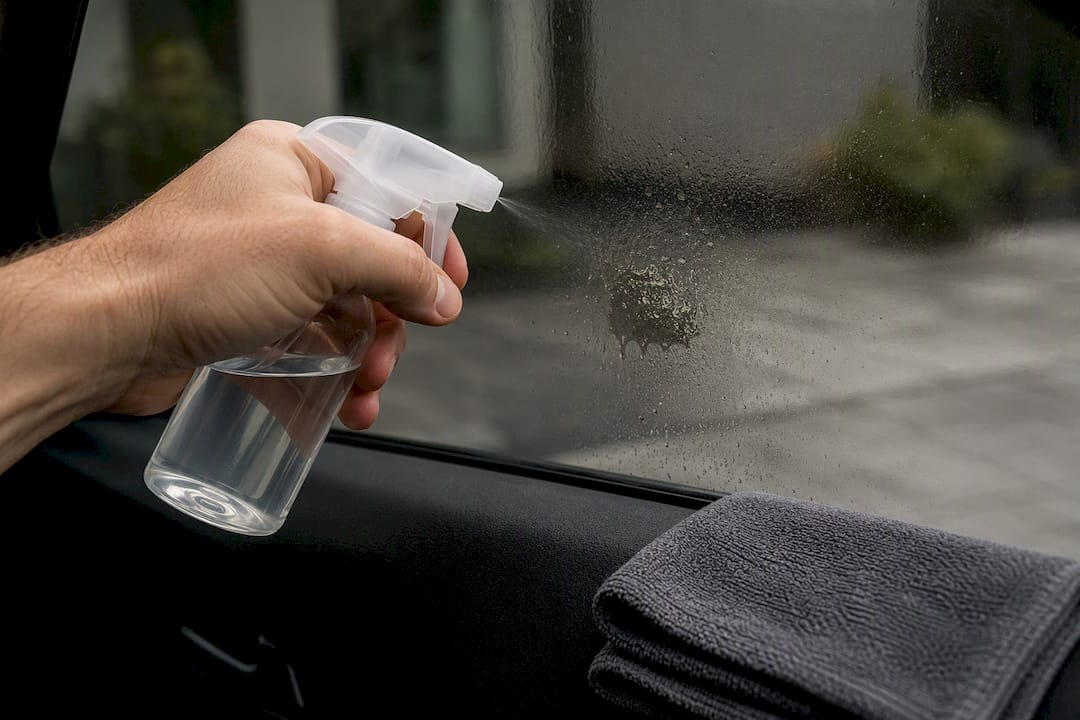
Cleaning and maintenance that actually prevent scratches
Most scratch damage is preventable with the right routine, starting before you ever touch the glass.
- Respect the cure window. 3M recommends waiting at least 48 hours before operating or cleaning tinted windows, and some products call for up to 72 hours depending on climate and film type.
- Use dedicated microfiber towels, one set for interior glass and a separate set for exterior glass, to avoid transferring grit between surfaces.
- Clean with pH-neutral solutions rather than ammonia-based glass cleaners, which can degrade the film’s adhesive and coating over time.
- Dry with a squeegee moving in one direction to prevent water from pooling at the edges, where it can seep under the film and affect the adhesive.
- Soak tough contaminants like bug residue or tree sap before wiping, rather than scraping them off dry.
Avoid abrasive sponges, scouring pads, razor blades, and newspaper entirely. Newspaper in particular carries fine grit from the printing process that can leave micro-scratches you will not notice until they catch the light. A monthly clean using this routine keeps most films looking new well past the point where careless owners start seeing haze.
Pro Tip: If you must remove something stuck to the film, soak it with your cleaning solution for a full minute before touching it. Patience beats pressure every time.
Do scratch repair kits and polishes actually work
Light surface haze sometimes responds to careful treatment, but the margin for error is narrow. According to Consumer Reports’ hands-on testing of window films, small superficial haze marks can sometimes improve with a very fine abrasive polish applied gently by hand or machine, though improper technique often makes haze worse and can void a manufacturer’s warranty.
- Specialized tint scratch kits are designed for this exact use case and typically include a fine polish and application pad, used with light pressure in small sections.
- Automotive paint polish is not formulated for window film and can strip the top coat faster than it removes the scratch.
- Toothpaste and similar household remedies are mild abrasives at best. They may mask a hairline scratch temporarily but carry real risk of spreading haze across a wider area.
None of these fixes a deep scratch that has cut through the top coat into the base film. If you see delamination, bubbling around the damaged area, or the scratch catches a fingernail, stop trying to repair it yourself. At that point you are looking at a professional consultation, and attempting an aggressive DIY fix will likely void whatever warranty coverage remains.
When a scratch means it’s time to replace the tint
Not every scratch is worth worrying about, but a few signs mean repair is not realistic.
- Cosmetic haze that does not obstruct visibility is usually fine to leave alone or treat lightly.
- Scratches directly in the driver’s line of sight are a safety issue regardless of severity and justify replacement.
- Edge lifting or delamination signals the adhesive bond has failed, and no amount of polishing addresses that.
- Deep gouges that expose the adhesive layer or cause visible staining will only get worse with time.
Installers checking a film for warranty claims typically look at exactly these points, following visual inspection standards similar to those laid out in the IWFA’s automotive inspection guidelines. A well-maintained premium film with a solid abrasion-resistant coating can reasonably last the life of the vehicle. Neglect, harsh cleaning tools, or a poor install cut that lifespan dramatically.
What installers do differently to prevent scratches
Professional installers reduce scratch risk in ways that are easy to overlook from the outside. They work in a controlled, dust-free environment, use the correct slip solution to float the film into place without dragging debris underneath, and leave a small, deliberate edge gap on safety films rather than trimming flush to the frame, a practice reflected in IWFA’s own installation guidance.
- Ask an installer what abrasion-resistant coating their film uses and whether it has published ASTM D1044 results.
- Ask what their post-install cure and cleaning instructions are, and get them in writing.
- Ask how they inspect the film in daylight after the adhesive sets, and what defects they consider acceptable versus a redo.
Experience shows up in the details: the right tools, the right slip solution, and clear care instructions handed to the customer afterward. Skipping any of those steps is usually where early scratching and edge problems start.
— Charles
How CDC Auto Detailing handles tint durability and care
Choosing the right film matters, but so does who installs it. Some professional installers offer tint options with attention to durability, installing with clean-environment practices and providing post-install care instructions.

- GeoShield tints are installed with attention to edge gaps and debris control to avoid the trapped-particle scratches common with rushed jobs.
- Customers get clear cure-time and cleaning guidance after installation, matching the care routine outlined earlier in this article.
- Pairing tint with a ceramic coating package adds extra protection against contaminants that can otherwise scratch or stain other parts of the vehicle.
If you want tint that holds up to daily driving without babysitting it, start with our window tinting page to compare GeoShield options, or check our detail packages if you are bundling tint with a full detail. Serving vehicle owners across South Jersey, CDC Auto Detailing books mobile appointments directly through the site.
Primary sources on tint testing, care, and durability
- ASTM D1044 test summary: explains the Taber Abraser method behind scratch resistance ratings.
- 3M product care guidance: official post-install cleaning and cure instructions.
- IWFA inspection guidelines: installer-level visual inspection and defect standards.
- Consumer Reports window film testing: independent, hands-on evaluation of installed film performance.
Sources
- 3M™ Safety & Security Window Film Safety S70 technical data sheet
- 3M | How To Protect Your Vehicle after Tinting, PPF or Wrapping?
- IWFA automotive visual inspection guidelines
- Consumer Reports — Best window films
FAQ
Is there scratch-proof window tint available?
No film on the market is truly scratch-proof. Premium films with abrasion-resistant top coats, including those tested under ASTM D1044, resist everyday wear far better than basic dyed films, but sharp objects and grit can still damage any tint.
How bad is 20% tint at night?
Darker tints reduce the amount of light reaching your eyes, which can make it harder to see in low-light conditions compared to lighter or untinted glass. The tradeoff varies by driver and vehicle, so checking your local tint law limits before installation is worth doing regardless of the percentage you choose.
What are the downsides of ceramic tint?
Ceramic tint costs more than dyed or carbon film and its scratch resistance depends on the specific top coat used, not the ceramic particles themselves, so it is not automatically more scratch-resistant. It also does not fully eliminate glare the way some buyers expect from its heat-rejection reputation.
Can you buff out scratches on tinted windows?
Very light, superficial haze sometimes improves with a fine abrasive polish applied carefully, a technique noted in Consumer Reports’ testing. Deeper scratches that reach the base film cannot be buffed out and typically require replacing the tint.