
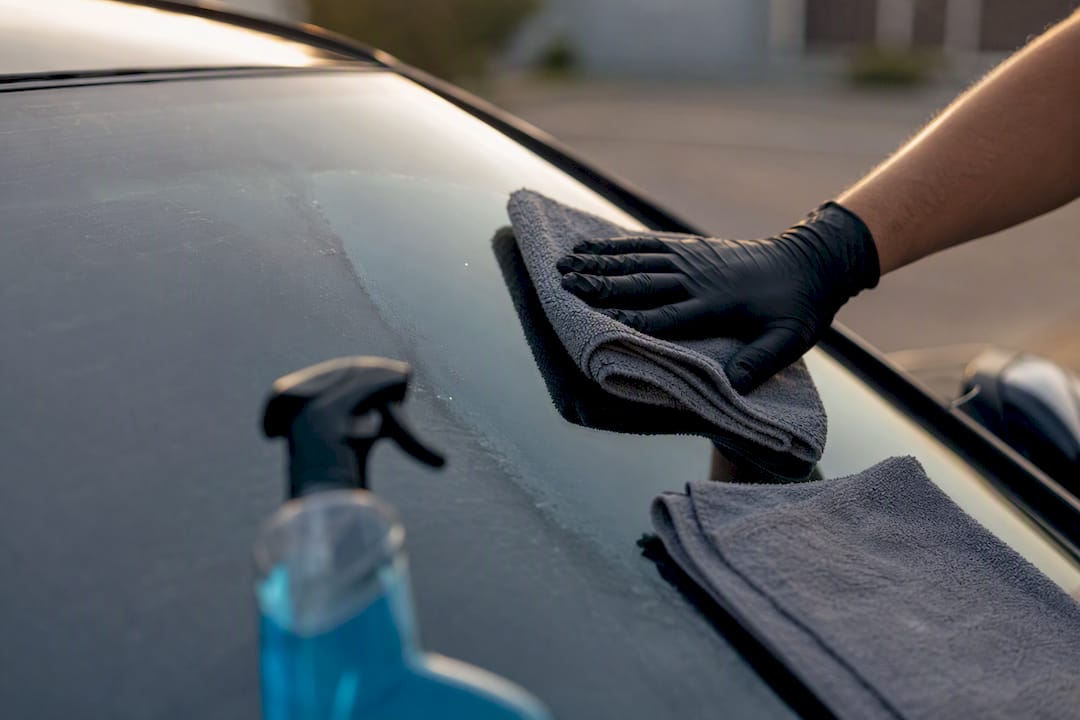
If your windshield looks foggy even after the defroster runs, you’re dealing with a film problem, not a glass problem. Figure out whether the haze sits on the inside or the outside, then treat it with an ammonia-free glass cleaner and the two-towel method. For stubborn interior film, add a pass of 70% isopropyl alcohol before you polish it clear.
Do this now:
- Wipe a small patch with a dry microfiber towel. If it comes away oily and gray, that’s interior film.
- Check the glass from the passenger seat at an angle, with sun behind you. Streaks or a hazy sheen confirm the diagnosis.
- Grab an ammonia-free cleaner and a clean microfiber towel before you touch the glass at all.
Pro Tip: Never spray cleaner straight onto the windshield. It runs down into the dash and A-pillar trim, and you’ll end up chasing drips instead of cleaning glass.
Key Takeaways
Windshield haze removal works best when you diagnose interior versus exterior film first, then clean outside before inside using an ammonia-free cleaner and the two-towel method.
| Point | Details |
|---|---|
| Diagnose before cleaning | Use the angle and dry-wipe tests to confirm whether haze is interior film or exterior residue. |
| Skip ammonia cleaners | Ammonia can damage window tint, so stick to ammonia-free glass cleaners or a vinegar mix. |
| Clean outside, then inside | Removing exterior grime first prevents cross-contamination of your interior glass towels. |
| Use the two-towel method | Clean with a damp microfiber, then immediately buff dry to avoid streaking. |
| Call Cdcautodetailing for etching | When DIY methods stall on scratches or deep film, Cdcautodetailing offers glass polish and decontamination as part of a full detail. |
Table of Contents
- How Do You Tell Interior Haze From Exterior Residue?
- What Cleaners and Tools Actually Work?
- How Do You Clean Windshield Haze Step by Step?
- What If the Haze Won’t Come Off?
- How Do You Stop Windshield Haze From Coming Back?
- Why Does Windshield Haze Keep Forming in the First Place?
- Sources
How Do You Tell Interior Haze From Exterior Residue?
Run three quick checks before you buy a single product. First, the angle test: look at the glass from the driver’s seat with low sun hitting it. A greasy, uneven sheen usually means interior film. Second, try a directional wipe with a dry cloth on both sides. If the haze smears on the inside but not the outside, you’ve isolated it. Third, check the view from the passenger seat at night, since oncoming headlights exaggerate haze glare and confirm how bad the visibility loss really is.
Interior haze is almost always oily plastic residue. Exterior haze is usually mineral deposits, road film, or, in tougher cases, actual etching from wiper blades dragging grit across the glass over time.
- Interior film: greasy to the touch, smears under a dry towel, worse under headlights.
- Exterior residue: rough or gritty feel, doesn’t smear, often paired with water spots.
- Damaged glass: haze that won’t lift with cleaning and shows fine scratch lines when you look at an angle.
Glare from either type is a genuine night-driving hazard, so treat this as a visibility issue, not just a cosmetic one. If you find deep pitting or wiper-track scratches that don’t respond to cleaning, that’s a job for polishing equipment, not a spray bottle.
What Cleaners and Tools Actually Work?
Skip anything with ammonia. It’s fine on old-school clear glass but it can cloud or peel aftermarket window tint over time, and plenty of daily drivers have tint these days.
Stock these instead:
- An ammonia-free automotive glass cleaner, such as Invisible Glass by Stoner or Meguiar’s Perfect Clarity Glass Cleaner.
- 70% isopropyl alcohol for breaking down stubborn oily film.
- White distilled vinegar mixed 50/50 with distilled water as a backup DIY option.
- Low-pile microfiber towels dedicated only to glass, never shared with paint or interior surfaces.
- A spray bottle and, for exterior use, an automotive clay bar for embedded contaminants.
Avoid ammonia cleaners, paper towels (they shed lint and scratch), abrasive scrub pads, and oily dashboard dressings that make the next round of haze worse.
How Do You Clean Windshield Haze Step by Step?
Work outside first following the streak-free method for UK owners. Cross-contaminating your interior towel with road grime is one of the fastest ways to smear haze around instead of removing it, a sequence backed by Nanak Car Wash’s streak-free method.
- Rinse the exterior to knock off loose dirt and grit before any cloth touches the glass.
- Run a finger test across the dry glass to feel for etching or wiper scratches. If you feel ridges that don’t lift with cleaning, note that area for a professional opinion later.
- Clay the exterior if bugs, tar, or mineral deposits remain after washing. A basic automotive clay bar lifts embedded contaminants that soap can’t touch.
- Move inside and start with a damp microfiber towel. Spray your ammonia-free cleaner onto the towel, never the glass, then wipe in straight strokes: vertical for the inside, horizontal for the outside, so you can tell which side any leftover streak is on.
- Immediately buff dry with a second, clean microfiber towel. This two-towel method keeps the cleaner from evaporating on the glass and leaving streaks, a technique detailed by Auto Care Genius’s pro method.
- For greasy film that won’t lift, dampen a towel with 70% isopropyl alcohol, work a small section at a time, then follow immediately with your glass cleaner and dry buff. Alcohol dissolves oils that plain glass cleaner just pushes around.
- Flip your towels often. A saturated towel redistributes grease instead of lifting it.
Expect a reasonable amount of time for a thorough interior and exterior cleaning pass, and under $20 in supplies if you’re starting from scratch. A professional detail covering the same ground typically runs somewhere in the range of a standard interior detailing package, with the advantage of tools and polish compounds most home garages don’t have.
Pro Tip: Work in sections no bigger than a foot square when using alcohol. It evaporates fast, and if you spray too wide an area, you’ll be buffing dry, sticky patches instead of clear glass.
What If the Haze Won’t Come Off?
Some film and residue laughs off a standard cleaning. That doesn’t mean you’re stuck.
- Exterior mineral deposits or bonded contaminants: a clay bar pass, done slowly with plenty of lubricant, usually lifts what washing alone won’t.
- Light etching from wiper blades: a mild automotive glass polish can reduce the appearance, though deep etching is permanent and polish only softens how it catches light.
- Persistent interior film after two cleaning passes: a stronger isopropyl alcohol treatment or a commercial automotive degreaser, used sparingly and buffed immediately, often finishes the job.
Decide DIY versus professional based on three things: how bad the haze actually is, whether you feel scratches or ridges under your fingers, and how comfortable you are running a clay bar without leaving marks. If you’re on your second round of cleaning with no improvement, or you spot actual pitting, that’s the point where a pro’s polishing wheel and glass-specific compounds outperform anything in a spray bottle. Expect a dedicated glass decontamination and polish service to add time and cost on top of a standard detail, but it’s a one-time fix compared to repeated DIY attempts that never quite clear the haze.
How Do You Stop Windshield Haze From Coming Back?
Cleaning solves today’s problem. Prevention is what keeps you from doing this every six weeks.
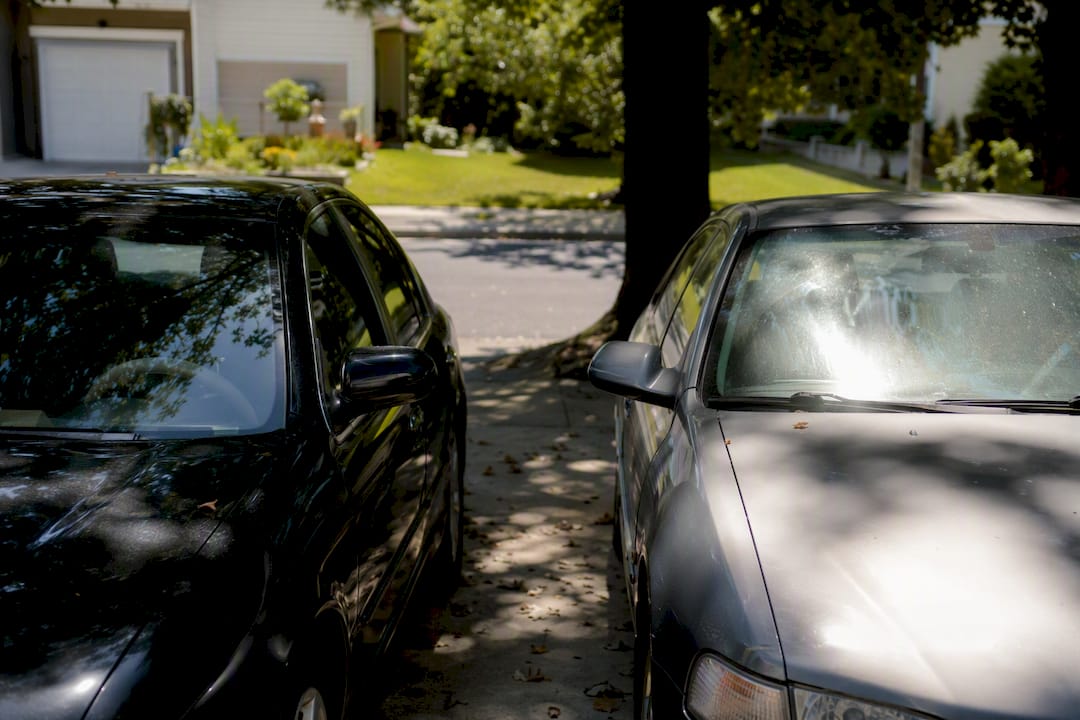
- Use a sunshade whenever the car sits parked, especially in summer heat that accelerates off-gassing.
- Crack a window or ventilate the cabin when parked, so trapped heat has somewhere to go.
- Skip oily dashboard dressings and heavy air fresheners. They add volatile compounds that condense right back onto your glass.
- Replace your cabin air filter regularly to maintain air quality and reduce airborne particle buildup, a schedule SlashGear’s prevention guide backs as a meaningful way to cut airborne particle buildup.
- Avoid smoking or vaping inside the vehicle, both major contributors to fast-forming film.
For upkeep, a quick interior wipe once a month and a full two-towel deep clean periodically will keep most vehicles ahead of the haze. Retire your glass towels once they start feeling stiff or the shine dulls; a worn towel does more smearing than cleaning.
Pro Tip: Where you park changes everything. A car baking in direct sun off-gasses plastic and vinyl faster than one parked in shade, so the sunshade habit does more long-term work than any cleaner.
Why Does Windshield Haze Keep Forming in the First Place?
The film on your windshield isn’t dirt tracked in from outside. It’s your own dashboard, door panels, and seats releasing volatile organic compounds as their plastics and vinyl age, a process called off-gassing.
Windshield haze is largely driven by plasticizer off-gassing from interior materials. Those compounds condense on the glass, which stays cooler than the surrounding air, and build an oily film that never really stops forming, according to Jalopnik’s breakdown of interior windshield haze.
Smoke, vape residue, and heavy dashboard dressings all add more volatile compounds to that mix, which is why detailers flag those products as accelerants. It also explains why weak cleaners just smear the film: they don’t break the oil bond, they spread it. That’s the whole logic behind isopropyl alcohol as a first pass and prevention as the long game.
A Detailer’s Take on Fast Wins
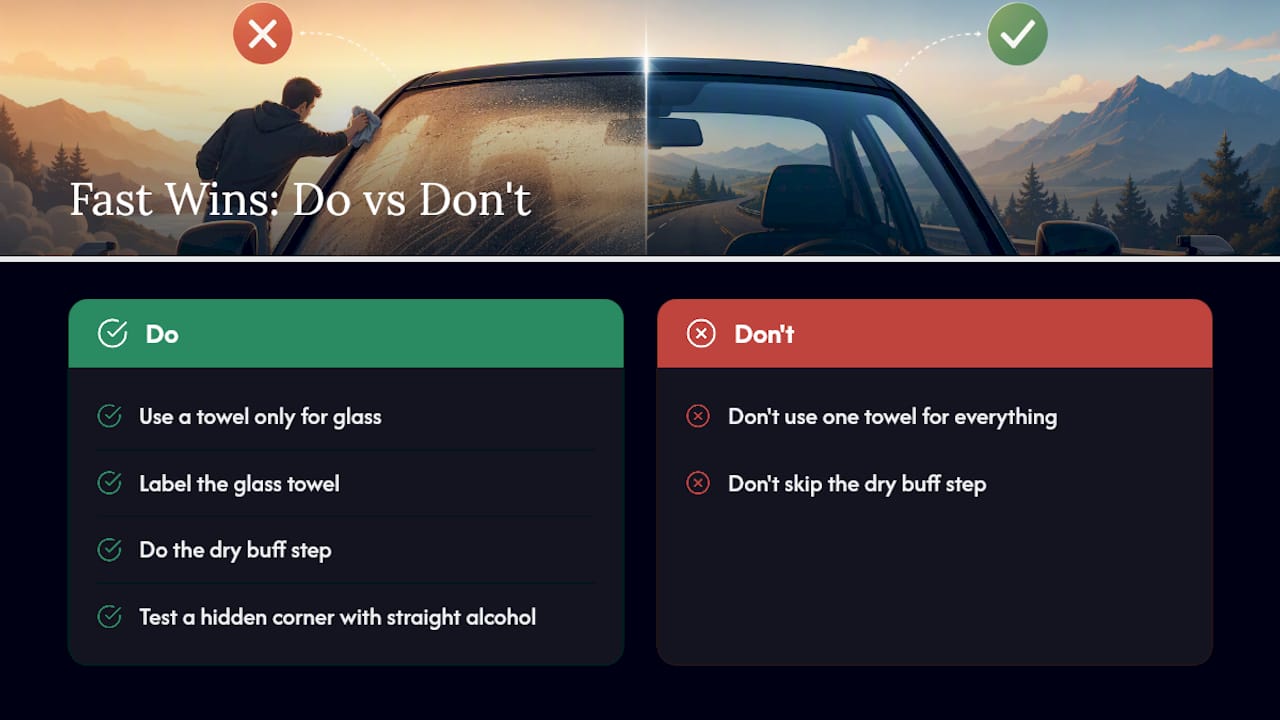
The two biggest mistakes I see are using one towel for everything and skipping the dry buff step. Keep a towel that only ever touches glass, and label it if you have to. When film won’t budge, I test a hidden corner with straight alcohol first. If it lifts clean there, the rest of the glass will respond the same way.
When Should You Call a Pro for Haze Removal?
If you’ve run through the two-towel method with isopropyl alcohol and the film keeps ghosting back, or you’ve found wiper-track scratches that catch the light at night, that’s your signal to stop DIYing it. Deep etching and scratched glass don’t respond to cleaner, no matter how many passes you run.

Cdcautodetailing handles exactly these cases as part of a full interior detail: complete glass decontamination, a proper polish pass on light etching, a wiper inspection to catch the blade that’s been scratching your glass all along, and a cabin air filter swap if yours is overdue. Where a bottle of alcohol and a lot of elbow grease might get you 80% of the way there, a mobile detail closes the gap in one visit, at your home or office, without you burning a Saturday on it.
- Interior decontamination and full glass polish
- Wiper blade and arm inspection
- Cabin air filter replacement
- Prevention-focused finishing so haze takes longer to return
If your windshield is past the point where towels and alcohol are cutting it, check out CDC Auto Detailing’s service breakdown and book a visit before the next humid stretch makes visibility worse.
Sources
- Here’s How To Clean That Nasty Haze Inside Your Car Windows | Jalopnik
- How to Clean Inside Windshield Without Streaks (Pro Method) – Auto Care Genius
- How to clean and prevent car inside windshield film — SlashGear
- How to Clean a Windshield Perfectly: A Streak-Free Guide — Nanak Car Wash
- How to make a DIY window washing solution | Angi