
TL;DR:
- Ceramic tint is a multi-layer polyester film embedded with nano-ceramic particles that block infrared heat and UV rays. It offers better heat rejection, UV protection, and signal clarity compared to dyed or metallic films, lasting over 10 years with proper care. Professional installation ensures optimal performance, compliance, and longevity of the tint.
Ceramic tint for cars is defined as a multi-layer polyester window film embedded with nano-ceramic particles that block 80–95% of infrared heat and 99% of UV radiation while maintaining full compatibility with GPS, Bluetooth, and cellular signals. Unlike dyed or metallic films, ceramic window film achieves heat rejection through material science rather than darkness or metal conductivity. The result is a cooler cabin, protected interior, and zero interference with the vehicle electronics that modern drivers depend on. Car owners researching what is ceramic tint for cars will find it is the most technically advanced option in the window tinting market today.
What is ceramic tint for cars and how does it work?
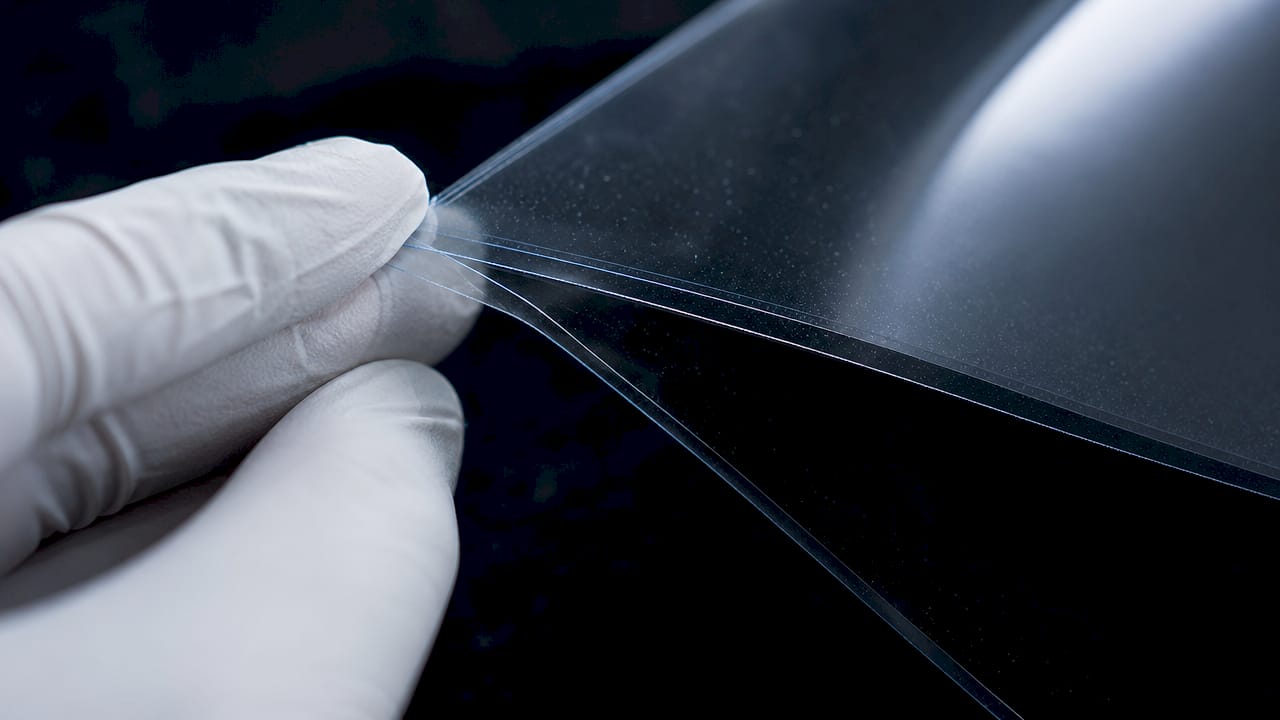
Ceramic tint works by suspending non-metallic, non-conductive particles inside a layered polyester film. The particles absorb and reflect infrared wavelengths before they pass through the glass and heat the cabin. The physics are straightforward: infrared radiation carries the heat you feel from sunlight, and ceramic particles intercept it at the molecular level.
The specific particles used are titanium dioxide or aluminum oxide, sized between 20 and 50 nanometers in diameter. At that scale, they are invisible to the naked eye, which is why ceramic film looks optically clear compared to darker dyed films. Their non-conductive nature is the key reason ceramic tint causes zero signal interference with GPS, radar, or cellular systems.
The film structure itself has multiple layers working together:
- Adhesive layer: bonds the film permanently to the glass surface
- Polyester base layer: provides structural stability and flexibility
- Nano-ceramic particle layer: handles infrared and UV rejection
- Scratch-resistant topcoat: protects the film surface from hazing and premature wear
That topcoat layer matters more than most car owners realize. A scratch-resistant topcoat is what makes lifetime warranties on premium films credible. Without it, the film degrades faster under daily cleaning and UV exposure.
Pro Tip: Ask your installer to confirm the film includes a scratch-resistant topcoat before committing. Budget films often skip this layer, which shortens the lifespan significantly.
Dyed films work by absorbing light, which causes them to fade and discolor over time. Metallic films reflect signals along with heat, creating interference with toll transponders and ADAS sensors. Ceramic film avoids both problems by using particle-based absorption that is wavelength-selective and electrically inert.
What are the main benefits of ceramic tint?
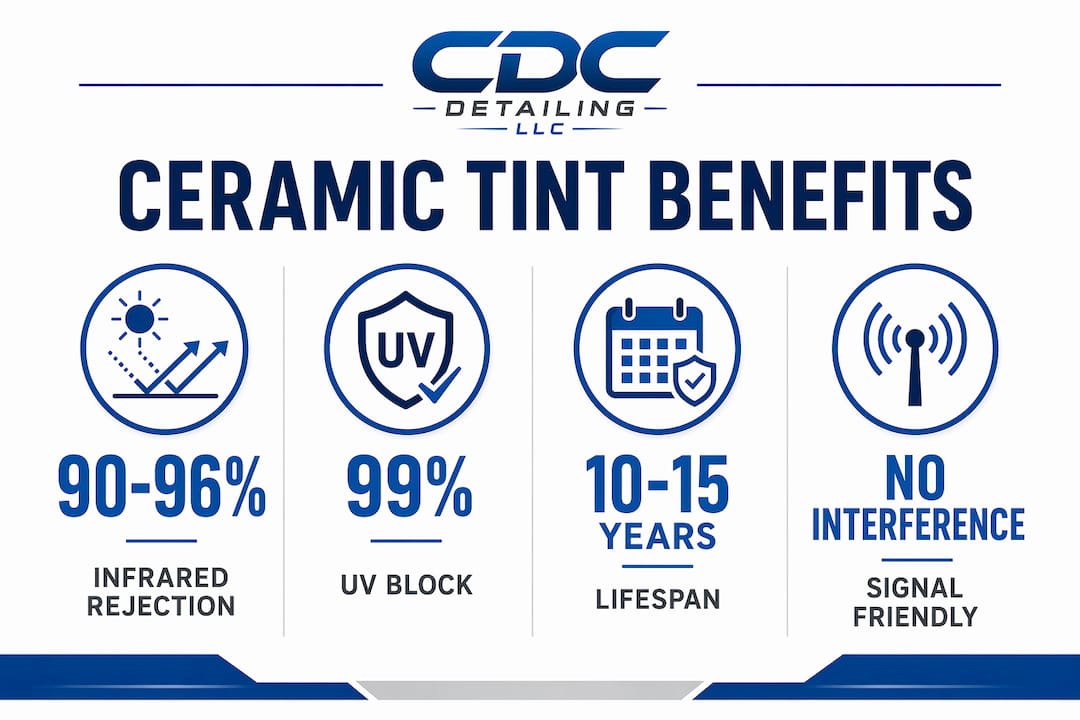
The benefits of ceramic tint go well beyond keeping your car cooler. The technology delivers measurable improvements across heat rejection, UV protection, signal clarity, visibility, and long-term durability.
Superior heat rejection
Ceramic tint rejects 90–96% of infrared radiation across the near-infrared spectrum. That number is not just a spec sheet figure. Vehicles treated with ceramic film stay noticeably cooler even after sitting in direct sun for an hour. The reduced cabin temperature means your air conditioning works less hard, which improves fuel economy in gas-powered vehicles and extends range in electric vehicles.
UV protection for skin and interior
Ceramic window film blocks over 99% of UV rays. UV-A and UV-B radiation are the primary causes of dashboard cracking, seat fading, and leather drying out. They also cause cumulative skin damage during daily commutes. For more detail on how tint protects against radiation, UV protection and tint is worth reading before you choose a film.
Zero signal interference
Ceramic tint uses non-conductive nano-particles that are fully compatible with GPS, Bluetooth, cellular networks, and ADAS systems. Metallic films create a Faraday-cage effect that degrades signal strength. Ceramic film eliminates that trade-off entirely, which matters especially for drivers who rely on lane-keeping assist, adaptive cruise control, or connected navigation.
Better nighttime visibility
Dyed films haze and discolor as they age, reducing optical clarity and increasing nighttime glare. Ceramic tint maintains superior optical clarity that reduces glare and improves visibility after dark. This is a safety benefit that rarely gets enough attention in standard buying guides.
Long lifespan
Premium ceramic films last 10–15 years or more with consistent performance in harsh sun climates. Dyed films typically fade within 3–5 years. The durability gap is one of the strongest arguments for choosing ceramic over entry-level options.
Is ceramic tint worth the investment?
Ceramic tint costs 30–50% more than carbon or dyed films. That premium is real, and it deserves an honest evaluation before you commit.
The value calculation depends on three factors: your climate, how long you plan to keep the vehicle, and how much you use your car’s electronics. Here is how to think through each one:
- Hot climate drivers see the fastest return. Reduced A/C load translates directly into lower fuel costs and less wear on the compressor. In a single summer season in a hot climate, the comfort and efficiency gains can offset a meaningful portion of the price difference.
- Long-term owners benefit most from the 10–15 year lifespan. If you plan to keep your vehicle five years or more, ceramic film’s durability means you pay once and get consistent performance throughout. Dyed films often need replacement within that window.
- Tech-dependent drivers should treat signal compatibility as a non-negotiable. Drivers with ADAS features, EV charging apps, or fleet tracking systems cannot afford the signal degradation that metallic films cause. Ceramic is the only film type that eliminates this risk entirely.
The cost savings from reduced A/C usage add up over years of ownership, particularly for electric vehicle drivers where range preservation has direct financial value.
Pro Tip: Get a written spec sheet from your installer listing the film brand, model, and VLT percentage. This protects you if the film underperforms and gives you a baseline for warranty claims.
One serious pitfall: many budget shops falsely market lower-quality films as ceramic. True ceramic window film requires multi-layer nano-ceramic particle technology. If a price seems too low for ceramic, ask the installer to name the specific film product and verify it independently. Mislabeled films look similar on installation day but fail within a few years.
How is ceramic tint installed and what should you expect?
Professional installation is the only way to get the full benefit from ceramic window film. Improper application creates bubbles, lifting edges, and optical distortion that no amount of post-install care can fix.
Here is what the professional installation process involves:
- Glass cleaning: the installer removes all contamination from the glass surface before cutting or applying film
- Film cutting: the film is precision-cut to match each window’s exact dimensions, either by hand or with a computer-guided plotter
- Application: the film is wet-applied to the interior glass surface using a slip solution, then squeegeed flat to remove air and moisture
- Cure time: ceramic film requires 3–7 days to fully cure, during which the windows should not be rolled down
Visible light transmission, or VLT, is the percentage of light the film allows through. A 35% VLT film blocks 65% of visible light. Your state’s window tinting laws set the legal minimum VLT for each window position, so confirm compliance before choosing a shade.
The most common misconception about ceramic tint is that darker means better heat rejection. Heat rejection depends on film composition, not darkness level. A light ceramic film at 70% VLT can still block 40–60% of infrared heat. This means you can choose a lighter, more natural-looking tint and still get serious thermal performance.
Maintenance after installation is straightforward. Use a soft microfiber cloth and an ammonia-free cleaner. Ammonia degrades the adhesive layer over time and is the single most common cause of premature film failure from improper care.
Key Takeaways
Ceramic tint is the highest-performing window film available because its nano-ceramic particle technology blocks infrared heat and UV rays without compromising signal clarity or optical quality.
| Point | Details |
|---|---|
| Heat and UV rejection | Ceramic film blocks 80–95% of infrared heat and 99%+ of UV rays through nano-particle technology. |
| Zero signal interference | Non-conductive titanium dioxide or aluminum oxide particles preserve GPS, Bluetooth, and ADAS function. |
| Long-term value | Premium ceramic films last 10–15 years, making them cost-effective for drivers keeping vehicles 5+ years. |
| Darkness is not heat rejection | A light 70% VLT ceramic film still blocks significant infrared heat due to material properties, not shade level. |
| Verify film quality | Only multi-layer nano-ceramic films deliver true performance; always confirm the specific product before installation. |
Why ceramic tint changed how I think about vehicle protection
I have seen hundreds of tint jobs come through the shop, and the difference between ceramic and everything else is not subtle. The first time a customer came back after a South Jersey summer and told me their car felt like a different vehicle, I understood why ceramic film commands a premium.
What surprises most car owners is the signal story. Modern vehicles are loaded with ADAS sensors, toll transponders, and connected apps. Metallic films were already a compromise five years ago. Today, with lane-keeping assist and adaptive cruise control standard on most new vehicles, putting a signal-blocking film on your windows is a real functional problem. Ceramic film removes that trade-off completely.
The pitfall I see most often is car owners choosing a budget “ceramic” film because the price looks right. The film goes on fine. Six months later, it starts to haze. Two years in, it is peeling at the edges. True nano-ceramic window film costs more because the particle technology and multi-layer construction are genuinely more expensive to produce. That cost difference is not markup. It is the difference between a film that lasts a decade and one that needs replacing before your next oil change schedule.
My honest advice: treat ceramic tint as a long-term investment in your vehicle, not a cosmetic upgrade. The comfort, UV protection, and signal integrity benefits compound over years of ownership. Get it done right once, and you will not think about it again for a very long time.
— Charles
Ceramic tint installation at Cdcautodetailing
Cdcautodetailing provides professional ceramic window film installation for car owners across South Jersey, with mobile service that comes directly to your location.
The team at Cdcautodetailing uses premium multi-layer nano-ceramic films that deliver verified heat rejection, UV protection, and full signal compatibility. Every installation includes a consultation on VLT selection to keep you legal and comfortable. For car owners who want complete exterior protection, Cdcautodetailing also offers ceramic coating services that complement window tinting with paint-level UV and chemical protection. To learn more about what professional mobile detailing covers, the auto detailing overview covers the full range of services available. Contact Cdcautodetailing to schedule your ceramic tint installation and protect your vehicle from the inside out.
FAQ
What is ceramic tint made of?
Ceramic tint is made from a multi-layer polyester film embedded with non-metallic nano-ceramic particles, typically titanium dioxide or aluminum oxide sized 20–50 nanometers. These particles block infrared heat and UV rays without conducting electricity.
Does ceramic tint block more heat than regular tint?
Yes. Ceramic tint rejects 90–96% of infrared radiation, significantly more than standard dyed or carbon films. The heat rejection comes from particle material properties, not the darkness level of the film.
Will ceramic tint interfere with my GPS or phone signal?
No. Ceramic tint uses non-conductive particles that are fully compatible with GPS, Bluetooth, cellular networks, and ADAS systems. Metallic films cause signal interference; ceramic films do not.
How long does ceramic tint last?
Premium ceramic window film lasts 10–15 years or more with proper care. Lifetime warranties are common with quality multi-layer films, making them significantly more durable than dyed alternatives.
Is ceramic tint legal in New Jersey?
New Jersey sets specific VLT minimums for each window position. Ceramic tint is legal as long as the film meets those requirements. Check current tinting laws in NJ before selecting your shade to stay compliant.