
TL;DR:
- Ceramic coating is a durable liquid polymer that chemically bonds to your car’s paint, providing long-lasting protection and enhanced gloss. It shields against UV damage, chemical etching, water spots, and contaminants, reducing maintenance time and preserving the vehicle’s appearance over years. Proper prep and ongoing maintenance are essential, and its cost-efficiency makes it valuable for owners in harsh environments or those seeking lasting aesthetic benefits.
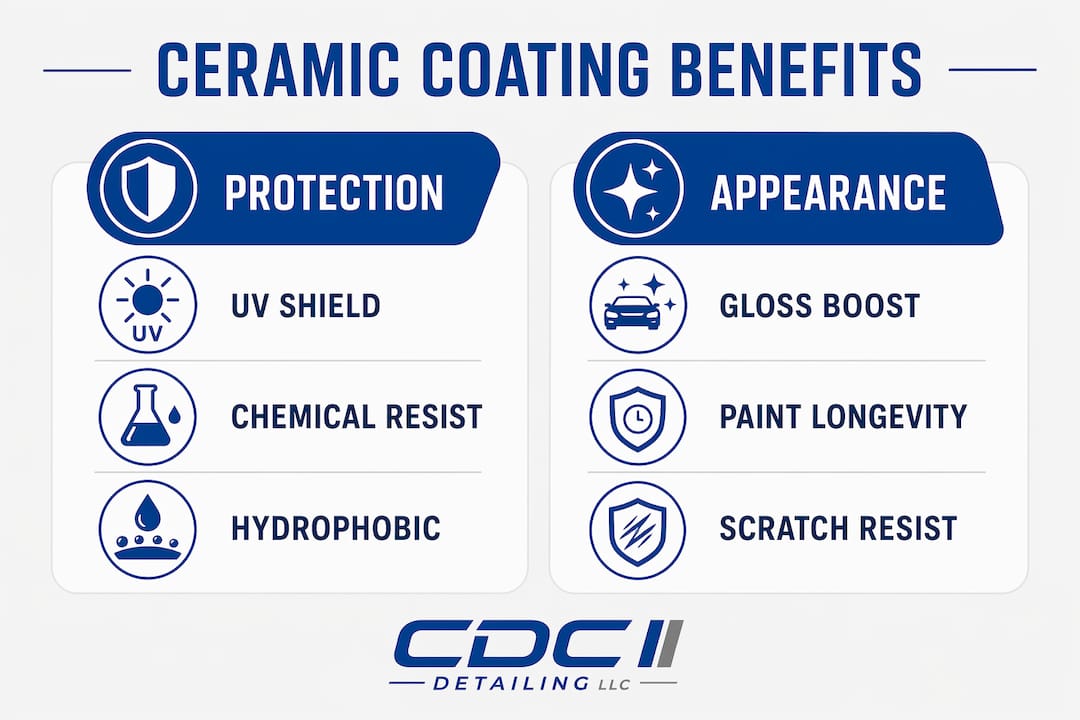
Ceramic coating is a durable liquid polymer that chemically bonds to your car’s paint, forming a glass-like protective layer made primarily from silicon dioxide (SiO2). The benefits of ceramic coating a car go well beyond aesthetics. You get long-lasting UV protection, chemical resistance, a hydrophobic surface that repels water and contaminants, and a deep gloss that traditional wax simply cannot match. Professional-grade coatings from brands like Gtechniq, Gyeon, and IGL Coatings have raised the bar significantly, making ceramic protection one of the most discussed topics in modern car care.
How does ceramic coating protect a car’s paint and finish?
Ceramic coating creates a sacrificial glass-like layer that sits on top of your clear coat, absorbing environmental punishment so your factory paint does not have to. This is the core protective mechanism, and it works across several threat categories simultaneously.
UV protection and oxidation resistance
Ultraviolet radiation is one of the most consistent threats to automotive paint. It breaks down the clear coat over time, causing fading, chalking, and oxidation. Ceramic coating acts as a UV filter, slowing this degradation considerably. Cars parked outdoors in states like Arizona or Florida, where UV exposure is intense, see measurable paint preservation benefits compared to uncoated vehicles.
Hydrophobic surface and water spot reduction
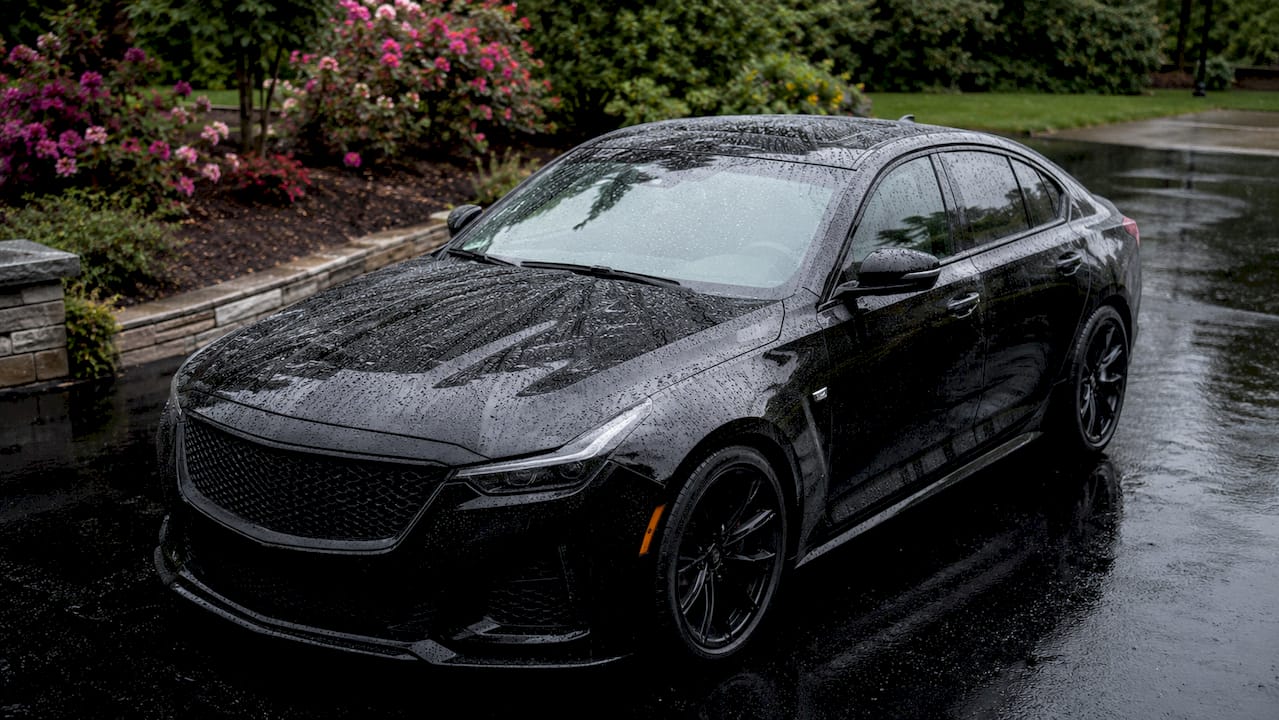
The SiO2 molecules in ceramic coating create a surface that water cannot grip. Rainwater and wash water bead up and roll off, taking loose dirt and contaminants with them. This hydrophobic surface reduces the mineral deposits left behind when water evaporates, which are the primary cause of water spots. Fewer water spots means less corrective polishing over the life of the vehicle.
Chemical resistance against real-world contaminants
Bird droppings, tree sap, acid rain, and road salt are chemically aggressive. On bare or wax-protected paint, these substances etch into the clear coat within hours, especially in warm weather. Ceramic coating resists this chemical etching, giving you a wider window to clean the contaminant before damage occurs. This is not a theoretical benefit. Anyone who has watched bird droppings permanently scar a hood will understand the value immediately.
Here is what the protective layer defends against on a daily basis:
- UV radiation that fades and oxidizes paint over months and years
- Bird droppings and tree sap that chemically etch clear coat within hours
- Acid rain and road salt that accelerate corrosion and surface degradation
- Mineral deposits from hard water that leave permanent water spots
- Light surface contaminants that bond to unprotected paint during normal driving
Pro Tip: Apply a ceramic coating within the first few months of owning a new vehicle. Paint is cleanest and most defect-free at that stage, which means less prep work and a better bond.
How does ceramic coating compare to wax and sealants for appearance?
Ceramic coating produces a glass-like gloss enhancement of 10 to 20 Gloss Units above baseline, which is a measurable optical improvement that wax and paint sealants cannot replicate at the same level. The chemical bond creates a surface so smooth that light reflects off it with exceptional clarity and depth. Wax produces a warmer, softer sheen that many enthusiasts love on classic cars, but it lacks the mirror-like intensity that ceramic delivers on modern paint.
The comparison between these three protection methods comes down to durability, gloss output, and total cost over time:
| Protection Method | Durability | Gloss Enhancement | Reapplication Frequency |
|---|---|---|---|
| Carnauba wax | 2 to 3 months | Moderate, warm sheen | Every 2 to 3 months |
| Paint sealant | 6 to 12 months | Moderate, synthetic shine | Every 6 to 12 months |
| Ceramic coating | 2 to 7 years | High, glass-like depth | Every 2 to 7 years |
Wax lasts 2 to 3 months under normal conditions, while a professionally applied ceramic coating holds for years. That gap in durability is the central reason car owners are shifting away from traditional wax. A sealant sits in the middle, offering synthetic protection for up to a year, but it still cannot match the chemical bonding strength or gloss depth of a quality ceramic product.
One nuance worth knowing: ceramic coating produces what detailers call a “cold gloss,” a sharp, reflective finish with high clarity. Carnauba wax produces a “warm gloss,” a slightly amber-tinted depth that flatters older paint and classic finishes. Neither is objectively better. The right choice depends on the look you want and how long you want it to last.
Pro Tip: For the deepest gloss from a ceramic coating, have a one-step or two-step paint correction done before application. Even light swirl marks will be amplified, not hidden, under a high-gloss ceramic layer.
You can also explore the wax vs. ceramic coating breakdown from Cdcautodetailing for a side-by-side look at real-world performance differences.
What maintenance benefits does ceramic coating actually deliver?
The hydrophobic effect of ceramic coating changes how dirt interacts with your car’s surface. Contaminants have far less to grip onto, so they sit on top of the coating rather than bonding to the paint. When you wash the car, they release faster and with less scrubbing effort.
Owners save 12 to 24 hours per year in maintenance washing time after applying a ceramic coating. That figure reflects both the reduced wash frequency and the shorter time per wash session. A coated car that previously needed weekly washing can often go two to four weeks between washes without looking neglected.
Here is what changes in your maintenance routine after coating:
- Wash frequency drops from weekly to every two to four weeks on average
- Wash time per session decreases because dirt releases without heavy scrubbing
- Detailing products cost less since you need fewer chemical cleaners and degreasers
- Paint correction needs decrease because the coating absorbs minor abrasion instead of the clear coat
What does not change is the need for regular washing. Ceramic coating is not self-cleaning in any meaningful sense. Dirt, pollen, and road grime still accumulate. The coating makes removal easier, not unnecessary. Skipping washes for months will degrade the hydrophobic properties and shorten the coating’s effective life. Proper ceramic coating maintenance requires pH-neutral soaps and periodic decontamination washes to keep the surface performing at its best.
Is ceramic coating worth the cost over time?
Professional ceramic coating costs between $500 and $2,500 upfront, depending on vehicle size, paint condition, and the number of coating layers applied. That number sounds significant until you compare it against the cumulative cost of waxing a car every two to three months for five years.
| Cost Category | Wax Over 5 Years | Ceramic Coating Over 5 Years |
|---|---|---|
| Product or service cost | $600 to $1,200 | $500 to $2,500 (one-time) |
| Time investment | 40 to 60 hours | 5 to 10 hours |
| Paint correction needs | Frequent | Minimal after initial prep |
| Reapplication required | Every 2 to 3 months | Every 2 to 7 years |
The math shifts further in favor of ceramic coating when you factor in paint correction savings. Wax does not prevent swirl marks or chemical etching, so cars relying on wax alone typically need polishing every year or two. A coated car absorbs that damage at the coating level, not the paint level.
Owners in high UV or road salt climates see the strongest return on investment. If you drive daily in New Jersey winters, where road salt is aggressive, or in southern states with intense sun exposure, the coating earns its cost faster. A garage-kept weekend car with minimal environmental exposure is a weaker candidate for the full professional treatment.
Pro Tip: If the upfront cost of professional coating is a barrier, consider a consumer-grade product like Gtechniq C2 Liquid Crystal or Chemical Guys HydroSlick as a starting point. They do not last as long, but they deliver real hydrophobic benefits at a fraction of the price.
What are the real limitations of ceramic coating?
Ceramic coating is not a force field. It does not prevent rock chips or deep scratches, and the “9H hardness” rating you see in marketing materials is a pencil hardness benchmark, not a measure of impact resistance. That number means the coating resists light swirls and surface marring, not gravel strikes at highway speed.
The limitations car owners most often misunderstand include:
- Not scratch-proof. Ceramic coating resists light swirl marks from washing but will not stop a key scratch or parking lot door ding.
- Not rock-chip-proof. For that level of protection, paint protection film (PPF) is the correct product. Ceramic and PPF are often combined for full coverage.
- Requires thorough prep. Paint correction before application is non-negotiable. Any swirl marks, scratches, or oxidation present at the time of coating will be sealed in permanently under the glass-like layer.
- Maintenance is still required. The coating degrades without proper care. Harsh soaps, automatic car washes with abrasive brushes, and skipped decontamination washes all shorten its lifespan.
- Not all products perform equally. Consumer spray coatings and professional multi-layer systems are not the same product. Durability, gloss output, and chemical resistance vary significantly by formulation and application method.
Understanding these boundaries helps you set realistic expectations and get the most out of the investment.
Key takeaways
Ceramic coating delivers measurable, long-lasting protection and gloss enhancement that wax and sealants cannot match, but it requires proper prep, realistic expectations, and consistent maintenance to perform as advertised.
| Point | Details |
|---|---|
| Durability advantage | Ceramic coating lasts 2 to 7 years versus 2 to 3 months for traditional wax. |
| Gloss improvement | SiO2 bonding adds 10 to 20 Gloss Units, producing a sharper, deeper finish than wax. |
| Maintenance time savings | Owners save 12 to 24 hours per year in washing time due to hydrophobic properties. |
| Cost-effectiveness | Upfront cost of $500 to $2,500 outperforms cumulative waxing costs over a 5-year period. |
| Realistic limitations | Ceramic coating resists light abrasion and chemical etching but does not prevent rock chips or deep scratches. |
Why I think most car owners underestimate ceramic coating’s real value
The conversation around ceramic coating tends to get stuck on two extremes. Either it is sold as an invincible shield that makes your car bulletproof, or it gets dismissed as an overpriced gimmick by people who have never actually used one. Neither view is accurate, and both miss the point.
What I have found, working with vehicle owners across South Jersey, is that the real value of ceramic coating is not in the hardness rating or the marketing language. It is in the chemical resistance and the hydrophobic effect. Those two properties change the daily experience of owning a car in ways that are genuinely noticeable. Washing takes less effort. Contaminants do not bond as aggressively. The paint looks better for longer without constant intervention.
Where I see owners go wrong is in skipping proper prep to save money. Applying a coating over uncorrected paint is one of the most common and costly mistakes in detailing. The coating locks in whatever is underneath it. A $1,500 coating applied over swirl-marked paint will look worse than a $300 sealant applied over corrected paint. Prep is 90% of the result.
My honest recommendation: if you plan to keep your vehicle for three or more years and you drive it regularly in conditions that include UV exposure, road salt, or heavy environmental contamination, ceramic coating is worth the investment. If you rotate cars frequently or keep a vehicle in a climate-controlled garage with minimal exposure, the math is less compelling. Match the product to your actual situation, not to the marketing.
— Charles
Get professional ceramic coating from Cdcautodetailing

Cdcautodetailing provides professional ceramic coating services for vehicle owners across South Jersey, including Pitman, NJ and surrounding areas. Every application starts with a full paint decontamination and correction process, so the coating bonds to a clean, defect-free surface and performs at its maximum potential. Mobile service means the work comes to your driveway, not the other way around. Whether you drive a daily commuter or a weekend show car, Cdcautodetailing matches the right coating system to your vehicle, your budget, and your environment. Book a consultation to find out which protection package fits your situation.
FAQ
How long does ceramic coating last on a car?
Professional ceramic coatings last 2 to 7 years depending on the product, application quality, and maintenance routine. Consumer-grade spray coatings typically last 6 to 12 months under normal conditions.
Does ceramic coating prevent scratches?
Ceramic coating resists light swirl marks and surface marring but does not prevent rock chips or deep scratches. For scratch and chip protection, paint protection film is the appropriate product and is often layered with ceramic coating for combined coverage.
Is ceramic coating better than wax for daily drivers?
For daily drivers exposed to UV, road salt, or frequent contamination, ceramic coating outperforms wax in durability, chemical resistance, and long-term cost. Wax lasts 2 to 3 months and requires constant reapplication, while ceramic holds for years with proper maintenance.
What preparation is needed before applying ceramic coating?
Paint correction and full decontamination are required before ceramic coating application. Any defects present at the time of coating are permanently sealed under the layer, so skipping prep compromises both appearance and coating performance.
How do you maintain a ceramic-coated car?
Use pH-neutral soaps for regular washing and avoid automatic car washes with abrasive brushes. Annual decontamination washes help preserve the coating’s hydrophobic properties and extend its effective lifespan.