
TL;DR:
- Ceramic coating chemically bonds to your vehicle’s paint, providing lasting UV protection, chemical resistance, and increased gloss.
- It reduces maintenance needs by making the surface hydrophobic and easier to clean but does not prevent deep scratches or impact damage.
- Proper surface preparation, regular maintenance, and realistic expectations are essential for maximizing its benefits and longevity.
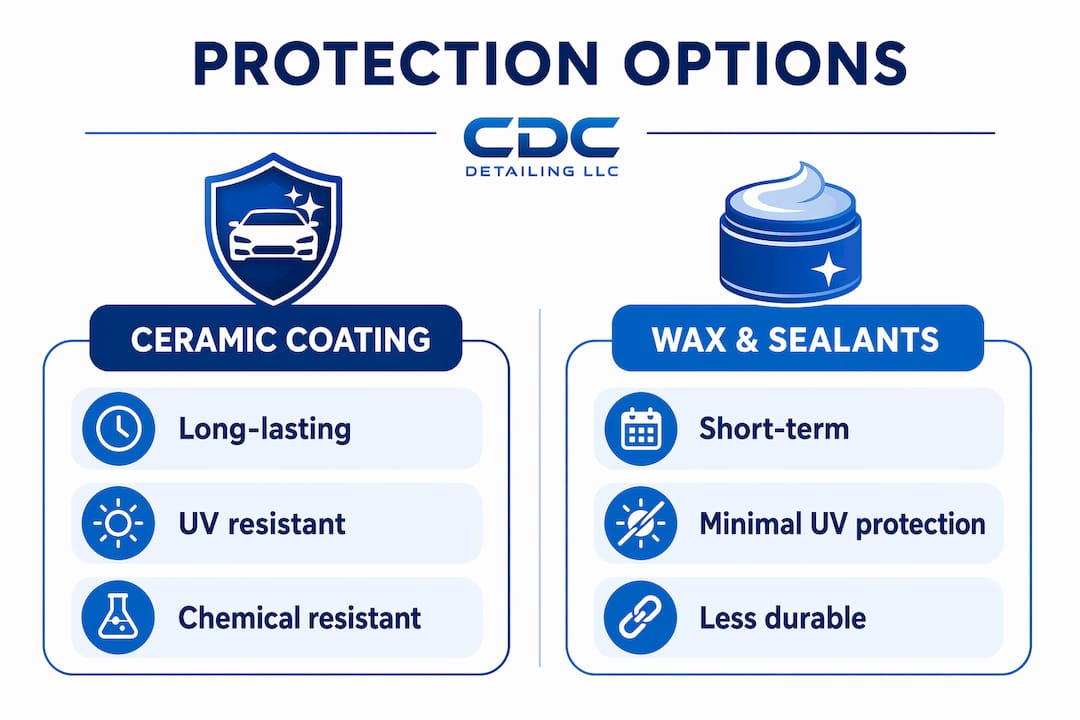
Ceramic coating is a liquid polymer that chemically bonds to your car’s factory paint, forming a semi-permanent protective layer that resists UV damage, repels contaminants, and deepens gloss. The benefits of ceramic coating in car protection go far beyond what traditional wax or sealants deliver. Where wax sits on top of paint and washes away in weeks, ceramic coating fuses to the clear coat at a molecular level, creating a surface that actively sheds water, dirt, and chemical contaminants. For car owners in South Jersey and beyond, that difference translates to less time washing, better-looking paint, and a vehicle that holds its value longer.
What are the benefits of ceramic coating in car paint protection?
Ceramic coating’s most measurable advantage is UV defense. Professional-grade coatings block 88–94% of harmful UV rays, extending factory paint life by 30–50% in high-UV climates. That means a car parked outdoors in New Jersey summers loses significantly less color depth and clear-coat integrity over time compared to an uncoated vehicle.
Beyond UV, the coating acts as a chemical barrier. Bird droppings, tree sap, acid rain, and road salt all carry acids or alkaline compounds that etch into unprotected paint within hours. A ceramic-coated surface resists these contaminants long enough for you to wash them off before they cause permanent damage. This is the core of ceramic coating car protection: it buys you time and reduces the consequences of everyday exposure.
The coating also functions as a sacrificial surface layer, absorbing light swirl marks from wash mitts and drying towels instead of letting them reach the clear coat. Coating hardness sits at 4–5 Mohs, which is harder than paint but not hard enough to stop rock chips or deep scratches. Think of it as a buffer, not a shield.
- Blocks UV radiation that causes oxidation and color fading
- Resists bird droppings, tree sap, acid rain, and road salt
- Reduces micro-marring from routine washing
- Creates a chemical barrier against industrial fallout and brake dust
Pro Tip: Apply a ceramic coating within the first few months of owning a new car. Paint is cleanest and most defect-free at that stage, which means the coating bonds to a perfect surface and locks in that condition.
How does ceramic coating improve appearance and reduce maintenance?
The visual upgrade from a professional ceramic coating is immediate and measurable. Gloss increases by +10–20 Gloss Units, producing the kind of deep, mirror-like finish that makes a three-year-old car look freshly detailed. This is one of the most cited car detailing ceramic coating benefits among owners who invest in the service.
The hydrophobic effect is where maintenance savings become real. Water beads up and rolls off the surface, carrying loose dirt and dust with it. Ceramic-coated vehicles require 20–50% less wash time and stay cleaner two to three times longer than uncoated vehicles. For a car owner who washes weekly, that reduction compounds into hours saved over a year.
Paint durability is the longer-term payoff. A well-maintained coating preserves the factory finish, which directly supports resale value. Buyers pay more for vehicles with clean, unoxidized paint. A ceramic-coated car that has been properly maintained presents significantly better at trade-in or private sale than one that has been exposed to years of UV and chemical damage without protection.
- Mirror-like gloss from +10–20 Gloss Unit improvement
- Hydrophobic surface repels water, mud, and road grime
- Stays cleaner longer, reducing wash frequency
- Preserves factory paint condition for stronger resale value
Pro Tip: After washing a ceramic-coated car, use a ceramic coating maintenance spray every few months to refresh the hydrophobic layer and extend the coating’s effective lifespan.
What ceramic coating does not do: realistic limitations
Ceramic coating is most valuable as a preventive maintenance tool, not as armor against serious physical damage. This distinction matters because many buyers enter the purchase expecting a force field. The reality is more nuanced and still worth understanding before you invest.
Rock chips, deep scratches, and key marks go straight through any ceramic coating. The hardness level that makes the coating resistant to light marring is nowhere near sufficient to absorb the impact of a gravel chip at highway speed. If physical impact protection is your priority, Paint Protection Film (PPF) is the correct product. PPF provides physical impact protection that ceramic coating alone cannot deliver.
The hydrophobic effect also fades over time. Hydrophobicity decreases from a 115° to a 95° contact angle as the coating ages, meaning water beading becomes less dramatic. The coating remains protective, but the visual performance you saw at installation gradually softens. Regular maintenance slows this process but does not stop it entirely.
Ceramic coating does not eliminate the need for washing. Dirt still accumulates on a coated surface. The difference is that contaminants bond less aggressively and release more easily, making each wash faster and less abrasive. Skipping washes entirely will degrade the coating faster and allow contaminants to accumulate past the point where the hydrophobic layer can help.
- Does not prevent rock chips, deep scratches, or key damage
- Does not replace regular washing and proper maintenance
- Hydrophobic performance fades gradually over the coating’s lifespan
- Best results require paint correction before application and PPF in high-impact zones
Ceramic coating vs. wax, sealants, and PPF: which is right for you?
Understanding the advantages of car ceramic coating requires comparing it directly to the alternatives. Each product occupies a different position in terms of durability, protection level, and cost.
| Protection Option | Durability | UV and Chemical Resistance | Impact Protection | Typical Cost |
|---|---|---|---|---|
| Carnauba wax | 4–8 weeks | Low | None | $20–$100 DIY |
| Paint sealant | 3–6 months | Moderate | None | $50–$200 DIY |
| Ceramic coating | 2–7+ years | High | None | $1,200–$2,500 professional |
| PPF (Paint Protection Film) | 5–10 years | Moderate | High | $2,000–$6,000+ |
Wax lasts weeks while ceramic coatings last years with measurably better UV and chemical resistance. That gap in durability alone justifies the cost difference for any owner planning to keep their vehicle for more than two years. Paint sealants sit between wax and ceramic in durability but still lack the chemical bonding and hardness that make ceramic coatings perform at their level.
PPF is the only product that stops rock chips and deep scratches. When paired with PPF, ceramic coating provides UV and chemical resistance while PPF handles impact protection. This combination is the gold standard for daily drivers in high-risk environments. You can explore the PPF vs. ceramic coating decision in detail to determine which approach fits your driving conditions.
Pro Tip: Apply ceramic coating over PPF on high-impact zones like the hood and front bumper. The PPF stops chips while the ceramic coating on top makes the PPF easier to clean and keeps it looking glossy.
How to maintain your ceramic coating for maximum lifespan
Proper maintenance is the single biggest variable in how long a ceramic coating performs. Owner commitment to correct washing techniques is what separates a coating that lasts two years from one that lasts seven. The coating does not maintain itself.
- Wash with pH-neutral soap. Acidic or alkaline cleaners degrade the hydrophobic layer faster than any environmental factor. Products like Meguiar’s Gold Class or Chemical Guys Honeydew Snow Foam are formulated to clean without stripping the coating.
- Avoid automatic tunnel car washes. Spinning brushes and harsh detergents in automated washes introduce swirl marks and chemical stress that shorten coating life. Hand washing or touchless washes are the correct approach.
- Wash regularly, not occasionally. Contaminants that sit on the surface for extended periods can still etch through the coating given enough time. Washing frequency recommendations for coated cars typically suggest every two weeks in normal conditions.
- Apply a booster spray every three to six months. Ceramic coating booster sprays, such as Gtechniq C2 Liquid Crystal or CarPro Reload, refresh the hydrophobic layer and extend the coating’s effective performance window.
- Schedule periodic professional inspections. A detailer can assess coating condition, perform light decontamination, and apply professional-grade boosters that consumer products cannot match.
Key takeaways
Ceramic coating delivers durable UV protection, hydrophobic cleaning ease, and gloss enhancement that wax and sealants cannot match, but it requires proper prep, regular maintenance, and realistic expectations about physical impact protection.
| Point | Details |
|---|---|
| UV and chemical defense | Ceramic coating blocks 88–94% of UV rays and resists bird droppings, acid rain, and road salt. |
| Maintenance reduction | Coated vehicles require 20–50% less wash time and stay cleaner two to three times longer. |
| Gloss improvement | Professional coatings add +10–20 Gloss Units for a deeper, mirror-like finish. |
| Physical damage limitation | Ceramic coating does not stop rock chips or deep scratches; PPF is required for impact protection. |
| Maintenance commitment | pH-neutral soaps, regular washing, and periodic booster sprays are required to reach full coating lifespan. |
Why ceramic coating is worth it, from someone who has seen both sides
I have seen hundreds of cars come through with and without ceramic coatings, and the difference after two or three years of South Jersey weather is not subtle. The uncoated cars show oxidation on the hood, faded trim, and paint that looks tired. The coated cars, maintained properly, still look close to the day they left the lot.
The investment in professional ceramic coating pays off most clearly for two types of owners: people who keep their cars for five or more years, and people who care about resale value. Ceramic coating pays off best for long-term owners in harsh climates and those prioritizing appearance and resale. That describes most of the clients I work with in South Jersey.
What I push back on is the idea that ceramic coating is a set-it-and-forget-it solution. I have seen coated cars that looked worse than uncoated ones because the owner stopped washing properly, used the wrong soap, or ran the car through a brush wash every week. The coating amplifies good habits and punishes bad ones. If you are not willing to commit to proper washing, the coating will underperform and you will feel like you wasted your money.
The other thing worth saying plainly: proper paint correction before application is not optional. Coating over swirl marks and light scratches seals them in permanently under a glass-like layer. The prep work is where most of the value is created. A great coating on poorly prepared paint is a disappointing result. A great coating on corrected paint is genuinely impressive.
— Charles
Get professional ceramic coating from Cdcautodetailing
If you are ready to protect your vehicle with a coating that actually lasts, Cdcautodetailing provides professional-grade ceramic coating services across South Jersey, including Pitman, NJ and surrounding areas.
Every coating installation at Cdcautodetailing starts with a thorough paint decontamination and correction process to give the coating the cleanest possible surface to bond to. The result is maximum gloss, maximum adhesion, and a finish that performs the way ceramic coating is supposed to perform. Cdcautodetailing also provides maintenance guidance and booster options so your coating reaches its full lifespan. Book your ceramic coating service today and give your vehicle the protection it deserves from day one.
FAQ
What does ceramic coating actually do for a car?
Ceramic coating chemically bonds to your car’s paint, creating a hard, hydrophobic layer that blocks UV rays, resists chemical contaminants, and reduces cleaning time. It improves gloss and protects the factory finish for two to seven or more years depending on maintenance.
How long does ceramic coating last on a car?
Professional ceramic coatings last two to seven or more years with proper care. Lifespan depends on washing frequency, the products used, and environmental exposure. Using pH-neutral soaps and avoiding automated brush washes extends performance significantly.
Does ceramic coating prevent scratches and rock chips?
Ceramic coating does not prevent rock chips or deep scratches. Its hardness of 4–5 Mohs reduces light swirl marks from washing but cannot absorb highway-speed gravel impacts. Paint Protection Film (PPF) is the correct product for physical impact protection.
Is ceramic coating worth the cost?
Professional ceramic coating costs $1,200–$2,500 for sedans and delivers measurable returns through reduced maintenance time, preserved paint condition, and stronger resale value. For owners keeping a vehicle five or more years, the cost is justified across the ownership period.
Can I apply ceramic coating myself?
DIY ceramic coating kits exist but require significant surface preparation, controlled application conditions, and experience to apply correctly. Coating over uncorrected paint seals in defects permanently. Professional application with paint correction beforehand produces consistently better results.