
TL;DR:
- Energy saving window tint blocks solar heat and ultraviolet rays before they enter a space, reducing energy bills. It intercepts solar radiation at the glass surface through high TSER films, which reject 51% to 82% of solar energy, providing better cooling and UV protection. Proper interior installation by professionals ensures long-lasting performance, with significant energy savings and protection against fading and damage.
Energy saving window tint is a specialized film applied directly to glass surfaces that blocks solar heat and ultraviolet radiation before it enters your space. The industry term for this technology is solar control window film, and it covers both residential and automotive applications. Modern films block 51%–82% of total solar energy while maintaining clear, natural views. That single number explains why homeowners and vehicle owners are turning to window film as a practical first step toward lower energy bills and better daily comfort.
How does energy saving window tint block heat and UV rays?
Solar control window film works by intercepting solar radiation at the glass surface itself. This is a critical distinction. Blinds and curtains only manage heat after it has already passed through the glass and entered the room. Window film rejects solar heat at the glass before it ever becomes a problem indoors.
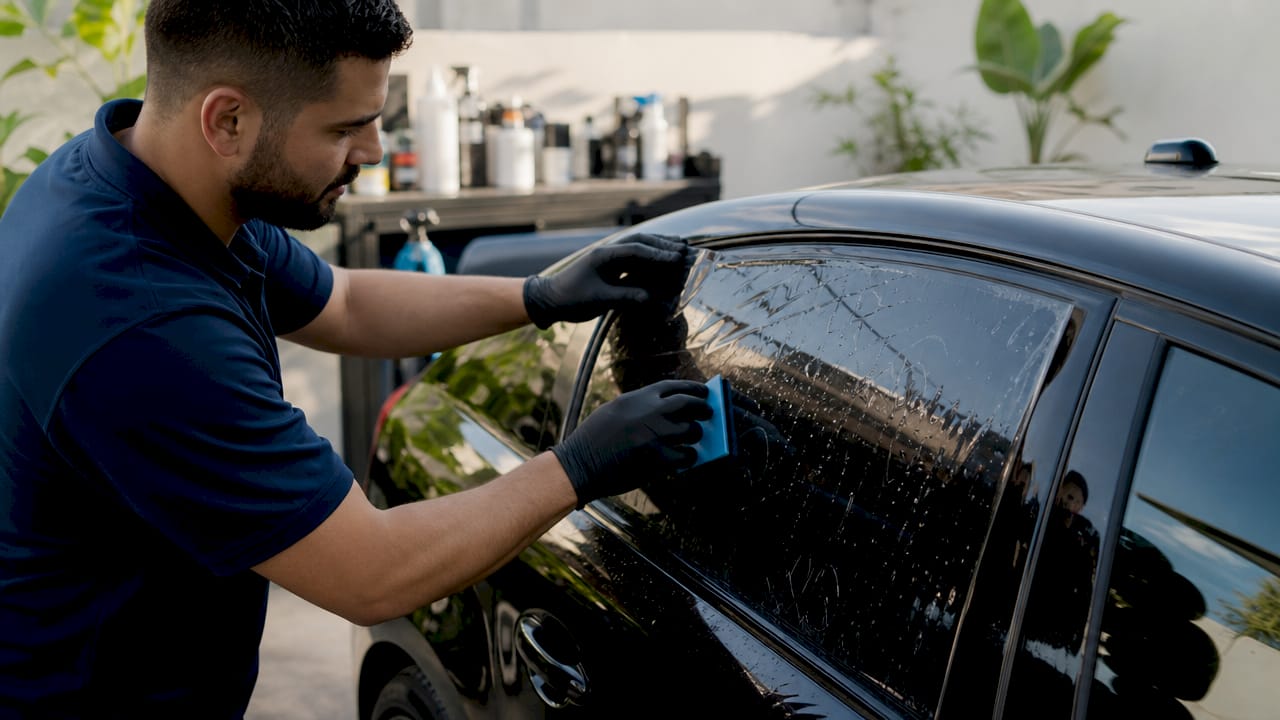
The key performance metric is Total Solar Energy Rejected, or TSER. TSER measures the percentage of incoming solar energy that a film blocks, including infrared heat, visible light heat, and ultraviolet radiation. Films with higher TSER deliver better cooling savings without darkening your windows significantly. A film rated at 70% TSER blocks seven out of every ten units of solar energy hitting the glass.
Different film technologies achieve heat rejection in different ways:
- Spectrally selective films filter out infrared and UV wavelengths while allowing most visible light through. These are the gold standard for homes where natural light matters.
- Ceramic-based films use non-metallic ceramic particles to absorb and reject infrared radiation. They produce no radio frequency interference, which matters for vehicles with electronic systems.
- Metallic films use thin metal layers to reflect solar energy. They perform well on heat rejection but can interfere with cell signals and GPS.
- Low-Emissivity (Low-E) films act as a thermal mirror, reflecting heat in both directions. They block solar heat in summer and reflect interior warmth back inside during winter.
UV protection is a separate but equally important benefit. Quality films block over 99% of UV rays, protecting skin, furniture, flooring, and vehicle interiors from fading and long-term damage.
Pro Tip: When comparing films, always ask for the TSER rating, not just the visible light transmission percentage. A dark film with low visible light transmission does not automatically mean high heat rejection.
What film types work best for homes versus vehicles?
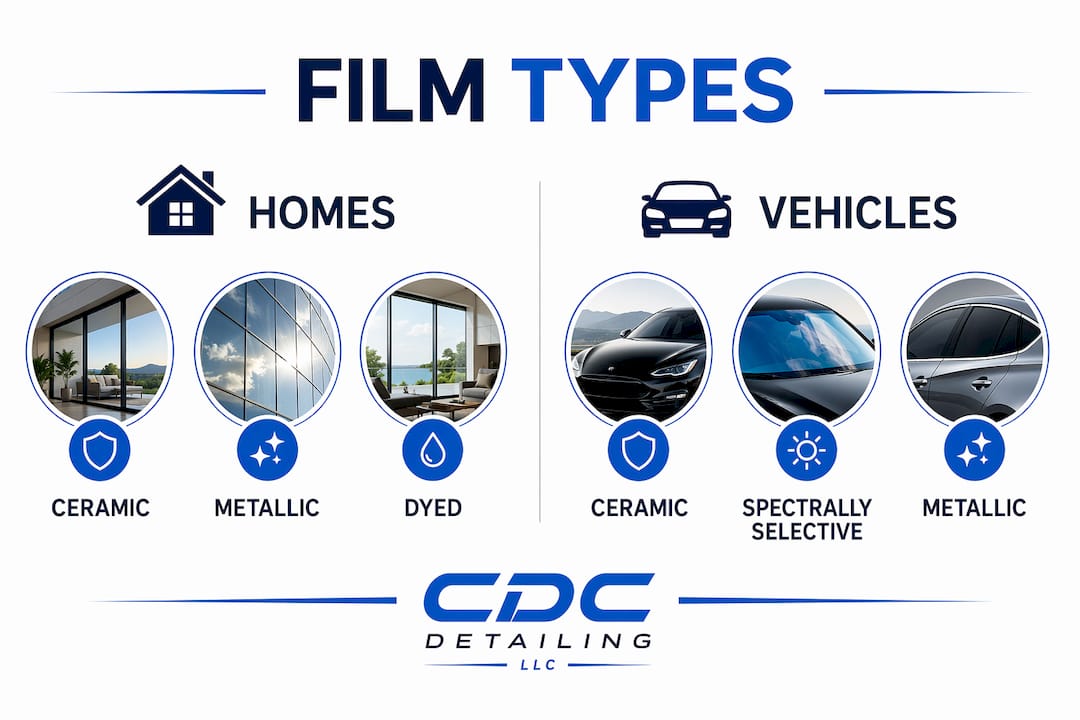
Choosing the right film depends on your application, climate, and priorities. The table below outlines the main film categories and their ideal use cases.
| Film type | Best for | Key strength | Key limitation |
|---|---|---|---|
| Ceramic | Homes and vehicles | Superior infrared rejection, neutral look | Higher upfront cost |
| Low-E | Homes in mixed climates | Year-round thermal control | Less effective in extreme heat alone |
| Metalized | Vehicles, older homes | Strong heat reflection | Signal interference, reflective look |
| Spectrally selective | Homes with large windows | High visible light, high TSER | Moderate cost |
Ceramic-based films are the preferred choice for both homes and vehicles because they combine superior infrared blocking with a neutral, non-reflective appearance. Older metallic tints gave window film a mirror-like look that many homeowners and drivers dislike. Ceramic films solve that problem entirely.
Low-E window film is the right pick for homeowners in mixed or heating-dominant climates. It acts as a thermal mirror, pushing solar heat away in summer and reflecting interior radiant heat back inside during winter. This dual-season performance makes it one of the most cost-effective options for year-round energy savings.
A few additional factors shape the right choice:
- Climate: High heat rejection films deliver the greatest return in hot, sun-heavy climates. Low-E films suit regions with cold winters and moderate summers.
- Window orientation: South-facing and west-facing windows receive the most direct sun and benefit most from high-TSER films.
- Window type: Single-pane windows gain the most from any film. Double-pane windows require careful film selection to avoid thermal stress on the sealed unit.
For vehicles, ceramic tint is the clear leader. It keeps cabin temperatures lower, protects the dashboard and upholstery from UV damage, and does not interfere with modern electronics or navigation systems.
What does professional installation cost, and is DIY worth it?
Professional window film installation is the recommended path for most homeowners and vehicle owners. Here is what to expect from the process and the costs involved.
- Assessment and film selection. A professional measures your windows, evaluates your climate and orientation, and recommends the right film type and TSER rating for your specific situation.
- Surface preparation. The glass is cleaned thoroughly to remove dust, oils, and debris. Any contamination under the film causes bubbles and reduces adhesion.
- Interior application. Film applied to the interior surface lasts significantly longer than exterior application. Exterior installation accelerates deterioration from UV exposure and weather. Most high-performance films are designed for interior use only.
- Trimming and finishing. The film is cut to fit precisely, squeegeed flat, and inspected for air pockets or lifting edges.
- Curing period. Most films require 2–4 weeks to fully cure and bond to the glass. Some haze or small water pockets during this period are normal and will clear.
Professional installation costs typically run $8–$18 per square foot. DIY kits are available at lower price points but come with real limitations. Cutting film precisely, avoiding bubbles, and applying it without contamination requires practice. A poor DIY installation reduces film performance and can look unprofessional, especially on vehicles.
Pro Tip: Before applying any film to factory-sealed double-pane windows, verify compatibility with the window manufacturer. Certain dark or highly absorptive films can cause thermal stress that cracks the glass or breaks the airtight seal between panes.
Professional installation also comes with warranties that DIY kits cannot match. Most quality films installed by a certified technician carry manufacturer warranties of 10 years or more. Payback periods for professional installation typically fall between 1 and 5 years, depending on your climate, window count, and local energy rates.
How much can window film reduce your energy costs?
The financial case for energy efficient window film is strong, particularly in warm climates. Cooling energy consumption drops 30%–50% in hot climates after quality film is installed. That is not a marginal improvement. It represents a meaningful reduction in air conditioning load across an entire cooling season.
In dollar terms, homeowners in typical climates report monthly savings of $60–$100 on summer energy bills after installation. Over a full year, those savings add up quickly against the cost of the film itself.
Winter performance is equally compelling for homeowners with older windows. Window film cuts heat loss through single-pane glass by nearly 50%, reducing the U-value from 5.7 to approximately 3.0–3.5 W/m²K. That is a significant thermal improvement, though it still falls short of modern double-glazing performance. For homeowners who cannot yet afford full window replacement, film is a practical and affordable interim solution.
Beyond energy bills, the comfort improvements are immediate and noticeable. Rooms that previously felt unbearably hot near south-facing windows become usable year-round. Glare on screens and surfaces drops sharply. Temperature consistency across a room improves because the glass surface itself stays cooler. In vehicles, cabin temperatures stay lower on hot days, reducing the time and energy needed to cool the interior after parking.
UV protection adds another layer of long-term value. Blocking over 99% of UV radiation prevents the fading and degradation that damages hardwood floors, upholstery, artwork, and vehicle interiors over time. The cost of replacing faded furnishings or a sun-damaged car interior far exceeds the cost of a quality film installation.
Key Takeaways
Energy saving window tint delivers measurable reductions in cooling costs, UV damage, and heat gain when the right film type is matched to the right application and climate.
| Point | Details |
|---|---|
| TSER is the key metric | Choose films rated 51%–82% TSER for the best balance of heat rejection and visible light. |
| Ceramic films lead for most uses | Ceramic-based films offer superior infrared rejection and a neutral look for both homes and vehicles. |
| Interior installation is non-negotiable | Applying film to the interior surface protects it from weather and extends its lifespan significantly. |
| Savings are real and measurable | Cooling costs drop 30%–50% in hot climates, with monthly bill savings of $60–$100 in typical homes. |
| Payback is faster than most expect | Most professional installations pay for themselves within 1–5 years through energy bill reductions. |
What I’ve learned after years of window tinting installations
The most common mistake I see is homeowners choosing a film based on price alone without considering their window type or local climate. A high-TSER film installed on a north-facing window in a cold climate delivers almost no return. The same film on a south-facing window in South Jersey summers pays for itself in one season.
The second mistake is underestimating the importance of interior application. I have seen DIY exterior installations peel within 18 months. Interior application is not just a preference. It is the difference between a film that lasts a decade and one that looks terrible by next spring.
For vehicle owners, ceramic tint is worth every extra dollar. The infrared rejection keeps your cabin genuinely cooler, not just slightly less hot. You can read more about choosing the right tint for your specific vehicle if you want to dig into the details before committing.
One thing I want to push back on is the idea that window film is a standalone energy solution. It works best as part of a broader approach that includes proper insulation, weatherstripping, and HVAC maintenance. Film handles the solar gain problem at the glass. The rest of your building envelope handles everything else. Treat it as one strong tool in a full toolkit, not a single fix.
— Charles
Window tinting services from Cdcautodetailing
Cdcautodetailing brings professional window tinting directly to vehicle owners across South Jersey, with film options that cover the full range of heat rejection and UV protection needs.

Whether you want ceramic film for your daily driver or a spectrally selective option for your work vehicle, Cdcautodetailing’s technicians select and install the right product for your specific situation. Every installation uses interior application techniques that protect film longevity and performance. You can review the full range of window tinting options to understand what fits your vehicle before booking. For owners who want to understand the full value of professional service, the window tinting benefits guide covers comfort, protection, and energy savings in detail.
FAQ
What is TSER and why does it matter for window film?
TSER stands for Total Solar Energy Rejected and measures the percentage of solar energy a film blocks. Films rated between 51% and 82% TSER provide the best combination of heat rejection and visible light transmission.
Can window film really lower my energy bill?
Yes. Quality solar control film reduces cooling energy consumption by 30%–50% in hot climates and can cut monthly summer energy bills by $60–$100 in a typical home.
Is professional installation better than DIY window film?
Professional installation produces better results because technicians apply film to the interior surface correctly, avoid contamination and bubbles, and back their work with long-term warranties that DIY kits do not offer.
Will window film damage my double-pane windows?
Certain absorptive films can cause thermal stress on sealed double-pane units. Always verify film compatibility with your window manufacturer before installation to avoid seal failure.
How long does energy saving window film last?
Professionally installed interior window film typically lasts 10 years or more under normal conditions. Exterior application degrades much faster due to direct UV and weather exposure.