
TL;DR:
- Proper cleaning and layered protection with UV shields, fabric protectors, and moisture control extend your car’s interior lifespan. Using automotive-specific products and maintaining a regular routine prevents damage from sun, dirt, and humidity, preserving resale value. Professional detailing can supplement home efforts by deep cleaning and applying durable coatings for long-term interior preservation.
Your car’s interior faces a daily assault. Sun bleaches the dashboard, spilled coffee soaks into fabric seats, road salt drags in on winter boots, and humidity quietly breeds mold under floor mats. Knowing how to protect car interior surfaces before damage sets in saves you money, preserves resale value, and keeps your cabin feeling like new. This guide walks you through every step, from the right products to a layered protection strategy that actually holds up through every season.
Table of Contents
- Key takeaways
- How to protect car interior: the right tools and products
- Preparing the interior: cleaning before you protect
- Applying protection: UV shields, protectants, and seasonal gear
- Mistakes that undermine your protection efforts
- Building a routine that keeps results going
- My take: why most people protect their car the wrong way
- Let the professionals handle the heavy lifting
- FAQ
Key takeaways
| Point | Details |
|---|---|
| Use automotive-specific products | Household cleaners damage modern car surfaces; always use products made for automotive interiors. |
| Clean before you protect | Protectants bond poorly to dirty surfaces, making thorough cleaning the non-negotiable first step. |
| Layer your protection | Combine sunshades, UV sprays, fabric protectors, and floor mats for defense across every risk zone. |
| Control moisture year-round | Hidden cabin humidity causes mold and odors, so dehumidifiers and ventilation are part of the strategy. |
| Maintain a regular schedule | Quarterly reapplication of protectants and weekly cleaning sustains results far better than one-time efforts. |
How to protect car interior: the right tools and products
You cannot protect what you have not properly equipped yourself to clean and coat. The products you choose matter as much as the technique, and the wrong ones will cause more harm than the original dirt.
Here is what belongs in your kit:
- Automotive interior cleaner formulated for plastic, vinyl, and fabric surfaces
- Leather cleaner and conditioner if your vehicle has leather or leatherette seats
- Microfiber cloths in multiple sizes (at least six so you always have a clean one ready)
- Vacuum with upholstery and crevice attachments to reach seams and vents
- UV protectant spray for dashboards and trim
- Fabric protector such as Scotchgard or a dedicated automotive version
- Sunshade sized to your windshield and rear window
- All-weather floor mats for year-round mud, salt, and moisture control
- Moisture absorber or small dehumidifier bag for the cabin
The temptation to grab whatever cleaning spray is under your kitchen sink is real. Resist it. Household cleaners damage modern automotive surfaces, stripping coatings and drying out vinyl and leather permanently. Consumer Reports specifically warns against paper towels too. They feel like a reasonable shortcut, but their rough fibers scratch soft-touch plastics and leave lint behind.
Pro Tip: Pick up a dedicated glass cleaner that is ammonia-free and alcohol-based for streak-free windows. Never spray it directly onto infotainment screens.
Annual investment in quality interior protection products typically runs $200 to $500 and preserves thousands of dollars in interior value over a vehicle’s lifespan.
Preparing the interior: cleaning before you protect
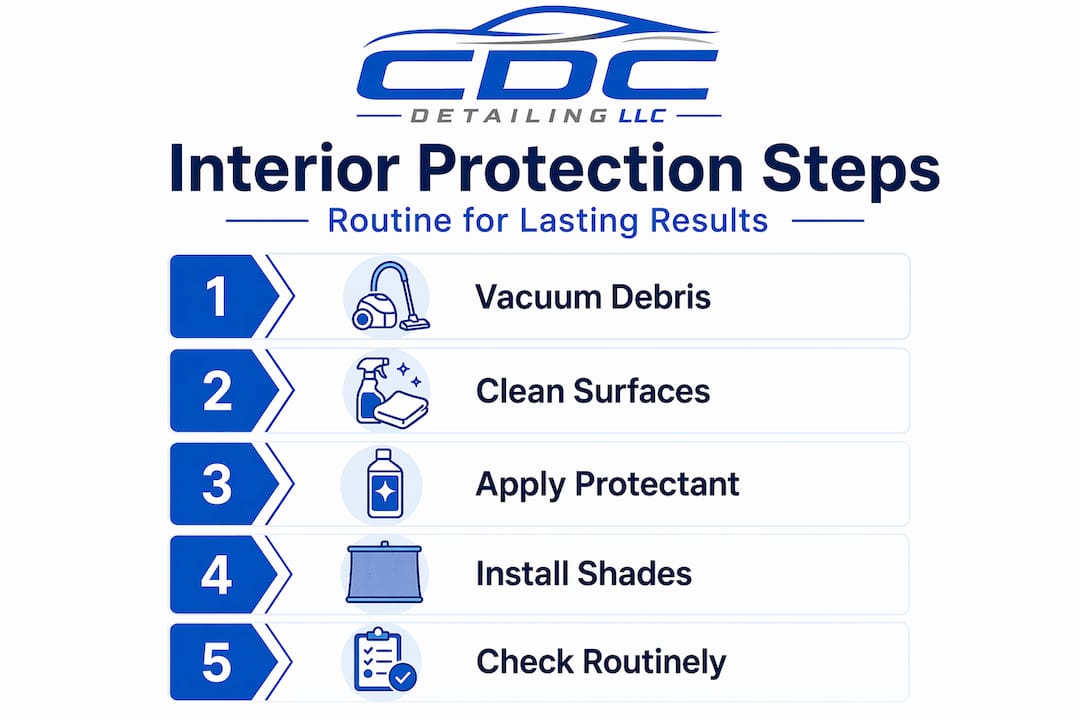
Skipping straight to applying a protectant is one of the most common mistakes car owners make. Protectants form a barrier only when surfaces are completely free of dirt, oils, and old product residue. Think of it like painting a wall. Prime it dirty and the paint peels fast.
Follow this sequence every time:
- Remove all loose items and trash so you have clear access to every surface.
- Vacuum thoroughly, starting with the seats, then working across the carpets, floor mats, and into the crevices between seat cushions. Use the narrow crevice tool around the center console and under seat rails.
- Wipe hard surfaces including the dashboard, door panels, steering wheel, and center console with an automotive interior cleaner applied to a microfiber cloth. Never spray directly onto the surface.
- Clean the leather (if applicable) with a pH-balanced leather cleaner. Work in small circular sections and wipe dry before applying conditioner. Leather conditioners restore hydration and add UV defense, which prevents cracking down the road.
- Clean the glass with an ammonia-free cleaner sprayed onto a clean microfiber cloth first. This keeps overspray off electronic screens.
- Wipe infotainment screens and instrument clusters with a lightly dampened microfiber cloth only. Never spray screens directly, as doing so damages anti-glare and anti-fingerprint coatings that cannot be restored.
- Let everything dry completely before moving on to protectants. Even slight moisture under a protectant traps it and reduces adhesion.
For a more detailed breakdown of each cleaning phase, the interior car cleaning workflow at Cdcautodetailing covers material-specific techniques and timing tips.
Pro Tip: Good Housekeeping recommends material-specific protectants and careful cleaning to repel stains without damaging sensitive surfaces. Use a separate cloth for each surface type to avoid cross-contamination.
Applying protection: UV shields, protectants, and seasonal gear
Once the interior is clean, this is where your car interior protection tips actually turn into lasting results. The key principle here is layering. No single product covers every threat, so you build a system that addresses sun, stains, and moisture as separate but connected challenges.
Preventing sun damage in cars
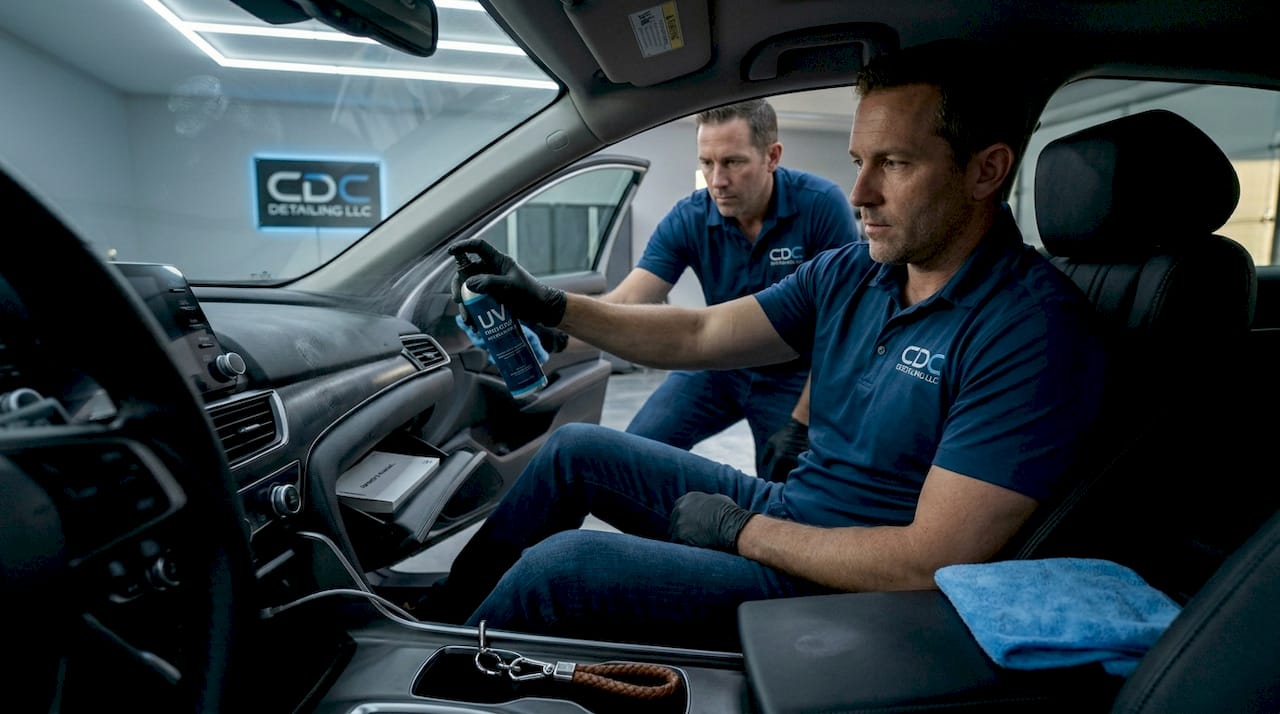
UV radiation is the most consistent threat to dashboards, seats, and trim. Combined UV strategies work far better than any one method alone. That means parking in shade whenever possible, using a quality sunshade any time the car sits in direct sunlight, applying a UV protectant spray to the dashboard and vinyl trim every two to three months, and considering professional window tinting. Check your state’s legal tint limits before scheduling a window tinting appointment.
Fabric and leather protectants
After cleaning, apply a fabric protector to cloth seats and carpets. Products like Scotchgard create a surface barrier that repels stains before they soak in. For leather, conditioner is not optional. It replaces the natural oils that heat and UV light strip out over time. Reapply leather conditioner every three months, and fabric protector every four to six months depending on how much the vehicle gets used.
Seasonal accessories and moisture control
Here is where many car owners fall short. All-weather floor mats are not just for winter convenience. They contain road salt, mud, and slush in a tray that lifts out for easy cleaning. In summer they catch sand and grass. Seat covers protect fabric from sweat, pet hair, and sun exposure simultaneously.
Moisture control deserves its own attention. Managing cabin humidity is especially important in winter when condensation from wet boots and cold windows creates invisible damage inside door panels and under carpets. Small dehumidifier bags placed under seats absorb excess moisture between uses. If you notice a musty smell, that is mold already starting. Information on stopping interior moisture damage before it becomes a bigger problem is worth reviewing if you park in a damp environment regularly.
| Protection type | Primary threat | Reapplication frequency |
|---|---|---|
| Sunshade (windshield) | UV damage to dash and seats | Use every time parked in sun |
| UV protectant spray | Fading and cracking of vinyl/plastic | Every 2 to 3 months |
| Fabric protector | Staining and moisture absorption | Every 4 to 6 months |
| Leather conditioner | Cracking, drying, UV degradation | Every 3 months |
| All-weather floor mats | Dirt, salt, moisture | Replace annually or as needed |
| Dehumidifier bags | Mold and condensation | Replace monthly in winter |
Mistakes that undermine your protection efforts
Even car owners who buy the right products sometimes see their interior age faster than expected. The problem is almost always in the execution, not the products.
- Using household cleaners on automotive surfaces. Multi-surface sprays, bleach-based products, and even some dish soaps strip plastics and dry out leather within a few uses.
- Applying protectants over uncleaned surfaces. Dirt and oils sit between the surface and the protectant, preventing proper bonding and locking in grime.
- Spraying products on a hot interior. On a warm day after the car has been sitting in the sun, protectant sprays dry before they can spread evenly. Apply in shade or after the interior has cooled.
- Ignoring moisture until odors appear. Condensation-driven damage is invisible at first. By the time you smell mold, it has already taken hold in your carpet padding or door panels.
- Leaving spills to dry. Coffee, juice, and food stains that sit for more than a few hours start bonding chemically with fabric fibers. Blot immediately with a clean microfiber cloth, then treat with an automotive upholstery cleaner.
Pro Tip: Set a phone reminder every 90 days to check your floor mats, inspect seat surfaces for fading or cracking, and reapply your UV and fabric protectants. Consistency beats intensity every time.
Building a routine that keeps results going
Applying protectants once and calling it done is where most people lose ground. The ways to maintain car interiors that actually work over years are built on consistent, scheduled habits rather than occasional deep cleans.
Here is what a sustainable routine looks like:
- Weekly: Shake out floor mats and do a quick vacuum of high-traffic areas like driver’s footwell and the rear seat.
- Monthly: Wipe down all hard surfaces with an interior cleaner, check for new stains on seats, and empty or replace dehumidifier bags.
- Quarterly: Full vacuum of all surfaces and crevices, clean and condition leather, reapply UV protectant to the dashboard and trim, and inspect floor mats for wear.
- Annually: Deep clean carpets and fabric seats with an extractor or professional service, replace worn floor mats, and assess whether window tint is delaminating or losing UV protection.
Checking for the signs that your protection is holding up matters too. Leather that feels soft and resists light scuffs is well-conditioned. Dashboard surfaces that do not show white stress marks when pressed are still protected. Fabric seats that bead water slightly after a fabric protector application confirm the coating is still active.
Professional interior detailing services fill in the gaps that routine home maintenance misses, especially for extracting deep-set stains and reconditioning surfaces that have started to age.
My take: why most people protect their car the wrong way
I have seen hundreds of car interiors over the years, and the pattern is always the same. People wait until something looks bad before they act. The seat is cracked, the dash has turned chalky, the carpets have permanent stains, and then they want to fix it. At that point, you are restoring, not protecting, and those are two very different fights.
The approach I have found most effective is thinking in zones rather than products. Your floor sees a completely different set of threats than your seats, which are different from your dashboard. A zone-based strategy tailored by material and exposure risk works far better than a single product applied everywhere. Floor mats handle the dirt and salt. UV protectant handles the sun. Leather conditioner handles the heat. Each layer does its specific job.
What I tell every car owner I work with: the best protection routine is the one you will actually stick to. A quick wipe-down every month beats a quarterly marathon session you never get around to. And if life gets busy, one professional detail twice a year resets the baseline in ways no amount of spray-and-wipe at home can match.
The other thing I have learned is that the best materials for car protection are not always the most expensive. A $15 windshield sunshade and a $20 can of fabric protector will do more to preserve your interior over five years than a $200 gadget you use twice.
— Charles
Let the professionals handle the heavy lifting

DIY protection gets you far, but some tasks need professional hands. Cdcautodetailing offers mobile interior detailing throughout South Jersey, bringing the full service directly to your driveway. Professional cleaning removes embedded dirt that vacuums miss, reconditioning treatments restore surfaces that have already started to fade, and ceramic coating services add a durable UV and stain barrier that outperforms any spray-on product you can buy at a retail store. If you are serious about preserving your vehicle’s value and comfort, pairing your home routine with professional detailing is the most effective combination. You can learn more about how detailing works and schedule a mobile appointment that fits your schedule without ever leaving home.
FAQ
What are the best materials for car interior protection?
Microfiber cloths, automotive-grade UV protectant sprays, pH-balanced leather conditioners, and fabric protectors like Scotchgard are among the most effective. All-weather floor mats and windshield sunshades round out a solid protection kit.
How often should I apply UV protectant to my car interior?
Apply UV protectant to dashboards and vinyl trim every two to three months. In regions with intense sun exposure or for vehicles that park outdoors regularly, stick to the two-month end of that range.
Can I use household cleaners on my car interior?
No. Consumer Reports warns that household products can cause permanent damage to modern automotive surfaces. Use cleaners specifically formulated for car interiors.
How do I prevent mold in my car interior?
Managing cabin humidity with dehumidifier bags under the seats and leaving windows slightly cracked when parked safely reduces condensation buildup. Address wet floor mats immediately after winter driving.
Does window tinting help protect my car interior from sun damage?
Yes. Window tint reduces UV light penetration significantly, slowing the fading and cracking of seats and dashboard surfaces. Check your state’s legal tint limits before installation, and consider professional tinting for the best coverage and adhesion.