
Your car’s interior faces a silent enemy that works around the clock, even when parked in your driveway. UV radiation degrades materials by up to 50% over five years, causing fading, cracking, and permanent damage that slashes resale value and comfort. Most South Jersey car owners underestimate this threat, assuming interiors naturally withstand daily use. This guide reveals why proactive protection matters, which materials need specific care, and how mobile detailing services preserve your vehicle’s appearance and longevity with minimal effort on your part.
Table of Contents
- What Damages Car Interiors And Why Protection Matters
- How Different Interior Materials Respond To Damage And Protection
- Effective Interior Protection Methods And Best Practices
- Comparing Protection Techniques: Sprays, Covers, And Professional Detailing
- Discover Convenient Mobile Auto Detailing In South Jersey
- FAQ
Key takeaways
| Point | Details |
|---|---|
| UV damage accelerates aging | Sunlight causes fading, cracking, and material breakdown that reduces interior lifespan significantly. |
| Material type dictates care | Leather, fabric, and vinyl each require tailored protection methods for optimal durability. |
| Immediate stain removal prevents permanent damage | Quick action on spills stops odors, mold growth, and costly replacement needs. |
| Layered protection works best | Combining UV protectants, seat covers, and professional detailing maximizes interior preservation. |
| Mobile detailing saves time | Expert care comes to you, offering convenience and specialized treatments for busy schedules. |
What damages car interiors and why protection matters
Your car’s cabin endures constant assault from multiple sources, with UV radiation leading the charge. Sunlight penetrates windows and attacks dashboard materials, leather seats, and plastic trim, breaking down molecular bonds that keep surfaces supple and vibrant. UV protectants reduce degradation by 70% when applied consistently, proving prevention far outweighs reactive repairs. Heat cycling compounds this damage as South Jersey’s temperature swings cause materials to expand and contract repeatedly, creating microscopic cracks that grow into visible splits over time.
Stains represent another critical threat that many owners dismiss as merely cosmetic. Spilled coffee, pet accidents, and food residue don’t just leave marks. Untreated spills cause mold growth with health risks, releasing allergens and odors that compromise air quality and passenger comfort. Prompt removal prevents 90% of permanent damage, making quick action your first line of defense. The longer contaminants sit, the deeper they penetrate fabric fibers and leather pores, requiring professional extraction that costs significantly more than preventive care.
Protection strategies directly impact your vehicle’s resale value and daily experience. A well-maintained interior commands premium pricing when you sell or trade, while degraded cabins trigger immediate buyer skepticism. Consider these protection priorities:
- Apply UV protectants to dashboards and leather surfaces every three months
- Install quality seat covers in vehicles exposed to direct sunlight
- Address spills within 24 hours to prevent permanent staining
- Schedule professional detailing every four to six months for deep cleaning
“Regular interior protection isn’t optional maintenance, it’s financial insurance that preserves thousands in vehicle equity while ensuring every drive remains comfortable and pleasant.”
Understanding these damage mechanisms helps you prioritize protection strategies that match your usage patterns and environment. South Jersey’s coastal humidity and summer heat create particularly harsh conditions that accelerate wear, making proactive care essential rather than optional. Your car interior cleaning guide provides detailed steps for maintaining surfaces between professional treatments, establishing routines that compound protection benefits over months and years.
How different interior materials respond to damage and protection
Leather seats offer luxury and durability but demand specific care to prevent premature aging. In dry climates, leather maintains flexibility for years, yet UV exposure degrades leather faster than fabric alternatives, causing surface cracking and color fading that diminishes aesthetic appeal. Cold temperatures stiffen leather fibers, making them vulnerable to stress cracks when passengers shift weight. Regular conditioning replenishes natural oils that keep leather supple, creating a protective barrier against environmental damage.
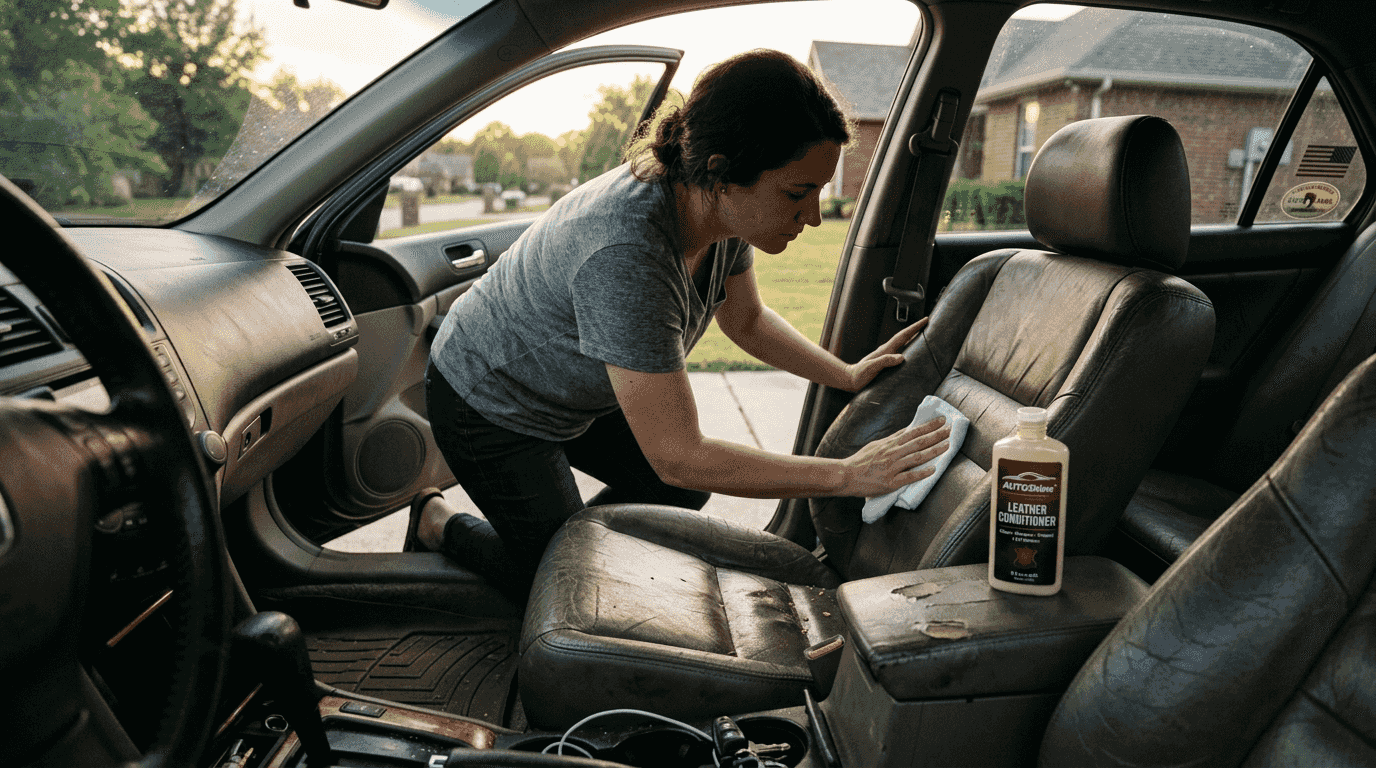
Fabric seats excel in breathability and cost efficiency, making them popular choices for families and budget-conscious buyers. These materials naturally resist heat buildup, staying cooler under direct sunlight compared to leather surfaces that can reach uncomfortable temperatures within minutes. Modern fabrics incorporate antimicrobial treatments and nanotech coatings that repel liquids and resist stains, though older vehicles lack these advanced protections. Fabric’s acoustic properties also dampen road noise, contributing to quieter cabin environments that enhance passenger comfort on long drives.
Vinyl and leatherette present middle-ground options that combine leather’s appearance with fabric’s maintenance simplicity. These synthetic materials resist moisture better than genuine leather, making them practical for households with children or pets. However, vinyl becomes brittle under sustained UV exposure, developing surface cracks that expose underlying foam padding. Protection methods vary significantly:
| Material | Heat Retention | UV Vulnerability | Stain Resistance | Best Protection Method |
|---|---|---|---|---|
| Genuine Leather | High | Very High | Moderate | UV protectant plus monthly conditioning |
| Fabric | Low | Moderate | High (modern) | Nanotech spray and regular vacuuming |
| Vinyl/Leatherette | Moderate | High | High | UV protectant and protective covers |
| Alcantara | Low | Low | Low | Professional cleaning every 6 months |
Choosing appropriate protection depends on accurately identifying your interior materials and understanding their specific vulnerabilities. Leather requires pH-balanced conditioners that won’t strip natural oils, while fabric benefits from enzyme-based cleaners that break down organic stains without damaging fibers. Your South Jersey interior cleaning guide addresses regional factors like salt air exposure and seasonal pollen that affect material longevity in coastal areas.
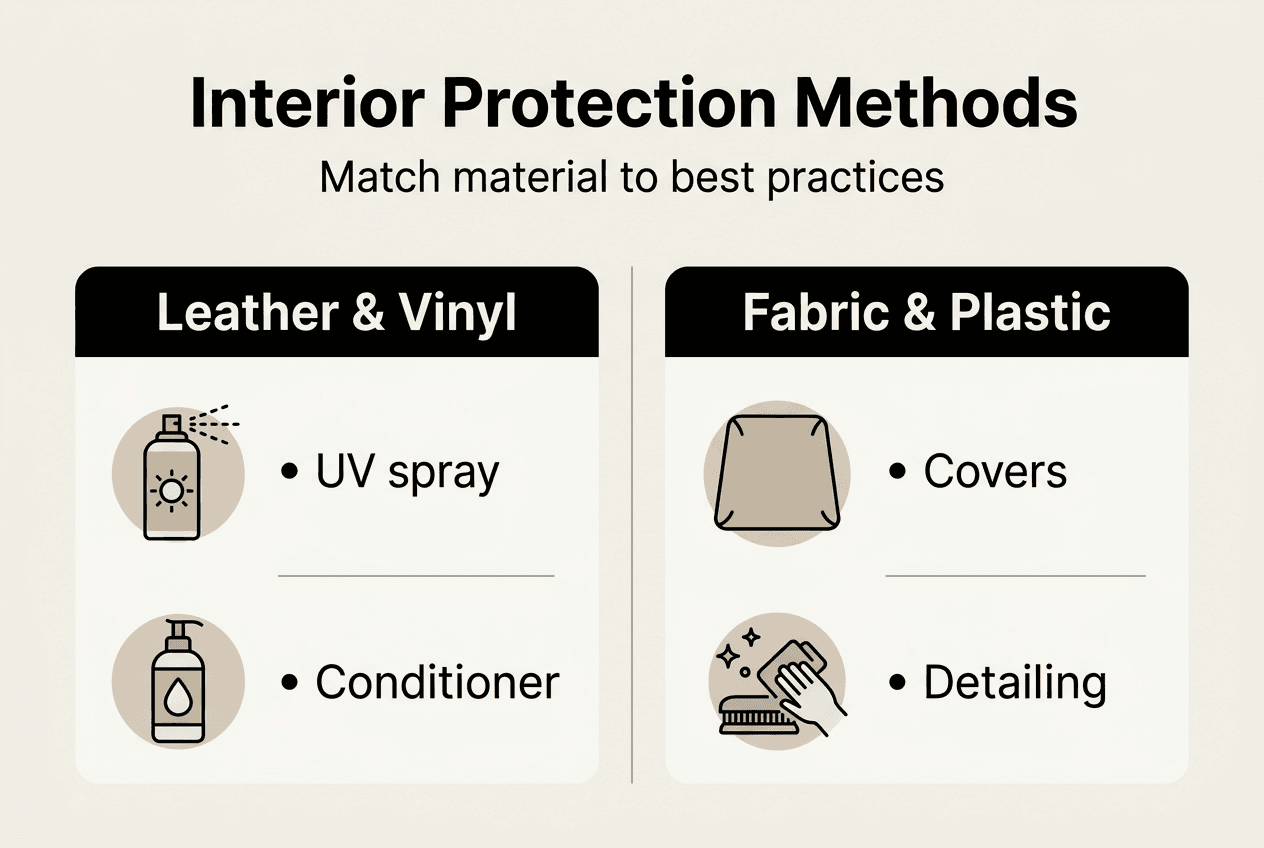
Pro Tip: Test any new protectant or cleaner on a hidden area under the seat before applying to visible surfaces, as chemical reactions can cause discoloration that’s impossible to reverse on leather and light-colored fabrics.
Effective interior protection methods and best practices
UV protectant sprays form your first defense layer, creating invisible shields that absorb harmful radiation before it reaches material surfaces. Apply these products to dashboards, door panels, and any plastic or leather surface exposed to sunlight, reapplying every 60 to 90 days as formulas gradually wear away through contact and cleaning. Window tinting blocks up to 99% of UV rays while reducing cabin temperature by 15 degrees, delivering dual benefits that protect materials and improve comfort. South Jersey’s intense summer sun makes tinting particularly valuable for vehicles parked outdoors during work hours.
Seat covers provide physical barriers that absorb UV rays and prevent fading more effectively than chemical treatments alone. Quality covers feature breathable fabrics that don’t trap moisture, preventing mold growth underneath while shielding original upholstery from wear. Custom-fit options maintain your interior’s appearance better than universal covers, staying securely in place without bunching or sliding during normal use. Remove and wash covers monthly to prevent dirt accumulation that can abrade underlying materials through friction.
Immediate spill response prevents 90% of permanent staining and odor problems that plague neglected interiors. Keep these supplies in your vehicle:
- Microfiber towels for quick absorption
- pH-neutral cleaner for general spills
- Enzyme cleaner for organic stains like food or pet accidents
- Soft-bristle brush for working cleaner into fabric
Blot spills immediately rather than rubbing, which pushes liquids deeper into fibers and spreads stains across larger areas. Work from the stain’s outer edge toward the center to prevent expansion, applying cleaner sparingly to avoid oversaturation that requires extended drying time.
Regular maintenance routines compound protection benefits through consistent care that prevents minor issues from becoming major problems. Follow this schedule:
- Vacuum weekly to remove abrasive dirt and debris
- Wipe hard surfaces with damp microfiber cloths bi-weekly
- Apply leather conditioner monthly on genuine leather surfaces
- Deep clean fabric seats quarterly with upholstery cleaner
- Schedule professional detailing every four to six months
Mobile detailing services eliminate the hassle of transporting your vehicle to shops, bringing professional-grade equipment and expertise directly to your location. Technicians assess your interior’s specific needs, applying targeted treatments like leather conditioning and stain removal that restore appearance and protect against future damage. Steam cleaning penetrates deep into fabric fibers, extracting embedded dirt that household vacuums can’t reach while sanitizing surfaces without harsh chemicals.
Pro Tip: Park in shaded areas whenever possible, as even the best protectants can’t completely eliminate UV damage from hours of direct sun exposure that raises interior temperatures above 150 degrees Fahrenheit.
Your interior detailing checklist breaks down professional processes into manageable steps you can implement between service appointments, maintaining the results of professional treatments while extending the time between deep cleaning sessions.
Comparing protection techniques: sprays, covers, and professional detailing
UV protectant sprays offer convenience and affordability, making them accessible entry points for protection-minded owners. Application takes minutes, requiring only clean surfaces and even coverage across treated areas. However, durability remains limited as formulas break down through UV exposure, contact wear, and routine cleaning, necessitating frequent reapplication to maintain effectiveness. Sprays work best as supplementary protection rather than standalone solutions, particularly on hard surfaces like dashboards and door panels where physical covers aren’t practical.
Seat covers deliver superior physical protection by blocking UV rays, absorbing impact wear, and shielding original upholstery from spills and stains. Installation requires initial time investment, and covers need regular removal for cleaning to prevent trapped moisture and dirt accumulation. Quality matters significantly, as poorly fitted covers bunch and slide, creating discomfort while failing to protect effectively. Despite maintenance requirements, covers preserve original seats in like-new condition, dramatically improving resale value for buyers who prioritize pristine interiors.
Professional mobile detailing combines cleaning expertise, commercial-grade products, and specialized equipment that achieve results impossible with consumer-grade supplies. Mobile services provide flexible, tailored care addressing specific challenges like pet hair removal, leather restoration, and odor elimination that require professional knowledge and tools. Technicians identify material types and apply appropriate treatments, avoiding common mistakes that damage surfaces through incorrect product selection or application techniques.
| Protection Method | Effectiveness | Cost | Convenience | Durability | Best For |
|---|---|---|---|---|---|
| UV Protectant Sprays | Moderate | Low ($15-30) | Very High | 60-90 days | Hard surfaces and supplementary protection |
| Quality Seat Covers | High | Moderate ($100-300) | Moderate | 2-5 years | High-use vehicles and sun-exposed parking |
| Mobile Detailing | Very High | Higher ($150-300) | High | 4-6 months | Comprehensive care and restoration needs |
| Window Tinting | Very High | Higher ($200-500) | Low (one-time) | 5-10 years | Maximum UV protection and heat reduction |
Combining methods yields optimal results that single approaches can’t match. Apply UV protectants to hard surfaces, install covers on seats receiving direct sunlight, and schedule regular mobile detailing for deep cleaning and conditioning that maintains all protected surfaces. This layered strategy addresses different damage vectors simultaneously, providing comprehensive protection that extends interior lifespan while minimizing maintenance effort.
Pro Tip: Track protection application dates in your phone’s calendar with automatic reminders, ensuring you never miss reapplication windows that leave interiors vulnerable during gaps in coverage.
Busy South Jersey owners benefit particularly from mobile detailing’s flexibility, eliminating shop visits that consume hours of valuable time. Your mobile detailing implementation tips explain how to prepare your vehicle and schedule services that fit seamlessly into work or home routines, maximizing convenience while ensuring consistent professional care.
Discover convenient mobile auto detailing in South Jersey
Protecting your car’s interior shouldn’t disrupt your busy schedule or require extensive product research. CDC Auto Detailing brings professional interior care directly to your South Jersey location, whether at home, work, or anywhere convenient for you. Our technicians use commercial-grade UV protectants, leather conditioners, and fabric treatments that preserve your interior’s appearance and comfort far beyond what consumer products achieve. We assess your vehicle’s specific materials and conditions, applying tailored protection that addresses your unique needs.
Flexible scheduling accommodates your lifestyle, with appointments available evenings and weekends when traditional shops close. Our mobile service eliminates transportation hassles, letting you focus on work or family while we restore and protect your interior. Professional expertise ensures safe, effective treatments that enhance resale value and daily driving comfort. Explore our detailed service examples to understand how comprehensive interior care transforms your vehicle, or learn how to implement mobile detailing into your maintenance routine. Ready to experience the difference? Discover how to book mobile detailing and schedule your first appointment today.
FAQ
How often should I have my car interior professionally detailed?
Professional detailing every four to six months maintains optimal interior condition for most drivers, though high-use vehicles or those exposed to South Jersey’s intense summer sun may benefit from quarterly service. Frequency depends on factors like daily mileage, passenger count, pet transportation, and parking conditions. Watch for signs you need professional detailing like persistent odors, visible stains, or dull leather surfaces that indicate immediate attention requirements.
What are the best products to protect leather and fabric seats?
Use pH-balanced leather conditioners containing natural oils and UV protectants specifically formulated for automotive leather, avoiding household products that strip protective coatings. For fabric seats, choose nano-coating sprays with antimicrobial properties and stain resistance that create invisible barriers against spills and dirt. Always test new products on hidden areas under seats before applying to visible surfaces, as chemical reactions can cause irreversible discoloration. Your car interior cleaning products guide recommends specific brands and application techniques for different material types.
Can window tinting really protect my car interior?
Window tinting blocks up to 99% of harmful UV rays that cause fading, cracking, and material degradation, making it one of the most effective single protection investments available. Quality tinting also reduces cabin temperature by 10 to 15 degrees, decreasing heat stress on leather and plastic components while improving passenger comfort. South Jersey’s coastal sun exposure makes tinting particularly valuable for vehicles parked outdoors during work hours. Explore our window tinting guide for film options, legal requirements, and installation considerations.
What advantages does mobile detailing offer over traditional shop visits?
Mobile detailing saves hours by eliminating travel time and waiting periods, bringing professional equipment and expertise directly to your preferred location. Services adapt to specific needs like leather conditioning, pet hair removal, and odor elimination that generic shop treatments often overlook. Technicians assess your vehicle’s unique materials and conditions, applying tailored protection that addresses your interior’s specific vulnerabilities. Flexible scheduling accommodates busy lifestyles with evening and weekend availability that traditional shops rarely offer. Learn more about mobile detailing advantages and how convenient professional care preserves your interior’s value and appearance.