
Wash gently, protect aggressively: hand wash weekly using the two bucket method, dry the paint with a contact free blower or a high quality microfiber towel, and lock in a layer of protection with a sealant or a professional ceramic coating. That single routine, repeated on a cadence instead of skipped and rescued later, is what keeps black paint looking deep instead of hazy.
TL;DR:
- Proper wash technique is crucial, with a focus on rinsing thoroughly, using a foam pre-wash, and washing in shade to prevent swirl marks.
- Using dedicated tools and a pH neutral shampoo can significantly reduce swirl marks and maintain paint clarity over time.
- Drying with a microfiber towel or contact-free blower minimizes water spots and avoids scratching the paint during the drying process.
- Applying protection products like wax, sealant, or ceramic coating is most effective after proper correction and cleaning of swirl marks and surface contamination.
- Regular maintenance, including weekly washes and periodic inspections, is key to preserving a deep black shine and preventing damage from environmental factors.
Table of Contents
- Quick checklist: tools, products, and cadence to keep on hand
- Step-by-step hand-wash process that minimizes swirl marks
- Drying and water-spot prevention (including contact-free options)
- Spot removal: bugs, bird droppings, sap, tar: safe removal steps
- Protection options: wax, sealant, ceramic coating, and PPF: practical trade-offs
- How to reduce and correct swirl marks and light scratches
- Maintenance schedule: weekly, monthly, and seasonal tasks
- Common mistakes to avoid and pro-level shortcuts that make a measurable difference
- Why a professional detailer’s process helps on black paint
- What most black car advice gets backward
- Book a professional detail for black paint that actually holds up
- Sources
- FAQ
Quick checklist: tools, products, and cadence to keep on hand
Black paint forgives nothing, so the right tools matter more than they do on lighter colors. Keep a dedicated kit near your driveway or garage so washing never turns into a scramble for supplies.
- Two wash buckets with grit guards, one for soap and one for rinsing the mitt.
- A pH neutral car shampoo and a separate detailer spray for quick touch ups between washes.
- Plush microfiber wash mitts and at least two high GSM drying towels, one for paint and one kept only for wheels.
- A dedicated bug and tar remover for fast spot treatment.
- A foam cannon or pump sprayer, optional but useful for pre-wash dwell time.
On cadence, wash weekly if the car sits outside or under trees, every two weeks if it is garaged. Add a five-minute quick detail spray between washes to knock off dust, and plan to check or reapply wax or sealant every one to three months depending on the product.
Step-by-step hand-wash process that minimizes swirl marks
The wash itself causes most of the damage people blame on age or bad luck. Research on dark vehicles points to wash induced swirl marks as the source of a large majority of the visible defects owners notice, which makes technique the real priority, not product price.
Start with the setup. Wash in shade or early morning when panels are cool, since hot paint dries soap and water into spots before you can rinse them off.
- Rinse the entire car first to knock off loose grit, paying extra attention to lower panels and wheel wells.
- Apply a foam pre wash or snow foam and let it dwell for a few minutes to loosen dirt before any mitt touches the paint.
- Fill one bucket with soapy water and one with plain rinse water, each fitted with a grit guard to scrape debris off the mitt.
- Wash the wheels and tires first, using a separate mitt and separate bucket so brake dust never transfers to paint tools.
- Work the body top to bottom, one panel at a time: dip, wash a section, rinse the mitt against the grit guard, dip again.
- Rinse each panel before it dries, and do a final full rinse once every panel is clean.
Use a pH neutral shampoo rather than dish detergent. Dish soap strips wax and sealant and speeds up dulling, according to AAA’s car wash guidance, while a proper car shampoo cleans without eating through your existing protection.
Pro Tip: Fold your microfiber mitt into quarters and rotate to a clean face every panel or two so you’re never dragging trapped grit across the paint.
Drying and water-spot prevention (including contact-free options)
Wet black paint shows every missed streak, so drying deserves as much care as washing. A plush microfiber towel with a GSM rating around 400 to 600 holds more water and glides with less friction than a thin shop rag.
Lay the towel flat and pat or drag it in one direction rather than scrubbing in circles, and switch to a fresh section often. For an even safer option, professional detailers recommend contact free drying with an electric dryer or leaf blower set on a cool or low setting, which removes water from seams and mirrors without any towel ever touching the clear coat.
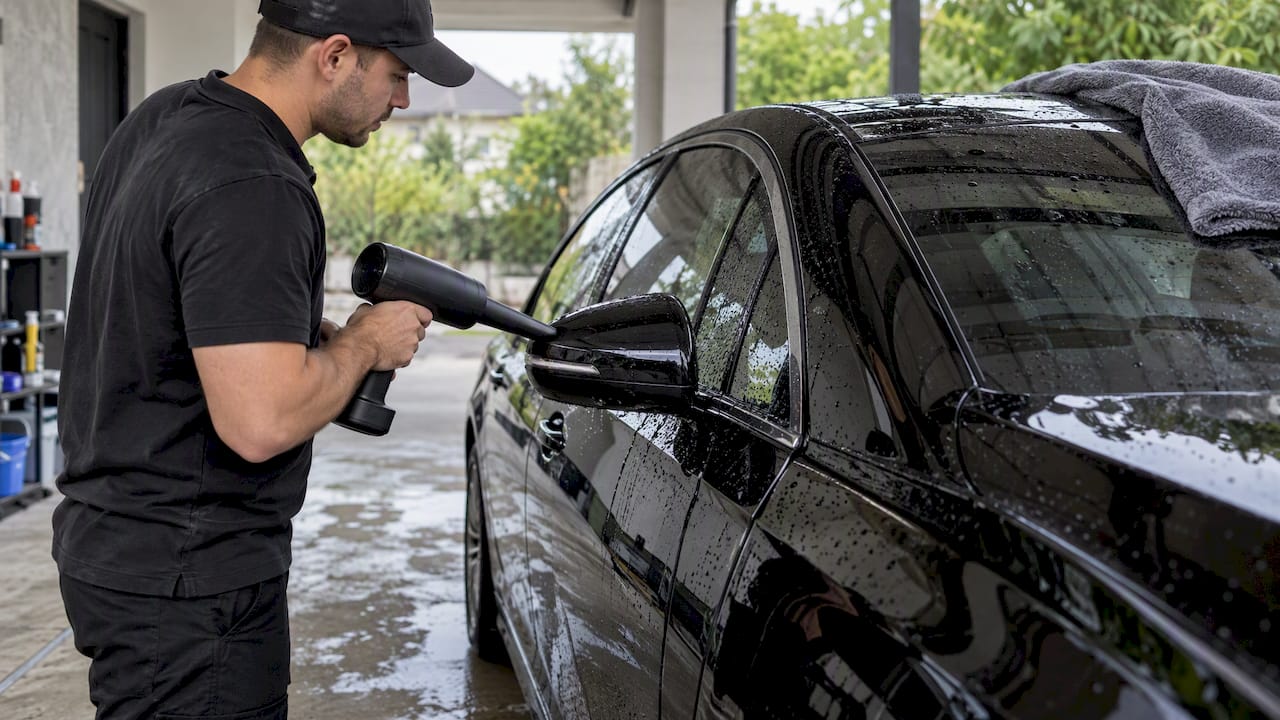
If your tap water leaves white mineral spots, finish with a filtered or spot free rinse, or mist on a quick detail spray as a drying aid to help the last water sheet off cleanly instead of beading into spots.
Spot removal: bugs, bird droppings, sap, tar: safe removal steps
Contaminants that sit on black paint do their damage fast, since bug acids, bird droppings, and tree sap are all mildly corrosive and etch into the clear coat the longer they stay. Waiting until the next scheduled wash is how a one-minute fix turns into a paint correction job.
The safe sequence is the same for most of these:
- Soak the spot with a dedicated detailer spray or bug and tar remover, giving it time to soften the residue rather than wiping immediately.
- Lift gently with a soft microfiber towel, folding to a clean section as grime transfers off.
- Rinse the area with clean water to remove any leftover chemical or residue.
- Reapply a light layer of wax or quick sealant over the spot if the original protection was stripped during cleaning.
AAA’s guidance on bug removal backs the soak and lift approach specifically because it avoids grinding hardened bug bodies into the clear coat, which is what causes the small pockmarks owners later mistake for stone chips.
If a stain has already etched a dull ring or faint outline into the paint, washing alone will not remove it. That level of damage calls for machine polishing or professional correction, since the mark is no longer sitting on top of the clear coat but inside it.
Protection options: wax, sealant, ceramic coating, and PPF: practical trade-offs
Every protective product buys you the same basic thing, less effort during the next wash, but they differ widely in how long that protection lasts and how much prep they demand upfront.
- Carnauba wax adds deep gloss and is the easiest to apply by hand, but it typically lasts four to six weeks before needing a reapplication.
- Synthetic sealant trades a touch of warmth in the shine for durability, generally holding up for three to six months with normal washing.
- Professional ceramic coating bonds to the clear coat and creates a hydrophobic barrier that can last upward of five years when the paint was properly corrected first.
- Paint protection film (PPF) is a physical barrier best suited to high impact areas like the front bumper and hood, protecting against chips rather than just adding shine.
The catch with any long term option, especially ceramic coating, is prep. Coating over paint that still has swirl marks or embedded dirt seals those defects under a hard shell for years, since proper correction has to happen before the coating goes on, not after. That prep requirement is also why professional coating jobs cost more than a bottle of wax: a detailer is paying for hours of correction work before the product itself ever touches the panel.
For most owners, wax or sealant covers a car that gets washed often and garaged most of the time, while ceramic coating or PPF makes more sense for a daily driver parked outside or a vehicle you plan to keep for years. You can read more about how ceramic coating performs specifically on black paint if you are weighing that option, and NJ Vinyl Wrapz’s rundown of coating basics is a useful second opinion on prep expectations before you book anything.
How to reduce and correct swirl marks and light scratches
Swirl marks are the single biggest reason black paint looks tired, and most of them come from the wash itself rather than from road debris. With wash technique responsible for most of those defects, the fix is a ladder of increasingly serious steps, not a jump straight to a compound.
Start by inspecting the paint in direct sunlight, since swirls that are invisible in shade show up clearly under a bright angle. If the surface feels rough or gritty under a light touch, run a fine grade synthetic clay mitt with plenty of lubrication to lift embedded contamination before any polishing begins, since polishing over a dirty surface just grinds grit deeper in.
Light swirls often respond to a hand applied polish and a microfiber applicator, worked in small sections with light pressure. Deeper marks need a dual action polisher, which levels the clear coat more evenly than hand application. Scratches that catch a fingernail, or haze that does not lift after a couple of polishing passes, are past the DIY stage and call for wet sanding or professional correction, since those techniques remove a controlled layer of clear coat that is easy to overdo without experience.
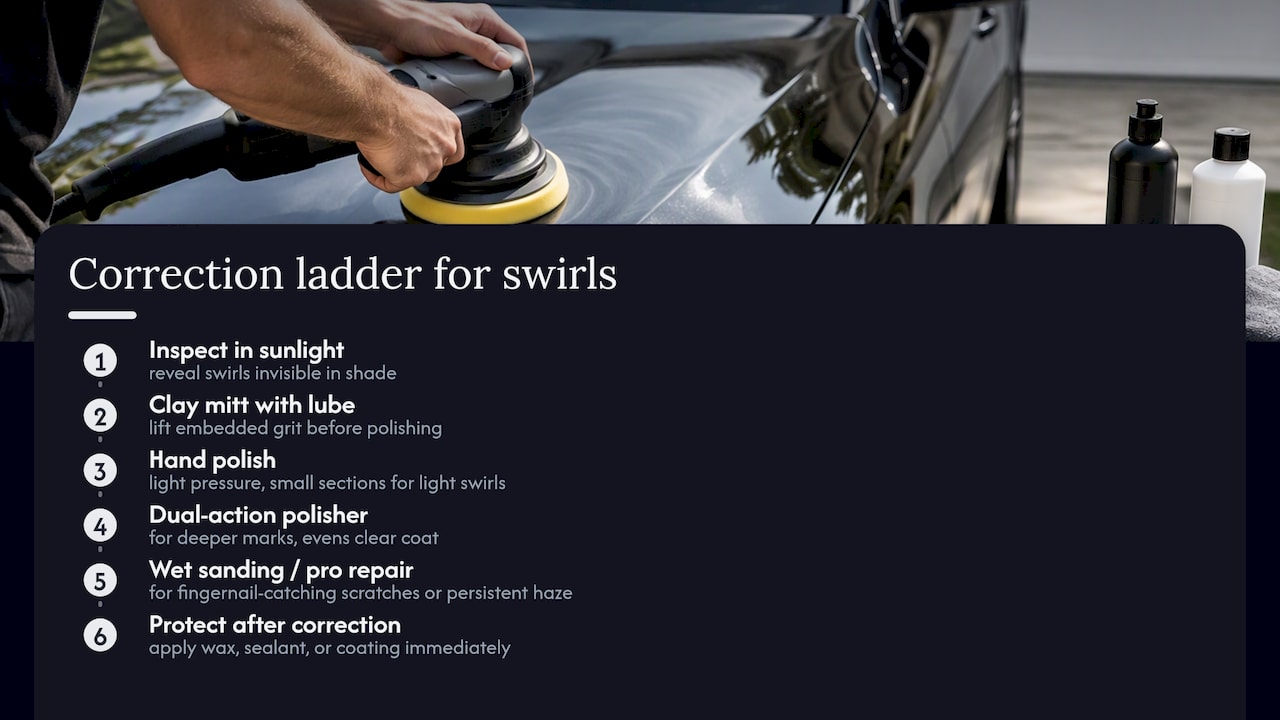
Once the paint is corrected, protect it immediately with wax, sealant, or a coating. Freshly polished paint is stripped of any barrier and is more exposed to new contamination than paint that was never touched.
Maintenance schedule: weekly, monthly, and seasonal tasks
A black car rewards a routine more than a one time deep clean. Build the habit around three layers of effort so nothing gets overlooked.
- Weekly: wash using the two bucket method if the car is parked outside, or every two weeks if it is garaged, plus a quick detail spray between washes to knock off dust.
- Monthly: inspect the paint in sunlight for new swirls, check wax or sealant beading, and top up protection if water stops sheeting off cleanly.
- Seasonal: rinse the undercarriage and lower panels more often during salt season, wash off bug splatter promptly through summer, and book a professional detail or ceramic coating check before winter or after a long season of heavy exposure.
Owners dealing with road salt should pay particular attention to lower panels and wheel wells, where salt and winter grime sit longest and cause the most hidden corrosion risk.
Common mistakes to avoid and pro-level shortcuts that make a measurable difference
A few habits do more damage to black paint than years of normal driving. Avoiding them matters more than any product you buy.
- Automatic bristle washes trap grit and grind it into the clear coat, a pattern AAA specifically warns against in favor of hand washing or touchless systems.
- Dish soap strips existing wax or sealant and speeds up dulling instead of cleaning safely.
- Dry wiping dust off with a rag grinds particles across the surface and is one of the fastest ways to create fresh swirls.
Pro Tip: Never touch dry paint with a cloth. A quick mist of detailer spray before wiping turns a scratching motion into a lubricated, safe one.
Small investments pay off disproportionately here: a set of grit guards, a couple of high GSM towels, and a dedicated wheel mitt cost little compared to a single paint correction appointment.
Why a professional detailer’s process helps on black paint
Some stages of black car care are easier to get right with professional equipment and experience, especially correction before a long term coating. Professional detailers offer exterior detailing, ceramic coatings, and paint protection film installation, each suited to a different point in a black car’s upkeep.
Professional prep matters most before any multi-year coating, since uncorrected swirls get sealed in permanently once the coating cures. It also matters after a contamination event like tree sap or sustained etching that a home wash cannot lift. For readers who want more detail before booking anything, guides on applying a ceramic coating step by step and on choosing the right detailing package cover the process end to end.
What most black car advice gets backward
Most guides treat products as the answer and technique as an afterthought, but the opposite is closer to true. A $40 bottle of ceramic spray cannot fix a wash routine that drags grit across the paint every weekend, and a $20 microfiber mitt used correctly will outperform expensive wax applied over dirty, swirled paint.
The habit that matters most is the boring one: rinse before you touch anything, use separate tools for wheels and paint, and dry without dragging a towel across a dry panel. Protection products are a multiplier on good technique, not a substitute for it. If you only have time to fix one thing, fix the wash, not the wax.
— Charles
Book a professional detail for black paint that actually holds up
If you would rather skip the weekend bucket routine, CDC Auto Detailing’s exterior detail and detail packages cover the wash, decontamination, and protection steps in one visit, with mobile service so the work happens at your home or office.

For longer term results, the ceramic coating packages and paint protection film installs are built around full paint correction before any product goes on, so the protection locks in a clean surface instead of existing swirls. Coatings need time to cure and a short maintenance window afterward, which the team walks you through at booking. Check availability and get a quote through the detail packages page.
Sources
- 6 Car Wash Mistakes That Could Damage Your Vehicle | AAA Club Alliance
- Best Ceramic Coatings for 2026, Tested | Car and Driver
- How To Protect Black Car Paint: Expert Tips For Lasting Shine | AutomotivePlanner
FAQ
What’s the hardest color vehicle to keep clean?
Black and other dark colors are generally considered the hardest to keep looking clean because every speck of dust, water spot, and swirl mark shows up against the dark surface. Lighter colors hide the same level of dirt and minor paint defects far more easily.
How to make a black car shine like glass?
A glassy finish comes from a clean, swirl free surface under a layer of protection, achieved by washing with the two bucket method, correcting any existing swirls with a polish, and sealing the result with wax, sealant, or a ceramic coating. Skipping the correction step and going straight to a glossy product only adds shine on top of existing haze.
How to bring black car paint back to life?
Faded or swirl heavy black paint usually needs a clay treatment to lift embedded grime, followed by a polishing step to level out scratches and haze before any protective product is applied. Paint with deeper etching from bugs, sap, or neglect typically needs professional correction rather than a home polish.
Is ceramic coating on a black car worth it?
Ceramic coating suits black paint well because the added gloss and hydrophobic finish make dirt and water easier to rinse off, and a professionally applied coating can last upward of five years with proper prep. It makes the most sense for cars parked outside often or kept long term, since the upfront correction and cost pay off over years rather than months.
How often should you wash a black car?
A weekly wash is a reasonable baseline for a black car parked outside, while every two weeks works for a garaged vehicle with less exposure to dust and sun. Adding a quick detail spray between washes helps control dust without a full wash cycle.