
TL;DR:
- Proper PPF installation by an experienced professional ensures seamless protection and long-lasting appearance.
- PPF offers effective defense against chips, scratches, and UV damage, especially when installed correctly.
- The skill of the installer is more crucial than the brand of film for achieving optimal results and durability.
Most car owners think paint protection film is something only for sports cars, luxury SUVs, or people with too much money to spend. That assumption leads thousands of South Jersey drivers to leave their vehicles completely exposed to the road hazards that chip, scratch, and fade paint every single day. The truth is that PPF is one of the most practical investments you can make for any vehicle you plan to keep long term, and the difference between a great result and a wasted investment comes down almost entirely to who installs it and how.
Table of Contents
- What is paint protection film (PPF) installation?
- Benefits and limitations of PPF installation
- Why choosing the right installer matters
- What to expect before, during, and after PPF installation
- The inconvenient truth about PPF: installer skill outweighs the film
- Ready for PPF? Take the next step with trusted expertise
- Frequently asked questions
Key Takeaways
| Point | Details |
|---|---|
| Installer quality is critical | Even the best film fails if not installed by a skilled professional. |
| PPF protects paint investment | Paint protection film protects against most chips, scratches, and stains for years. |
| Know the limitations | PPF can show minor flaws or require future replacement if not maintained properly. |
| Ask the right questions | Verify certifications, view past work, and ask about warranties before you choose an installer. |
What is paint protection film (PPF) installation?
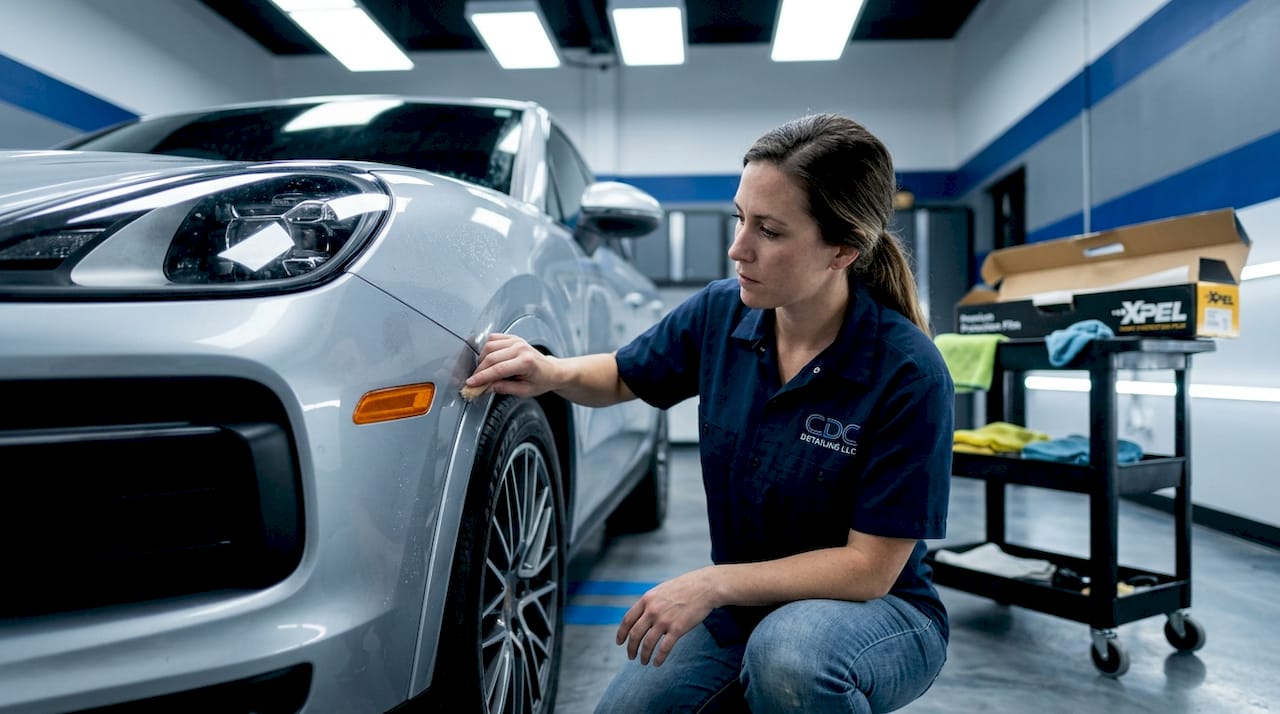
Paint protection film is a thin, transparent urethane film applied directly over your car’s painted surfaces to absorb damage before it reaches the paint itself. Think of it as a nearly invisible shield that takes the hit so your paint does not have to. It was originally developed for military helicopter blades to protect against rotor damage and debris, and the same basic principle now protects everything from daily commuters to high-end sports cars.
But here is where most explanations stop short. PPF is not something you order online, unroll, and stick on yourself. Professional installation involves multiple critical steps, each one determining whether the final result looks flawless or falls apart within months.
The process typically works like this:
- Deep cleaning and decontamination of all painted surfaces to remove wax, oils, and embedded debris
- Paint correction to fix swirl marks or minor scratches before the film traps them permanently
- Precise pattern cutting using software templates matched to your specific vehicle’s make and model
- Film application using slip solution, squeegees, and skilled hand work to eliminate air bubbles and creases
- Edge sealing to prevent moisture or debris from getting under the film at seams and curves
- Curing time to allow the adhesive to bond properly before the vehicle is exposed to water or road conditions
Cutting corners on any of these steps creates problems that are expensive to fix. Paint protection examples from quality installations show just how seamless the film can look when each step is done correctly.
“PPF quality depends heavily on the installer, and
issues like edge lifting and imperfections can result from poor installation.”
Common installation mistakes include visible seams at panel edges, trapped dirt or debris under the film, uneven stretching that distorts the finish, and improper edge wrapping that begins lifting within weeks. Once any of these problems appear, the only fix is removal and reinstallation, which costs almost as much as the original job. Understanding the PPF role and benefits before you commit helps you ask the right questions and avoid walking into a low-quality situation.
Benefits and limitations of PPF installation
Let’s be honest about what PPF can and cannot do, because overselling it does nobody any favors.
What PPF does extremely well:
- Absorbs stone chips and road debris impact before they chip the clear coat
- Prevents fine scratches from car washes, keys, and everyday contact
- Blocks swirl marks caused by improper washing technique
- Self-heals minor surface scratches with exposure to heat or direct sunlight, depending on the film grade
- Adds a layer of UV protection that slows paint fading and oxidation over time
- Reduces the frequency of paint touch-ups and repair work, saving money in the long run
These are real, measurable benefits that make a noticeable difference over years of ownership. A car with professionally installed PPF on its front end will still look sharp after five years of highway driving while an unprotected vehicle of the same age will show countless chips and fading along the leading edges.
Here is a clear side-by-side look at how the benefits and limitations stack up:
| Category | Benefit | Limitation |
|---|---|---|
| Physical protection | Absorbs chips, scratches, and debris | Cannot prevent deep dents or structural impact |
| Appearance | Nearly invisible when installed correctly | Poor installation causes visible edges or haze |
| Longevity | Lasts 5 to 10 years with proper care | May yellow or stain over time in extreme conditions |
| Maintenance | Reduces need for paint repairs | Requires specific cleaning products to avoid film damage |
| Cost | Prevents expensive future repairs | High upfront cost for full-vehicle coverage |
| Replaceability | Can be removed without damaging paint | Removal and reinstallation adds to total cost |
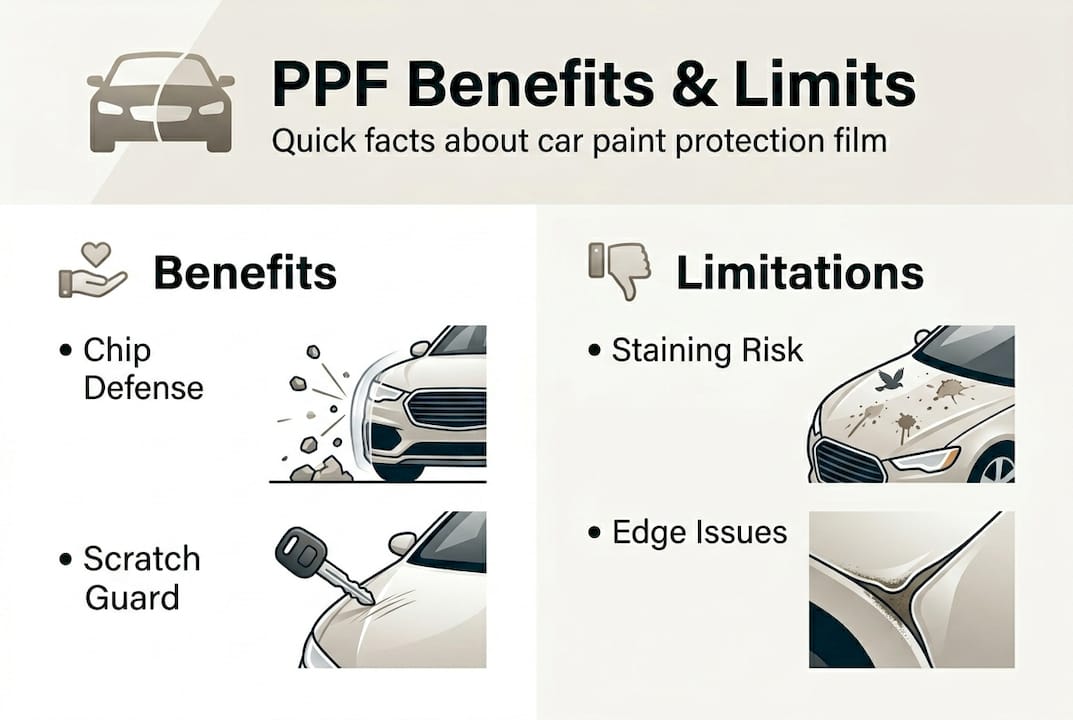
Some owners experience staining or appearance differences over time and may choose to remove or reinstall the film as their needs change. This is completely normal and not a sign of failure, as long as the original installation was done properly.
Pro Tip: Always ask your installer about the warranty on both the film itself and the labor. A reputable installer backs their work with at least a one-year labor warranty and should use film brands that carry a manufacturer warranty of five years or more.
Here are the signs that separate a quality installation from a problematic one:
Signs of a well-installed PPF:
- Film edges are wrapped under panel gaps or tucked invisibly at seams
- Zero air bubbles visible after the curing period
- No trapped dirt or debris visible beneath the surface
- Film clarity matches the surrounding paint with no discoloration
- Smooth, consistent adhesion across curved surfaces
Signs of poorly installed PPF:
- Visible lift at door edges, mirrors, or hood corners
- Bubbles or cloudiness that does not disappear after curing
- Noticeable seam lines across flat panels
- Debris trapped under the film creating texture bumps
- Mismatched pattern cuts that leave paint gaps or overlap awkwardly
Exploring types of paint protection can help you understand how PPF compares to other options like ceramic coatings or vinyl wraps, and whether a combination approach makes sense for your situation. If you want to see what quality results actually look like, reviewing common PPF problems and their solutions gives you a realistic benchmark.
Why choosing the right installer matters
This is the part most buyers skip, and it is usually why they end up disappointed.
The film brand is not the most important factor in your PPF experience. The installer is. A mediocre installer using premium film will produce worse results than a skilled installer using mid-grade film. The technical demands of proper PPF installation require experience, patience, and the right controlled environment.
“Common PPF problems like lifting edges and visible imperfections are often due to installers’ mistakes, not the film itself.”
Here is a numbered checklist of questions to ask before you commit to any PPF installer:
- How long have you been installing PPF specifically? General detailing experience does not transfer directly to film work.
- Can I see photos or examples of your completed PPF jobs? Real results on similar vehicles matter far more than any sales pitch.
- What film brand do you use, and does it carry a manufacturer warranty? Reputable brands like XPEL, SunTek, or 3M carry clear warranty terms.
- Where do you perform the installation? A clean, climate-controlled indoor space is non-negotiable for proper adhesion.
- Do you offer a labor warranty on your installation work? This tells you immediately how confident they are in their own results.
- Do you perform paint correction before applying the film? Applying PPF over scratches traps them permanently.
- Will you use custom-cut patterns or hand-cut on the car? Software-cut patterns reduce error and produce cleaner edge work.
Red flags to watch out for include installers who cannot show you previous work, who are vague about which film brands they use, who cannot explain their warranty terms clearly, or who offer unusually low prices without explanation. PPF installation done right is labor intensive, and pricing that seems too good usually means shortcuts somewhere in the process.
Looking at trusted local PPF installation options and real-world PPF results side by side will sharpen your instincts fast when evaluating installers.
What to expect before, during, and after PPF installation
Knowing exactly what happens at each stage of the process takes the anxiety out of committing to PPF, and helps you take care of your vehicle properly once the job is done.
Before installation: Your installer should perform a thorough decontamination wash and clay bar treatment to pull embedded contaminants from the paint surface. If your paint has swirl marks, scratches, or oxidation, paint correction before PPF is strongly recommended. Any defects underneath the film are sealed in permanently once it is applied.
During installation: Depending on coverage area, the process takes one to two full days. The installer will apply software-cut film sections panel by panel, using a slip solution to position the film before final squeegee work removes moisture and air. Edge wrapping is the most skill-intensive part, particularly around mirrors, door handles, and hood edges where the film must conform to complex curves without lifting.
After installation: The first 48 hours are critical. Do not wash the vehicle, park in direct sunlight for extended periods, or expose the film to heavy rain during this window. The adhesive needs time to fully cure and bond to the surface.
Here is a practical timeline to help you plan:
| Stage | Timeframe | Owner action required |
|---|---|---|
| Pre-installation prep | Day of appointment | Drop vehicle off clean and empty |
| Paint correction (if needed) | 1 additional day | Approve scope and pricing beforehand |
| Film application | 1 to 2 days | Arrange alternate transportation |
| Initial curing period | 48 hours post-install | No washing, avoid heavy moisture |
| Full cure | 7 to 14 days | Wash gently by hand only |
| Ongoing maintenance | Monthly or as needed | Use PPF-safe soaps and avoid abrasive products |
Some owners remove and reinstall PPF as appearance or protection needs change over time, which is a completely valid choice, especially after years of heavy use.
For long-term care, following PPF maintenance tips designed for coated and protected vehicles keeps the film performing at its best through South Jersey’s full range of seasonal conditions.
Pro Tip: Do not schedule your PPF installation right before a long road trip or a major weather event. Give the film at least a full week to cure properly before putting the vehicle through harsh conditions.
The inconvenient truth about PPF: installer skill outweighs the film
Here is something the marketing around PPF products almost never says out loud: the film itself is rarely the reason an installation succeeds or fails. It is always the installer.
PPF brands compete heavily on self-healing technology, gloss levels, and warranty terms. That competition leads car owners to spend enormous energy researching which film to buy, when they should be spending that energy evaluating who will install it. A premium film installed carelessly will yellow, peel, and trap dirt faster than a mid-grade film installed by someone who truly knows what they are doing.
The real protection results that hold up over years of real-world use consistently come from installers who sweat the small details. Edge prepping. Controlled temperatures during application. Proper slip solution ratios. Full cure time before returning the vehicle. These are not glamorous selling points, but they are the actual difference between a five-year investment and a six-month headache.
We have seen vehicles come through our shop with PPF that was installed less than a year prior, already lifting at the hood corners, trapping dirt at door edges, and showing haze on flat panels. In every case, the film itself was not the problem. The installation process was rushed or performed in a poor environment.
“You can buy the best PPF available, but it is useless if the installation is flawed.”
The uncomfortable bottom line: chase the installer’s quality, not the film brand’s marketing.
Ready for PPF? Take the next step with trusted expertise
Understanding the installation process is the first step. Working with a team that applies that knowledge consistently, every single time, is what actually protects your investment.
At CDC Auto Detailing, we bring professional local PPF installation directly to South Jersey vehicle owners who want real protection without the guesswork. Our process includes thorough paint prep, software-cut film patterns, and proper curing protocols on every vehicle we work on. Browse our PPF examples to see what quality installation actually looks like, and explore our full range of premium protection options to find the right coverage level for your vehicle. Contact us today to schedule your consultation.
Frequently asked questions
How long does PPF installation usually take?
Most professional PPF installations take one to two days depending on the vehicle’s size and the coverage area requested. Full-vehicle coverage naturally takes longer than partial front-end protection.
Can PPF really prevent all paint damage?
PPF provides excellent protection against everyday chips and scratches but cannot stop every type of damage, particularly deep dents or major impacts. The film handles the abuse your paint would otherwise absorb in normal driving conditions, but it is not a structural barrier.
Will PPF installation alter the color or gloss of my paint?
High-quality PPF is designed to be nearly invisible on the paint surface, but cheap or poorly applied film may show edges, slight haze, or color differences that become more noticeable over time. Proper installation by an experienced professional eliminates these issues.
Is it possible to remove or replace PPF in the future?
Yes, PPF can absolutely be removed or replaced if it becomes stained, damaged, or simply worn out after years of use. PPF removal and reinstallation is a common service as owners’ needs or film appearance changes over time, and professional removal protects the underlying paint.
What should I ask when choosing a PPF installer?
Ask about installer experience and warranty terms, request photos of previous work, and confirm they use a clean indoor installation environment. Installer competence directly shapes the outcome of your PPF investment more than any other single factor.