
Picking the right paint protection film feels overwhelming when every brand claims to be the best. Walk into any detailing shop in South Jersey and you’ll face a wall of technical jargon, conflicting reviews, and price tags that range from a few hundred to several thousand dollars. Make the wrong call and you’re looking at a film that yellows within two years, peels at the edges, or simply fails to stop rock chips on the highway. This guide cuts through the noise, spotlights the most trusted PPF examples, and gives you a clear framework to choose with confidence.
Table of Contents
- What makes a paint protection film effective?
- Top examples of paint protection films
- Comparing paint protection film options
- What to know before installing paint protection film
- Which paint protection film is best for you?
- Protect your investment with expert installation
- Frequently asked questions
Key Takeaways
| Point | Details |
|---|---|
| Choose proven PPF brands | Top-rated films like XPEL, 3M, and LLumar offer reliable self-healing and long-term clarity. |
| Quality installation is vital | Even the best film will fail if the prep and install are not meticulous. |
| Specialty films for niche needs | Stealth, colored, and thicker films exist for custom finishes and tougher protection. |
| Compare specs before buying | Look at warranty, yellowing resistance, thickness, and price to get the best value. |
What makes a paint protection film effective?
Paint protection film, or PPF, is a thin, flexible layer applied directly over your car’s painted surfaces to absorb road debris, rock chips, and minor abrasions before they reach the paint. Think of it as a sacrificial shield that takes the hits so your factory finish doesn’t have to. Not all films are created equal, and understanding the core criteria separating good from great will save you money and frustration.
The material matters most. Most top PPFs are made from thermoplastic polyurethane (TPU), typically 8 mil (203 microns) thick, with self-healing topcoats that resist yellowing and swirl marks. TPU is flexible enough to conform to curved body panels but tough enough to absorb real impact. Thinner, cheaper films made from PVC tend to crack, yellow, and fail much faster.
When you’re evaluating films, look for these key features:
- TPU construction for flexibility and impact resistance
- 8 mil thickness as the standard for daily driver protection
- Self-healing topcoat that erases light scratches with heat
- Hydrophobic properties so water and grime bead off easily
- Low yellowing (ΔE) score, meaning the film stays optically clear over time
- Warranty length of at least 7 to 10 years from reputable brands
- Certified installer network to ensure proper application
Yellowing is measured using a value called ΔE (delta E). A ΔE score below 1.0 is considered nearly invisible to the human eye. The lower the number, the clearer the film stays over time. This is one of the most telling indicators of long-term quality, and you should always ask for it when comparing industry PPF benchmarks.
Pro Tip: Ask any installer to show you a film sample that’s been on a car for at least two years. Real-world aging tells you far more than a spec sheet. If they can’t produce one, that’s a red flag.
For a deeper look at what separates budget films from premium ones, explore choosing premium PPF options and how self-healing coatings work in practice.
Now that you know what matters in PPF selection, let’s look at the best real-world examples.
Top examples of paint protection films
Three brands consistently dominate the professional PPF market: XPEL, 3M, and LLumar. All three use self-healing TPU around 8 mil thick and are trusted by certified installers worldwide. Here’s how each one breaks down.
XPEL Ultimate Plus is widely regarded as the gold standard. It features an optically clear, stain-resistant topcoat, a 10-year manufacturer warranty, and a yellowing ΔE of approximately 0.7 after two years. That’s essentially invisible aging. XPEL scores a 9.2/10 overall in independent testing, making it the top performer for buyers who want maximum clarity and long-term protection.
- Self-healing activates with ambient heat or warm water
- Hydrophobic angle exceeds 100 degrees, repelling water and contaminants
- Available in gloss and matte (Stealth) finishes
- Best for: luxury vehicles, new cars, and enthusiasts who want the best
3M Scotchgard Pro Series is the trusted workhorse. It scores an 8.5/10 and offers a 7 to 10-year warranty depending on the product tier. Its self-healing performance is solid, and 3M’s massive installer network means you’ll find certified pros almost anywhere in South Jersey.
- Slightly higher ΔE than XPEL but still well within acceptable range
- Excellent impact resistance for daily drivers
- Competitive pricing compared to XPEL
- Best for: commuters, budget-conscious buyers, and those prioritizing installer availability
LLumar Valor and Platinum round out the top tier. LLumar’s Platinum line competes directly with XPEL on clarity and self-healing, while the Valor line offers a more accessible entry point without sacrificing core protection.
- Strong hydrophobic performance across both product lines
- 10-year warranty on Platinum tier
- Best for: buyers who want premium performance with flexible pricing options
Beyond the big three, specialty films are worth knowing about. XPEL Stealth and similar matte-finish films protect paint while transforming a gloss finish into a satin look. Colored PPF lets you change your car’s appearance while protecting it. For track cars or off-road vehicles, 10 mil thick films provide extra impact resistance against gravel and debris.
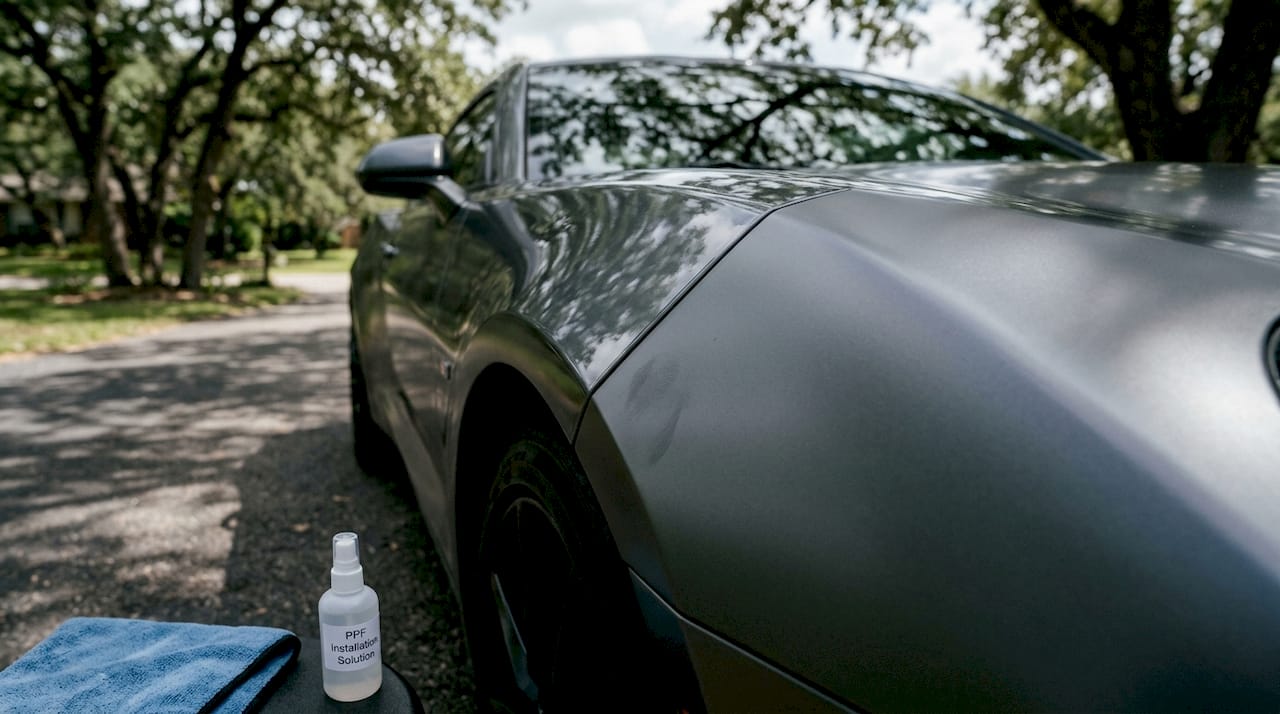
Pro Tip: Choose a matte or Stealth film if your car has a factory gloss finish and you want a unique look without a full respray. It’s a reversible transformation that also protects.
Exploring popular PPF brands in more detail can help you match the right product to your specific vehicle and goals, especially if you’re focused on preserving your car’s appearance long term.
Comparing paint protection film options
Numbers make decisions easier. Here’s a direct comparison of the three leading films across the specs that matter most.
| Feature | XPEL Ultimate Plus | 3M Scotchgard Pro | LLumar Platinum |
|---|---|---|---|
| Thickness | 8 mil | 8 mil | 8 mil |
| Self-healing temp | ~140°F (60°C) | ~140°F (60°C) | ~140°F (60°C) |
| Yellowing (ΔE, 2 yr) | ~0.7 | ~1.2 | ~1.0 |
| Hydrophobic angle | 100°+ | 95°+ | 98°+ |
| Warranty | 10 years | 7 to 10 years | 10 years |
| Overall rating | 9.2/10 | 8.5/10 | 8.7/10 |
| Relative cost | Premium | Mid to premium | Mid to premium |
Empirical testing confirms that XPEL Ultimate Plus leads on yellowing resistance and self-healing speed, but 3M and LLumar remain strong choices based on budget or local installer availability. The difference in ΔE between XPEL (0.7) and 3M (1.2) is real but subtle. For most daily drivers, 3M or LLumar will perform beautifully for years.
Here’s how to choose based on your priorities:
- Maximum optical clarity and lowest yellowing: XPEL Ultimate Plus
- Best installer network and competitive pricing: 3M Scotchgard Pro
- Balance of performance and value: LLumar Platinum
- Matte or specialty finish: XPEL Stealth or equivalent
- Track or off-road use: 10 mil thick film options
Understanding how self-healing works at a molecular level helps explain why temperature and topcoat quality vary across these brands, even when the base specs look identical.
Once you see the numbers, you might wonder about installation and what’s actually involved.
What to know before installing paint protection film
Installation is where PPF projects succeed or fail. Even the best film on the market will bubble, peel, or trap contamination if the prep work is rushed. Here’s what a proper professional installation looks like step by step.
- Wash and decontaminate the vehicle thoroughly with a pH-neutral soap
- Clay bar treatment to remove embedded particles from the paint surface
- IPA wipe-down (isopropyl alcohol) to strip any remaining wax, oils, or residue
- Film cutting using a plotter or hand-cut method to fit each panel precisely
- Slip solution application to allow repositioning during install
- Careful squeegeeing to remove air and solution from under the film
- Heat gun finishing at edges and contours to ensure a tight, seamless bond
- Cure time of 24 to 48 hours before washing or exposing to rain
A proper PPF install requires thorough prep including wash, clay, and IPA wipe-down, followed by careful squeegeeing, heat gun work at edges, and a 24 to 48 hour cure period.
“Contaminated surfaces are the number one cause of PPF failure. If there’s wax, oil, or dust under that film, you’ll see it lift within months. Heat activation at the edges isn’t optional, it’s what makes the film permanent.”
Time and cost vary significantly by coverage level. A full front install takes 6 to 8 hours, while a full vehicle wrap can take 2 to 5 days. Full body PPF typically runs between $5,500 and $8,000 depending on film brand and vehicle size.
Common mistakes to avoid:
- Choosing a cheap film to save money upfront (you’ll pay more to remove and redo it)
- Skipping surface prep or using an installer who rushes this step
- Not asking about the installer’s certification or brand training
- Ignoring cure time and washing the car too soon after install
Before booking, ask your installer which film brand they use, whether they’re factory certified, how long the install will take, and what their warranty covers. A good installer welcomes these questions. Learn more about the full PPF installation process and how detailing for PPF prep differs from a standard detail.
Now you’re ready to make an informed decision tailored to your needs in South Jersey.
Which paint protection film is best for you?
The right film depends on how you use your car, what you value most, and how long you plan to keep it. Here’s a quick breakdown by ownership style.
- Daily commuter on South Jersey highways: 3M Scotchgard Pro Series. Solid protection, competitive price, and easy to find certified local installers.
- New car owner who wants maximum protection: XPEL Ultimate Plus. The lowest yellowing score and 10-year warranty make it the smartest long-term investment.
- Collector or luxury vehicle owner: XPEL Ultimate Plus or LLumar Platinum. Both deliver near-invisible protection that won’t compromise a showroom finish.
- Driver with a matte factory finish: XPEL Stealth or a brand-matched matte film. Gloss PPF over matte paint creates an unwanted sheen.
- Off-road or track enthusiast: 10 mil specialty films designed for high-impact environments. Standard 8 mil won’t hold up to gravel and debris at speed.
- Style-focused owner: Colored or tinted PPF for a unique look that also protects.
Once you’ve identified your category, get at least two quotes from certified installers. Ask to see film samples and completed installs on similar vehicles. Installer skill matters as much as film brand. A perfectly applied 3M film will outperform a poorly installed XPEL every time. For trusted local PPF installation in South Jersey, working with a certified pro is the smartest move you can make.
Protect your investment with expert installation
Knowing which film to choose is only half the equation. The other half is finding an installer who treats your car with the same care you do. At CDC Auto Detailing, we bring certified PPF installation directly to you across South Jersey, with no shop drop-off required.
We work with top-tier films and take the prep work seriously, because we know that’s where quality is won or lost. Whether you want to explore paint protection film services, learn more about the detailed PPF benefits for your specific vehicle, or compare premium protection options, we’re here to help you make the right call. Reach out today to schedule a consultation and get a custom recommendation for your car.
Frequently asked questions
What is the difference between PPF and ceramic coating?
PPF is a thick, impact-resistant film that physically absorbs rock chips and scratches, while ceramic coating is a thin liquid layer that adds hydrophobic properties and gloss but won’t stop physical damage. Many owners use both together for complete protection.
How long does paint protection film last?
XPEL Ultimate Plus and 3M Scotchgard offer 7 to 10 year warranties, and with proper care and regular washing, top films routinely reach or exceed that lifespan depending on exposure and installation quality.
Can I install paint protection film myself?
DIY install is not recommended. Contaminated surfaces cause film failures, and professional installers have the tools, climate-controlled environment, and experience to avoid bubbles, lifting edges, and dust trapped under the film.
Does paint protection film really self-heal?
Yes. Premium films use a specialized topcoat that heals at about 140°F (60°C), which is easily reached by direct sunlight or a quick rinse with warm water. Light swirl marks and surface scratches disappear within minutes.