
Rail dust is iron particles that land on your paint and rust into orange-brown specks. A chemical iron remover is usually the safest first move because it dissolves the iron before physical contact. A polymer mitt with lubricant can lift remaining particles. Finish with a thorough rinse and a protective coating, and call a pro if you see pitting.
TL;DR:
- Look for orange brown specks and gritty paint that stays rough after washing; dark finishes can hide contamination just as easily.
- Work on cool, shaded panels one section at a time, follow the remover’s labeled dwell time, and rinse thoroughly before treating nearby areas.
- Keep remover off brake rotors, wheel bolts, and suspension parts because it can speed corrosion; cover those areas and rinse them twice.
- Arrange professional treatment if specks return soon, clear coat shows pitting, rough patches persist, or contamination covers most of the car.
- Wax, sealant, ceramic coating, or paint protection film will not stop fallout from landing, but these finishes make particles easier to rinse away.
Table of Contents
- 1. How to spot rail dust on your car
- 2. Why rail dust forms on paint
- 3. Rail dust removal options compared
- 4. How to remove rail dust at home, step by step
- 5. When DIY is enough and when to book a pro
- 6. Why we start with chemistry, not friction
- 7. Let us handle stubborn rail dust
- FAQ
- Sources
1. How to spot rail dust on your car
Rail dust shows up as tiny orange or rust-colored specks that look like someone peppered your paint. Here is what to look for:
- Specks concentrated on horizontal surfaces such as the hood, roof and trunk lid
- Heavier clusters on lower panels, behind the wheels and on the rear quarters
- A rough, gritty feel when you run a clean fingertip over washed and dried paint
- Spots that return after a normal wash, because washing alone does not dislodge embedded iron
Other contaminants look different. Tar forms sticky, larger blobs, paint transfer leaves smears, and pollen is powdery and rinses off. If you are dealing with sticky spots instead, our guide to paint-safe tar removal covers that problem.
White, silver and other light colors make the problem obvious, which is why orange spots on a white car are such a common complaint. Dark paint hides the same contamination, so a black car can be just as affected while looking clean from a few feet away.
2. Why rail dust forms on paint
Rail dust, also called iron fallout, is made of metal particles that travel through the air and settle on your car. Fallout is jagged iron that comes from brake dust, railroad tracks or factories. Once it lands, it behaves in a few predictable ways:
- Sources: Rail transport throws off sparks and metal particles, brake dust adds more, and nearby industrial sites release airborne iron.
- Embedding: Hot particles from train transport can embed in the paint as they land, then rust once they get wet.
- Shape: The particles are jagged, so dragging them across paint can cause swirls and, over time, pitting.
- Long-term damage: Left untreated, the rust can contribute to paint damage, including pitting.
This is why a regular wash rarely fixes the problem. The particles sit in the microscopic valleys of the paint, and rubbing them around makes things worse.
3. Rail dust removal options compared
Four methods do most of the work. Each has a place, and the order you use them in matters more than which one you pick.
- Iron/fallout remover (chemical): This is the approach we prefer. It dissolves iron before heavy friction touches the paint, so the risk of scratching is low. You need the right dwell time and a thorough rinse. Follow the product label for application and rinsing instructions.
- Polymer or rubber decontamination mitt: Fast, generally safe with a lubricant, and well suited to large, smooth panels. It is a good follow-up when chemistry alone leaves a few stubborn specks.
- Clay bar: A proven physical method, but it carries more risk of marring if you use too little lubricant or too much pressure. It works best on light contamination after the chemical step. Our overview of clay bar treatment explains when it makes sense.
- Towel-on-chemical: Professionals often soak towels in a rail-dust remover and lay them on affected spots. This helps on contours, vertical surfaces and areas where a liquid would run off.
Practitioners also give one firm caution: fallout removers can speed up corrosion on exposed ferrous parts such as brake rotors, wheel bolts and suspension components. Never let product pool on those parts, and rinse thoroughly.
Some owners reach for household sprays instead. WD-40 Multi-Use Product is safe on many painted metal surfaces, but it is a general-purpose product, not an iron remover, and the maker advises a spot test. So if you were wondering about using WD-40 on rust specks, treat it as a lubricant, not a fix.
Pro Tip: When in doubt, start with chemistry. Test the product on a small hidden area first, such as a lower door edge, and follow the label’s dwell time exactly.
4. How to remove rail dust at home, step by step
Work on a cool, shaded panel and tackle one section at a time.
- Pre-wash and rinse to remove loose dirt, pressure rinsing the lower panels and wheel wells.
- Spray the iron remover on one section and watch for a color change, then follow the dwell time on the label.
- Rinse the section thoroughly before moving on, and keep product from pooling near brakes or bolts.
- If residue remains, use a polymer mitt with lubricant, or a clay bar as a gentle follow-up.
- Hand wash with a pH-balanced car shampoo, dry the panel and inspect it closely for pitting.
- Finish with wax, a paint sealant, a ceramic coating or paint protection film to slow future buildup.
Pro Tip: Cover or avoid the wheels and brake components when you spray, and rinse those areas twice. A decontamination wash like the one we explain in our decontamination wash guide should always end with a full rinse.
5. When DIY is enough and when to book a pro
Doing it yourself is reasonable for fresh, limited contamination if you have the right products and follow the rinsing precautions above. Know when to stop:
- Book a pro if the specks return soon after your DIY attempt
- Book a pro if you see clear-coat pitting or rough patches that do not smooth out
- Book a pro if the contamination covers most of the car
A professional brings controlled chemistry, polishing or paint correction for swirls, and durable protection such as a ceramic coating or paint protection film. A professional can help manage the process around your paint and brake parts.
6. Why we start with chemistry, not friction
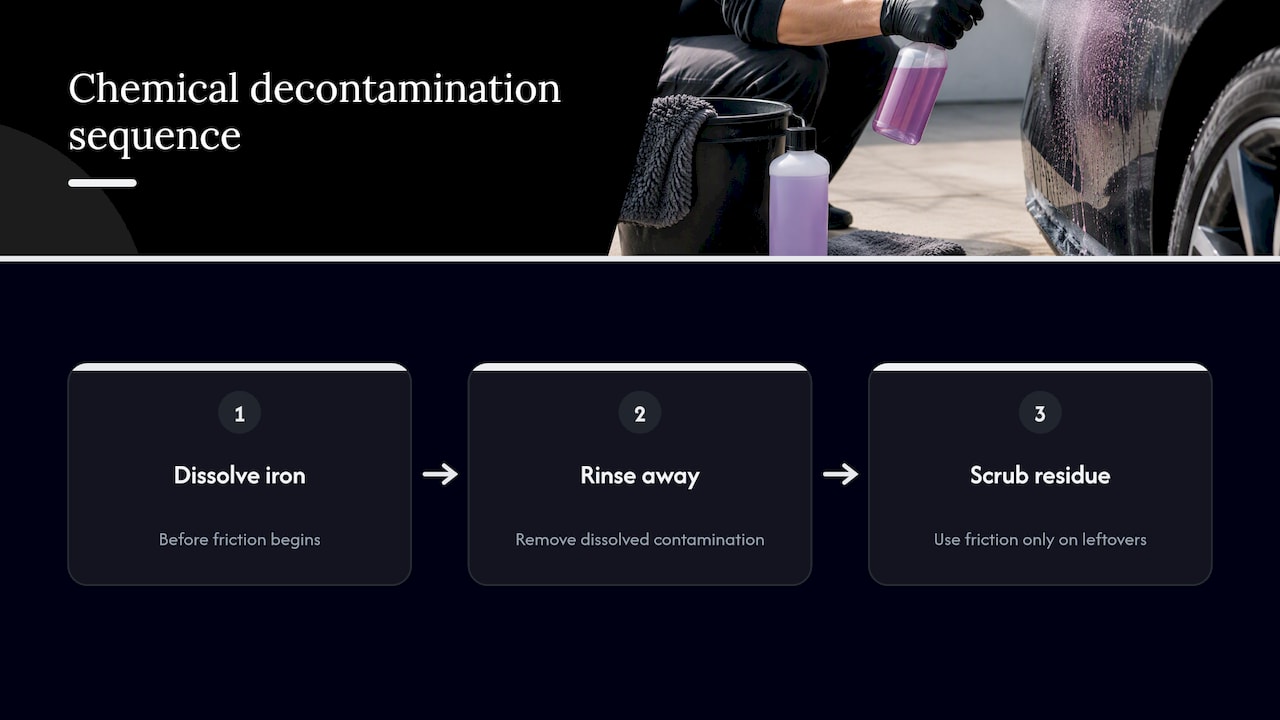
Most rail dust damage I see described in car care circles comes from the same mistake: scrubbing first and thinking second. My view is that the order of operations matters more than the product brand. Dissolve the iron, rinse it away, then use friction only on what is left. This approach can reduce the risk of swirl marks.
Our workflow follows the same logic. For exterior jobs we offer exterior detail packages, ceramic coatings, paint protection film and mobile service, and chemical decontamination comes before any polishing or protection goes on.
— Charles
7. Let us handle stubborn rail dust
If rail dust keeps coming back or covers more than a few panels, we can take it off for you at your home or workplace. Our exterior detail service starts at $175 and covers decontamination and protection, and we can add a ceramic coating or paint protection film to keep fallout from bonding again. Request a quote or book an appointment today.

FAQ
How can I remove rail dust from my car?
Use an iron or fallout remover first, then rinse thoroughly. If specks remain, follow with a polymer mitt or clay bar and plenty of lubricant. Finish with a wash and a layer of wax or sealant.
What are the tiny brown dots on my car?
Tiny orange-brown dots are usually rail dust, also called iron fallout. These jagged iron particles come from brake dust, railroad tracks or factories and rust once they settle on paint. Paint that feels rough after washing is a strong clue.
Can I use WD-40 to remove rust on my car?
WD-40 is a general-purpose product, not a specialized iron remover, so it is not the right tool for rail dust. It is safe on many painted metal surfaces, but the maker advises spot testing and avoiding certain plastics. A dedicated fallout remover is designed for iron fallout and is usually the safer choice for paint.
How do I prevent rail dust from coming back?
Apply a durable layer of protection, such as wax, a paint sealant, a ceramic coating or paint protection film. Protection will not stop particles from landing, but it makes them easier to rinse off. Wash regularly if you park near tracks or industrial sites.