
The fastest way to fix a smelly tractor cab is to find and remove the actual source, deep-clean the upholstery, mats, and vents, then replace the cabin filter with an activated carbon unit. Skip the air fresheners and ozone machines. They mask or chase a smell instead of removing it. Ventilate the cab, inspect for the obvious culprit (food, mildew, exhaust leak, rodents), and work from there.
TL;DR:
- Ventilate the cab for 15 minutes with fresh air before starting cleaning, and remove all organic waste, trash, and food residues first.
- Deep-clean upholstery and mats with enzyme or odor-specific cleaners, ensuring they dry completely to prevent mold or mildew odors from returning.
- Clean vents and evaporator core carefully using soft brushes and low-pressure air, or seek professional help if mold or persistent odors are suspected internally.
- Replace cabin filters with activated carbon equivalents more frequently, especially after chemical exposure, and check seals to prevent unfiltered air bypass.
- Avoid ozone generators and always disinfect rodent waste properly, wearing protective gear, and never vacuum contaminated waste to prevent pathogen spread.
Table of Contents
- Quick action checklist: what to do first, today
- Step-by-step deep-clean walkthrough: upholstery, mats, vents, evaporator
- Cabin filters, activated carbon, and cab sealing
- Safety and what to avoid: ozone, rodent waste, and risky shortcuts
- Products, DIY equipment, and when to hire a professional
- How a professional mobile detailer approaches tractor cab odors
- DIY or call a pro: a quick way to decide
- Let us clear out a tractor cab odor for good
- FAQ
- Sources
Quick action checklist: what to do first, today
Before any deep clean, run through a short triage so you don’t waste time or make a contamination worse.
- Open the doors and windows and run the fan on fresh air (not recirculate) for at least 15 minutes.
- Pull out trash, food wrappers, and anything organic that’s been sitting in the cab.
- Remove floor mats and any seat covers and check underneath for standing moisture or droppings.
- If you smell chemicals rather than mustiness, check the cabin filter first since a saturated filter often is the source.
- If you see rodent droppings, nesting material, or urine stains, stop and disinfect before you touch anything else.
Most of this is safe to do yourself with gloves and a dust mask. The exceptions are rodent contamination, which calls for the disinfect-first protocol covered below, and any smell that persists after mats, seats, and filters are handled, which usually points to something inside the vents or evaporator core that needs a trained hand. If you’re not sure which category you’re in, treat it as the more cautious one until proven otherwise.
Step-by-step deep-clean walkthrough: upholstery, mats, vents, evaporator
Odors live in porous materials, not in the air, so the cleaning has to reach the material itself.
Mats and seats first. Pull mats outside and scrub them with a stiff brush and a degreaser or enzyme cleaner, then let them dry fully in the sun before putting them back. Seat covers come off for machine washing when possible; foam padding that’s absorbed urine, manure, or years of sweat often can’t be fully restored and may need replacement rather than repeated cleaning.
Match the cleaner to the odor type.
- Organic smells (sweat, food, animal waste) respond best to enzyme cleaners that break down the proteins causing the smell, not just cover it.
- Tobacco residue needs a smoke-specific odor remover since standard cleaners tend to leave the stale smell behind.
- An upholstery extractor pulls cleaning solution and embedded grime out of foam and fabric far more effectively than surface wiping or a shop vac alone, a point echoed in independent source-first odor advice for vehicle interiors generally.
Vents and evaporator. Dust and debris in the vents can be loosened with a soft brush and a low-pressure air gun, following the kind of careful technique outlined in guides to cleaning car air vents without pushing dust deeper into the ductwork. The blower motor housing and evaporator core are a common hidden odor source, especially moldy or musty smells that come and go with the AC. These parts sit behind the dash or under the cab floor and aren’t always easy to reach without removing panels, which is where many owners choose to call an AC shop or a professional odor removal service rather than risk damaging the housing.
Pro Tip: Dry everything completely before closing the cab back up. Trapped moisture restarts the mildew smell within days.
Cabin filters, activated carbon, and cab sealing
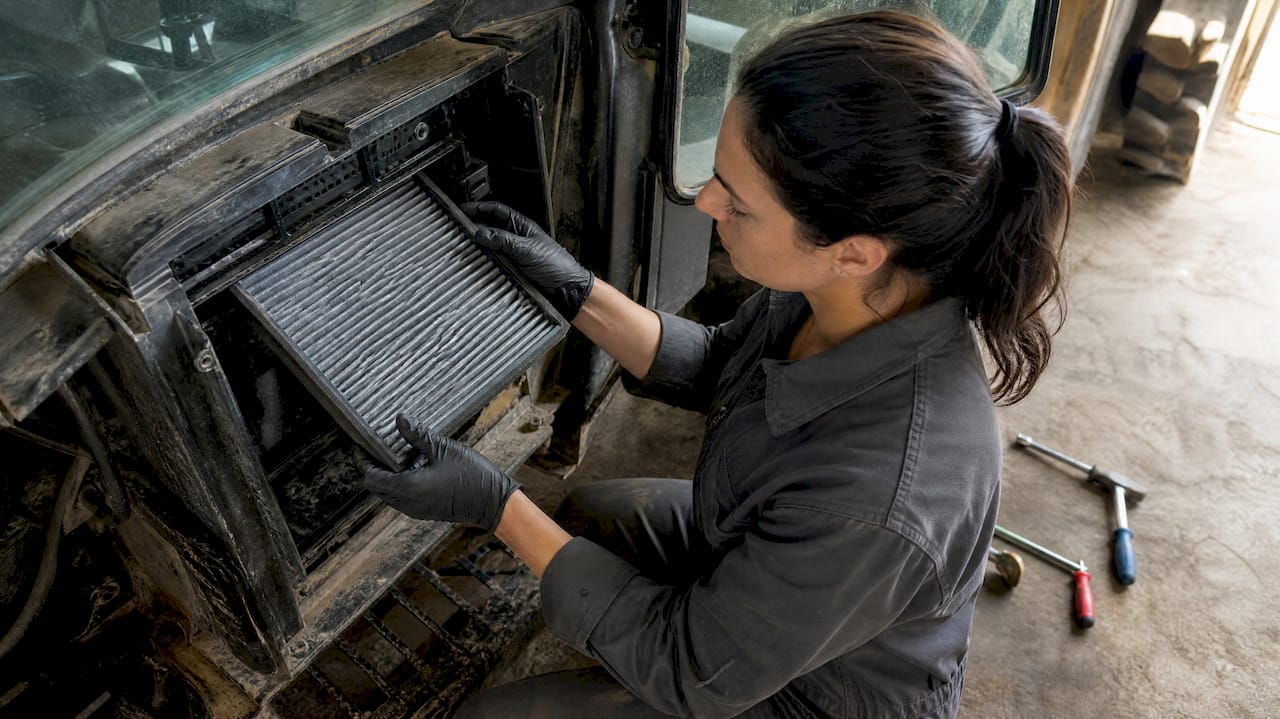
A standard particulate filter traps dust and pollen but does nothing for gas or vapor odors like chemical overspray, diesel exhaust, or manure fumes. An activated carbon filter adds a layer of porous carbon that adsorbs those vapor molecules, which is why one easy fix for chemical smells in the cab points straight to carbon filtration as safety equipment, not a disposable convenience part.
A few practical rules for getting the most out of a carbon filter:
- Replace it as soon as a chemical smell returns, since that means the carbon media is saturated and no longer adsorbing anything.
- As a rule of thumb, replace it regularly, more often with heavy hours spraying chemicals.
- Install it with the carbon layer facing the incoming airflow; backward installation cuts its effectiveness sharply.
- Check door and window seals for cracked rubber or gaps, since unfiltered bypass air carries dust and odor straight past a perfectly good filter.
A tractor cab that’s pressurized with clean, filtered air resists outside odors far better than one that’s just been scrubbed once and left to fend for itself.
Safety and what to avoid: ozone, rodent waste, and risky shortcuts
Ozone generators marketed as air cleaners are not proven to remove many odor-causing chemicals at concentrations that are safe to breathe, and the EPA’s guidance on ozone generators notes they can produce irritating byproducts instead. High-concentration ozone sometimes has a role in unoccupied, professionally controlled fire or flood restoration, but that’s a different situation from a tractor cab you’re about to climb back into, and ozone can also degrade rubber seals and fabric over repeated use. A more detailed breakdown of why ozone treatment rarely solves the real problem covers the same tradeoff.
Rodent contamination needs its own protocol:
- Soak droppings, nests, and urine spots with disinfectant and let it sit for the label contact time before removing anything.
- Never vacuum rodent waste before it’s been disinfected, since vacuuming can aerosolize pathogens into the air you’re breathing.
- Wear gloves and, ideally, a mask, then double-bag waste for disposal, following the CDC’s rodent cleanup guidance.
Masking sprays and air fresheners don’t remove anything. They add a stronger scent on top of the existing one, which usually smells worse once both compete in a closed cab.
Products, DIY equipment, and when to hire a professional
A handful of tools and products cover almost every DIY tractor cab odor job:
- An enzyme cleaner for biological odors like sweat, urine, or food residue.
- A rentable or owned upholstery extractor for deep-cleaning seat foam and carpet.
- A smoke-specific odor remover if tobacco is the culprit.
- An activated carbon cabin filter as the finishing step, plus a pump sprayer for disinfectant and a small heater or dehumidifier to speed drying.
Call a professional when the evaporator core is contaminated and hard to reach, when the smell comes back after a full clean, when smoke or manure saturation runs deep into foam and carpet backing, or any time rodent contamination raises a safety concern you’re not equipped to handle alone.
How a professional mobile detailer approaches tractor cab odors
Our team at CDC Auto Detailing handles odor jobs with the same discipline: disinfect contaminated areas before touching them, extract rather than surface-clean upholstery, access or refer out evaporator contamination, and finish with a fresh activated carbon filter. We treat each vehicle individually, following the interior cleaning workflow we use across cars, trucks, and farm equipment, and we verify the smell is actually gone before calling a job finished.
DIY or call a pro: a quick way to decide
If the smell clears up once mats, seats, and the cabin filter are handled, you’re done and DIY was the right call. If it lingers after all that, the problem is almost certainly in the vents, blower motor, or evaporator, and that’s worth professional attention rather than another round of air freshener. Any rodent contamination or chemical exposure situation is also better handed to someone with the right PPE and equipment.
— Charles
Let us clear out a tractor cab odor for good
When a smell survives a full DIY clean, a mobile visit from our team saves the guesswork of chasing it through vents and foam on your own. Our Interior Detail service covers upholstery extraction, vent and cabin cleaning, and odor source treatment, and our broader detail packages scale up for cabs that need a full reset inside and out.

What a visit typically includes:
- A source inspection of mats, seats, vents, and filter before any cleaning starts.
- Enzyme or smoke-specific treatment matched to the actual odor type.
- A fresh activated carbon filter installed correctly, facing the airflow.
- For fleets running multiple tractors, our fleet washing service extends the same approach across the whole yard.
Reach out through our site to check availability and get a quote for your cab.
This article is general information, not a substitute for advice from a qualified doctor. Consult a qualified healthcare professional about your own circumstances before acting on anything here.
FAQ
What is the most powerful odor eliminator?
There’s no single product that eliminates every odor. The most reliable approach combines removing the source material, cleaning it with an enzyme or smoke-specific cleaner matched to the odor type, and backing it up with an activated carbon filter to catch residual vapors, as recommended in guidance on chemical smells in tractor cabs.
What is the best tractor cleaner spray?
The right spray depends on the odor: enzyme cleaners work best on organic smells like sweat, food, or animal waste, while smoke-specific odor removers target tobacco residue more effectively than general cleaners. A degreaser handles mats and floor grime but won’t touch deeper fabric odors on its own.
What neutralizes musty smell?
Musty, mildew-type smells usually mean trapped moisture in mats, foam, or the evaporator core, so the fix is removing and drying those materials completely, not spraying a neutralizer over the top. Check the evaporator and blower housing if the musty smell returns after the visible surfaces are dry.
What is a good vehicle odor neutralizer?
The most dependable option is an activated carbon cabin filter, since the carbon layer adsorbs vapor-based odors that a standard particulate filter and most spray neutralizers miss, according to industry guidance on carbon filtration. Ozone devices are not a dependable substitute, since the EPA cautions that they aren’t proven effective at safe concentrations.
Is it safe to clean rodent droppings in a tractor cab myself?
Yes, with the right precautions: soak the area with disinfectant and let it sit for the label contact time before removing anything, and never vacuum before disinfecting since that can spread pathogens into the air. Follow the CDC’s rodent cleanup steps and wear gloves and a mask throughout.
Sources
- Ozone generators that are sold as air cleaners | US EPA
- Follow Your Nose: One Easy Fix If You Smell Chemicals in the Cab – AgWeb
- How to clean up after rodents | Healthy Pets, Healthy People | CDC