
TL;DR:
- Ozone treatment chemically destroys embedded odor molecules in vehicles, providing long-lasting results. It is especially effective after persistent contamination from smoke, mold, pet accidents, or biohazards. Proper safety measures, including unoccupied treatment and post-ventilation, are essential for effective and safe use.
If you’ve ever tried hanging air fresheners, spraying fabric deodorizers, or shampooing your seats only to have that same stubborn smell return within a week, you already know the frustration. Ozone treatment takes a completely different approach. Instead of layering a new scent on top of an old one, it chemically destroys the molecules responsible for the odor. This guide covers exactly what ozone treatment is, how it works inside your vehicle, which situations call for it, and what safety rules you need to follow to protect yourself and your interior.
Table of Contents
- How ozone treatment works for vehicle interiors
- Ozone treatment vs. other odor removal methods
- Safe use of ozone treatment: Health and material considerations
- When should you consider ozone treatment for your vehicle?
- Why ozone treatment delivers what most odor remedies only promise
- Get professional ozone treatment and detailing in South Jersey
- Frequently asked questions
Key Takeaways
| Point | Details |
|---|---|
| Removes odors at source | Ozone treatment breaks down odor-causing molecules instead of just masking smells. |
| Requires careful safety steps | Safe ozone use means no people or pets present and proper post-treatment ventilation. |
| Effective for tough cases | Ozone works especially well for stubborn odors like smoke, mildew, and pet smells. |
| Not always DIY-friendly | Correct concentration and timing are critical, making professional service often safest and most effective. |
How ozone treatment works for vehicle interiors
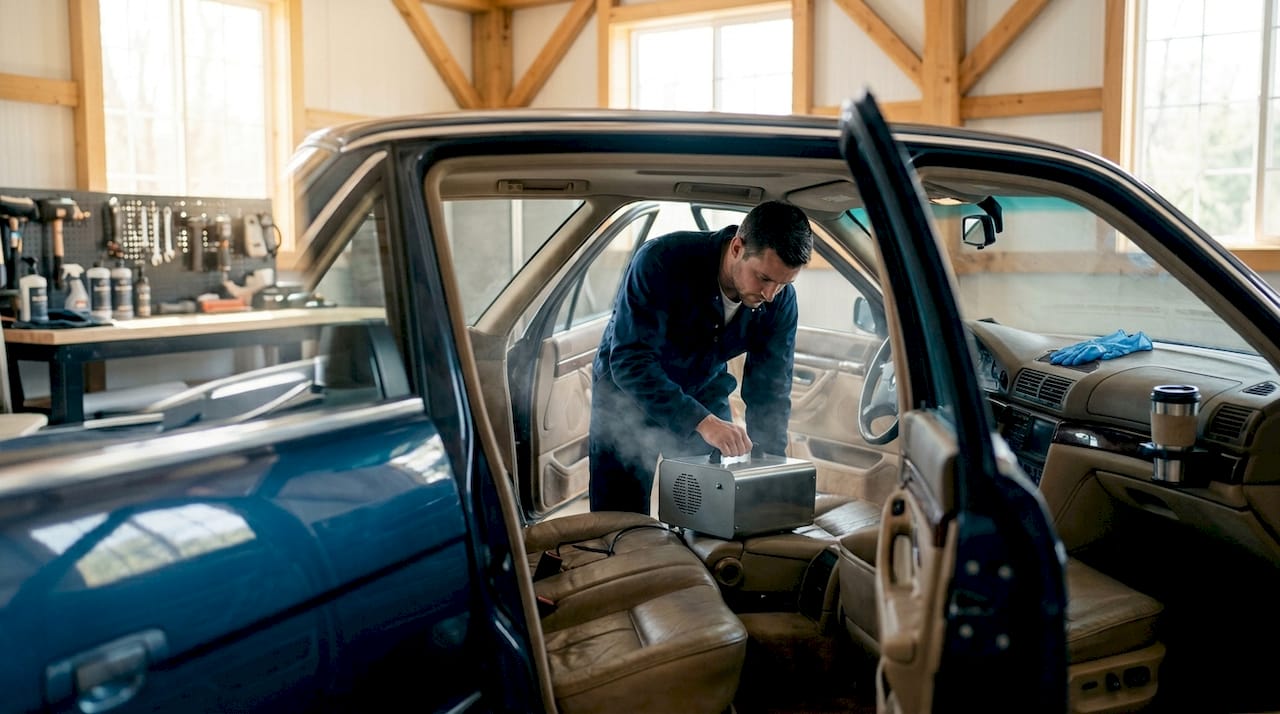
Ozone is a molecule made up of three oxygen atoms rather than the two you breathe normally. Because that third atom is loosely bonded, it breaks free easily and reacts with almost anything it contacts. In the context of auto detailing, an ozone generator pumps this reactive gas into a sealed vehicle cabin, where it circulates through every crack, seam, and upholstery fiber.
That reaction process is called oxidation. When ozone contacts an odor-causing compound, it breaks apart that compound’s chemical structure at the molecular level. As a reactive oxidizer, ozone breaks down the chemical structures of odor-causing compounds rather than merely masking them with fragrance. After the ozone degrades those molecules, what remains is a neutral compound with no smell. The odor is not covered. It is gone.
This is a meaningful distinction when you think about car odor removal basics and why so many household products fail. Air fresheners introduce a competing smell. Baking soda absorbs some surface odors. Shampooing lifts surface contamination. None of these methods reach the microscopic residue embedded in foam padding, behind door panels, or inside the HVAC ductwork. Ozone gas does, because it travels like air.
Odors and contaminants ozone treatment addresses:
- Cigarette and cigar smoke residue
- Mildew and mold spores from water intrusion
- Pet dander, urine, and animal odors
- Spoiled or spilled food
- Bacteria from illness events
- Fuel or chemical contamination
Ozone generators are also marketed for sanitization by reducing microorganisms in vehicles when used at the correct concentration and setup. This makes ozone especially valuable after situations like a stomach flu episode in the backseat, a flooding event, or the purchase of a used vehicle with an unknown history.
Understanding why odor removal matters goes beyond comfort. Persistent odors signal that organic residue is still present, and that residue can degrade your interior materials and air quality over time.
How ozone compares to standard cleaning methods:
| Method | Reaches embedded residue | Destroys odor source | Lasts long-term | Risk of overuse |
|---|---|---|---|---|
| Ozone treatment | Yes | Yes | Yes | Moderate |
| Air freshener | No | No | Days only | Low |
| Fabric shampoo | Partially | No | Weeks | Low |
| Ventilation | No | No | Minimal | None |
| Ionizer | Partially | Partially | Short-term | Low |
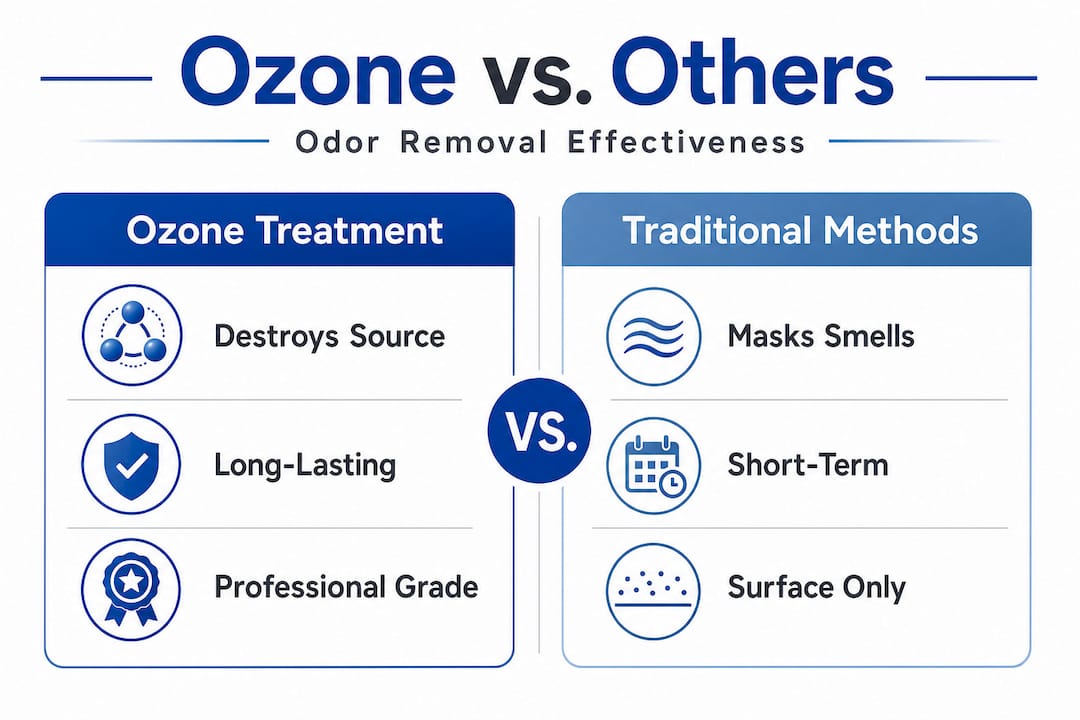
The table makes one thing clear: ozone is the only method in that list that actually destroys the odor source while also penetrating deeply into the materials where residue hides.
Ozone treatment vs. other odor removal methods
Choosing the right solution for your vehicle’s odor problem comes down to understanding exactly what each method can and cannot do. Understanding how ozone is different is crucial when choosing the smartest solution for stubborn or hazardous odors.
As established, ozone destroys odor at the chemical structure rather than acting as a masking agent like air fresheners. This is not a marketing claim. It reflects how oxidation chemistry works. If you stop masking and start eliminating, results are immediate and lasting.
Situations where ozone treatment is the right call:
- A previous owner or passenger smoked regularly in the vehicle and the smell is embedded in headliner fabric and seat foam.
- Mildew has developed from a slow leak or a wet carpet that was not dried promptly.
- Spilled milk, raw meat, or other proteins have been cleaned from the surface but the odor keeps returning.
- A pet had an accident in the vehicle and enzymatic cleaners have not fully resolved the smell.
- A family member was ill in the car and you want to sanitize the interior, not just clean visible surfaces.
- You bought a used vehicle and cannot identify the source of a persistent background smell.
Pro Tip: Repeatedly buying air fresheners for a smell that keeps returning is a sign the odor source is still physically present in your interior. Every dollar spent on cover-up products is money that could go toward a single professional ozone session that actually ends the cycle.
Standard shampooing is excellent for lifting visible stains and surface-level dirt. It is not designed to penetrate deeply enough to reach residue that has soaked into padding or settled into ventilation systems. Ionizers break up some odor particles in the air but do not deliver the same chemical breakdown as ozone. Ventilation helps dilute smells but provides no actual removal.
Avoiding common detailing mistakes means recognizing when a surface-level approach simply will not work. Ozone is not the first tool in every situation, but for deep, persistent contamination it is often the only tool that delivers permanent results.
Safe use of ozone treatment: Health and material considerations
Once you see why chemical-level odor removal is valuable, it becomes vital to learn the safest way to implement ozone in your vehicle. Ozone is a powerful oxidizer, and that same reactivity that destroys odor molecules can cause problems if it is used incorrectly.
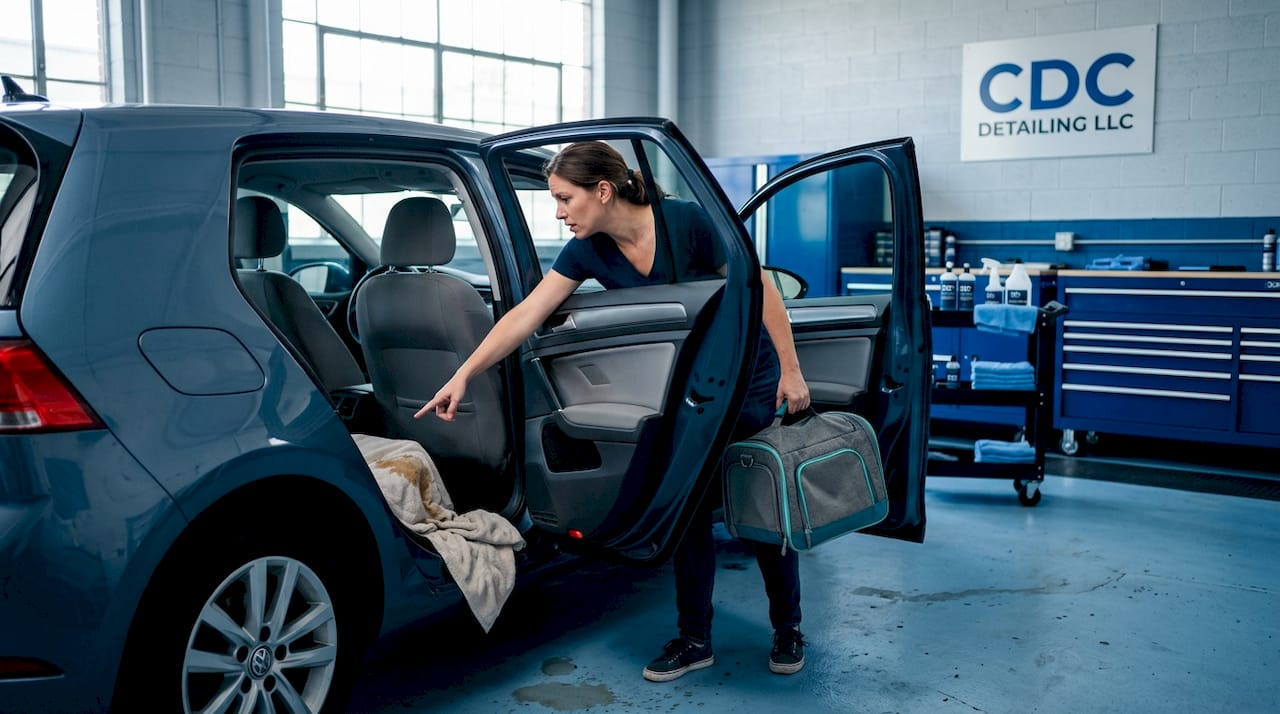
The most critical rule: the vehicle must be completely unoccupied during treatment. No people, no pets, and no plants. The doors and windows should be sealed to contain the gas and maximize concentration during the treatment cycle. Post-treatment ventilation is equally important. After the cycle ends, the vehicle must be aired out thoroughly before anyone enters it, because excess ozone can irritate the lungs and airways even at moderate concentrations.
“Ozone treatment must be done in unoccupied vehicles with careful post-treatment ventilation to avoid lung irritation. Excessive ozone can damage rubbers, electronics, fabrics, and paints when concentration or exposure time is not managed correctly.”
Interior materials that are most vulnerable to ozone overexposure:
- Rubber seals around doors and windows, which can dry out and crack
- Dashboard plastics and painted trim surfaces
- Electronic components including sensors, displays, and wiring harnesses
- Leather upholstery, which can become brittle with repeated overexposure
- Adhesive-backed components like headliner glue
These risks exist primarily at excessive concentrations or with extended exposure times beyond what a professional would apply. The solution is not to avoid ozone. It is to use it correctly and to follow verified detailing safety tips that account for both human health and material preservation.
Pro Tip: More ozone is not more effective. An untrained DIY approach that runs a generator for too long can bleach fabrics, damage electronics, and create a respiratory hazard. Professional detailers follow specific auto detailing safety protocols that calibrate concentration to vehicle size and contamination level for safe, effective results every time.
A typical professional ozone cycle might run 30 to 60 minutes for moderate odors. Severe contamination like heavy smoke or mold may require a longer cycle, but that decision belongs with someone who understands the variables. After the generator stops, the vehicle should be ventilated for at least 30 to 60 additional minutes before occupancy.
When should you consider ozone treatment for your vehicle?
Knowing the right way to run ozone cycles is only part of the story. You also want to understand when it is truly worth the investment.
Not every bad smell requires ozone treatment. A light food smell from last week’s takeout may clear up with a thorough interior cleaning. But when an odor persists after multiple cleaning attempts, that is a signal that something deeper is happening. Results depend on correct setup, concentration, and ventilation. Ozone treatment excels specifically for interior odor and post-contamination sanitization scenarios.
Persistent odor situations that strongly warrant ozone treatment:
- Cigarette, cigar, or marijuana smoke that has saturated upholstery and the headliner
- Mold or mildew following water intrusion from a leak, flood, or open window in rain
- Biological spills like urine, vomit, or blood, especially after initial cleaning
- Pet accidents that have reached the carpet padding beneath the surface layer
- Mystery odors in a used vehicle purchase with no visible source
- Bacterial contamination following an illness event inside the vehicle
Checklist: Is it time to book ozone treatment?
- You have shampooed or steam-cleaned the interior at least once and the smell returned.
- You cannot locate a visible source for the odor.
- The smell is strongest in enclosed spaces (early morning, windows up).
- Air fresheners wear off within two or three days and the underlying odor is immediately noticeable again.
- The odor intensifies in heat or humidity.
- Passengers comment on the smell even when you have stopped noticing it.
If two or more of those apply, ozone treatment is your next logical step. Knowing the signs you need professional detailing prevents you from spending more money on surface solutions that the problem has already outgrown.
For situations involving flooding, confirmed mold growth, or any biohazard event, consulting a professional is not optional. These scenarios require not just odor elimination but also mold remediation and potentially a full assessment of the interior car cleaning workflow before ozone is introduced. Applying ozone to a vehicle with active mold without addressing the moisture source first will only delay the problem.
Why ozone treatment delivers what most odor remedies only promise
Here is the professional reality that most odor advice leaves out: the detailing industry sees the same vehicles cycle back repeatedly with the same smells because the root problem was never addressed. Customers buy deodorizing sprays, drop in new seat covers, and eventually stop noticing the smell themselves. The odor is still there. They just adapted to it.
What real results with ozone reveal is that a single properly executed ozone session regularly succeeds where months of repeated shampooing and dozens of air fresheners have failed. The reason is straightforward. Shampoo removes what it contacts. Ozone travels. It reaches behind plastic panels, into seat foam, inside the HVAC system, and along every surface in the sealed cabin. Nothing hides from gas.
The trap most people fall into is the “more is better” mindset. This applies to DIY ozone as much as it does to air fresheners. Running a generator for four hours when one hour was sufficient does not improve results. It raises the risk of material damage and lung irritation significantly, and it still will not fix an underlying moisture problem that the ozone cycle cannot address alone.
The honest takeaway from years of field experience is this: ozone works powerfully and efficiently when it is part of a complete detailing process, not a standalone shortcut. Heavily contaminated vehicles often need a physical deep clean first, then ozone to neutralize what remains at the molecular level. That combination is what produces results that last. It is also why professional application consistently outperforms consumer-grade equipment used without proper training or ventilation discipline.
If you are still masking odors in your vehicle, that smell is telling you something. The source is still there. Ozone, used correctly, is the tool that ends the conversation permanently.
Get professional ozone treatment and detailing in South Jersey
Persistent odors are not something you should have to live with, and now you know why surface-level solutions are not enough for serious contamination.

At CDC Auto Detailing, we bring certified, professional-grade ozone treatment directly to your location across South Jersey. Our mobile service means your vehicle gets expert interior care without you needing to leave home or work. From understanding how auto detailing works to reviewing the full range of auto detailing services we offer, everything you need is available on our site. Ready to eliminate that odor for good? Reach out to schedule your appointment and let our team handle the rest with the protocols and equipment to do it right the first time.
Frequently asked questions
Is ozone treatment safe for all vehicles and interiors?
Ozone treatment is safe when used correctly, but overexposure can damage materials like rubber, electronics, paints, and fabrics. Treatment must always occur in an unoccupied vehicle with proper post-session ventilation.
How long does ozone treatment take to remove odors from a car?
Most professional treatments take between one and two hours, plus additional ventilation time of at least 30 to 60 minutes before the vehicle is safe for re-entry.
Does ozone treatment remove all types of odors, including smoke and mildew?
Yes. Ozone is effective for smoke, mold, mildew, pet odors, food smells, and bacterial contamination because it breaks those compounds down at the molecular level rather than covering them.
Is ozone treatment the same as using air freshener in your car?
No. Air fresheners only cover smells temporarily while ozone breaks down odor compounds rather than masking them with fragrance, which is why results last significantly longer.
Can I perform ozone treatment at home or should I hire a professional?
DIY ozone is possible, but proper setup and concentration are key for safe and effective results. Professionals reduce the risk of material damage and ensure the treatment cycle actually eliminates the odor source.