
Yes, you can wax paint protection film (PPF), but only with a non-abrasive wax that has no dyes or harsh solvents, and only after the film has had time to bond. Even then, wax is rarely the best top layer for film. Paste wax can collect along edges and seams, and a flexible ceramic coating or a film-safe sealant usually does the job with less risk. Below you’ll find what the manufacturers say, what to avoid, how to apply wax if you still want to, and when another product makes more sense.
TL;DR
- Wax is allowed on PPF if it is non-abrasive and free of dyes, rubbing compounds and petroleum-based solvents.
- Wait before waxing a new install. 3M’s guidance is one week, and other film makers ask for at least a few days before the first wash.
- Skip cleaner waxes, one-step products and anything sold as a polish. They often contain abrasives.
- Ceramic coating is a good fit for PPF. Some films already build in a ceramic-style slick surface, so wax may add nothing.
- If you are unsure, ask the installer who put the film on. Warranty terms depend on following the film maker’s care rules.
Table of Contents
- Can you wax PPF at all?
- Which waxes to avoid on PPF
- How long to wait before waxing new film
- How to wax PPF without leaving residue
- Do you even need wax on PPF?
- Can you ceramic coat PPF?
- Wax, sealant or ceramic: a quick way to choose
- Our perspective
- Protecting film and paint with CDC Detailing
- Common mistakes to avoid
- FAQ
- Sources
Can you wax PPF at all?
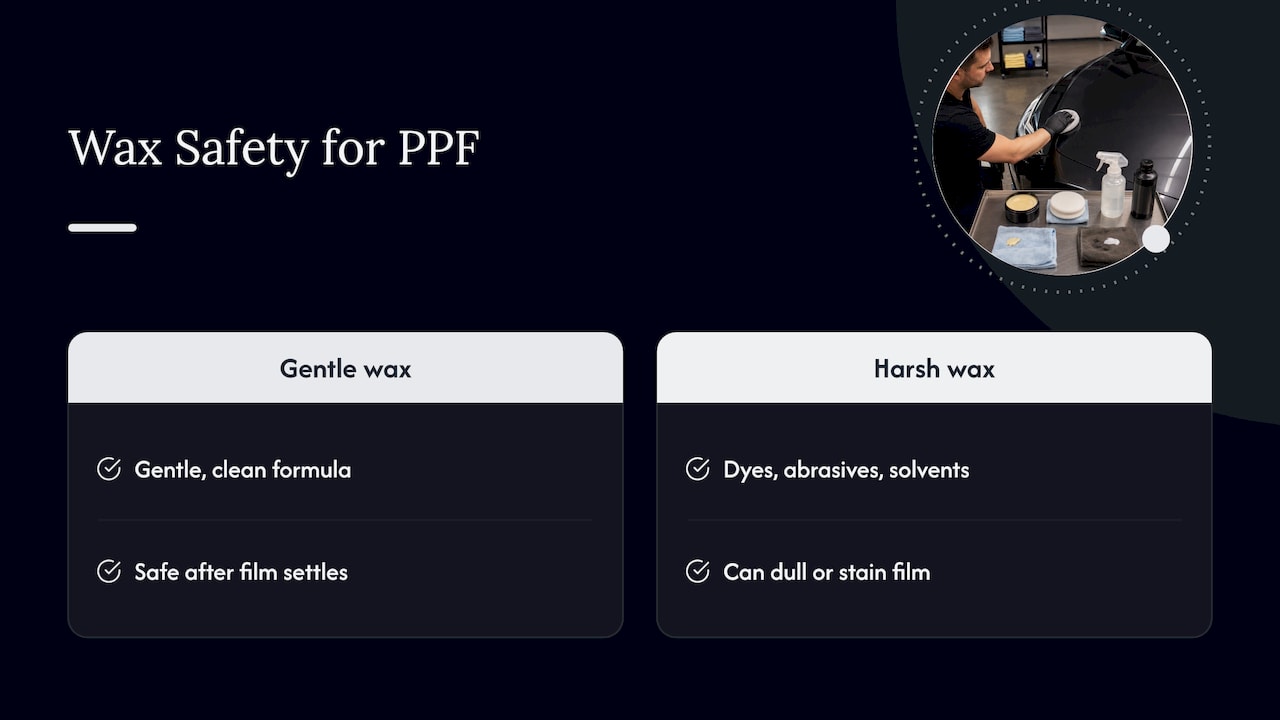
The short answer from the people who make the film is yes, with conditions. PPF is a clear urethane layer, usually with a protective top coat. It is not paint, so products made for paint can behave differently on it. A wax that is gentle and clean works. A wax that carries abrasives, dyes or aggressive solvents can dull the surface or stain it.
3M warns against waxes containing dyes, abrasive polishes and rubbing compounds on its film, because they can permanently damage the surface. You can read the details in 3M’s vehicle maintenance FAQ for its Protection Wrap Film. The same document names its own recommended paste wax for use after the film has settled.
So the real question is not “can I” but “which wax, when, and why.” The rest of this guide answers those three.
Which waxes to avoid on PPF
Most damage comes from picking the wrong product off the shelf. Here is what to leave on the shelf.
Waxes with abrasives
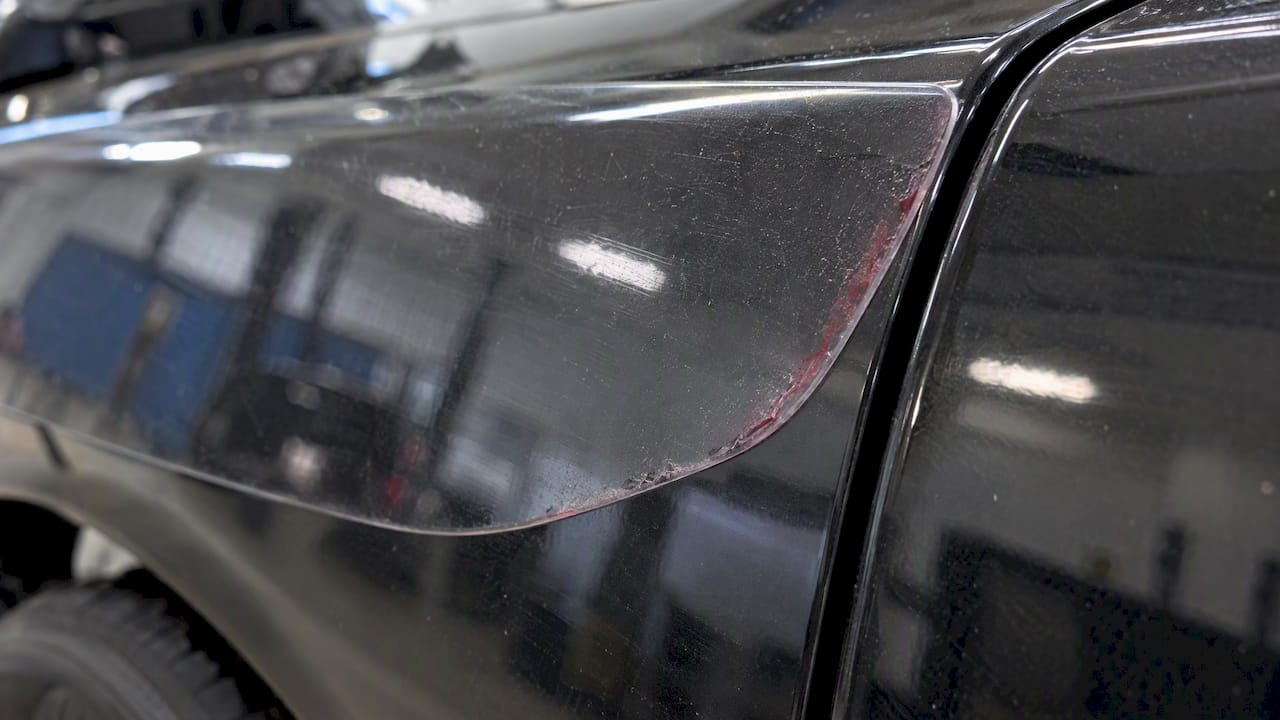
Cleaner waxes, one-step “cleans and protects” products and polishes marked for paint all work by gently removing a thin layer of the surface. On clear coat that is fine. On film it can leave haze or fine marring, and it wears down the top coat that gives the film its gloss. If the label says cleaner, compound, polish or swirl remover, don’t put it on film.
Waxes with dyes
Some waxes are tinted to “enhance” dark or red paint. Dye can settle into the film, especially in textured areas and at the edges. 3M specifically lists dyed waxes among the products that can damage its film, as noted above.
Waxes with strong solvents
Petroleum distillates and similar solvents can dry out the film or weaken the adhesive near edges. Check the label. If it lists solvents you wouldn’t want on a rubber seal, assume it’s not good for film either.
Hard carnauba paste, especially on edges
This one is less about chemistry and more about mechanics. Paste wax that dries in a seam or along a trimmed edge leaves a white, chalky line that is tedious to clean. In our experience that residue is the most common complaint on film that has been hand waxed. Edges are also where film is most likely to lift if you scrub at them.
| Product type | Safe on PPF? | Main risk |
|---|---|---|
| Non-abrasive liquid or spray wax, no dyes | Usually yes | Streaking if applied in sun or too thick |
| Non-abrasive paste wax | Yes, with care | White residue in seams and edges |
| Cleaner wax or one-step product | No | Abrasives dull the film surface |
| Polish or rubbing compound | No | Permanent surface damage |
| Dyed or tinted wax | No | Staining, especially at edges |
| Wax with petroleum solvents | No | Drying out the film, weaker edge adhesion |
How long to wait before waxing new film
Fresh film needs time to bond. Moisture from the installation process works its way out, and the adhesive builds strength. Waxing, washing or rubbing early can put stress on edges before they have set.
Manufacturers give different windows:
- 3M advises waiting one week after installation before applying its recommended paste wax, so the adhesive can build properly, per the maintenance FAQ.
- SunTek recommends waiting three days after installation before washing the vehicle, according to its paint protection film FAQ.
Because the windows differ, treat the longest one as your floor if you don’t know which film you have, and follow your installer’s written aftercare sheet. If we installed your film, that sheet tells you the exact interval for the product on your car.
How to wax PPF without leaving residue
If you want the look of wax and have picked a film-safe product, a careful method keeps edges clean.
- Wash first. Hand wash out of direct sun, once the panels have cooled, and dry with a blower or a plush microfiber towel.
- Work one panel at a time, in shade. Wax that bakes on is wax that smears.
- Use a very thin coat. Thick wax is the main reason residue ends up in seams. Two thin coats beat one heavy one.
- Stay soft near edges. Wipe parallel to the edge, not into it, and don’t dig at a trimmed line with a fingernail or a corner of a towel.
- Remove with a clean, soft microfiber. Flip it often. If there’s a visible line in a seam, a soft detailing brush or a fresh towel lightly dampened with a film-safe quick detailer usually clears it.
- Avoid pressure on lifted corners. If an edge looks raised, stop and call the installer rather than waxing over it.
For general washing, the film makers agree on the basics. XPEL’s product care guide calls for hand washing out of direct sunlight, drying promptly, removing contaminants quickly, and avoiding automatic tunnel washes, unapproved chemicals and high-pressure water near film edges. 3M says brush car washes may dull or scratch its film and lift edges, and warns that strongly alkaline, acidic or alcohol-based cleaners can permanently damage the surface.
Do you even need wax on PPF?
This is the question behind many searches, and the honest answer is often no. The film is the protection. It takes the rock chips, bug acids and light scratches that wax never could. Wax adds gloss and a bit of slickness, and that’s about it.
What wax does well on PPF:
- Adds a warm gloss some owners like, especially on darker colors.
- Makes the surface a little slicker so dirt rinses off more easily.
Where wax falls short on PPF:
- It wears off in weeks to a couple of months, so you repeat the edge-cleaning risk each time.
- It does nothing for impact or scratch protection that the film doesn’t already provide.
- Some modern films already have a slick, hydrophobic top coat. SunTek notes that its Reaction film builds in the hydrophobicity of a ceramic coating, so waxes and coatings can be applied but may not be needed, as stated in its dealer FAQ.
If your main goal is easy washing and water beading, there is a better tool.
Can you ceramic coat PPF?
Yes. A ceramic coating is the more common top layer for film, and it is the answer many installers give when owners ask about wax.
3M recommends its own ceramic coating or Ceramic Boost on Protection Wrap Film for extra hydrophobicity and stain resistance, per the maintenance FAQ. XPEL, another film maker, sells its FUSION PLUS coatings with film in mind, described on its ceramic coating blog post.
Things to check before coating film:
- Is the coating rated for film? Not every coating is. A thin, flexible formula is what you want, because film moves slightly with temperature.
- Is the film fully cured? Wait for the film maker’s recommended interval, then coat. Your installer should confirm the timing.
- Does your film already have a built-in coating? If so, ask whether an extra layer adds anything.
- Does it affect your warranty? Some film warranties require approved products. Ask for it in writing.
- Who is applying it? Prep matters. The surface must be clean and free of oils, and the edges need careful handling.
Wax versus ceramic is a long-running debate on paint too. If you want the full comparison, our guide to ceramic coating versus wax lays out durability, cost and upkeep side by side.
Wax, sealant or ceramic: a quick way to choose
| If you want… | Best fit |
|---|---|
| The easiest upkeep and strong water beading | Ceramic coating made for film |
| A warm gloss and don’t mind redoing it often | Non-abrasive liquid wax, applied thinly |
| Minimal fuss on a film with built-in coating | Wash properly and leave it alone |
| A fleet or work truck that gets washed often | Ceramic coating plus a scheduled wash plan |
| A show car with edges you’re protective of | Ceramic coating applied by the installer |
Our perspective
We install and maintain film, and we’ve also cleaned up after a lot of well-meant waxing. Here is how we see it.
First, PPF is an investment you made to avoid thinking about paint damage, so the best aftercare is the boring kind: gentle hand washes, quick removal of bird droppings and bugs, and no shortcuts with aggressive products. Wax is not forbidden, but it is optional, and the risk sits at the edges, which is exactly where film needs to stay put.
Second, when owners ask us for a top layer, we steer toward a coating made for film. It gives the slickness people want from wax, lasts far longer, and means you aren’t working a towel along trimmed edges every few weeks. We keep each vehicle’s documented process on file, so the product, the cure time and the aftercare are written down for you. That helps if you ever sell the car.
Third, we come to you. As a mobile service in South Jersey we can see where the vehicle lives, whether that’s a driveway, a lot or a farm yard, and recommend a wash routine that fits. For a step-by-step view of how film is handled from prep to cure, see our paint protection film workflow, and for a maintenance rhythm that suits busy owners and fleets, read our PPF maintenance timeline.
If you’re unsure about a product already in your garage, don’t guess on the car. Ask first.
— Charles
Protecting film and paint with CDC Detailing
If you have film on your car, or you’re about to, we can handle the whole chain in South Jersey: film installation, a film-safe ceramic coating, and ongoing washes at your location. Our ceramic coating packages come in 3, 5 and 8 year versions at $1,000 to $1,200, $1,500 to $1,700 and $2,200 to $2,400, with a 10% booking charge. Paint protection film pricing is quoted per vehicle, so request a quote for paint protection film and tell us which panels you want covered.

For upkeep, our Exterior Maintenance Plan is $100 per week or $200 per month per vehicle. Mobile service carries an additional fee that starts at $100. You can see the ceramic coating options and the detail packages on our site.
Common mistakes to avoid
- Waxing within days of installation. Edges haven’t set. Follow the film maker’s interval.
- Using a spray wax with “cleaner” in the name. Check the label for abrasives.
- Running the car through a tunnel wash. Brushes can dull the film and lift edges.
- Pressure washing close to edges. Keep the nozzle back and angled away from seams.
- Scrubbing at white residue. Soften it and lift it with a clean towel instead.
- Stacking products. Wax over a coating, or a coating over fresh wax, can cause streaking and uneven beading. Strip and prep first.
FAQ
Can you wax a car with PPF on it?
Yes, as long as the wax is non-abrasive and free of dyes and harsh solvents. Wait until the film has bonded, which 3M puts at one week for its film. Apply thin coats and take care along edges and seams.
Is carnauba wax bad for PPF?
Carnauba itself isn’t the problem. Hard paste formulas can dry into seams and edges and leave a white residue that is hard to clean. A thin coat of a non-abrasive liquid wax is a lower-risk way to get a similar look.
Can you ceramic coat over PPF?
Yes. Film makers such as 3M and XPEL offer coatings designed for their film. Use a coating rated for film, let the film cure first, and check that it fits your warranty. Some films already include a ceramic-style top surface, so ask whether an extra coat helps.
Do I still need wax if I have PPF?
No. The film does the protecting, and wax adds gloss and slickness for a short time. If you want longer-lasting water beading and easier washing, a film-safe ceramic coating is the better upgrade.
Can you buff out PPF?
Not with the products you’d use on paint. Abrasive polishes and compounds can permanently damage the film’s surface. If film is scratched or hazy, talk to the installer about the right fix for that film, which may include replacing the panel.
Sources
- 3M Protection Wrap Film Vehicle Maintenance FAQ
- SunTek paint protection film FAQ
- SunTek dealer FAQ
- XPEL product care instructions
- XPEL FUSION PLUS ceramic coating guide