
TL;DR:
- Ceramic coating is a durable liquid polymer that chemically bonds to a car’s clear coat, providing superior UV, chemical, and hydrophobic protection. It enhances appearance, reduces washing time, and extends paint longevity, especially in high-UV climates. Proper maintenance and professional application are essential for maximizing long-term benefits and protection.
Ceramic coating is a liquid polymer that bonds chemically to your car’s clear coat, forming a hard, hydrophobic, UV-resistant layer that outperforms traditional wax in every measurable way. The benefits of ceramic coating for cars include blocking up to 94% of UV radiation, resisting chemical etching from bird droppings and acid rain, and cutting your wash time by roughly 40%. Unlike wax, which sits on top of the paint and wears off in weeks, a professionally applied ceramic coating becomes part of the surface itself. For car owners in South Jersey and beyond, that means real, lasting protection rather than a temporary shine.
What are the main benefits of ceramic coating for cars?
Ceramic coating protection for vehicles works on three fronts: UV defense, chemical resistance, and surface hardness. Each one addresses a specific threat your paint faces every single day.
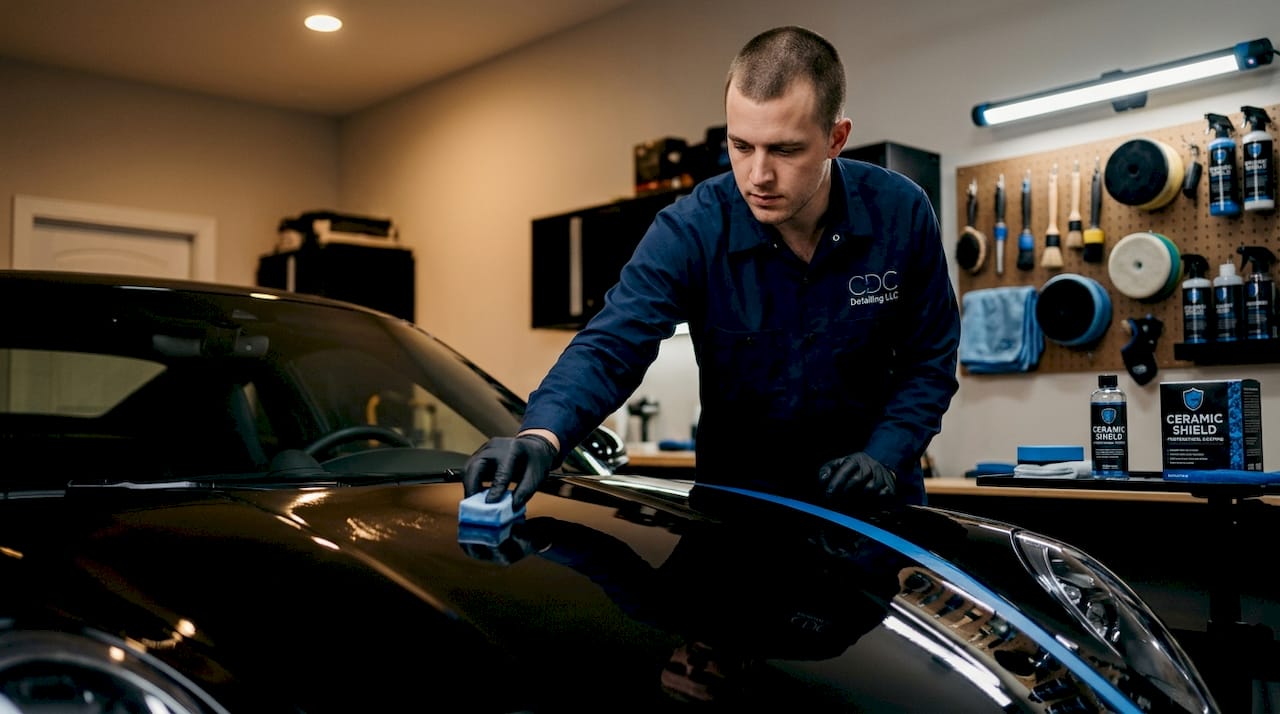
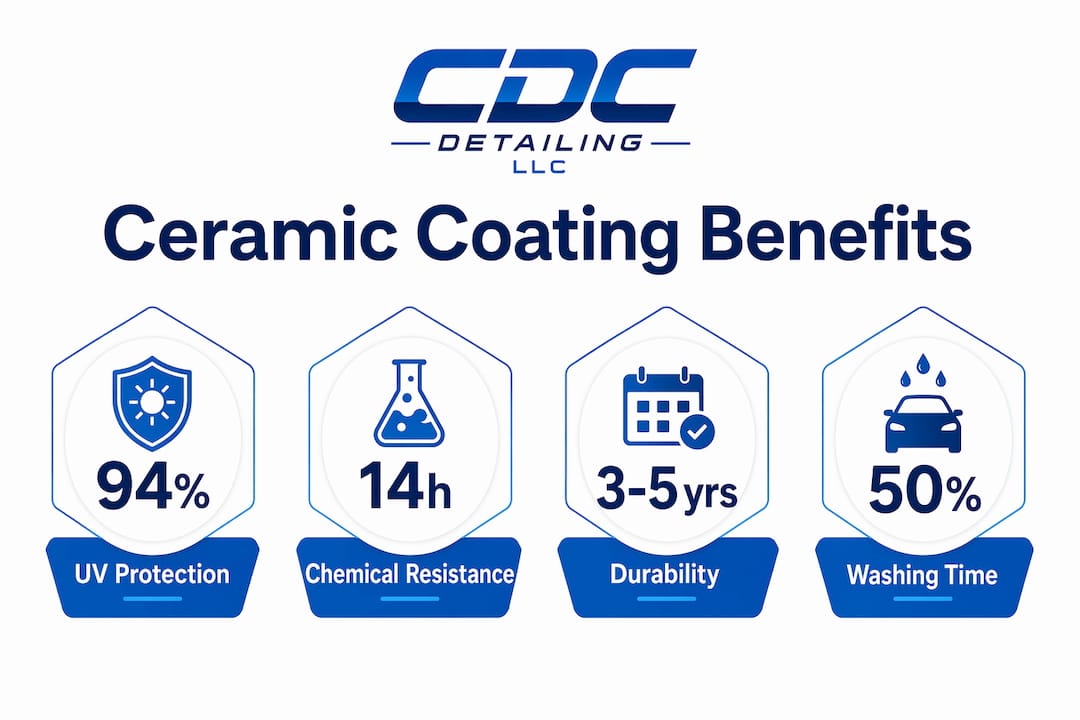
UV protection is where ceramic coatings deliver the most measurable impact. Quality 9H-rated coatings block 88 to 94% of UV rays, which directly reduces oxidation and color fading. In high-UV climates, that translates to a 30 to 50% longer factory clear coat lifespan. That is the difference between repainting at year five versus year eight or nine.
Chemical resistance is the second major advantage. Bird droppings, tree sap, and acid rain all etch unprotected clear coat within 45 to 90 minutes. Coated surfaces resist etching at low pH for 6 to 14 hours. That window gives you time to wash off contaminants before they cause permanent damage.
Surface hardness is the third benefit, though it comes with an important caveat. Ceramic coatings reduce light swirl marks and minor abrasions from routine washing. However, 9H-rated coatings do not prevent rock chips or deep scratches. The coating is micron-thin. A piece of road gravel hits harder than any coating can absorb. Understanding this distinction is critical to setting realistic expectations.
- Blocks UV-A and UV-B rays to prevent oxidation and fading
- Resists chemical etching from bird droppings, sap, and acid rain for hours longer than bare paint
- Reduces swirl marks and light abrasions from washing
- Does not protect against rock chips or deep scratches (paint protection film handles that)
Pro Tip: If you park outside regularly in a sunny region like South Jersey, UV protection alone justifies the investment. Oxidized paint is expensive to restore.
How does ceramic coating improve appearance and make washing easier?
The aesthetic advantages of car ceramic coating are visible from the first wash after application. Dark-colored vehicles see the most dramatic change. Ceramic coatings increase gloss by 10 to 20 gloss units on properly polished panels, giving paint a deeper, wetter appearance that wax simply cannot replicate. That effect comes from the coating’s ability to reflect light more cleanly than the microscopic texture of bare clear coat.
The hydrophobic surface is where daily life gets noticeably easier. Water beads up and sheets off the paint rather than sitting and evaporating into mineral deposits. Over time, this means fewer water spots, less contamination bonding to the surface, and a car that looks cleaner between washes. Washing time drops by about 40% on coated vehicles because dirt and grime have far less to grip onto.
Here is what a practical maintenance routine looks like for a ceramic-coated car:
- Wash every two to four weeks using a pH-neutral shampoo and a clean microfiber mitt
- Rinse thoroughly before contact washing to remove loose grit that could cause swirls
- Air dry or use a clean microfiber drying towel to prevent water spots
- Apply a ceramic booster spray every three to six months to refresh hydrophobicity
- Avoid automatic car washes with abrasive brushes, which degrade the coating faster
One thing most owners do not expect: the hydrophobic effect gradually shifts from tight water beading to broader water sheeting as the coating ages. This is not coating failure. The contact angle drops from roughly 115 degrees to around 95 degrees over the coating’s life, but wash-ease and stain resistance continue throughout.
You can find more guidance on washing frequency and technique to keep your coating performing at its best.
How ceramic coating is applied and how long it lasts
The application process is where most DIY attempts fall short. Paint correction and decontamination lasting two to four hours must happen before any coating touches the surface. Any contamination, swirl marks, or oxidation trapped under the coating will be locked in permanently and will degrade the final result. This is not a step you can skip or rush.
Prep quality determines bonding, and bonding determines longevity. A single-layer professional coating typically lasts two to three years. Multi-layer systems extend that to three to five years with proper upkeep. Climate and maintenance cadence influence lifespan more than the warranty language on any product label. A car washed weekly with pH-neutral soap in a mild climate will hold its coating far longer than one washed monthly with dish soap in Phoenix.
Maintenance after application is straightforward but non-negotiable:
- Use only pH-neutral car shampoos. Alkaline or acidic cleaners strip the coating faster.
- Apply a ceramic booster spray every three to six months to restore contact angle and extend life toward the upper durability range.
- Avoid parking under trees when possible. Sap and bird droppings still need prompt removal even on coated paint.
- Schedule a professional inspection annually to assess coating condition and address any thin spots.
Pro Tip: Ask your detailer for a multi-layer application if you live in a high-UV or high-humidity region. The added cost is modest compared to the extended protection you get.
Ceramic coating vs. wax, sealants, and paint protection film
Understanding how ceramic coating compares to other options helps you decide what is actually worth it for your situation.
| Protection type | Durability | UV resistance | Chemical resistance | Impact protection | Best for |
|---|---|---|---|---|---|
| Carnauba wax | 4 to 8 weeks | Low | Low | None | Budget-conscious, show cars |
| Synthetic sealant | 3 to 6 months | Moderate | Moderate | None | Seasonal protection |
| Ceramic coating | 2 to 5 years | High (88 to 94%) | High | Minimal (swirls only) | Long-term paint preservation |
| Paint protection film (PPF) | 5 to 10 years | High | High | High (chips, impacts) | High-impact areas, daily drivers |
Wax and synthetic sealants sit on top of the paint rather than bonding to it. That is why they wash away. Ceramic coatings form a chemical bond with the clear coat, which is why they last years instead of weeks. For UV and chemical protection, ceramic outperforms wax in every category.
Paint protection film occupies a different category entirely. PPF is a thick, self-healing thermoplastic urethane film that absorbs rock chips and road debris. Ceramic coating cannot do that. The two products complement each other well. Many serious car owners apply PPF to high-impact zones like the hood, front bumper, and mirrors, then coat the entire car in ceramic. That combination covers both physical impact and chemical or UV threats. You can learn more about PPF installation options if impact protection is a priority for your vehicle.
Key takeaways
Ceramic coating delivers its strongest value through UV protection, chemical resistance, and reduced maintenance burden rather than impact defense.
| Point | Details |
|---|---|
| UV protection is the top benefit | Quality coatings block 88 to 94% of UV rays, extending clear coat life by 30 to 50% in sunny climates. |
| Chemical resistance buys you time | Coated paint resists etching for 6 to 14 hours versus 45 to 90 minutes on bare clear coat. |
| Maintenance becomes noticeably easier | Hydrophobic surfaces reduce washing time by about 40% and minimize water spot formation. |
| Prep quality determines durability | Paint correction and decontamination before application directly control how long the coating bonds and performs. |
| Ceramic does not replace PPF | For rock chip and impact protection, paint protection film is the right tool. Ceramic and PPF work best together. |
What I’ve learned after years of ceramic coating installs
I have seen the same pattern repeat itself more times than I can count. A car owner invests in a quality ceramic coating, skips the maintenance routine, and then calls six months later wondering why the water beading is gone. The coating did not fail. The owner stopped using pH-neutral soap, ran through a brush car wash twice, and never applied a booster. The coating held up. The maintenance did not.
The honest truth about ceramic coatings is that they are not magic. They are chemistry. When you respect the chemistry, meaning proper prep, correct washing products, and periodic boosters, the results are genuinely impressive. A dark blue sedan that would normally show oxidation and swirl marks within two years can look showroom-fresh at year four. That is real, measurable value.
Where I see owners make the biggest mistake is treating ceramic as a substitute for paint protection film on high-impact areas. If you drive on highways regularly, the front end of your car takes a beating from road debris. Ceramic will not save that paint from chips. A combination of PPF on the front bumper and hood, with ceramic over the rest of the vehicle, is the approach I recommend for daily drivers who want long-term protection without compromise.
Climate matters more than most people realize. A vehicle in South Jersey faces UV exposure, humidity, road salt in winter, and tree sap in spring. That is a demanding environment. Multi-layer coatings and consistent winter maintenance practices are not optional extras here. They are what separate a two-year coating from a five-year one.
— Charles
Get professional ceramic coating from Cdcautodetailing
Cdcautodetailing brings professional-grade ceramic coating services directly to your location across South Jersey, including Pitman, NJ and surrounding areas. Every application starts with thorough paint correction and decontamination so the coating bonds properly and delivers on its full durability potential.

Multi-layer coating packages are available for owners who want extended protection in demanding climates, along with maintenance guidance and booster product recommendations to keep your coating performing year after year. Whether you drive a daily commuter or a weekend show car, Cdcautodetailing has the right solution. Book your ceramic coating service today, or learn how easy it is to schedule mobile detailing at your home or office.
FAQ
What are the real benefits of ceramic coating for cars?
Ceramic coating blocks 88 to 94% of UV rays, resists chemical etching for up to 14 hours, reduces washing time by about 40%, and increases gloss by 10 to 20 units. It bonds chemically to the clear coat, making it far more durable than wax or synthetic sealants.
Is ceramic coating worth it for everyday drivers?
Yes, especially for vehicles exposed to sun, road chemicals, or frequent washing. The coating extends clear coat life by 30 to 50% in high-UV climates and significantly reduces the time and effort needed to keep the car clean.
How long does a ceramic coating last?
A professionally applied single-layer coating lasts two to three years. Multi-layer systems last three to five years with proper maintenance, including pH-neutral washing and periodic booster spray applications.
Does ceramic coating prevent rock chips and scratches?
No. Ceramic coatings reduce light swirl marks from washing but cannot stop rock chips or deep scratches. Paint protection film is the correct product for physical impact defense and works well alongside ceramic coating.
How do you maintain a ceramic-coated car?
Wash with pH-neutral shampoo every two to four weeks, avoid automatic brush car washes, and apply a ceramic booster spray every three to six months. Prompt removal of bird droppings and tree sap also protects the coating from accelerated wear.