
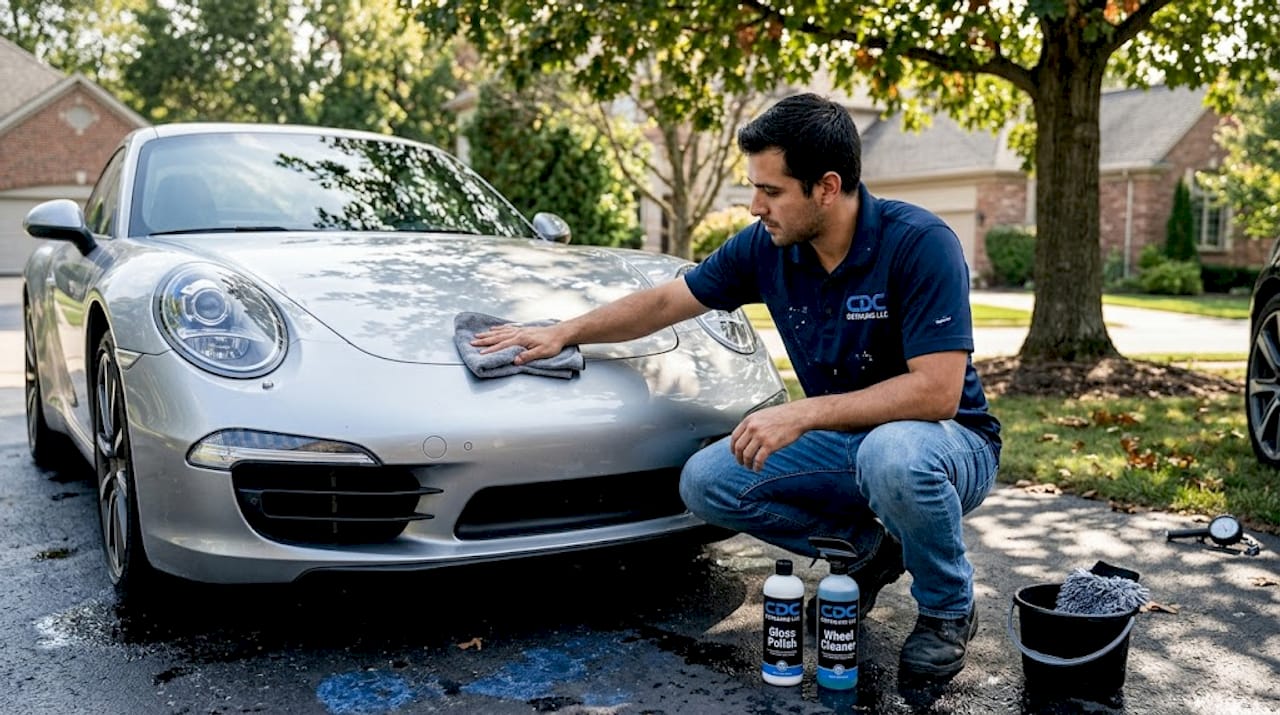
TL;DR:
- Car washing is surface cleaning and does not provide long-term protection for your vehicle.
- Detailing restores, protects, and preserves both interior and exterior for better vehicle longevity.
- Regular professional detailing enhances resale value and prevents costly repairs in challenging South Jersey conditions.
Most South Jersey drivers assume a regular wash keeps their car in top shape. But have you noticed how some vehicles look practically new five or six years in, while others fade, scratch, and dull within months? The difference rarely comes down to luck. It comes down to understanding what actually protects your paint, preserves your interior, and holds your resale value together. Car washing and car detailing are not the same service, not even close, and confusing the two is one of the most common and costly mistakes vehicle owners make. This guide breaks it all down clearly, with practical takeaways you can apply right away.
Table of Contents
- What is car washing? The basics and limitations
- Car detailing explained: Process, benefits, and outcomes
- Comparing detailing vs car washing: Which serves your needs?
- Practical tips for optimizing vehicle care in South Jersey
- Why most drivers underestimate detailing—and how you can avoid costly mistakes
- Ready to transform your car’s care? Discover professional detailing in South Jersey
- Frequently asked questions
Key Takeaways
| Point | Details |
|---|---|
| Car washing removes surface dirt | A wash provides quick cleaning but does not protect or restore your vehicle’s finish. |
| Detailing preserves and boosts value | Professional detailing adds protection, restores appearance, and enhances resale value. |
| Choose care based on needs | Use regular washes for maintenance; schedule detailing to maintain longevity and prevent costly repairs. |
| Local factors matter | South Jersey’s weather and road salt mean combining washing and detailing is especially important. |
What is car washing? The basics and limitations
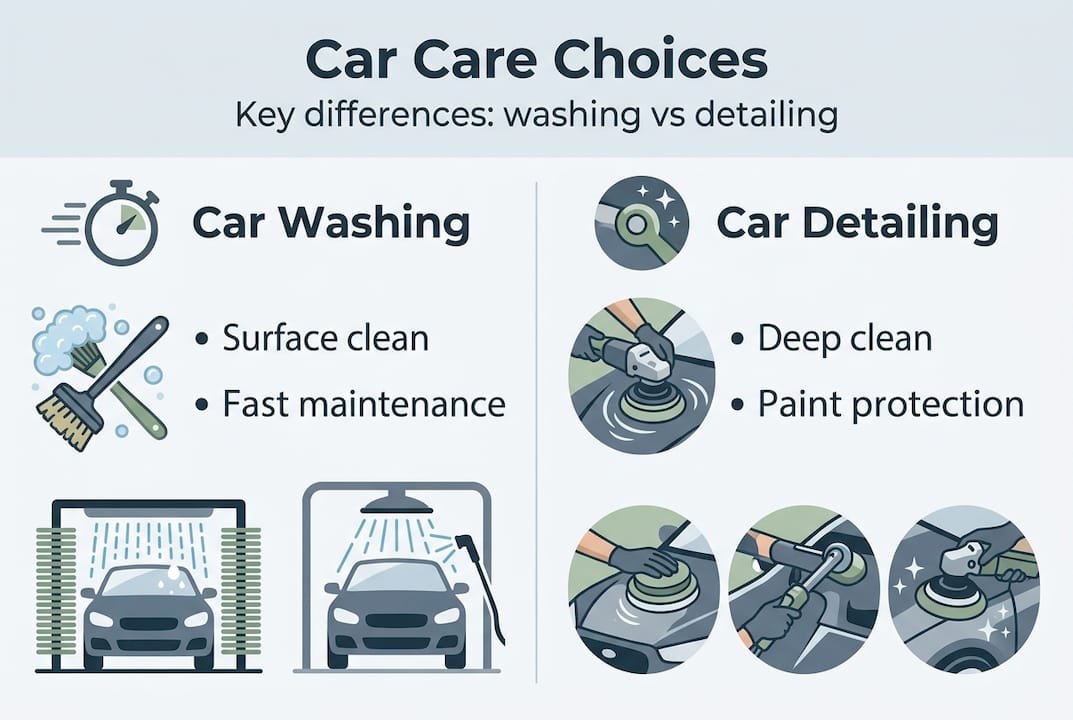
Car washing is exactly what it sounds like: a process of cleaning the exterior surface of your vehicle using soap, water, and sometimes a rinse agent. Whether you use an automatic drive-through, a self-service bay, or hand wash at home, the core goal is the same. You are removing surface-level dirt, dust, bird droppings, and road grime from the paint and glass. A good wash leaves your car looking cleaner than before. That part is real. But it stops there.
The standard wash process goes like this: pre-rinse to loosen debris, apply soap or foam, scrub with a mitt or brush, rinse thoroughly, then dry. Done right, it takes about 20 to 30 minutes. Done wrong, it can actually cause damage. Swirl marks, fine scratches, and paint dulling are common side effects of careless washing techniques, particularly when using the wrong products. Consumer Reports warns that using automotive-specific products is essential to avoiding this kind of surface damage, and it is a point most drivers overlook entirely.
One of the biggest misconceptions about washing is that a clean car equals a protected car. It does not. Washing removes contaminants but leaves your paint exposed to UV rays, oxidation, environmental fallout, and moisture. There is no protective layer applied. No sealant, no wax, nothing. You are simply starting each wash cycle from zero again.
Pros of regular car washing:
- Quickly removes surface dirt, dust, and grime
- Keeps the vehicle looking presentable between detail sessions
- Prevents buildup of corrosive materials like bird droppings and road salt
- Affordable and widely accessible
- Takes minimal time to complete
Cons of car washing:
- Does not protect paint from UV damage or oxidation
- No interior cleaning included in a standard wash
- Wrong products or technique can cause scratches and swirl marks
- Offers no resale value benefit on its own
- Results fade within days or even hours in poor conditions
Key insight: A car wash is maintenance. It is not restoration. It is not protection. Think of it like wiping down a countertop versus deep-cleaning and sealing it. One keeps things tidy. The other keeps things durable.
Understanding these limitations matters, especially for South Jersey drivers dealing with salt air, pollen seasons, and road grime from year-round driving. Washing alone simply cannot address those long-term challenges. And while washing is absolutely worth doing regularly, knowing where it falls short pushes you toward smarter choices. Before you schedule your next wash, reviewing detailing safety tips can help you avoid the most common product and technique mistakes that cause damage.
Car detailing explained: Process, benefits, and outcomes
Car detailing is a thorough, multi-step process that goes far beyond surface cleaning. It addresses both the interior and exterior of your vehicle with professional-grade tools, products, and techniques. The goal is not just to clean but to restore, protect, and preserve. The result is a vehicle that looks better, holds its condition longer, and is worth more when you decide to sell.
Here is what a full professional detail typically includes:
- Exterior pre-wash and decontamination to remove embedded contaminants and road tar
- Clay bar treatment to pull bonded particles off the paint surface
- Paint correction or polishing to remove swirl marks, light scratches, and oxidation
- Wax, sealant, or ceramic coating application to protect the paint from UV and environmental damage
- Wheel and tire cleaning with specialized dressings to protect rubber and metal
- Interior vacuuming and steam cleaning of carpets, seats, and floor mats
- Leather conditioning or fabric protection treatment
- Glass cleaning inside and out for maximum clarity and UV protection
- Trim and vent detailing to restore plastic and rubber components
That is a completely different scope of work compared to a wash. Each step builds on the last, and the end result is a vehicle that is not just cleaner but genuinely better protected. Detailing is consistently rated superior for preservation and resale value compared to washing alone. This matters enormously if you plan to sell or trade in your vehicle at any point.
Comparison: Car detailing vs car washing
| Feature | Car wash | Car detailing |
|---|---|---|
| Surface cleaning | Yes | Yes |
| Interior cleaning | No | Yes |
| Paint protection | No | Yes |
| Scratch correction | No | Yes |
| UV protection | No | Yes |
| Resale value benefit | Minimal | Significant |
| Duration of results | Days | Months |
| Cost | Low | Moderate to high |
The impact on vehicle longevity is one of the most compelling reasons to prioritize detailing. Paint that is properly sealed and corrected lasts years longer than paint that is simply washed repeatedly. Oxidation and UV damage are slow and silent, but once they take hold, they are expensive to reverse.
Pro Tip: Most professional detailers recommend scheduling detailing every four to six months for everyday drivers. If you park outside, drive in heavy traffic, or deal with South Jersey’s coastal salt air, lean toward the shorter end of that range.
Comparing detailing vs car washing: Which serves your needs?
Now that both processes are clearly defined, the practical question is: which one do you actually need right now? The honest answer is that most drivers need both, but at different times and for different reasons. Washing is a routine. Detailing is an investment.
Core benefits of regular car washing:
- Prevents buildup of road salt that can accelerate rust and corrosion
- Keeps glass clear for safe driving visibility
- Maintains a basic level of curb appeal without a large time or money commitment
- Removes pollen and tree sap before they etch into the paint surface
Core benefits of professional car detailing:
- Protects paint from UV rays, oxidation, and environmental fallout for months
- Restores interior surfaces to near-original condition
- Increases resale and trade-in value significantly
- Addresses issues that washing ignores, like embedded tar, swirl marks, and faded trim
Side-by-side outcome comparison
| Outcome | Car wash | Car detailing |
|---|---|---|
| Removes surface dirt | Yes | Yes |
| Removes bonded contaminants | No | Yes |
| Adds paint protection | No | Yes |
| Addresses interior odors | No | Yes |
| Improves resale value | Rarely | Consistently |
| Requires professional tools | No | Yes |
The impact on resale value is one area where the data is especially clear. Vehicles that receive regular professional detailing sell faster and command higher prices compared to those that were only washed. Buyers notice condition, and a well-maintained interior combined with protected, corrected paint tells a story of careful ownership.
Paint protection is another area where washing simply cannot compete. Paint sealants and ceramic coatings applied during a detail create a hydrophobic barrier that repels water, dirt, and UV radiation. Washing does not apply or refresh this barrier. In fact, frequent washing without any protective layer actually accelerates paint degradation by exposing bare clear coat to repeated friction and environmental stress.
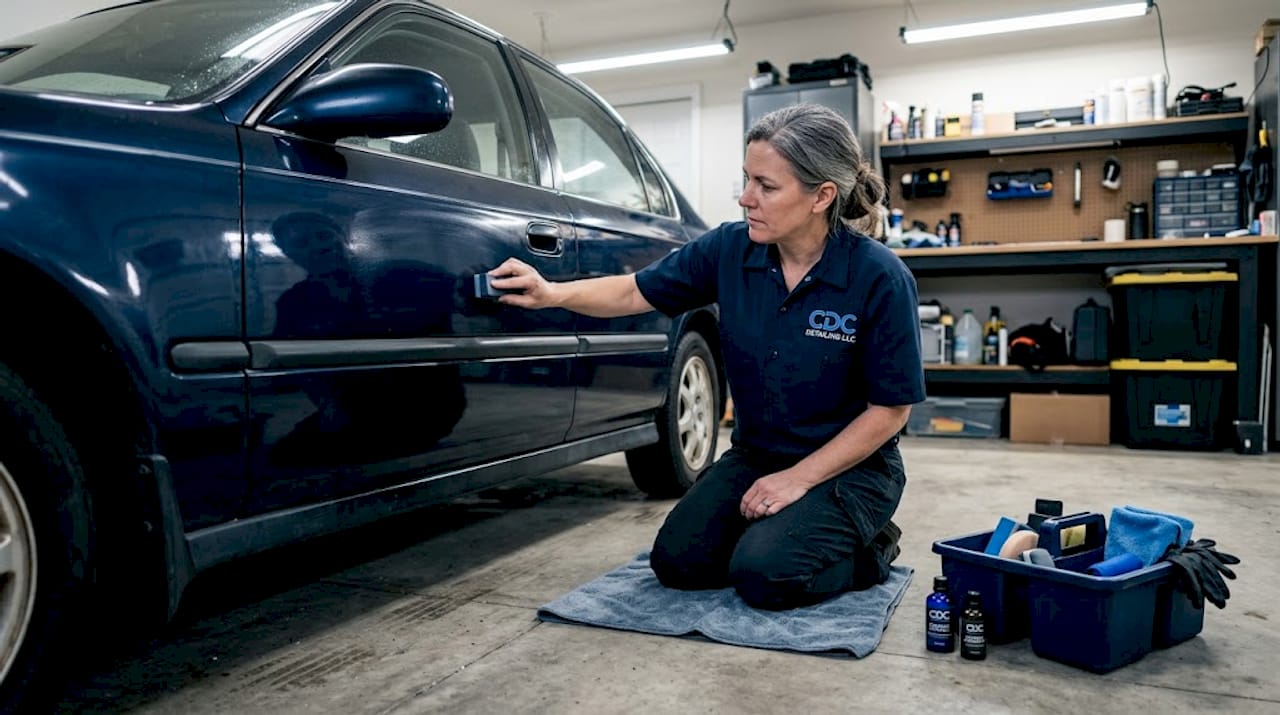
The real-world decision framework is straightforward. If your car was recently detailed and you want to maintain that level of cleanliness between sessions, washing is perfect. If your vehicle has not been detailed in over six months, or has never been detailed professionally, a wash alone is not going to address the underlying condition issues. Consumer research consistently supports detailing for preservation as the standard for serious vehicle owners.
Practical tips for optimizing vehicle care in South Jersey
South Jersey has a specific set of challenges that make vehicle care more demanding than in other regions. You are dealing with coastal salt air, humid summers, heavy pollen in spring, road salt from winter treatments, and stop-and-go traffic patterns that accumulate grime quickly. A one-size-fits-all approach to car care does not work here.
Seasonal maintenance steps for South Jersey drivers:
- Winter: Wash every one to two weeks to remove road salt before it causes undercarriage corrosion. Schedule a detail before winter begins to add a protective layer against salt and moisture.
- Spring: Wash frequently to remove pollen, which is acidic and can etch paint if left on the surface. A mid-spring detail refreshes any wax or sealant worn down over winter.
- Summer: UV exposure is strongest. Detailing with a wax or ceramic coating before summer protects paint from sun damage. Wash as needed to prevent heat-baked debris from bonding to the surface.
- Fall: Clean up leaves and sap before they cause staining. Schedule a fall detail to prepare for the upcoming salt season.
Recommended care frequency based on driving habits
| Driver type | Wash frequency | Detail frequency |
|---|---|---|
| Daily commuter | Weekly | Every 4 months |
| Occasional driver | Every 2-3 weeks | Every 6 months |
| Coastal/shore area driver | Every 1-2 weeks | Every 3-4 months |
| Vehicle used for ride-sharing | Weekly | Every 2-3 months |
| Show or collector vehicle | As needed | Every 3-4 months |
Following a detailing frequency guide tailored to your specific situation takes the guesswork out of scheduling. Using the table above as a starting point, you can build a routine that protects your investment without overspending.
The benefits of regular detailing compound over time. A vehicle that gets detailed consistently every four months develops a cumulative layer of protection that makes each future detail faster, easier, and more effective. Neglected vehicles, on the other hand, require more intensive correction work just to get back to a baseline condition.
Pro Tip: Combine your wash and detailing schedule strategically. Use automotive-specific wash products between details to avoid stripping your protective coating. Dish soap and household cleaners break down wax and sealants fast, undoing weeks of protection in a single wash.
Why most drivers underestimate detailing—and how you can avoid costly mistakes
Here is something we see constantly in South Jersey: drivers who wash their cars religiously every week but haven’t had a professional detail in years. They are proud of how clean their car looks. But when they go to sell, they are shocked to find the paint is oxidized, the interior plastics are faded, and the leather is cracked. All that washing, and the vehicle still aged poorly.
Routine washing cannot undo years of neglect. It never could. Washing is maintenance, not restoration. The distinction matters because many owners believe they are doing everything right when they are actually missing the most important step.
South Jersey’s climate accelerates wear in ways that are invisible until they are not. Salt air eats at clear coat slowly. Humidity breeds mold and odors inside cabins. Summer UV intensity fades dashboards and trim. These are not theoretical problems. They are things professional detailers see on vehicles every week.
The uncomfortable truth is that skipping professional detailing is not saving money. It is deferring a larger cost. Minor paint correction and protection done every six months costs a fraction of what a full paint restoration costs two years down the road. The same logic applies to leather conditioning versus full interior restoration. Detailing done consistently is always cheaper than correcting years of accumulated damage.
One more thing drivers consistently overlook: the interior. Most people focus on exterior shine while completely ignoring cabin condition. Buyers notice stained seats, cracked dashboards, and embedded odors immediately. A pristine exterior paired with a neglected interior does not maximize value. Following detailing best practices means treating the interior with the same priority as the exterior, every single time.
Ready to transform your car’s care? Discover professional detailing in South Jersey
Taking your vehicle care to the next level does not require guesswork.

At CDC Auto Detailing, we bring professional-grade services directly to your home or location across South Jersey. Whether you are exploring the full range of auto detailing examples or want to understand exactly how auto detailing works before committing, we have resources to guide every step of your decision. When you are ready to protect your paint, restore your interior, and maximize your vehicle’s value, book mobile detailing directly through our site. Your vehicle deserves more than a weekly wash. Let us show you what real protection looks like.
Frequently asked questions
How often should I detail my car versus just wash it?
Car washing can be done weekly to maintain cleanliness between sessions, while professional detailing is recommended every four to six months, depending on your driving environment and habits. Consumer Reports notes that using the right products at every stage matters as much as frequency.
Will regular washing protect my car’s paint as well as detailing?
No, washing removes surface dirt but applies no protective layer to your paint. Detailing is superior for preservation because it adds wax, sealants, or ceramic coatings that shield paint from UV damage, oxidation, and environmental fallout for months at a time.
Is detailing worth it for older vehicles?
Absolutely. Detailing can reverse surface oxidation, restore faded trim, condition leather, and add protective coatings that slow future deterioration. Consistent detailing improves resale value even on older vehicles by demonstrating careful ownership and addressing cosmetic wear.
What’s the biggest mistake South Jersey owners make with car care?
The most common mistake is relying exclusively on regular washing while skipping professional detailing entirely. South Jersey’s salt air, humidity, and UV exposure accelerate paint and interior wear far faster than most drivers realize, and avoiding automotive-specific products during washes compounds that damage over time.