
To clean vomit from a car seat, act quickly: ventilate the car, lift off the solids, blot (never rub), and then clean using the method that fits the surface. A child’s car seat has safety parts that must never be soaked or treated with harsh chemicals. A vehicle’s fabric or leather seat can take stronger cleaners. This guide covers both, so you can tell in about ten seconds which one you are dealing with and what to do next.
TL;DR
- Open the windows, remove solids with paper towels and blot gently. Rubbing pushes the mess deeper into foam and fibers.
- On a child restraint, never soak the harness straps and never put soap, lubricant or detergent in the buckle. Check your manual before anything else.
- Skip bleach, disinfectant sprays, vinegar and abrasive scrubbers on child seat parts. Wash removable covers on the care tag’s settings and let them drip dry.
- Vehicle upholstery that still smells after cleaning usually needs a deeper extraction or an enzyme-based treatment, not a masking spray.
- If the vomit has soaked into the foam or seat cushion, a professional interior detail is often faster and cleaner than repeated DIY attempts.
Table of Contents
- The first five minutes matter most
- First, work out what you are cleaning
- Cleaning a child car seat
- Cleaning vomit from a vehicle seat
- Getting rid of the smell
- Drying and putting it back together
- Mistakes that make it worse
- How to make the next time easier
- Our perspective
- When it’s time to call a professional
- FAQ
- Sources
The first five minutes matter most
The clock is the biggest factor. The longer vomit sits, the deeper it travels into foam and fabric, and the harder the smell is to remove. Here is what to do, in order.
- Pull over safely and ventilate. Open the windows or doors before you do anything else.
- Put on gloves. Disposable gloves and a few plastic bags make the rest much easier.
- Lift off the solids. Use paper towels or a stiff piece of cardboard to scoop chunks away. Lift, don’t smear.
- Blot the liquid. Press clean towels onto the wet area and let them absorb. Rubbing grinds the mess into the weave.
- Remove the child seat from the car if you can. Vomit often runs under and behind a seat, onto the vehicle upholstery or carpet. You cannot clean what you cannot reach.
- Open your manual. For a child seat, the manufacturer’s instructions decide what is allowed. Every brand differs slightly.
If you are on the road with a sick child and can’t do a full cleanup, do steps one through four, bag the soiled items, and finish at home. A rough wipe now and a proper clean within a day is far better than leaving it for a week.
First, work out what you are cleaning
“Car seat” means two different things to the people typing this question, and the cleaning rules are opposite in important ways.
| Child car seat (restraint) | Vehicle seat (fabric or leather) | |
|---|---|---|
| Safety parts | Harness, buckle, adjuster, padding | Seat belts only |
| Cleaners allowed | Mild soap and water, per the manual | Upholstery cleaners, leather cleaner, extraction |
| Soaking | Never for straps | Avoid oversaturating, but wet cleaning is normal |
| Drying | Air or drip dry, no dryer | Air dry with windows open, fans help |
| Odor treatment | Baking soda nearby, not on fabric | Extraction, enzyme-type products, ventilation |
If the vomit hit both, clean the child seat first, since it has the stricter rules and needs the longest drying time. Then deal with the vehicle seat underneath.
Cleaning a child car seat
Straps and harness
The harness is the part that keeps a child safe in a crash, so treat it gently. Graco’s cleaning guidance says to surface-clean harness straps with a damp cloth and mild soap or gentle baby wipes, and never to soak or submerge them. A soft toothbrush dipped in a little soapy water can lift dried residue from the webbing edges. Wipe the soap off afterward with a cloth dampened with plain water.
The reason is not only about dirt. Harsh cleaning or heat can change how the fabric and padding behave. Buckle Up for Life notes that aggressive cleaning or drying can affect important properties of seat covers and padding, including flame retardants added to the fabric.
If the straps are badly soiled or look frayed, discolored or damaged after cleaning, don’t improvise. Contact the seat manufacturer about replacement straps made for your exact model.
The buckle
Buckles are where parents most often go wrong. Vomit gets inside, and the instinct is to flush it with soap or spray something in to loosen it. Don’t. Graco advises warm water only for the buckle, with no soap, detergent or lubricant. Britax’s Marathon ClickTight user guide is an example of a manufacturer manual that spells out its own buckle-cleaning limits. Whether you may rinse at all depends on the model, so read the section for yours.
If the buckle still sticks or won’t click cleanly after it dries, stop using the seat and call the manufacturer.
Seat cover and padding
Most removable covers come with a care tag. Graco says most of its seat pads can be machine washed in cold water with mild soap on the delicate cycle, and that you should drip dry the pad instead of using a dryer, because heat can damage the fabric or change the fit. Follow the tag on your own seat, though. Some covers are hand-wash only.
Before you take anything apart, take photos. Wirecutter’s guide to cleaning a car seat recommends photographing the harness threading and the assembly so you can put everything back exactly as it was. Rethreading a harness from memory at 11 p.m. is how mistakes happen.
Hard shell and base
Plastic is the easy part. Chicco suggests a sponge with warm water and mild soap for plastics and the base. Graco recommends mild soap and cool water for hard surfaces, plus a soft brush or vacuum for loose particles in crevices. Check the seams around the belt path, where liquid collects.
What not to use
Graco warns against bleach, sanitizing sprays, disinfectants, vinegar, abrasive scrubbers and other harsh cleaners on car seat parts, since they can damage materials or affect safety features. It is tempting to reach for vinegar because it is a household deodorizer, but this is one place where the manufacturer says no.
When to replace instead of clean
If vomit has soaked deep into the seat’s foam or the interior of the shell, and you can’t get at it, the honest answer may be a replacement. Also look at your manual for any rule that a seat involved in a crash must be replaced; that is a separate issue from vomit, but the manual is where both answers live. When in doubt, ask the manufacturer directly.
Cleaning vomit from a vehicle seat
Once the child restraint is out, you can see what the vomit did to the car itself.
Cloth seats
- Remove solids and blot as described above.
- Lightly sprinkle baking soda over any damp patch and let it sit for 15 to 20 minutes to draw moisture, then vacuum it up.
- Mix a small amount of mild dish soap with warm water. Dab it on with a clean microfiber cloth, working from the outside of the stain toward the center so it doesn’t spread.
- Blot with a cloth dampened with plain water to lift the soap.
- Press dry with towels, and leave the doors or windows open so the cushion can dry through.
A wet/dry vacuum helps a great deal here because it pulls liquid out of the cushion instead of leaving it in the foam. Test any cleaner on a hidden spot first, such as under the seat edge, to check for color transfer.
Leather and leatherette
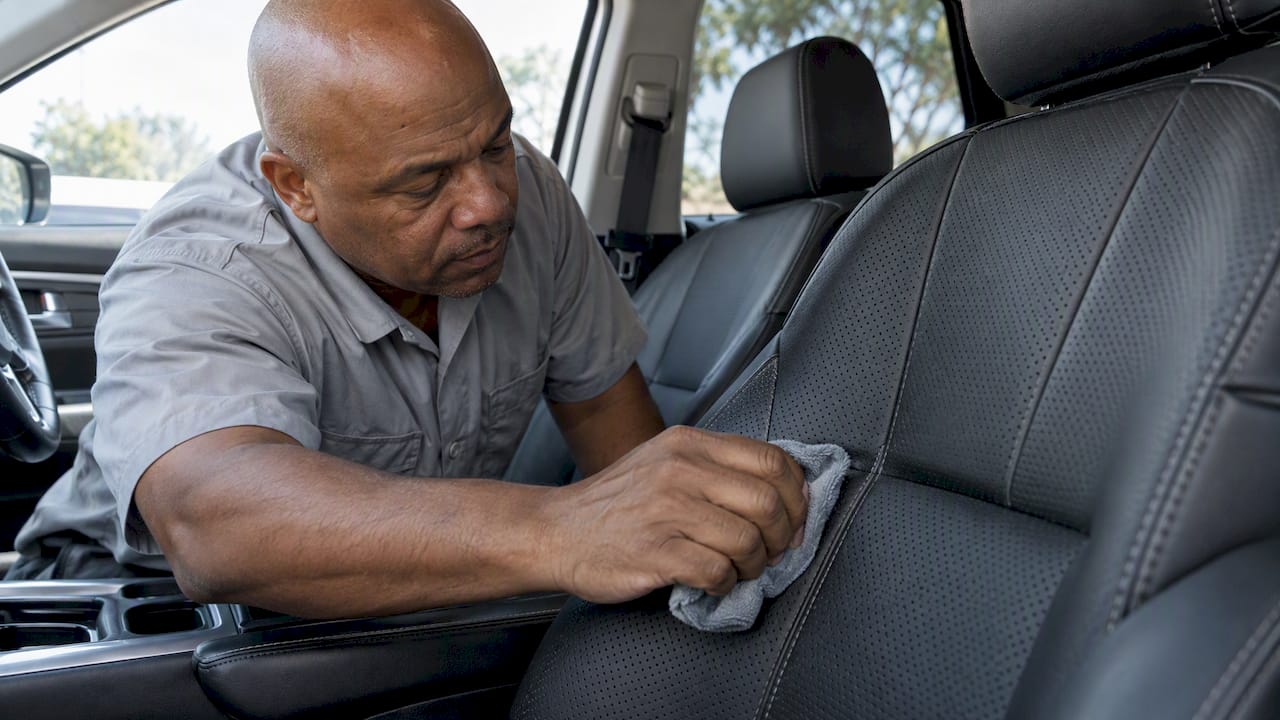
Leather is less absorbent, which helps, but the seams and perforations are not. Wipe the surface with a damp cloth and a leather-safe cleaner, then condition it once it is dry. Skip heavy scrubbing and anything with strong solvents. We cover safe choices in more detail in our guides on what you can use to clean leather car seats safely and removing stains from car seats naturally.
Carpet and floor mats
Lift out the mats and clean them separately. For the carpet, blot, treat with a mild soap solution, and extract. Vomit often runs down the seat sides and pools in the rail area, so check beneath the seat and along the seat tracks.
Getting rid of the smell
The smell is what sends most people looking for help. Vomit contains proteins that keep smelling if any residue remains, which is why spraying air freshener rarely works. Odor comes from what is still in the material, so the cure is removing it.
For a child seat, the manufacturer-approved method is gentle. Graco suggests placing an open box of baking soda on the seat base and covering the whole seat with a large plastic bag overnight, keeping the baking soda away from the fabric and harness. Airing the seat outdoors in the shade, with the cover drying, also helps.
For vehicle upholstery and carpet, enzyme-based cleaners are designed to break down protein-based residue, which makes them a sensible choice there. Keep them off the child seat itself unless the manual allows it, and follow the product label for dwell time. Then ventilate. A closed, warm car traps moisture and brings the smell back.
If the odor returns on a hot day, that usually means residue is deeper in the foam. That is the point where more spraying stops helping and extraction starts. Pet owners deal with the same problem; our piece on interior detailing for pet owners covers odor sources and why they come back.
Drying and putting it back together
- Dry thoroughly. Damp foam and padding turn musty. Give covers and cushions a full day if you can.
- Skip the dryer and heater. For child seat covers, drip dry only. A hot car in summer is not a drying rack for a freshly washed pad either.
- Reassemble with your photos. Check that harness straps are routed the same way, flat, without twists, and that the buckle clicks.
- Reinstall and check the fit. Follow your manual’s installation steps. If anything feels different, recheck the instructions or ask a certified child passenger safety technician.
If you are storing a seat after a cleanup, Evenflo’s documentation recommends removing the pad and thoroughly cleaning both the restraint and the pad first, paying attention to areas where debris builds up, in its quick-clean cover instructions.
Mistakes that make it worse
- Rubbing the stain. It spreads the mess and works it into the foam.
- Soaking straps or buckles. This is the one mistake that can affect safety, not just appearance.
- Using vinegar or bleach on child seat parts. Both are on the manufacturer’s avoid list.
- Masking the smell. Air fresheners and scented sprays cover the odor for a day or two, and the residue is still there.
- Closing the car up wet. Moisture and heat bring bacteria and mildew back, and the smell with them.
- Waiting. A mess cleaned in ten minutes is a very different job from one cleaned the next weekend.
How to make the next time easier
If you have a child who gets carsick, a few habits pay off. Keep a small kit in the car: gloves, a few bags, paper towels, wipes, a towel and a change of clothes. Dress the child in a bib or smock on longer drives, since the Car Seat Lady recommends this for kids prone to vomiting. Put a washable layer on the floor and the seat beside the child. For the vehicle seats themselves, protective car seat covers are an easy way to keep liquid from reaching the upholstery. Do not put anything between a child and a child seat harness that the seat maker has not approved.
Our perspective
When we get a call about vomit in a car, the problem is almost never the surface. It is what has gone through the surface. Fabric looks clean on top, while the foam below holds moisture and residue, and that is what you smell on the first hot afternoon. A mild soap and a wipe handle small incidents very well. They don’t handle a cushion that has soaked through.
We approach it the way we approach every interior: remove the loose material, treat the affected area with products matched to that material, extract the moisture, and let it dry fully before the car is closed up. Because we are mobile, we come to your driveway or workplace, so you don’t have to drive around in a car that smells.
One honest note on child seats: we will clean the vehicle seats, carpet and surrounding trim, but harness straps and buckles are safety equipment. Follow the manufacturer’s instructions for those, and contact the manufacturer if you are unsure. Our interior cleaning workflow shows how we sequence a job like this, from solids to dry-down.
— Charles
When it’s time to call a professional
DIY is the right answer for a small spill caught early. It stops being the right answer when:
- The vomit soaked into the cushion or went down the seat sides and into the carpet padding.
- The smell is still there after a full clean and dry.
- It happened days ago and has dried in.
- It is across several seats, headliner or door panels.
- You don’t have the time to deal with it. See our list of signs you need professional detailing help.
We are a mobile detailing service in Pitman, New Jersey, serving South Jersey. Our Interior Detail starts at $275. Mobile detailing services carry an additional fee from $100, and there is a $100 booking charge, all listed on our detail packages page. We will confirm what your vehicle needs before the work starts. To compare options, see how to select an auto detailing package.
FAQ
Is it better to clean vomit wet or dry?
Do both, in order. Remove the solids dry first, with paper towels or cardboard, and blot up as much liquid as you can. Then clean with a small amount of mild soap and water, and dry the area thoroughly. Heavy wetting without extraction just pushes the mess deeper into foam.
Can I put a child car seat cover in the washing machine?
Often yes, but follow your care tag. Graco says most of its seat pads can be machine washed cold with mild soap on a delicate cycle, then drip dried with no dryer. Some covers are hand-wash only, so check your manual first.
Can I use vinegar or bleach to get rid of the smell?
Not on child seat parts. Graco lists vinegar, bleach, disinfectants and sanitizing sprays among the things to avoid, since they can damage materials or affect safety features. Use mild soap and water, then air the seat out, with baking soda in the seat base overnight if the smell lingers.
Do I need to replace the harness straps after vomit?
Not necessarily. If you can surface-clean them with mild soap and a damp cloth and they look undamaged, they can stay. If they won’t come clean, or look worn or damaged, contact the seat’s manufacturer about replacement straps made for your model.
How long does it take to get the smell out of a car?
It depends on how fast you cleaned and how deep the vomit went. A small spill cleaned right away is usually gone once the seat dries. If it soaked into the cushion, expect to need extraction or a professional interior detail.
Sources
- How to Clean Baby Car Seats | Graco Baby
- How to Clean a Car Seat Like a Pro | Chicco
- Marathon ClickTight user guide | Britax
- How to Clean a Car Seat | Wirecutter
- How to Clean Your Child’s Car Seat | Buckle Up for Life
- Quick clean cover instructions | Evenflo