
Fleet managers across South Jersey often struggle with detailing terminology, leading to miscommunication with service providers and suboptimal maintenance decisions. When you confuse buffing with polishing or ceramic coating with wax, you risk overpaying for services or missing critical protective treatments your vehicles need. Understanding fleet detailing terminology empowers you to make informed choices that extend vehicle life, enhance professional appearance, and maximize your maintenance budget. This guide decodes essential terms, compares service types, and provides actionable strategies for South Jersey fleet managers seeking precise, cost-effective vehicle care in 2026.
Table of Contents
- Understanding Fleet Detailing Terminology: Definitions And Context
- Comparing Detailing Service Types And Terminology For Fleet Vehicles
- How Fleet Detailing Terminology Impacts Maintenance And Business Image
- Applying Fleet Detailing Terminology When Working With South Jersey Service Providers
- Explore Professional Fleet Detailing Services In South Jersey
Key takeaways
| Point | Details |
|---|---|
| Fleet terminology differs from consumer detailing | Commercial fleet services use specialized vocabulary reflecting scale, efficiency, and vehicle diversity needs. |
| Precise language improves service outcomes | Using correct terms during provider discussions ensures you receive appropriate treatments and avoid costly misunderstandings. |
| Terminology knowledge reduces depreciation | Fleet managers who understand detailing processes can implement maintenance strategies that preserve vehicle value by up to 20%. |
| South Jersey providers expect industry vocabulary | Professional detailers communicate more effectively when clients use standard fleet maintenance terminology. |
Understanding fleet detailing terminology: definitions and context
Fleet detailing employs distinct vocabulary that separates commercial vehicle maintenance from individual car care. While consumer detailing focuses on aesthetic perfection for single vehicles, fleet detailing terminology emphasizes efficiency, scalability, and functional protection across multiple units. This difference matters because selecting the wrong service based on misunderstood terms can waste thousands of dollars annually.
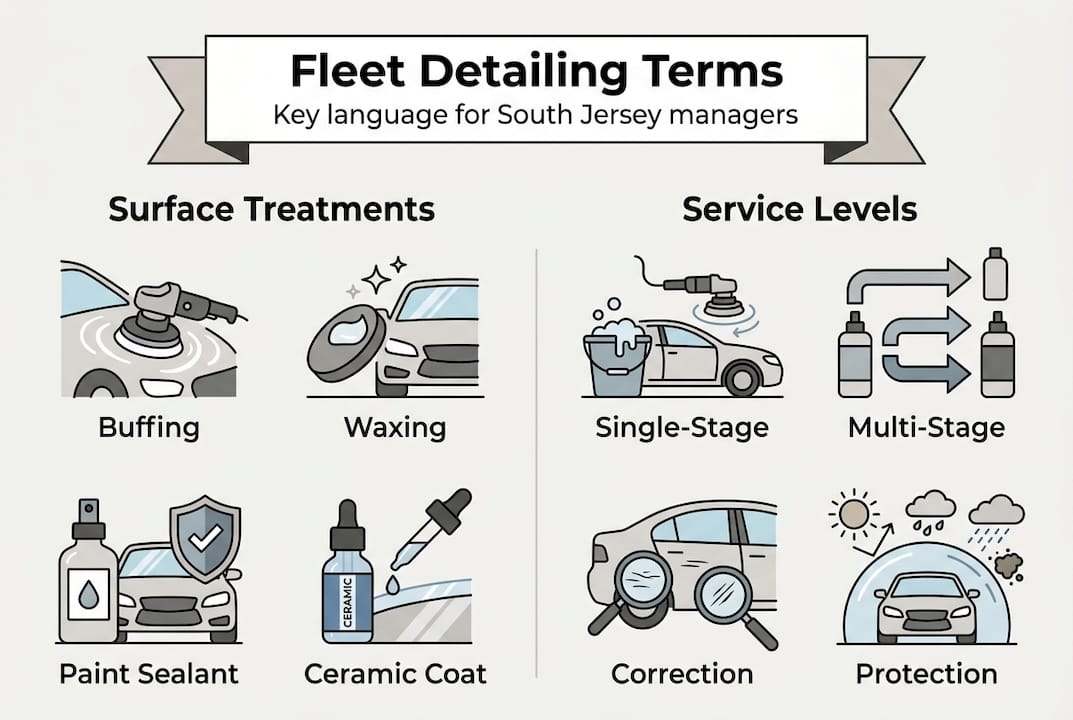
Buffing refers to the mechanical process of smoothing paint surfaces using rotary tools and compounds. Fleet managers often confuse this with polishing, which refines paint to a high gloss without aggressive cutting. Claying involves using specialized clay bars to remove bonded contaminants like industrial fallout and rail dust that washing cannot eliminate. For South Jersey fleets operating near industrial zones or coastal areas, claying becomes essential before applying protective treatments.
Ceramic coating creates a chemically bonded protective layer on paint, glass, and trim surfaces. Unlike traditional wax that sits on top of paint and degrades within weeks, ceramic coatings form molecular bonds lasting years. Paint correction describes the multi-step process of removing scratches, swirls, and oxidation through controlled abrasion before applying protective products. Skipping paint correction before ceramic coating locks in existing damage, defeating the purpose of premium protection.
Undercarriage cleaning targets the vehicle’s underside, removing road salt, mud, and corrosive materials that accelerate rust formation. South Jersey’s winter road treatments make this service critical for extending fleet longevity. Two-step wash processes separate initial dirt removal from final cleaning, preventing scratches caused by dragging contaminants across paint during single-stage washing.
Key fleet-specific terms include:
- Batch scheduling: Coordinating detailing appointments for multiple vehicles simultaneously to minimize operational downtime
- Fleet package: Bundled services tailored to commercial vehicle types and usage patterns rather than individual customization
- Mobile unit capacity: The number of vehicles a detailing team can service at your location within a specified timeframe
- Maintenance intervals: Recommended service frequencies based on mileage, environmental exposure, and vehicle function
- Protective film application: Installing clear polyurethane shields on high-impact areas like bumpers, hoods, and door edges
Understanding these distinctions helps you communicate specific needs rather than requesting generic “cleaning” that leaves providers guessing about your expectations. When you ask for paint correction followed by ceramic coating application, professionals know you want comprehensive surface restoration and long-term protection, not just a wash and wax.
Comparing detailing service types and terminology for fleet vehicles
South Jersey fleet managers choose from seven key detailing service types, each with specialized terminology reflecting distinct processes and outcomes. Exterior wash services remove surface dirt and grime using pH-balanced soaps and pressure rinsing. Interior shampooing deep-cleans upholstery, carpets, and fabric surfaces using extraction equipment that removes embedded dirt and odors.
Paint protection services encompass multiple approaches. Waxing applies natural or synthetic protective layers requiring reapplication every 4-8 weeks. Sealants use polymer-based formulas lasting 3-6 months. Ceramic coatings provide 2-5 year protection through nanotechnology bonding. Paint protection film (PPF) installs transparent urethane sheets on vulnerable surfaces, offering physical barrier protection against rock chips and scratches.
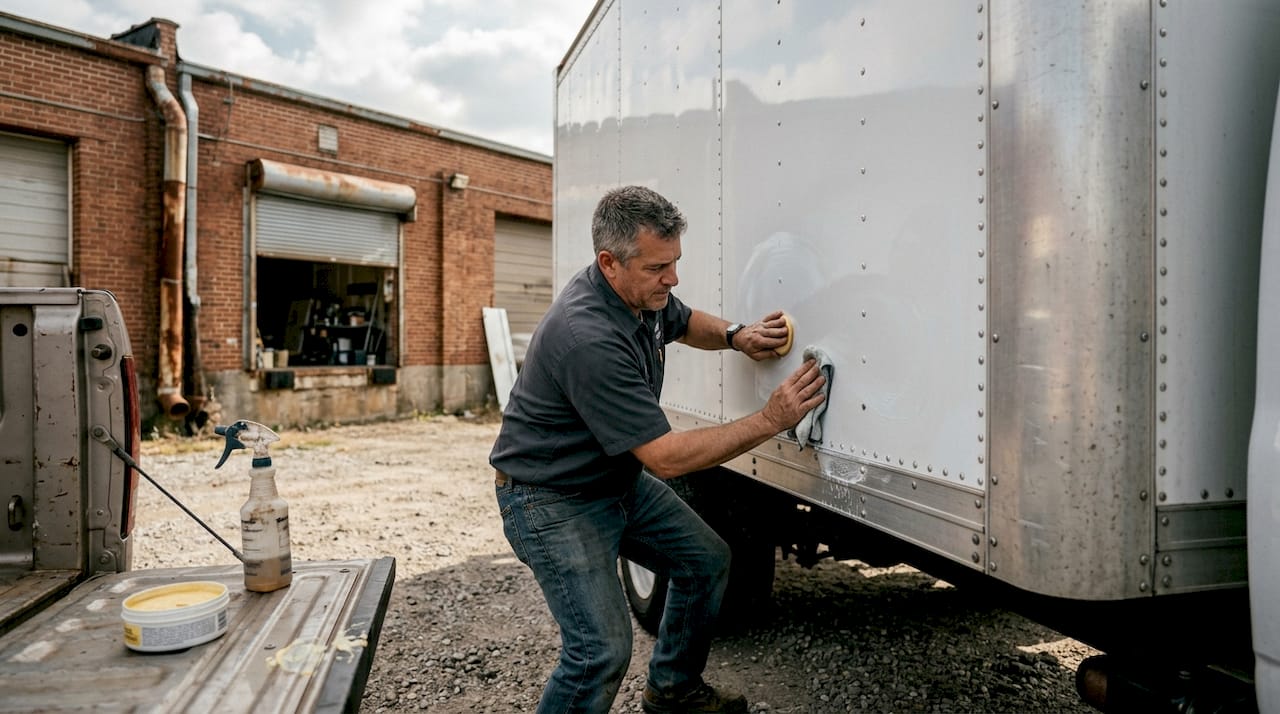
Undercarriage cleaning addresses corrosion prevention by removing salt, chemicals, and debris from brake components, suspension parts, and frame rails. Engine bay detailing removes grease, oil residue, and dirt from motor compartments, improving heat dissipation and simplifying leak detection during inspections.
| Service Type | Primary Method | Typical Frequency | Fleet Application | Key Terminology |
|---|---|---|---|---|
| Exterior Wash | Two-step pH-balanced cleaning | Weekly to monthly | All vehicle types | Foam cannon, clay bar, decontamination |
| Interior Shampoo | Hot water extraction | Quarterly | Passenger vehicles, vans | Steam cleaning, odor elimination, fabric protection |
| Paint Correction | Multi-stage polishing | Annually | High-visibility vehicles | Cut, polish, finish, swirl removal |
| Ceramic Coating | Chemical bonding application | Every 2-5 years | Premium fleet units | Hydrophobic layer, 9H hardness, curing time |
| Undercarriage Clean | Pressure washing with degreaser | Seasonally | All vehicles in winter climates | Rust inhibitor, chassis coating, salt neutralization |
Pro Tip: When requesting quotes, specify both the service type and desired outcome using proper terminology. Saying “I need paint correction to remove oxidation before applying a 3-year ceramic coating” communicates precise expectations, while “make the trucks look better” leaves interpretation open to misalignment.
Advanced terminology distinguishes professional-grade services from basic cleaning. Single-stage correction removes light imperfections in one polishing step. Multi-stage correction addresses severe damage through progressive cutting, polishing, and finishing sequences. Decontamination wash combines chemical and mechanical methods to remove bonded contaminants before protective treatments.
Glass treatment terminology includes water repellent application, which creates hydrophobic surfaces causing rain to bead and sheet off windshields. Trim restoration uses specialized products to revive faded plastic and rubber components. Headlight restoration removes oxidation and yellowing through sanding and polishing sequences, improving visibility and appearance.
Understanding these distinctions prevents ordering unnecessary services while ensuring critical treatments aren’t overlooked. A fleet operating primarily in urban environments needs different detailing approaches than agricultural vehicles exposed to mud, fertilizers, and field debris.
How fleet detailing terminology impacts maintenance and business image
Mastering detailing vocabulary directly influences vehicle longevity and your company’s professional reputation. Fleet detailing reduces depreciation by up to 20% in South Jersey businesses when managers use precise terminology to implement appropriate maintenance schedules. This financial impact stems from selecting treatments that address specific environmental challenges rather than applying generic services.
Terminology knowledge enables strategic maintenance planning. Understanding that ceramic coatings require paint correction first prevents wasting money on protective layers applied over damaged surfaces. Recognizing the difference between sealants and wax helps you choose products matching your budget cycles and performance expectations. Knowing undercarriage cleaning terminology ensures you request rust prevention services before corrosion becomes visible.
“South Jersey fleet managers who implement terminology-based maintenance protocols report 20% lower vehicle depreciation and 30% fewer paint-related repairs compared to those using generic cleaning services.”
Vehicle appearance directly affects customer perception and business credibility. Professional detailing enhances business image by maintaining consistent fleet presentation. When you understand terms like “swirl-free finish” and “color depth restoration,” you can specify appearance standards that align with your brand identity.
Terminology-driven practices that maximize fleet value include:
- Scheduling paint correction annually before oxidation penetrates clear coat layers
- Implementing ceramic coating rotations based on vehicle visibility and customer interaction frequency
- Requesting pH-neutral cleaning products that preserve existing protective treatments
- Specifying fabric protection application during interior shampooing to extend upholstery life
- Using proper decontamination terminology to ensure clay bar treatment before waxing or coating
- Ordering headlight restoration when light output diminishes rather than waiting for complete yellowing
- Requesting chassis coating application after undercarriage cleaning in fall to prevent winter salt damage
Pro Tip: Conduct quarterly terminology reviews with your detailing provider to confirm service specifications match your evolving fleet needs. As vehicles age or usage patterns change, appropriate treatments shift accordingly.
Communication clarity reduces costly errors. When you request “single-stage paint correction” instead of vague “buffing,” technicians know exactly which compounds and pads to use. Specifying “hot water extraction with fabric protectant” for interior work prevents confusion with basic vacuuming. Using standard industry terms eliminates the back-and-forth clarification that delays scheduling and increases administrative overhead.
Terminology mastery also helps you evaluate provider expertise. Detailing companies that cannot explain the difference between carnauba wax and synthetic sealants, or that use “buffing” and “polishing” interchangeably, likely lack the technical knowledge to deliver premium results. Providers who respond confidently to questions about ceramic coating cure times, paint correction stages, and decontamination methods demonstrate professional competence.
Vehicle condition documentation becomes more precise with proper vocabulary. Maintenance logs noting “Stage 2 paint correction completed, moderate swirl removal achieved” provide clearer historical records than “trucks detailed.” This specificity helps track service effectiveness over time and supports resale value claims with documented care history.
Applying fleet detailing terminology when working with South Jersey service providers
Effective communication with professional detailers requires systematic application of industry terminology throughout the service relationship. Mobile detailing implementation succeeds when fleet managers use precise language during initial consultations, appointment scheduling, and service evaluations. This approach ensures both parties share identical expectations and reduces the miscommunication that leads to disappointing results.
Follow this step-by-step process when engaging South Jersey detailing providers. First, prepare a fleet inventory listing vehicle types, current condition, and specific concerns using proper terminology. Instead of noting “dirty trucks,” specify “oxidized paint requiring correction” or “interior odor needing extraction cleaning.” This preparation demonstrates professionalism and helps providers allocate appropriate time and resources.
Second, during initial consultations, ask providers to explain their process using industry terms. Request details about their paint correction stages, ceramic coating brands and cure times, and decontamination methods. Providers who respond with vague descriptions or cannot articulate technical processes may lack expertise for fleet-level work.
Third, create written service agreements specifying treatments using exact terminology. Document whether you’re purchasing “single-stage correction with synthetic sealant” or “multi-stage correction with ceramic coating.” Include product names, application methods, and expected durability. This specificity prevents disputes about service scope and quality.
Best practices for terminology application include:
- Develop a standardized terminology glossary shared with all detailing vendors to ensure consistent communication across your organization
- Request before and after photos with technical descriptions using proper terms like “swirl removal” or “oxidation correction” rather than generic “improvement”
- Schedule regular service reviews where providers explain completed work using industry vocabulary, confirming they understand your requirements
- Document all services in maintenance logs with specific terminology, creating historical records that support warranty claims and resale valuations
- Train fleet supervisors on basic detailing terminology so they can conduct quality inspections and identify when services don’t match specifications
- Establish clear terminology for different fleet tiers, such as “executive vehicles receive ceramic coating” while “utility trucks get synthetic sealant”
- Use precise terms when requesting mobile service logistics, specifying “on-site batch scheduling for 8 vehicles” rather than “come detail our trucks”
Pro Tip: Create a one-page terminology reference sheet listing your most frequently requested services with exact specifications. Share this document with new detailing vendors during onboarding to establish clear communication standards from the first interaction.
When scheduling appointments, specify timing using industry understanding. Ceramic coating applications require 24-48 hour cure times before vehicle use. Multi-stage paint correction takes substantially longer than simple washing. Communicating these realities using proper terms helps you plan fleet availability and prevents rushed work that compromises quality.
Quality verification becomes straightforward with terminology knowledge. After paint correction, inspect surfaces under direct lighting for remaining swirls or holograms. Following ceramic coating application, test water beading behavior. Post-interior shampooing, check for complete odor elimination and uniform fabric appearance. Using technical vocabulary when discussing any deficiencies ensures providers understand exactly what requires correction.
Building long-term provider relationships benefits from consistent terminology use. When detailers recognize you understand their craft’s technical aspects, they’re more likely to recommend appropriate services, alert you to emerging issues, and prioritize your scheduling needs. This professional respect stems from speaking a common language that demonstrates your commitment to proper vehicle care.
Explore professional fleet detailing services in South Jersey
Now that you understand fleet detailing terminology, you can confidently select services that match your specific maintenance goals and budget parameters. CDC Auto Detailing offers comprehensive fleet detailing solutions throughout South Jersey, using the precise vocabulary and techniques covered in this guide. Our mobile teams bring professional-grade equipment to your location, minimizing operational disruption while delivering results that preserve vehicle value and enhance business image.
Whether you need paint correction before ceramic coating application, systematic undercarriage cleaning to prevent corrosion, or scheduled interior extraction services, our technicians communicate using industry-standard terminology. Explore our mobile detailing implementation strategies to see how proper terminology translates into efficient service delivery. Review our documentation on fleet detailing’s depreciation impact to understand the financial benefits of maintenance precision. Contact CDC Auto Detailing today to discuss your fleet’s specific needs using the terminology that ensures we deliver exactly what your vehicles require.
FAQ
What is the difference between fleet detailing and individual vehicle detailing?
Fleet detailing coordinates cleaning and maintenance across multiple vehicles simultaneously, using specialized terminology reflecting efficiency, scale, and vehicle diversity. Unlike individual car detailing that prioritizes aesthetic perfection and customization, fleet services emphasize consistent results, batch scheduling, and functional protection. Terminology differences include fleet packages versus custom services, mobile unit capacity planning, and maintenance interval specifications based on commercial usage patterns rather than personal preferences.
Why is knowing fleet detailing terminology important for South Jersey fleet managers?
Precise terminology improves service provider communication, helping you select maintenance treatments that address South Jersey’s specific environmental challenges like road salt, coastal moisture, and industrial fallout. Understanding terms like ceramic coating, paint correction, and undercarriage cleaning enables strategic decisions that reduce depreciation by up to 20%. Terminology knowledge also helps you evaluate provider expertise, create accurate service specifications, and maintain detailed maintenance logs that support resale value and warranty claims.
How can I use fleet detailing terminology to ensure quality service from providers?
Use correct industry terms during appointment booking to specify exact needs, such as “multi-stage paint correction followed by ceramic coating” rather than generic “make it shine.” Ask providers to explain their processes using standard fleet terminology like decontamination wash, hot water extraction, or synthetic sealant application to confirm technical competence. Share a terminology glossary with new vendors establishing communication standards, and document all services using precise vocabulary in maintenance logs. This systematic approach eliminates misunderstandings and ensures delivered services match your specifications.
What fleet detailing terms should I prioritize learning first?
Start with protective treatment terminology including ceramic coating, paint sealant, wax, and paint protection film, as these represent significant investment decisions with multi-year implications. Learn paint correction stages (single versus multi-stage) to understand surface preparation requirements. Master cleaning method terms like two-step wash, clay bar decontamination, and hot water extraction for interior work. Understanding these foundational concepts enables informed discussions with providers about service scope, pricing, and expected outcomes for your South Jersey fleet.
How often should fleet managers review detailing terminology with service providers?
Conduct quarterly terminology reviews to confirm service specifications align with your evolving fleet needs and environmental conditions. Seasonal changes in South Jersey require adjusting maintenance focus, such as emphasizing undercarriage cleaning and rust prevention before winter or paint protection before summer sun exposure. Regular reviews also introduce new team members to standard vocabulary, ensure consistent communication across multiple provider relationships, and update terminology as detailing technology advances with new products and application methods.