
TL;DR:
- A structured fleet vehicle cleaning program with tiered scheduling, correct product usage, and documented inspections is essential for asset protection and brand image. Proper sequencing, product matching, and consistent documentation prevent recontamination, reduce costs, and ensure compliance. Regularly scheduled maintenance based on usage and thorough training foster vehicle longevity and operational efficiency.
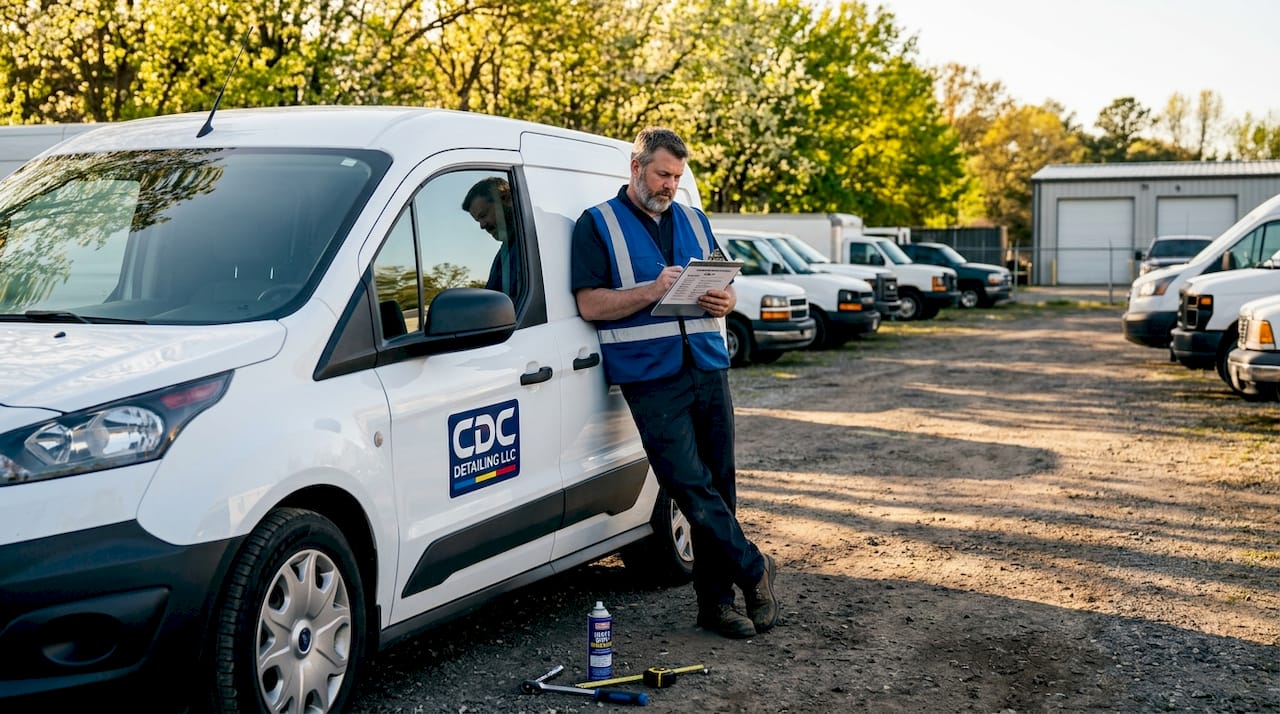
Fleet vehicle cleaning is the systematic process of washing, detailing, and maintaining commercial vehicles to protect assets, reinforce brand image, and extend vehicle lifespan. For fleet managers and business owners, this is not a cosmetic concern. Dirty vehicles corrode faster, reflect poorly on your brand, and create compliance risks. A structured fleet vehicle cleaning guide gives you the scheduling, product selection, workflow sequencing, and documentation tools to keep every unit in your fleet looking and performing at its best.
What is the right fleet vehicle cleaning schedule?
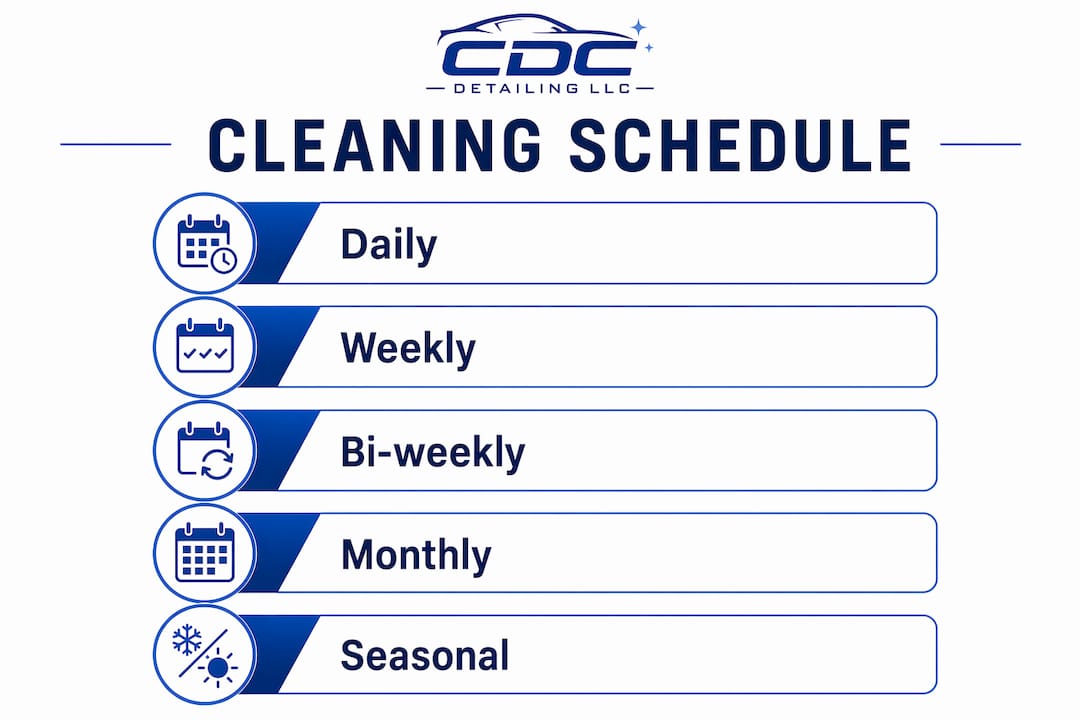
A tiered cleaning routine prevents overburdening your team while maintaining consistent cleanliness across every vehicle. The three tiers work together: daily tasks keep vehicles presentable, weekly tasks prevent buildup, and monthly tasks address the deep contamination that routine washes miss.
Here is how to structure each tier:
- Daily spot tidies. Drivers remove trash, wipe down high-touch surfaces, and report visible damage or staining. This takes under five minutes per vehicle and prevents small messes from becoming embedded contamination.
- Weekly vacuuming and wipe-downs. A full interior vacuum, dashboard wipe, window cleaning, and exterior rinse keep the cabin hygienic and the paint free of surface grime. Customer-facing vehicles like delivery vans or sales cars should never skip this step.
- Monthly deep cleans. Full exterior wash with foam and degreaser, interior extraction, undercarriage cleaning, and protective dressing application. This is where corrosion prevention and surface protection happen.
Wash frequency should match your fleet’s actual exposure. Bi-weekly washing is the right baseline for most fleets. Shift to weekly for vehicles operating in heavy soil, construction zones, or customer-facing roles. Lightly used or indoor-stored units can hold to monthly. Getting this calibration right saves money without sacrificing appearance standards.
Pro Tip: For fleets operating in coastal New Jersey or during winter road-salt season, add undercarriage cleaning to your monthly schedule without exception. Salt accelerates corrosion at a rate that bi-weekly exterior washes alone cannot address.
Which products and tools does effective fleet cleaning require?
Product selection is where most fleet cleaning programs fail. Using the wrong cleaning agents on vehicle surfaces leaves residue, strips protective coatings, or simply fails to remove contamination. That means rework, which costs more than getting it right the first time.
The core product categories every fleet program needs:
- Traffic film remover (TFR): Pre-diluted or concentrate for heavy road grime on exterior panels. Apply before contact washing.
- Non-acidic wheel cleaner: Safe for alloy and steel wheels. Acid-based alternatives etch finishes over repeated use.
- Snow foam or pre-wash foam: Loosens surface contamination before the main wash, reducing the risk of swirl marks from contact washing.
- Interior cleaner and protectant: An all-purpose interior cleaner for hard surfaces paired with a UV protectant for dashboards and door panels.
- Degreaser: For engine bays, wheel arches, and undercarriage work. Choose a biodegradable formula where runoff capture is limited.
- Microfiber towels: Minimum 300 GSM for drying and wiping. Color-code by zone (exterior, interior, glass) to prevent cross-contamination.
For equipment, a pressure washer rated between 1,500 and 2,000 PSI handles most fleet exterior work without damaging paint. Pair it with a foam cannon for pre-wash application. A wet-dry vacuum with upholstery attachments handles interior extraction. Soft-bristle brushes from Chemical Guys or Meguiar’s work well for wheel arches and door jambs.
Safety and compliance require PPE including gloves and eye protection, working in shaded or covered areas, and capturing chemical runoff to meet EPA stormwater regulations. Never mix cleaning chemicals without checking product labels for compatibility.
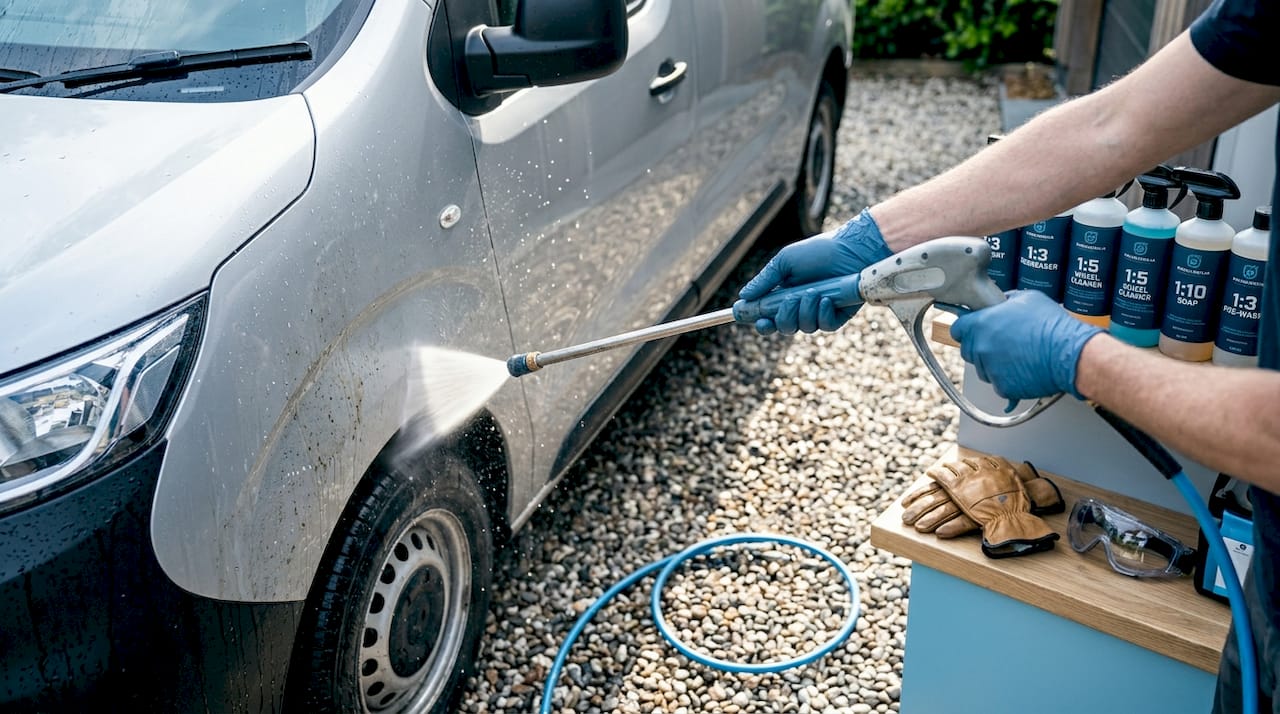
Pro Tip: Build a product kit for each vehicle or cleaning bay with pre-labeled bottles at correct dilution ratios. This removes guesswork, speeds up the process, and prevents accidental misuse of concentrated chemicals.
What is the most efficient workflow for cleaning fleet vehicles?
Sequence matters as much as product choice. A poorly ordered cleaning process recontaminates surfaces you have already cleaned, doubling your labor. The commercial vehicle cleaning sequence that professionals follow moves from the dirtiest areas to the cleanest, and from top to bottom on every surface.
Follow this exterior-to-interior workflow:
- Pre-wash and foam application. Apply TFR or snow foam to the entire exterior. Allow a 3 to 5 minute dwell time. This loosens road film before any contact washing begins.
- Wheels and lower panels. Clean wheels and wheel arches first. These are the dirtiest parts of the vehicle. Cleaning them after the body would splash brake dust and grime onto clean paint.
- Chassis and undercarriage. Apply degreaser and allow a 5 to 10 minute dwell time before scrubbing and rinsing. This dwell period is non-negotiable. Pressure washing without it simply redistributes grime rather than removing it.
- Body panels and glass. Wash top to bottom using a two-bucket method. Rinse thoroughly and dry with microfiber towels to prevent water spots.
- Interior: top-down sequence. Interior cleaning starts at the headliner and works down. Dust from the headliner and upper surfaces settles on lower areas. Cleaning floors before seats means redoing the floors.
- Floor mats. Remove and clean separately. Shake out loose debris, scrub with interior cleaner, and allow to dry fully before reinstalling.
- Final protection and inspection. Apply interior protectant to hard surfaces, dress tires, and inspect for missed areas or damage to report.
| Cleaning zone | Sequence position | Key product |
|---|---|---|
| Wheels and arches | First (exterior) | Non-acidic wheel cleaner |
| Undercarriage | Second (exterior) | Biodegradable degreaser |
| Body panels and glass | Third (exterior) | Snow foam plus wash shampoo |
| Headliner and upper trim | First (interior) | All-purpose interior cleaner |
| Seats and door panels | Second (interior) | Fabric or leather cleaner |
| Floors and mats | Last (interior) | Extraction cleaner |
How do you inspect and document fleet cleanliness standards?
Inspections without documentation are opinions. Documented appearance standards paired with regular audits turn vehicle condition monitoring into an objective, auditable process. This matters for regulatory compliance, driver accountability, and identifying which vehicles or routes generate the most cleaning demand.
Build your inspection program around two cycles:
Weekly spot-checks use a standardized form covering exterior condition, interior hygiene, glass clarity, and tire and wheel appearance. A supervisor or team lead scores each vehicle against defined criteria. The form takes under ten minutes per vehicle and creates a paper trail for corrective action.
Monthly photo audits go deeper. Photograph each vehicle zone against a benchmark image taken when the vehicle was last fully detailed. Score the current condition against the benchmark. This approach eliminates subjective disagreements about what “clean” means and makes training conversations concrete.
Documentation should also cover wash activity records. Proper wash records include the date, vehicle ID, chemical type and dilution rate, and how runoff was handled. These records support compliance with EPA Stormwater Pollution Prevention Plans (SWPPP) and protect your business in the event of an environmental audit. Pair your records with fleet dashcam evidence practices to build a complete picture of vehicle condition over time.
Digital tools like Fleetio or a simple shared spreadsheet work for smaller operations. Larger fleets benefit from dedicated fleet management platforms that integrate inspection forms, photo uploads, and maintenance scheduling in one place.
- Define “clean” in writing for each vehicle zone before you start inspecting.
- Use photo benchmarks to remove subjectivity from monthly audits.
- Record chemical type, dilution, and runoff handling for every wash event.
- Assign inspection responsibility by name, not by role, to create clear accountability.
- Review fleet cleaning checklists quarterly and update them as vehicle types or routes change.
Key takeaways
A structured fleet vehicle cleaning program built on tiered scheduling, correct product matching, and documented inspections is the most reliable way to protect vehicle assets and maintain brand standards.
| Point | Details |
|---|---|
| Tiered scheduling works | Daily, weekly, and monthly tasks prevent buildup without overburdening your team. |
| Product matching prevents rework | Wrong cleaners leave residue or damage surfaces; match every product to its substrate. |
| Sequence prevents recontamination | Clean wheels before body panels, and work top-down inside every vehicle. |
| Undercarriage dwell time is critical | Allow 5 to 10 minutes for degreaser to work before scrubbing, especially in winter. |
| Documentation creates accountability | Record wash dates, chemicals, and runoff handling to meet EPA compliance and track quality. |
What I’ve learned running fleet cleaning programs
The single biggest mistake I see fleet managers make is treating cleaning as a reactive task. A vehicle gets visibly dirty, someone notices, and it gets washed. That approach guarantees inconsistency and accelerates wear on paint and undercarriage surfaces.
What actually works is treating the cleaning schedule the same way you treat oil change intervals. It runs on a calendar, not on appearance. The vehicles that look fine on the outside are often the ones accumulating road salt under the chassis or mold in the carpet from a slow leak nobody reported.
The second thing I would push back on is the idea that effort compensates for poor product selection. I have seen crews spend twice as long on a vehicle because they used a general-purpose cleaner on a surface that needed a dedicated product. Matching products to surfaces is often more important than the effort applied. A tiered routine with the right products and a clear sequence will outperform an intensive but unstructured wash every time.
Finally, standardizing routines with checklists is not bureaucracy. It is the fastest way to train new staff, maintain quality across a large team, and catch problems before they become expensive repairs. If your cleaning program lives in someone’s head, it leaves when they do.
— Charles
How Cdcautodetailing supports your fleet cleaning program
Fleet managers running vehicles across South Jersey know that scheduled washes handle routine maintenance, but they do not replace professional detailing. Cdcautodetailing provides mobile fleet detailing services that bring paint protection, ceramic coatings, and deep interior sanitization directly to your location, eliminating downtime and keeping vehicles off the road for as little time as possible.
Whether you manage five delivery vans or a mixed commercial fleet, Cdcautodetailing’s team applies the right products and techniques for each vehicle type. Explore the full range of fleet detailing services available for business owners and fleet managers, or learn how mobile detailing works to fit your schedule without disrupting operations.
FAQ
How often should fleet vehicles be washed?
Most fleets benefit from bi-weekly washing as a baseline. Customer-facing or heavy-use vehicles should be washed weekly, while lightly used or indoor-stored units can be maintained monthly.
What order should you clean a fleet vehicle interior?
Interior cleaning follows a strict top-down sequence: headliner first, then seats and door panels, and floors last. This prevents dust and debris from upper surfaces settling on areas you have already cleaned.
Why is undercarriage cleaning important for fleet vehicles?
Undercarriage cleaning removes road salt, mud, and grime that cause corrosion on frame components and brake lines. Apply degreaser with a 5 to 10 minute dwell time before scrubbing, and schedule this monthly for fleets operating in winter or coastal conditions.
What records should fleet managers keep for vehicle washing?
Wash records should include the date, vehicle ID, chemical type and dilution rate, and runoff handling method. These records support EPA SWPPP compliance and provide documentation for environmental audits.
What is the difference between fleet washing and fleet detailing?
Fleet washing covers routine exterior and interior cleaning to maintain hygiene and appearance. Fleet detailing goes further with paint correction, ceramic coating application, interior extraction, and protective treatments that extend vehicle life and preserve resale value.