
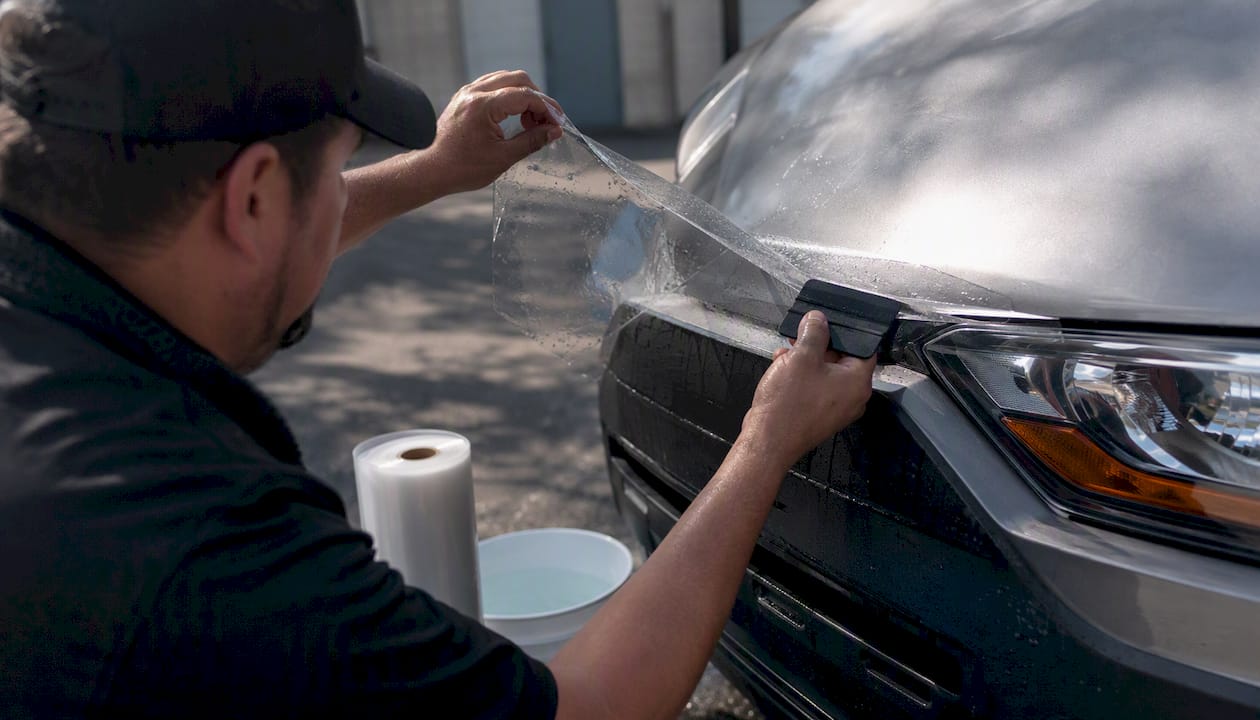
For most South Jersey commercial fleets, the right starting point is three things: scheduled mobile washing every two to four weeks, targeted paint protection film (PPF) on high-strike zones like front bumpers and door edges, and ceramic coatings on higher-value or high-visibility units. That combination reduces repair spend, preserves resale value, and keeps vehicles on the road instead of in a body shop. The immediate next step is booking an on-site fleet assessment with Cdcautodetailing to map which vehicles need which level of coverage.
Why this mix works:
- Mobile washing removes corrosive contaminants before they etch paint, and mobile fleet detailing brings water, power, and trained teams directly to your depot, cutting logistical cost and downtime.
- PPF on high-strike zones absorbs stone chips, scuffs, and UV exposure so the paint underneath stays cleaner and requires fewer repaints, directly supporting resale value.
- Ceramic coatings chemically bond to paint and provide hydrophobic, UV-resistant protection; in fleet contexts, coatings can materially reduce paint-related maintenance costs compared with wax-based approaches, with some fleet operators reporting significant cost reductions.
Pro Tip: Don’t try to protect every vehicle the same way on day one. Start with your highest-mileage or most client-facing units, prove the ROI, then scale the program.
Key Takeaways
A scheduled mobile program combining PPF on high-strike zones, ceramic coatings on priority units, and regular washing delivers the strongest ROI for South Jersey commercial fleets.
| Point | Details |
|---|---|
| Start with the right mix | Prioritize mobile washing every 2–4 weeks, front-end PPF, and ceramic coatings on high-value units. |
| PPF pays for itself | At $400–$900 per vehicle, front-end PPF prevents repaint events that typically cost $1,500–$3,500. |
| Pilot before scaling | Run a 5–10 vehicle pilot with a documented spec sheet before committing the full fleet budget. |
| Demand documentation | Require per-vehicle warranty cards, coverage maps, and SDS sheets from any provider before signing. |
| Cdcautodetailing for South Jersey | Cdcautodetailing offers on-site mobile fleet programs with self-contained equipment and per-vehicle documentation across South Jersey. |
Table of Contents
- What does a fleet vehicle protection guide actually cover?
- Which protection fits your fleet’s actual use-case?
- How does on-site mobile fleet service actually work?
- What does fleet protection cost, and how often do you need it?
- How do you choose a mobile fleet protection provider?
- Safety, environmental, and regulatory considerations for on-site washing
- What should drivers and managers do between service visits?
- A note from the field on what South Jersey fleets actually need
- Cdcautodetailing’s mobile fleet program for South Jersey businesses
- Sources
What does a fleet vehicle protection guide actually cover?
“Fleet vehicle protection” in the detailing context means physical, preventative-care services delivered by a mobile provider. Here is the service menu:
- Routine fleet washing: Contact washing of exterior surfaces, typically every two to four weeks. Removes road salt, bird droppings, and industrial fallout before they cause permanent damage.
- Full detail: Interior and exterior deep clean including decontamination, clay bar, and machine polish. Usually quarterly or semi-annually. Billed per unit.
- Ceramic coatings: A liquid polymer applied to paint that bonds chemically and cures hard. Provides hydrophobic and UV-resistant protection lasting two to seven years depending on the system. Billed per unit, often as a one-time program install. See ceramic coatings for fleets for product tiers.
- Paint protection film (PPF): A clear urethane film applied to high-impact areas. Modern films include self-healing top coats that reduce wash time and visible wear. Billed per zone or per vehicle.
- Interior protection: Fabric and leather protectants applied to seats, cargo areas, and door panels. Reduces staining and extends upholstery life. Usually bundled with a full detail.
- Windshield and headlight protection: Coatings or film applied to glass and lenses to resist chips, UV yellowing, and water sheeting.
- Scheduled reconditioning: A contracted program combining washing, touch-up detailing, and periodic coating maintenance on a fixed calendar. Priced as a fleet program, not per individual visit.
For a deeper breakdown of service types, the 7 key types of fleet detailing resource covers each category in detail.
Which protection fits your fleet’s actual use-case?
Match your vehicle roles and operating conditions to coverage levels using the guidance below.
| Vehicle Type | Recommended Coverage | Rationale |
|---|---|---|
| Delivery vans (high daily mileage) | Monthly wash + front-end PPF + door-edge film | Front bumper and hood edge take constant stone chip damage; door edges suffer loading-dock contact |
| Service trucks (job-site exposure) | Monthly wash + rocker panel PPF + interior protectant | Rocker panels and cargo areas take the most abuse; interior protection reduces odor and staining |
| Corporate cars / client-facing vehicles | Bi-weekly wash + full ceramic coating + PPF on mirrors | Brand image is the priority; ceramic coating keeps paint glossy with minimal maintenance between visits |
| Rental prep / high-turnover units | Monthly wash + basic PPF on front end | Cost control matters most; front-end PPF prevents the most expensive repaint zones |
| Pickups (mixed duty) | Monthly wash + front-end PPF + bed liner or interior protectant | Bed and cab both take abuse; PPF on the front, protectant in the cab |
Partial vs. full-vehicle coverage: Partial coverage (front bumper, hood leading edge, mirrors, door edges, rear loading sill) handles the zones that account for the majority of paint damage on working vehicles. Full-vehicle PPF makes sense for corporate cars or leased units where residual value is closely tracked. For most working fleets, partial PPF coverage on front-end and high-contact areas is the cost-effective starting point.
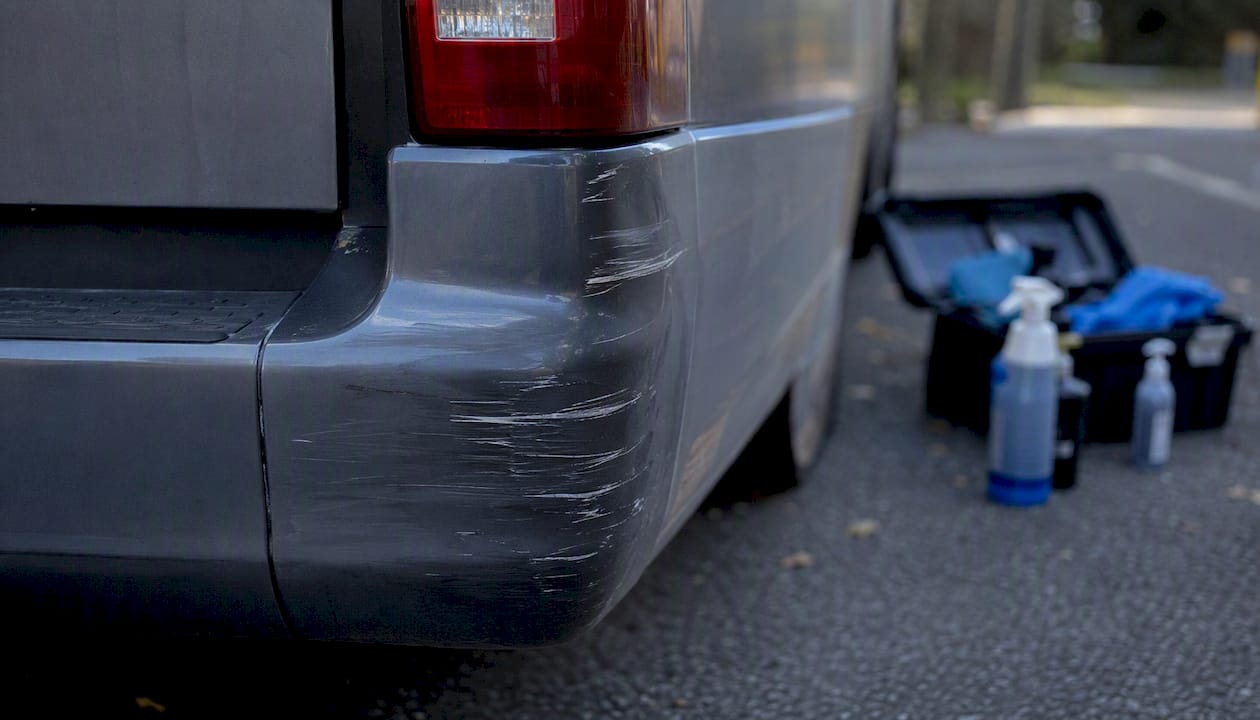
Piloting before scaling: Run a documented pilot on five to ten vehicles before committing the full fleet. A good pilot uses a standardized PPF specification including SKU, adhesive type, and coverage map, so results are auditable and repeatable when you scale.
How does on-site mobile fleet service actually work?
The operational flow for a mobile visit follows a consistent sequence regardless of service type.
- Pre-inspection: The mobile team photographs each vehicle and notes existing damage, film condition, and any areas requiring corrective work before protection is applied.
- Surface prep: Wash, decontamination, and clay bar (for coating or PPF installs). This step determines the quality of everything that follows.
- Service delivery: Wash-only visits complete in one to two hours per vehicle. PPF installs on a front-end package typically run four to six hours per vehicle. Ceramic coating application takes two to four hours, followed by a cure window.
- Cure and check: Ceramic coatings need one to three days of cure time before the vehicle returns to normal use. PPF is ready for light use within a few hours but should avoid high-pressure washing for 48 hours.
- Handback and documentation: The team records what was applied, the product batch, and any pre-existing damage noted at inspection. This documentation supports warranty claims and resale records.
Site prep checklist for your depot:
- Covered or shaded space for coating installs (direct sunlight affects cure quality)
- Water access or confirmation that the mobile unit is self-contained
- Power outlet within 50 feet for polishing and lighting equipment
- Vehicle staging plan so units rotate through without blocking each other
- Security and lighting if work runs after hours
Pro Tip: Batch vehicles by model or protection level. Running all your Transit vans on the same day lets the installer use the same PPF pattern cuts repeatedly, which cuts setup time and improves consistency across the fleet.
For a full scheduling workflow, fleet detailing scheduling guidance covers depot SOPs in detail.
What does fleet protection cost, and how often do you need it?
| Service | Typical Per-Unit Cost | Recommended Frequency | Expected Lifespan |
|---|---|---|---|
| Routine mobile wash | $30 to $80 per vehicle | Every 2–4 weeks | Ongoing |
| Full detail | $150 to $400 per vehicle | Quarterly or semi-annually | Ongoing |
| Ceramic coating (entry) | $300 to $600 per vehicle | Once, with annual maintenance | 2–3 years |
| Ceramic coating (premium) | $700 to $1,500 per vehicle | Once, with annual maintenance | 5–7 years |
| PPF (partial front-end) | $400–$900 per vehicle | Once per film lifespan | 5–7 years |
| PPF (full vehicle) | $1,500 to $3,500 per vehicle | Once per film lifespan | two to seven years |
| Interior protectant | $50 to $150 per vehicle | Semi-annually | quarterly or semi-annually |
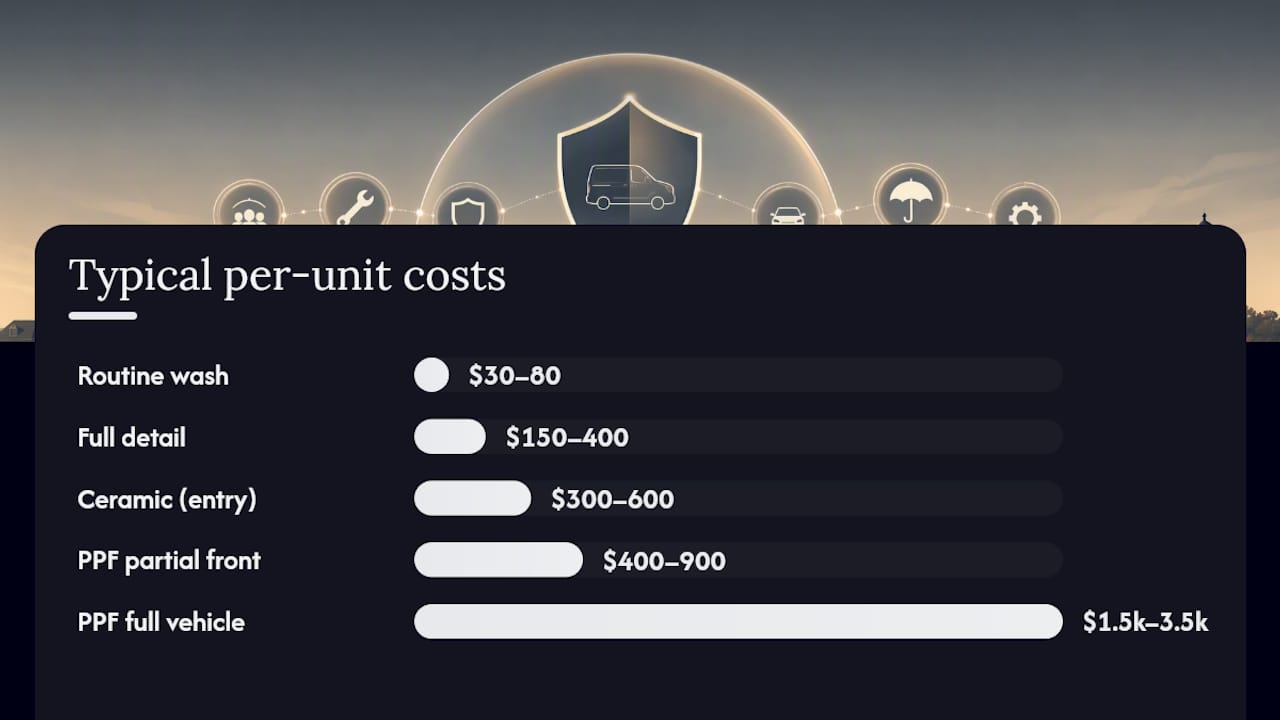
ROI framing: A single repaint on a commercial van typically runs $1,500–$3,500 depending on panel count and color match. Front-end PPF at $400–$900 per vehicle pays for itself after preventing one repaint event. Ceramic coatings reduce washing frequency and labor, and PPF absorbs stone chips and UV exposure so the paint underneath requires fewer repaints over the vehicle’s service life.
Volume discounts are standard for fleets of ten or more vehicles. A phased rollout, starting with your ten highest-mileage units, lets you validate cost savings before committing the full budget.
How do you choose a mobile fleet protection provider?
Vendor checklist:
- Mobile-capable team with self-contained water and power (not dependent on your depot utilities)
- Documented installation standards: PPF pattern library, coating product spec sheets, and coverage maps per vehicle model
- Written warranty policy covering film delamination, coating failure, and repair response time
- Local references from fleet clients, not just individual car owners
- Environmental permits and proof of compliant washwater disposal
- Fleet program documentation: per-vehicle warranty cards, batch traceability, and annual review process
Questions to ask in a quote meeting:
- What PPF SKU and adhesive do you use, and do you have a spec sheet?
- How do you handle cure windows when I need vehicles back same-day?
- What is your batching strategy for a fleet of our size?
- Do you offer a pilot program before a full fleet commitment?
- What is your replacement policy if a film section lifts within the warranty period?
Red flags: No documented process, vague warranty language (“we’ll take care of it”), no on-site equipment, or evasive answers about edge prep and adhesive choices. A provider who cannot show you a sample warranty card and before/after photos from fleet work specifically is not ready for a commercial program.
Required proofs before signing: sample warranty card, coverage maps for your vehicle models, before/after photos from comparable fleet work, and client references you can actually call.
Safety, environmental, and regulatory considerations for on-site washing
On-site fleet washing in the U.S. carries real compliance obligations that a professional provider should handle without prompting.
- PPE requirements: Technicians applying coatings or chemical degreasers must wear nitrile gloves, eye protection, and respirators where ventilation is limited. Confirm your provider follows OSHA Hazard Communication standards and maintains Safety Data Sheets (SDS) for every chemical on-site.
- Washwater runoff: Washing vehicles on an impervious surface (concrete, asphalt) without containment violates the Clean Water Act in most jurisdictions. A compliant provider uses berms, collection mats, or a reclaim system to capture runoff before it reaches storm drains.
- Local stormwater rules: New Jersey’s stormwater management regulations require that commercial vehicle washing runoff not discharge untreated to municipal storm systems. Ask your provider for their runoff containment method in writing.
- Coating ventilation: Ceramic coating application generates VOC off-gassing during cure. Work should happen in a ventilated space or outdoors, away from ignition sources.
- Driver and site communication: Brief your drivers on staging lanes, no-idle zones near chemical application areas, and the 48-hour post-PPF wash restriction. A laminated one-page instruction sheet posted in your depot prevents most contamination incidents.
What should drivers and managers do between service visits?
Extending the life of coatings and PPF between professional visits comes down to a few consistent habits.
- Daily: Remove bird droppings, tree sap, and insect residue within 24 hours. These are acidic and will etch through a ceramic coating given enough time.
- Weekly: Quick rinse or waterless wash on visibly dirty vehicles, especially after highway runs or coastal routes where salt accumulates.
- Avoid: Automated tunnel washes with abrasive brushes, high-pressure side-scraping at self-serve bays, and alkaline or solvent-based cleaners. Use pH-neutral shampoos for any touch-up washing.
- Interior: Remove trash and cargo debris daily. Spills on fabric or leather protectant should be blotted immediately, not wiped, to avoid spreading.
- Damage reporting: Drivers should photograph and report any new chips, film lifting, or coating damage at the end of their shift. A simple photo-to-manager text protocol works. Pull a vehicle for corrective work if film is lifting at an edge, since water intrusion under PPF accelerates paint damage.
For a full driver maintenance checklist, fleet maintenance tips covers cost-saving habits in more detail.
A note from the field on what South Jersey fleets actually need
The most common mistake fleet managers make is treating vehicle protection as a one-time event rather than a program. A single ceramic coating applied three years ago, with no maintenance washes and no driver protocols, performs no better than bare paint by the time a vehicle hits resale. What actually moves the needle for South Jersey fleets is a scheduled mobile program: front-end PPF installed once, monthly mobile washing to keep coatings active, and a quarterly check-in to catch film lifting or coating degradation before it becomes a repaint.
For fleets new to this, the pilot Cdcautodetailing typically recommends is front-end PPF on your five most-used vehicles combined with monthly mobile washing. That combination is low-cost to start, produces visible results within 90 days, and gives you real data to justify expanding the program.
Cdcautodetailing’s mobile fleet program for South Jersey businesses
South Jersey fleet managers get a provider who comes to them. Cdcautodetailing runs mobile fleet protection programs covering mobile washing, partial and full PPF installs, ceramic coatings, interior protection, and scheduled reconditioning, all delivered at your depot with self-contained equipment.
The practical advantage over a shop-based provider is zero transport time: vehicles stay at your location, get serviced in batches, and return to rotation the same day for wash visits. For coating and PPF installs, Cdcautodetailing stages cure windows around your dispatch schedule to minimize downtime. The fleet program includes per-vehicle documentation, coverage maps, and warranty cards so your records are audit-ready at resale.
To request an on-site fleet assessment or a program quote for your South Jersey operation, visit Cdcautodetailing’s fleet detailing packages and submit your fleet size and vehicle types. The team will schedule a depot visit and return a line-item quote within 48 hours.
Sources
- PPF for Fleet Vehicles | Commercial Paint Protection Film Rolls – FUNO PPF
- Why Fleet Detailing Matters: Brand Image, Longevity & Cost Savings – 1800 Dirty Cars
- What are the Best Coating Strategies for Paint Protection Methods to Prevent Fleet Damage? – Independent Paint Supplies Ltd