
TL;DR:
- Proper preparation and communication ensure optimal results and prevent delays during mobile detailing.
- Professional tools and a step-by-step process outperform DIY methods and product focus.
- Regular maintenance, like gentle washes and addressing spills promptly, extends detailing benefits significantly.
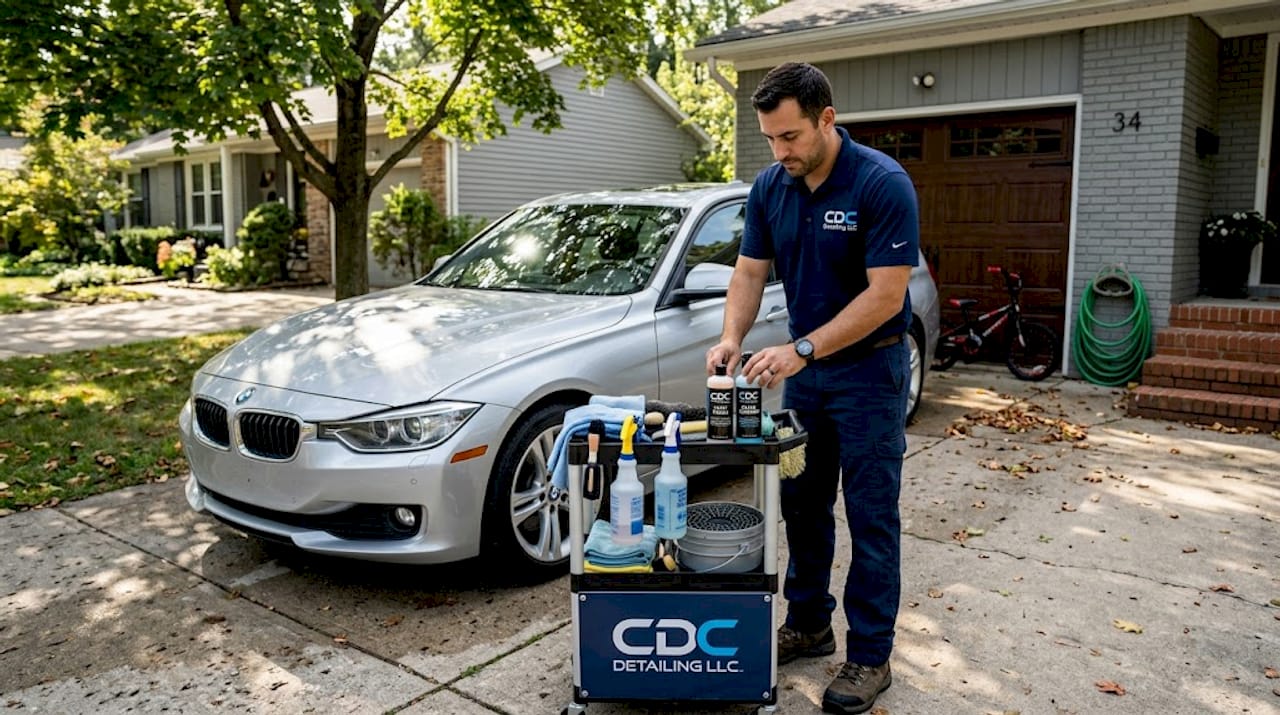
You have a busy schedule, a car that needs serious attention, and zero time to sit in a shop waiting room. That’s exactly the kind of problem mobile detailing solves. But here’s what most car owners in South Jersey don’t realize: getting the best possible results isn’t just about hiring someone with a bucket and some soap. It’s about understanding how the process works, what you need to do before the detailer arrives, and how to protect that fresh finish once the job is done. This guide walks you through every stage so you know exactly what to expect and how to get the most out of your service.
Table of Contents
- Preparing your vehicle for mobile detailing
- Essential tools and materials used in mobile detailing
- Step-by-step mobile detailing process
- Common mistakes to avoid and troubleshooting tips
- How to maintain your vehicle after mobile detailing
- Our take: Why process matters more than products in mobile detailing
- Ready to experience premium mobile detailing in South Jersey?
- Frequently asked questions
Key Takeaways
| Point | Details |
|---|---|
| Easy preparation steps | Simple preparation at home ensures the mobile detailing service is efficient and thorough. |
| Step-by-step process | Following a proven order of operations yields a better clean and longer-lasting protection for your vehicle. |
| Professional tools matter | Using commercial-grade equipment makes a noticeable difference compared to DIY supplies. |
| Avoid common mistakes | Knowing what not to do can help protect your car and ensure your investment pays off. |
| Maintain between details | A few routine aftercare tips make it easy to keep your car looking its best. |
Preparing your vehicle for mobile detailing
Before diving into the cleaning process, it’s important to prepare your car and your property for a successful service. A little effort on your end goes a long way toward getting a result you’ll love.
First, remove all valuables, personal items, and large pieces of trash from your vehicle. This isn’t just about making room for the detailer. It’s about protecting your belongings and giving the professional unobstructed access to every surface. Think about the gym bag in the back seat, the loose change in the cup holders, and those old receipts stuffed in the glove box. Clear it all out.
Next, make sure there’s enough open space for the detailer’s vehicle and equipment. Mobile detailers bring significant gear, including water tanks, vacuum units, and supply cases. A driveway or a flat, accessible parking area works best. Tight garage corners, low overhangs, or blocked driveways can delay the start of your appointment and limit what the detailer can accomplish.
Here’s a simple pre-appointment checklist:
- Remove all personal items and loose trash
- Move the vehicle to an open, accessible location
- Ensure there’s a flat area near the car for equipment setup
- Notify the detailer about any problem zones, like pet hair, deep stains, or child seat buckles
- Confirm any special material types, such as leather, suede, or carbon fiber trim
When booking a mobile detail, communicate your concerns upfront. If your dog rides with you daily or your kids spilled juice on the rear seats, say so during the booking process. This allows the detailer to bring the right products and allocate enough time. As detail appointment preparation guidelines confirm, following preparation steps ensures a smoother, more effective detailing service and helps avoid common delays.
Pro Tip: Let the detailer know about pet hair, unusual stains, or any sensitive materials before they arrive. This single step can prevent miscommunication and ensure they bring specialized tools like pet hair removal attachments or leather conditioners specific to your upholstery.
Essential tools and materials used in mobile detailing
Once your car is ready, understanding what the professionals bring helps you know what to expect from a quality mobile detailing session. The difference between a professional detail and a DIY wash often comes down to the equipment, not just the effort.
As mobile detailing overview resources confirm, mobile detailers arrive with professional-grade tools tailored to both interior and exterior cleaning. Here’s a look at the key tools and what they do:
| Tool | Purpose |
|---|---|
| Hot water extractor | Deep cleans carpets and upholstery, removes embedded dirt |
| Dual-action polisher | Removes minor scratches, restores paint clarity |
| HEPA vacuum | Captures fine particles, allergens, and debris |
| Spot remover | Targets individual stains without saturating fabric |
| Foam cannon | Applies a thick layer of soap for a safer, scratch-free wash |
| Pressure washer | Blasts away road grime and brake dust from wheels and body panels |
| Steam cleaner | Sanitizes interior surfaces without harsh chemicals |
Many professional detailers now prioritize eco-friendly and nontoxic product lines. Biodegradable soaps, water-based degreasers, and pH-neutral cleaners protect your vehicle’s surfaces while reducing environmental impact. This matters especially in South Jersey neighborhoods where runoff near water-sensitive areas is a real concern.
A typical professional detailing kit also includes:
- pH-balanced car shampoo and rinse aid
- Clay bars for paint decontamination
- Microfiber towels in various grades for different surfaces
- Tire dressing and wheel cleaning brushes
- Glass cleaner and lint-free applicators
- Interior protectant sprays for plastic and vinyl surfaces
- Odor neutralizers and enzyme-based fabric cleaners
The hot water extractor deserves special mention. Unlike a standard wet vac, this machine heats water to a high temperature and injects it into the fabric while simultaneously pulling it back out along with dissolved dirt. It’s far more effective than anything you’ll find at a consumer level and is one of the biggest reasons professional interior work looks so dramatically better.
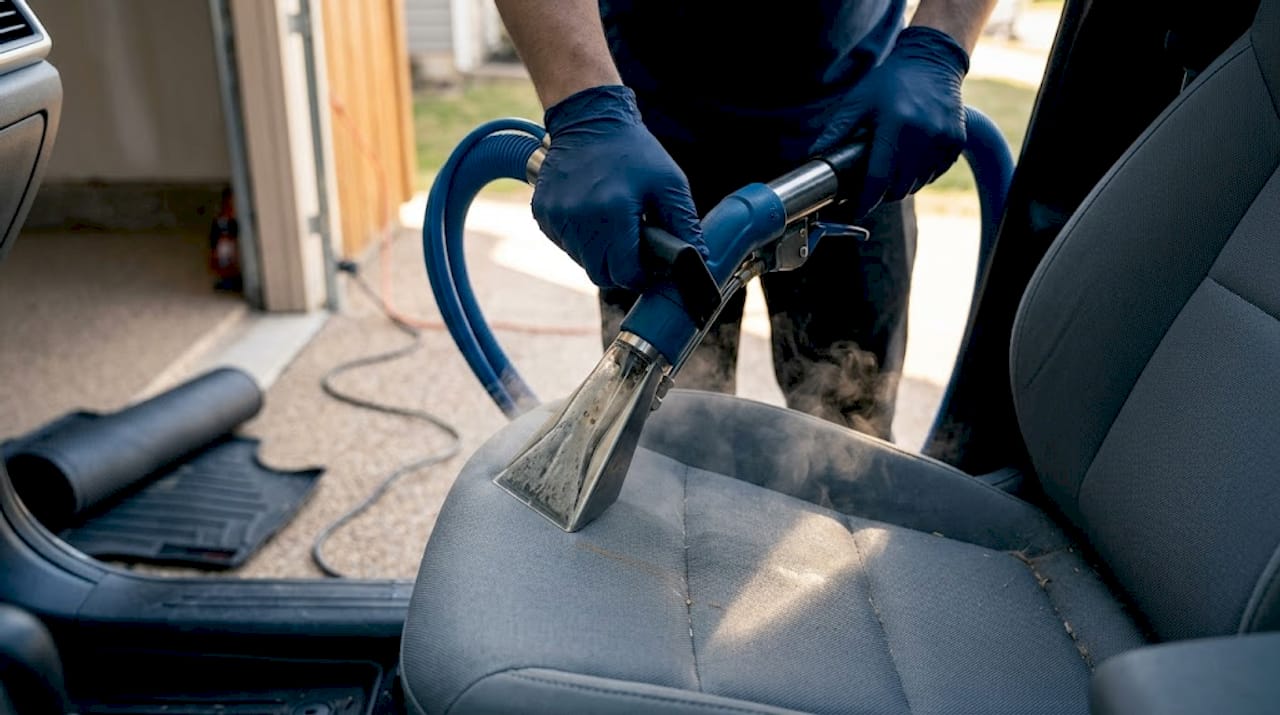
Safety practices also matter. Reputable mobile detailers use gloves when handling chemical concentrates and avoid cross-contaminating towels between interior and exterior surfaces. Color-coded microfiber systems, for example, use specific colors for glass, paint, and interior surfaces to prevent scratching.
Step-by-step mobile detailing process
With the right tools at hand, mobile detailers follow a carefully organized sequence to ensure every area of your car gets optimal attention. Order matters here. Doing things out of sequence wastes time and risks undoing work that’s already been completed.
A professional mobile detail follows a precise process covering exterior wash, interior cleaning, paint protection, and final inspection. Here’s how it unfolds:
- Initial assessment: The detailer walks around the vehicle to identify problem areas, note existing scratches or stains, and confirm the scope of the job with you.
- Pre-rinse and foam application: The exterior is rinsed to remove loose dirt, then coated with a thick foam layer to loosen grime safely before any contact washing.
- Exterior wash: Using two-bucket or foam cannon technique, the body panels are hand washed from top to bottom, minimizing swirl marks.
- Wheel and tire cleaning: Tires, rims, and wheel wells get individual attention with specific brushes and degreasers since they hold the most embedded brake dust and road tar.
- Interior vacuum: All interior surfaces are vacuumed thoroughly, including under seats, in door pockets, and inside the trunk.
- Upholstery and carpet cleaning: Using the hot water extractor or steam cleaner, the interior cleaning steps target stains and embedded grime in fabric seats and flooring. Each phase has specific techniques to maximize value and visual impact.
- Glass cleaning: All windows, mirrors, and glass surfaces are cleaned inside and out with streak-free solutions.
- Paint protection and finishing: Wax, sealant, or ceramic coating is applied based on the package selected.
- Final inspection: The detailer and client walk through the vehicle together to confirm everything meets expectations.
| Service feature | Standard detail | Premium detail |
|---|---|---|
| Exterior wash | Yes | Yes |
| Wheel cleaning | Basic | Deep clean with decontamination |
| Interior vacuum | Yes | Yes, with crevice tools |
| Upholstery treatment | Spot clean | Full extraction |
| Paint protection | Spray wax | Paint sealant or ceramic coating |
| Odor treatment | Air freshener | Enzyme-based neutralizer |
| Final inspection | Yes | Yes, with photos |
Following mobile washing tips and proper detailing process best practices ensures each phase builds on the previous one correctly.
Pro Tip: The order of steps matters for efficiency and preventing rework. Wheels should always be cleaned before the body panels. Brake dust and wheel cleaner splatter can contaminate freshly washed paint if the sequence is reversed.
Common mistakes to avoid and troubleshooting tips
Even with expert service, some preventable errors can compromise your results or cause hassle after the detailer leaves. Knowing what to watch out for puts you in control of the experience.
Here are the most common mistakes car owners make:
- Leaving personal items inside, forcing the detailer to work around them
- Parking in an area with no flat access or under a tree that drops sap or pollen mid-service
- Using household cleaners like Windex or all-purpose spray on vehicle glass or trim after the detail
- Not telling the detailer about child seats, which are often removed or worked around with extra care
- Assuming the detailer will move your car to a better location without permission
Prepping your vehicle correctly from the start is the single best way to avoid most of these issues. Skipping preparation or using DIY products can lead to swirl marks, missed spots, or inferior protection.
What if you notice something after the detailer leaves? First, don’t panic. Streaks on glass are often caused by the glass cleaner continuing to cure and can be buffed out quickly with a clean microfiber. Lingering odors usually respond to a second enzyme treatment rather than added air freshener. Most reputable mobile detailing companies will address concerns quickly when you contact them the same day.
“Professional detailers emphasize that most post-service complaints stem from issues that could have been communicated before the appointment, not from poor technique. A quick conversation during booking prevents most problems.”
Avoid applying any sprays, waxes, or conditioners to freshly treated surfaces for at least 24 hours. Let protective coatings bond and cure before introducing other chemicals.
Pro Tip: To extend your freshly detailed car’s appearance, avoid parking under trees, wipe down high-touch areas like door handles and steering wheels weekly with a clean microfiber, and rinse the vehicle gently after rain or heavy pollen days.
How to maintain your vehicle after mobile detailing
The benefits of professional detailing last longer when you implement simple routines after each service. Think of your detail as an investment. A little regular care multiplies its value dramatically.
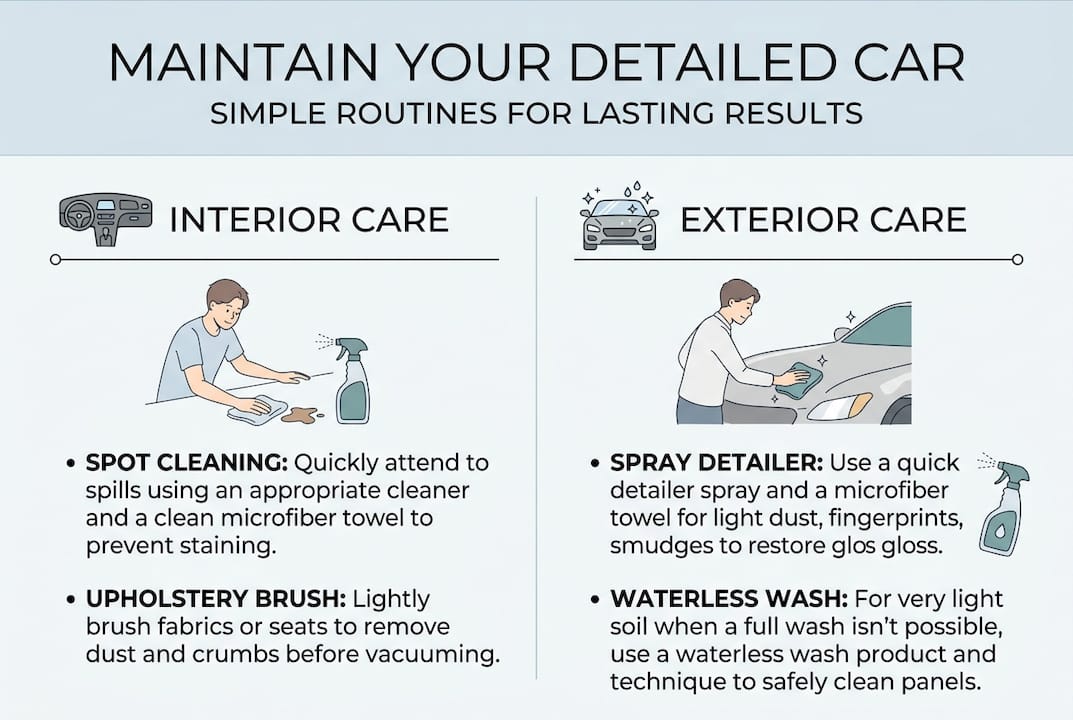
The most important thing you can do is wash gently and frequently. A light rinse or hand wash every one to two weeks removes surface contaminants before they bond to your clear coat or fabric. Regular gentle washes and careful spot cleaning help maintain the results of your professional detail far longer than skipping washes and expecting the detail to do all the heavy lifting. Avoid automated car washes with spinning brushes. They introduce swirl marks and can strip wax or sealant coatings faster than anything else.
For your interior, quick habits make a huge difference:
- Use a small trash receptacle in your car so debris doesn’t accumulate
- Keep a microfiber cloth in the center console for quick wipe-downs
- Address food or liquid spills immediately rather than letting them soak in
- Vacuum the floors and seats every two to three weeks
- Use a UV protectant spray on your dashboard monthly to prevent fading and cracking
Spot cleaning is your best friend between visits. A quality upholstery cleaner and a soft brush can lift fresh stains before they set permanently. The key word is fresh. The longer a stain sits, the harder it becomes to remove without a full extraction treatment.
For exterior care, a spray detailer or waterless wash product works well for light dust and fingerprints between full washes. Avoid using household dish soap on your car’s paint. It strips protective wax and sealant layers rapidly because it’s formulated to cut through grease.
Pro Tip: Schedule your next mobile detail every 8 to 12 weeks if you park outside, drive daily, or have kids or pets in the car regularly. Vehicles garaged and driven less frequently can often go 16 weeks between visits without significant deterioration in appearance.
Our take: Why process matters more than products in mobile detailing
Here’s something that most detailing content gets wrong: the conversation focuses almost entirely on products. Which wax is best? Which ceramic coating brand is most durable? But after years of working with vehicles across South Jersey, the clearest lesson is that process beats product every single time.
A skilled detailer using a mid-range sealant and a meticulous, ordered process will outperform someone with the most expensive ceramic coating on the market who skips decontamination or rushes the wash stage. Missed preparation steps allow bonded contaminants to lock under protective coatings, reducing adhesion and durability regardless of the brand name on the bottle.
A consistent, well-ordered approach also means less risk. You’re less likely to see swirl marks, water spots, or missed zones when each phase is standardized. It’s predictable, repeatable quality rather than variable results that depend on which products happened to be in stock that day.
The appointment workflow guide we follow was built around this principle. When someone asks us about our service, the most useful question isn’t “what products do you use?” It’s “can you walk me through your process step by step?” The answer to that question tells you far more about what kind of results you’ll actually get.
Pro Tip: Ask your detailer to explain their process rather than their product brands. A professional who can clearly describe each step in order is far more likely to deliver consistent, high-quality results than one who leads with brand names.
Ready to experience premium mobile detailing in South Jersey?
Now that you know exactly what to expect, take the next step toward a cleaner, better-protected vehicle.
At CDC Auto Detailing, we bring professional-grade service directly to your driveway across South Jersey. Our team follows mobile detailing best practices to deliver consistent, high-quality results on every vehicle we service. Whether you’re curious about what’s included in each package or want to see real examples, you can browse detailing service examples to understand exactly what your vehicle will receive. When you’re ready, book your mobile detailing appointment in just a few minutes and let us come to you with everything needed for a flawless finish.
Frequently asked questions
How long does a typical mobile detailing session take?
Mobile detailing usually takes 2 to 4 hours depending on your vehicle’s size and the level of service selected.
Do I need to supply water or electricity for a mobile detail?
Most professional mobile detailers bring their own water and power supply, but you should confirm utility needs when booking to avoid any surprises on the day of your appointment.
Will mobile detailing clean both the inside and outside of my car?
A complete mobile detailing package typically includes both interior and exterior services as part of its process, and most providers allow you to customize the scope based on your priorities.
How soon can I drive my car after mobile detailing?
You can usually drive your vehicle immediately after detailing, but allow a few hours before exposure to rain or dust if any protective coatings were applied, so they have time to cure properly.
How often should I book a mobile detailing service?
Most experts recommend mobile detailing every 2 to 4 months, though your schedule may vary based on how often you drive, where you park, and whether you have children or pets in the vehicle regularly.