
TL;DR:
- Professional window tinting and vehicle wraps improve comfort, protection, and appearance using high-quality films and vinyl. Proper installation, adherence to legal VLT limits, and regular maintenance are essential for durability and effectiveness. Choosing experienced installers and defining your primary goal help achieve the best long-lasting results.
Pro window tinting and wraps are specialized automotive services that block UV rays, reduce interior heat, increase privacy, and change a vehicle’s appearance through professional-grade films and vinyl materials. The industry term for the film-based side of this work is “automotive window film installation,” though most vehicle owners search for it as pro window tinting & wraps. Top-tier ceramic films block up to 98% of infrared heat and 99% of UV rays, making them far more than a cosmetic upgrade. Cdcautodetailing serves vehicle owners across South Jersey who want these results done right the first time.
What are pro window tinting & wraps, and why do they matter?
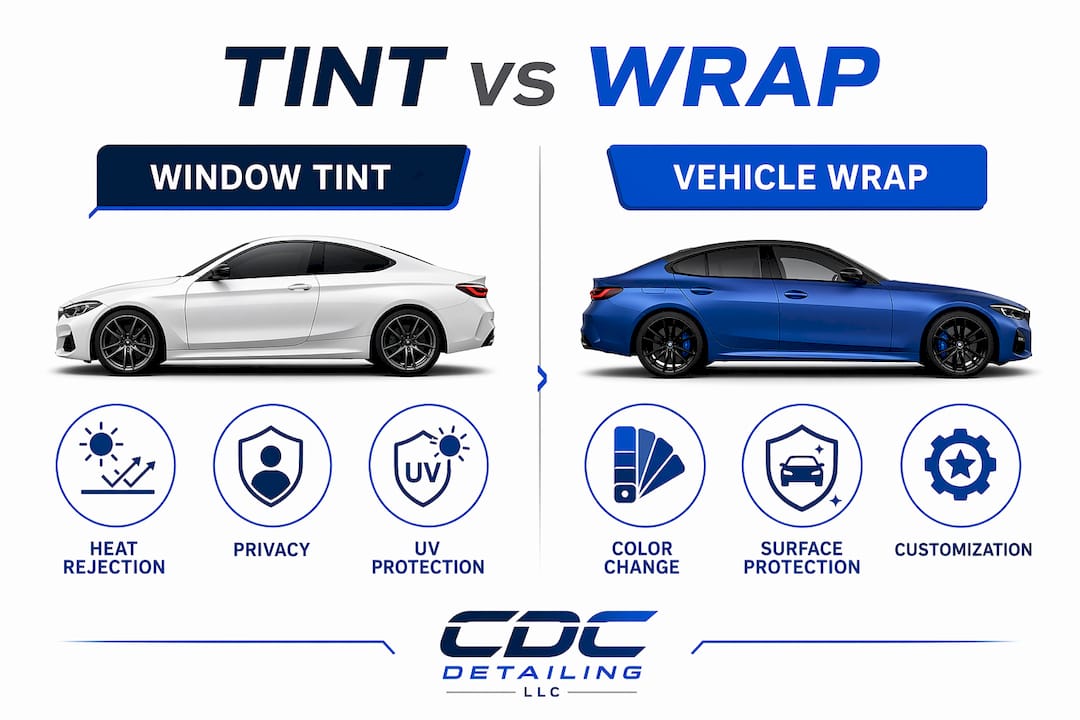
Professional window tinting and vehicle wrapping deliver measurable performance benefits, not just a new look. A quality tint film reduces cabin heat, protects your skin from UV exposure, and cuts glare during daytime driving. A vinyl wrap changes your vehicle’s color or finish without permanent paint work, which preserves resale value. These two services often go together because vehicle owners who care about appearance also care about protection.
The benefits of professional tinting extend well beyond aesthetics. UV radiation degrades interior leather, fades dashboards, and contributes to skin damage on long commutes. A professional-grade film addresses all three problems at once. That combination of comfort, protection, and style is why demand for these services has grown steadily among both everyday drivers and luxury vehicle owners.
What types of window tint films and wraps are available?
Window tint film types
Four main film categories cover the automotive window tinting market, and each performs differently.
- Dyed films use a layer of dye between adhesive and protective coating. They are the most affordable option and provide basic privacy and glare reduction, but they fade over time and offer limited heat rejection.
- Metalized films embed tiny metallic particles to reflect heat and UV rays. They are more durable than dyed films but can interfere with GPS, cell signals, and radio reception.
- Carbon films use carbon particles instead of metal. They deliver strong heat rejection, a matte finish, and no signal interference, making them a solid mid-range choice.
- Ceramic films are the top-performing category. Nano-ceramic films provide superior heat protection with lighter shades, preserving visibility for safer night driving. They carry the highest price but the longest lifespan.
Vehicle wrap types and cost ranges
Vinyl wraps fall into two broad categories: partial wraps and full wraps. Partial wraps cover specific panels, hoods, or roofs. Full wraps cover the entire exterior surface and allow complete color changes or custom graphics.
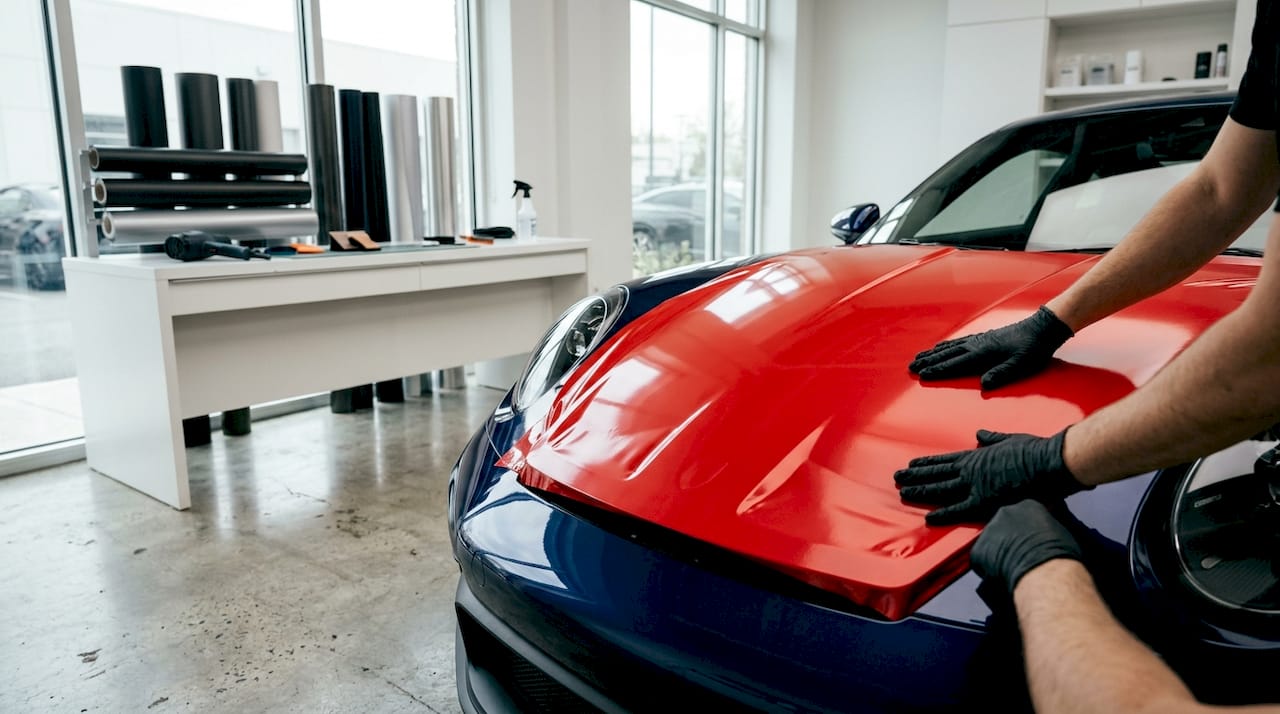
Finish options include gloss, matte, satin, chrome, and textured patterns like carbon fiber. Professional installation costs reflect this range: partial wraps start around $1,500, full wraps start at $3,500, partial paint protection film (PPF) starts at $1,699, and full PPF starts at $5,500. Window tinting services typically start around $175 for standard films and reach $750 or more for premium ceramic options. The price gap between entry-level and premium reflects real differences in material quality and installation complexity.
| Film or Wrap Type | Key Strength | Typical Starting Cost |
|---|---|---|
| Dyed window film | Privacy, low cost | ~$175 |
| Carbon window film | Heat rejection, no signal loss | ~$300 |
| Ceramic window film | Maximum heat and UV rejection | ~$500+ |
| Partial vinyl wrap | Accent panels, color change | ~$1,500 |
| Full vinyl wrap | Complete color or graphic change | ~$3,500+ |
How do tint laws affect which shade you can choose?
Tint laws vary by state, vehicle type, and window position, and the key measurement is Visible Light Transmission (VLT). VLT is the percentage of light a film allows through. A 5% VLT film is very dark; a 70% VLT film is nearly clear. Most states set different VLT minimums for front side windows, rear side windows, and rear windshields.
Non-compliance carries real consequences. Officers can issue citations, require film removal at the owner’s expense, and in some states fail a vehicle inspection. Checking your state’s specific limits before selecting a shade is not optional. You can review current state-by-state tint regulations to confirm what is legal for your vehicle before booking.
Key legal points every vehicle owner should know:
- Front side windows face the strictest VLT limits in most states.
- Rear windows often allow darker films, especially on SUVs and vans.
- Medical exemptions exist in many states for UV-sensitive conditions.
- Commercial vehicle wraps with graphics may require additional permits in some jurisdictions.
- Reflective or mirrored films are banned outright in several states regardless of VLT.
What should guide your choice of tint and wraps?
Defining your primary performance goal before selecting a film type is the most important step in the decision process. Heat rejection, UV protection, privacy, and aesthetics each point toward different film tiers. A vehicle owner in South Jersey who commutes in summer heat has different needs than one who primarily wants a blacked-out look for style.
Pro Tip: Do not choose a film shade based on darkness alone. A light ceramic film at 35% VLT can outperform a dark dyed film at 5% VLT in heat rejection. Darkness and performance are not the same thing.
Additional factors that should shape your decision:
- Vehicle type. Electric vehicles require specialized handling to avoid interference with sensors, cameras, and charging systems. Not every installer has this experience.
- Budget vs. longevity. Dyed films may need replacement in 3–5 years. Ceramic films routinely last 10 years or more with proper care.
- Wrap durability. Cast vinyl wraps conform better to curves and last longer than calendered vinyl. For full wraps, cast vinyl is the professional standard.
- Privacy needs. Rear window tinting provides the most privacy gain per dollar spent.
Learning how to choose window tinting that matches your specific priorities saves money and prevents regret after installation.
How does professional installation improve the final result?
Installation quality determines whether a tint or wrap lasts two years or ten. Digital plotters pre-cut films to exact vehicle specifications, which eliminates the risk of blade scratches on glass and improves edge fitment accuracy over hand-cutting. Shops that use this technology produce cleaner results with fewer bubbles, lifted edges, or misaligned seams.
Synchronized multi-technician teams can complete professional-grade tinting in as little as one hour by dividing the work across windows simultaneously. That efficiency matters for vehicle owners who cannot leave their car for a full day. Speed achieved through team coordination is a mark of a well-run shop, not a shortcut.
Pro Tip: Ask any installer whether they use digital pre-cut software before booking. If they hand-cut every film on the glass, the risk of scratches and poor fitment increases significantly.
Professional installation also matters for warranty coverage. Most premium film manufacturers void their warranties if the film is not installed by a certified professional. That warranty protects you against delamination, bubbling, and color shift over the film’s lifespan. Film quality and installer expertise matter more than brand name alone for achieving durable, high-performance results.
How do you maintain tints and wraps to make them last?
Proper maintenance extends the life of both window films and vinyl wraps by years. The most common mistake vehicle owners make is washing a new tint too soon. Films need 3–5 days to fully cure after installation before any cleaning.
Follow these maintenance guidelines to protect your investment:
- Use a soft microfiber cloth and ammonia-free cleaner on tinted windows. Ammonia degrades the film’s adhesive layer over time.
- For vinyl wraps, hand washing is safer than automatic car washes. Brush rollers can lift wrap edges, especially around door handles and mirrors.
- Avoid parking in direct sunlight for extended periods when possible. UV exposure accelerates fading in lower-grade films and wraps.
- Inspect edges and seams every six months. Catching a lifting edge early prevents water intrusion and larger peeling.
- Never use abrasive pads, razor blades, or solvent-based cleaners on either film or wrap surfaces.
Pro Tip: For vinyl wraps, a spray sealant designed for vinyl applied every 3–4 months adds a protective layer against contaminants and UV degradation without damaging the finish.
Scheduling a professional inspection annually catches issues before they become costly repairs. A trained eye spots micro-lifting, adhesive failure, and film discoloration that vehicle owners typically miss until the damage is visible.
Key Takeaways
Professional window tinting and wraps deliver lasting value only when the right film type, legal shade, and installation method are matched to the vehicle owner’s specific needs.
| Point | Details |
|---|---|
| Ceramic films lead on performance | They block up to 98% of infrared heat and 99% of UV rays, outperforming all other film types. |
| VLT laws are non-negotiable | State tint laws vary by window position; verify limits before selecting any shade. |
| Digital plotters improve quality | Pre-cut technology reduces scratches and improves fitment accuracy over hand-cutting. |
| Cost reflects real differences | Ceramic films and cast vinyl wraps cost more because they last significantly longer. |
| Maintenance protects your investment | Ammonia-free cleaners and edge inspections every six months prevent premature failure. |
Why I think most vehicle owners get this decision backwards
Most vehicle owners I talk to start with the question “How dark do you want it?” That is the wrong starting point. Darkness is a legal and aesthetic variable. Heat rejection is a performance variable. Treating them as the same thing leads to choosing a dark dyed film that looks great in october but turns your car into an oven by july.
The other mistake I see constantly is prioritizing brand name over installer skill. A premium film installed poorly will bubble, peel, and discolor faster than a mid-grade film installed by someone who does this work every day. The installer’s hands and tools matter more than the logo on the box. That is a hard truth for vehicle owners who research brands for hours but spend five minutes vetting the shop.
The best outcomes I have seen come from vehicle owners who define one primary goal, confirm their state’s VLT limits, and then find a shop that uses digital pre-cut technology and can show recent work. That process takes an afternoon of research. The result lasts a decade.
— Charles
Cdcautodetailing’s window tinting and detailing services
Cdcautodetailing brings professional-grade window tinting and vehicle care directly to vehicle owners across South Jersey, including Pitman, NJ and surrounding areas. The team handles everything from ceramic film installations to full exterior detailing, with the same attention to quality on every job.
If you are ready to protect your vehicle’s interior and upgrade its appearance, the complete window tinting guide covers every option in detail. Vehicle owners who want to combine tinting with paint protection or ceramic coating can also review how auto detailing works to see how these services complement each other. Booking a consultation with Cdcautodetailing takes minutes and puts a professional plan in place for your specific vehicle.
FAQ
What is the best window tint for cars in terms of heat rejection?
Ceramic window film is the best option for heat rejection. It blocks up to 98% of infrared heat and 99% of UV rays without interfering with electronics or GPS signals.
How much does professional window tinting cost?
Professional automotive window tinting starts around $175 for standard dyed films and reaches $750 or more for premium ceramic options, depending on vehicle size and film tier.
What VLT percentage is legal for car window tint?
VLT limits vary by state and window position. Front side windows face the strictest limits in most states, while rear windows often allow darker shades. Verify your state’s specific rules before installation.
Do electric vehicles need special treatment during tinting or wrapping?
Yes. Electric vehicles require installers experienced with EV-specific sensors, cameras, and panel materials. A controlled installation environment protects electronics from damage during the process.
How long does a professional vinyl wrap last?
A full vinyl wrap installed with cast vinyl by a professional typically lasts 5–7 years with proper maintenance, including hand washing and periodic vinyl sealant application.