
Rain usually does not permanently damage a properly installed window tint, but it can slow curing and stretch out the temporary haze or moisture pockets you see right after the job. Give the film its full cure window, follow your installer’s aftercare instructions, and most of what looks alarming on day one clears up on its own within a few weeks.
TL;DR:
- Under ideal conditions, final adhesion takes 15 to 20 days; cold, humid weather or thicker films can need 30 days or longer for full clarity.
- Keep windows closed for at least 48 hours, or 72 hours in cold or humid weather, and avoid defrosters, forced heat, and interior wiping.
- Check the film from six feet away in natural daylight; shrinking, evenly spread haze or tiny bubbles usually reflect curing, not installation failure.
- Seek an inspection if bubbles persist after three to four weeks or you see lifted edges, trapped debris, or gel texture beneath the film.
Table of Contents
- What actually happens when it rains after tinting
- How long curing takes and what changes the timeline
- What to do and avoid after rain hits fresh tint
- Reading the signs: normal haze versus a real problem
- Does the type of rainwater matter: acid rain and hard water
- Myths and facts about rain and window tint
- Rain damage or installation error: how to tell the difference
- Speeding up drying without risking damage
- What installers actually watch for during a rain-affected cure
- When to book a professional tint inspection with us
- FAQ
- Sources
What actually happens when it rains after tinting
Window film goes on wet. Installers use an application solution to position the film and press out excess liquid, but a thin layer always remains trapped between the film and the glass. That residual moisture is what causes the cloudy, streaky look you notice right after installation, and it is completely normal.
Rain itself does not dissolve adhesive or damage the film layers. What it can do is add extra moisture to the air around your car, which slows how fast that trapped application solution evaporates. The result is haze and small bubbles that stick around a little longer than they would on a dry, sunny week.
- Residual solution, not rain, causes most of the initial haze and bubbling.
- Exterior rain adds humidity that slows evaporation but doesn’t break down the film.
- Properly installed adhesive layers resist water exposure during the entire cure period.
Pro Tip: If it rained the day of or right after your tint job, don’t panic. Treat the extra humidity as a reason to be more patient, not a sign something went wrong.
How long curing takes and what changes the timeline
Manufacturer guidance for premium automotive film puts final adhesion at roughly 15 to 20 days under ideal conditions, around 65°F and low humidity, according to 3M’s technical guidance. Cooler or more humid weather extends that window, and films with thicker construction or metallic layers can take 30 days or longer to reach full clarity, per the same guidance.
Visual inspection guidance from 3M recommends waiting around 30 days before a final clarity check, since some water bubbles persist past that mark in humid or cool climates. That number is a useful benchmark for when to stop worrying and start checking.
A few things shift that timeline in either direction:
- Cold or humid weather slows evaporation and lengthens the haze and bubble period.
- Hot, dry conditions speed up curing and can clear visible moisture in days rather than weeks.
- Darker or thicker films, including ceramic and metallic options, generally take longer than lighter, thinner films.
Watch for shrinking bubbles and fading haze over time rather than expecting a single clear day. Gradual improvement is the sign curing is on track, even if it’s not finished yet.
What to do and avoid after rain hits fresh tint
The single biggest mistake owners make is rushing the process. Here’s the order of operations that keeps a fresh tint job on track:
- Keep your windows up for at least 48 hours, and extend that to 72 hours if the weather turned cold or humid.
- Let the car air dry naturally rather than using the defroster or blasting heat at the glass, since installers commonly discourage forcing the cure with excessive heat.
- Wipe exterior rainwater off the glass gently with a soft microfiber cloth if water is pooling at the edges, but leave the interior surface alone.
- Skip ammonia-based glass cleaners entirely. Ammonia breaks down tint adhesive over time and can cause discoloration.
- Call your installer if bubbles haven’t started shrinking after a few weeks, or if you notice lifting at the film’s edges.
Pro Tip: Resist the urge to press on bubbles to speed things along. Pressing can trap dirt or shift the film out of position, turning a cosmetic non-issue into an actual repair.
For a week-by-week breakdown of what to expect, our cure window maintenance plan walks through what’s normal at each stage.
Reading the signs: normal haze versus a real problem
Most post-rain tint complaints fall into four categories: moisture haze, small water pockets, light streaking, and a mottled, uneven look. All four are typical during curing and tend to fade as the trapped solution evaporates, clearing gradually over the days and weeks described above.
- Moisture haze shows as a faint white or gray film across the tint, strongest right after installation.
- Small water pockets look like tiny bubbles and usually shrink and disappear as curing progresses.
- Light streaking often follows the squeegee pattern used during installation and fades with time.
3M’s inspection standards suggest viewing the film from at least six feet away in natural daylight, since close-up inspection under indoor lighting exaggerates normal curing artifacts that are invisible at a driving distance.
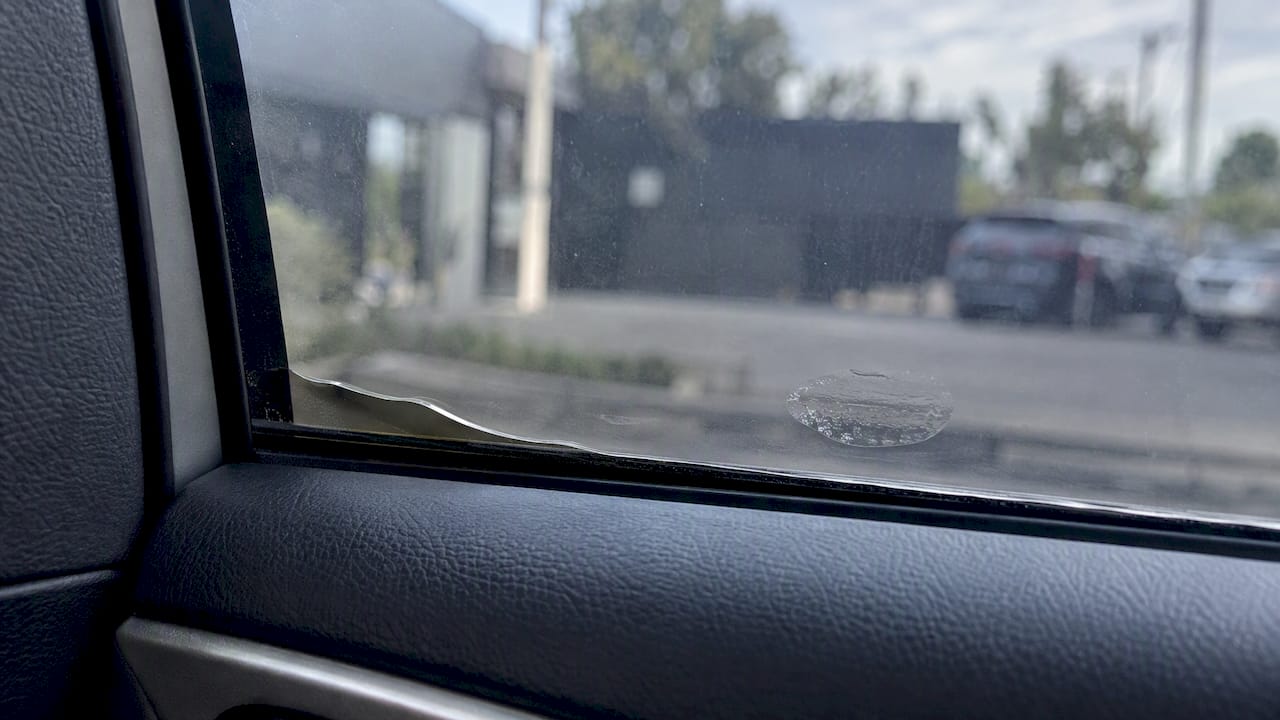
Signs that point to an actual defect rather than normal curing include edge lift where the film peels away from the glass frame, a gel-like texture under the film that doesn’t flatten out, or visible dirt and debris trapped permanently inside the layers. Those issues don’t resolve with time and are worth a professional look rather than more waiting.
Does the type of rainwater matter: acid rain and hard water
Acid rain and hard water get blamed for a lot of cosmetic damage on cars, but window film in particular is built to resist both. The outer layer of quality automotive tint is designed to shed water and resist the mild acidity found in typical rainfall, so a normal rain shower is not going to etch or discolor properly installed film.
Hard water is more of a glass problem than a film problem. Mineral deposits from hard water can leave spots on the exterior surface of the glass itself, visible as cloudy rings after the water evaporates, but these sit on top of the glass, not inside the tint layers. A gentle wash with a non-ammonia glass cleaner usually clears them.
Where acid rain or hard water residue becomes a real concern is on a tint job that was already compromised, for example if the edges weren’t properly sealed during installation. In that scenario, water can work its way under the film over repeated exposure. That’s a reason to have any edge issues checked early, not a reason to treat ordinary rain as a threat to a correctly installed film.
Myths and facts about rain and window tint
A lot of bad advice circulates about rain and tint, mostly because people see temporary haze and assume the worst. A few myths worth clearing up:
Myth: rain ruins a fresh tint job. Fact: rain adds humidity that can slow drying, but it doesn’t damage properly cured adhesive or film layers.
Myth: you need to dry the interior glass yourself to protect the tint. Fact: wiping or pressing on the inside surface during the cure period is more likely to shift the film or trap contaminants than to help it dry.
Myth: bubbles mean the installation failed. Fact: small bubbles from trapped application solution are expected and typically shrink as the film cures, per industry curing guidance.
Myth: the film stops blocking heat and UV while it’s hazy. Fact: tint performs its solar control and safety functions throughout the curing process, haze or no haze, according to the same guidance.
Rain damage or installation error: how to tell the difference
The honest answer is that most post-rain complaints are curing, not a mistake. But a few checks help separate the two.
Look at distribution first. Haze and small bubbles spread evenly across the film, following no particular pattern, point to normal curing. Bubbles clustered in one area, especially near an edge or corner, are more likely tied to how that section was applied.
Check whether the issue is shrinking. Pull the car into the same lighting every few days and look from the same six-foot distance. Curing artifacts get smaller and fainter over time. A problem that stays the same size or grows after two or three weeks is not curing anymore, it’s a defect.
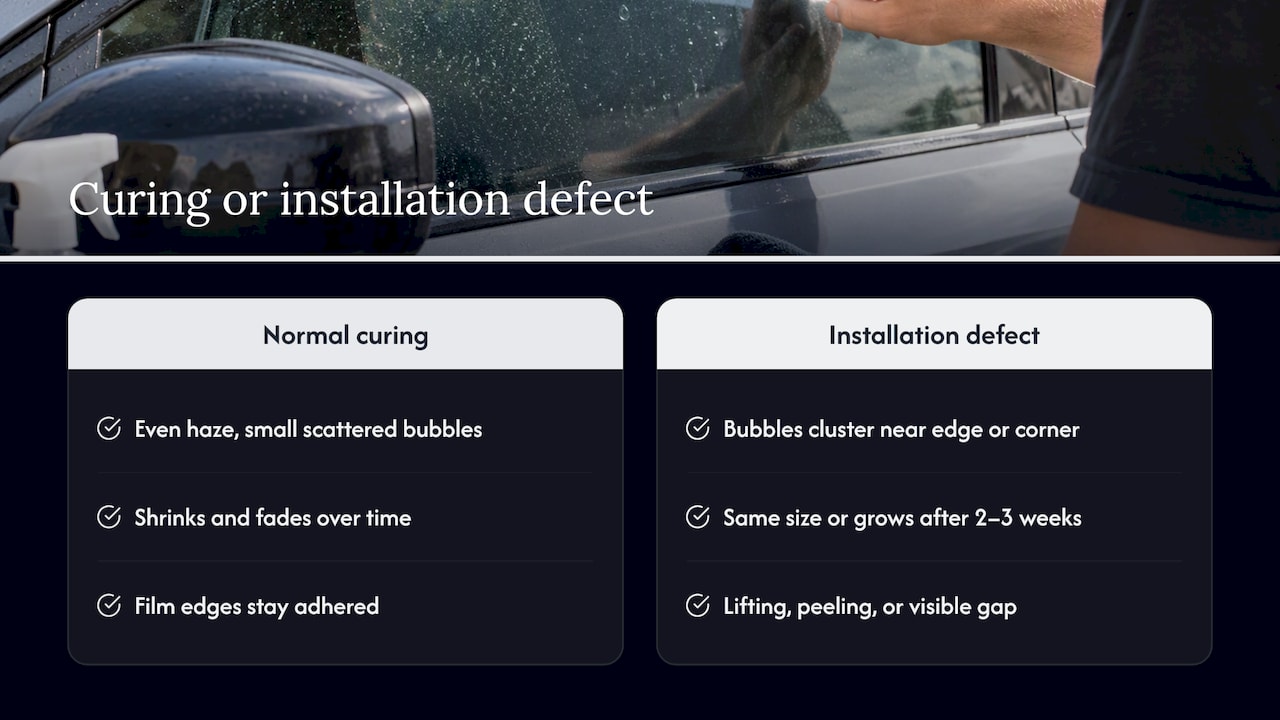
Inspect the edges specifically. Film that’s lifting, peeling, or showing a visible gap between the tint and the window frame is an installation or adhesion issue, not something rain caused. Our flawless finish installation guide covers what a correct edge seal should look like if you want a reference point.
When in doubt, photograph the area in natural daylight and send it to your installer rather than guessing. A quick photo review is faster than driving in for every question.
Speeding up drying without risking damage
You can’t force curing to finish overnight, but a few habits help it along without putting the film at risk.
Park somewhere warm and dry when possible. Heat and low humidity speed up evaporation of the trapped application solution, which is why cure times in a dry climate run shorter than in a cold, damp one.
Crack a different window, not the tinted one, to improve airflow through the cabin on a hot day. Better air circulation helps moisture escape faster without disturbing the curing film itself.
Leave the car parked rather than driving through more rain or washing it during the first week, since weatherproof plate covers offer an effective way to protect your vehicle’s license plate from moisture and wear. Repeated moisture exposure resets the clock on how long haze takes to clear, even though it won’t damage a correctly installed film.
Avoid interior fans or defroster vents aimed directly at the glass. Forced heat can cause uneven drying and, in some cases, contribute to bubbling rather than preventing it.
What installers actually watch for during a rain-affected cure
Patience is the rule installers repeat more than any other, and manufacturer guidance backs that up: expect roughly 15 to 20 days for final adhesion under good conditions, longer in cold or humid weather, per 3M’s technical documentation. Rain doesn’t change that advice, it just means the clock might run a little longer.
When we check a tint job that’s been through heavy rain during curing, we’re looking at three things: whether the adhesive is bonding evenly across the surface, whether any contaminants got trapped under the film, and whether the edges are sealed tight with no lifting. Most jobs pass that check without any work needed, and the haze finishes clearing on schedule.
— Charles
When to book a professional tint inspection with us
If you’re past the three or four week mark and still seeing bubbles that haven’t shrunk, or you’re just not sure whether what you’re looking at is normal, a quick professional check settles it faster than more waiting. We install both GeoShield CARBON TINT and GeoShield CERAMIC TINT, and our mobile setup means we can come inspect or correct a tint job at your home or office in South Jersey without you needing to carve out a trip to a shop.
- Choose a professional inspection if bubbles or edge lift haven’t improved after three to four weeks.
- Choose continued waiting if the haze is even, fading gradually, and the edges look sealed.
- Book correction work if you spot trapped contaminants or a gel-like texture under the film.

Reach out through our window tinting page to check availability and get a straight answer on whether your tint needs attention or just more time.
FAQ
How cold is too cold for window tint?
Most manufacturers recommend installing and curing tint above temperatures where evaporation slows dramatically, since colder conditions extend curing well past the typical 15 to 20 day window. If your tint was installed in cold weather, expect a longer wait before the haze fully clears.
How do you cut tint for a car window?
Professional installers use a pattern cut system or hand-trim the film against the glass with a sharp blade, trimming to the exact edge of each window before heat shrinking it to match the curve of the glass. This step is precise enough that most owners leave it to a trained installer rather than attempting it at home.
Why do my car windows fog up during rain?
Fogging during rain is usually condensation from a temperature or humidity difference between the inside and outside of the glass, not a tint problem. Freshly tinted windows can fog slightly more during the cure period since the trapped application solution adds extra moisture, but this clears as the film dries.
What should I do if I accidentally roll down the windows after tinting?
Roll the window back up right away and avoid rolling it down again until the recommended wait period has passed, since installer guidance commonly suggests at least 48 hours and up to 72 hours in humid or cold weather. Check the edges where the film meets the window frame for lifting, since rolling down a window too early is one of the more common causes of edge damage during the first few days.
Sources
- Crystalline Series — 3M automotive window film technical guidance
- How long does window film take to fully cure on a home or building — Madico