
TL;DR:
- Trim restoration renews faded vehicle surfaces at a fraction of replacement costs.
- Proper cleaning, preparation, and application are key for lasting professional results.
- Maintenance and reapplication extend the lifespan of restored trim, especially in South Jersey’s climate.
Most car owners in South Jersey assume faded, chalky trim is a sign that expensive replacement parts are on the way. That assumption costs people real money every year. Trim restoration is the process of renewing faded, discolored, or oxidized plastic, rubber, and vinyl surfaces on your vehicle using specialized products and techniques, and it typically costs a fraction of replacement. This guide breaks down exactly how restoration works, which products actually deliver results, how long you can realistically expect them to last, and whether hiring a mobile detailing professional beats going the DIY route.
Table of Contents
- What is trim restoration and why does it matter?
- How does trim restoration work? Methods and process explained
- Comparing types of trim restorers: Longevity and results
- Caring for restored trim: Maintenance and protection tips
- DIY vs. professional trim restoration: Which is best for you?
- What most guides miss about trim restoration
- Restore and protect your trim with mobile South Jersey experts
- Frequently asked questions
Key Takeaways
| Point | Details |
|---|---|
| Trim restoration defined | Trim restoration revitalizes faded plastic, rubber, or vinyl, boosting your car’s look and value. |
| Results are temporary | Most products need reapplication every 2–4 months, with premium options lasting up to two years. |
| Professional care advantages | Mobile detailing professionals offer prep and expert application, leading to longer-lasting results. |
| Regular maintenance required | You’ll prolong restored trim by gentle washing and periodic protection, especially in South Jersey’s climate. |
What is trim restoration and why does it matter?
Trim restoration is the process of renewing weathered or discolored exterior and interior trim surfaces on a vehicle. These surfaces include exterior bumper covers, door edge moldings, mirror housings, window surrounds, and wheel arch liners. On the inside, trim includes dash panels, door inserts, center consoles, and pillar covers. All of these components are typically made from plastic, rubber, or vinyl, and all of them are vulnerable to fading over time.
Why does trim fade in the first place? Sunlight is the biggest culprit. Ultraviolet radiation breaks down the chemical structure of plastic and pulls the oils right out of rubber. Combine that with South Jersey’s humid summers, road salt in winter, household cleaning chemicals, and just plain old age, and you get that familiar chalky, washed-out look. The damage is not purely cosmetic either. Dried-out rubber trim can crack and eventually allow moisture to work its way into door seams and window channels.
Restoring your trim matters for several practical reasons:
- Resale value: A vehicle with fresh, dark trim looks well maintained, which buyers notice immediately.
- Daily satisfaction: You spend time in and around your car. Clean, restored trim simply feels better.
- Protection: Restoration products add a layer of UV protection that slows future fading.
- Cost savings: Replacement moldings and panels are expensive. Restoration can cost as little as a fraction of that.
One important point worth stating plainly: restoration is not permanent. As Car Magazine’s group test makes clear, different products and conditions change longevity, and restoration is not a permanent fix. Think of it as maintenance rather than a one-time repair, and you will set realistic expectations from the start.
“Faded trim is not a death sentence for your vehicle’s appearance. It’s a maintenance signal, and restoration answers that signal effectively and affordably.”
How does trim restoration work? Methods and process explained
Understanding the process helps you appreciate why professional results look better and last longer than most at-home attempts. At its core, trim restoration follows a simple sequence, but the quality of each step determines the final outcome.
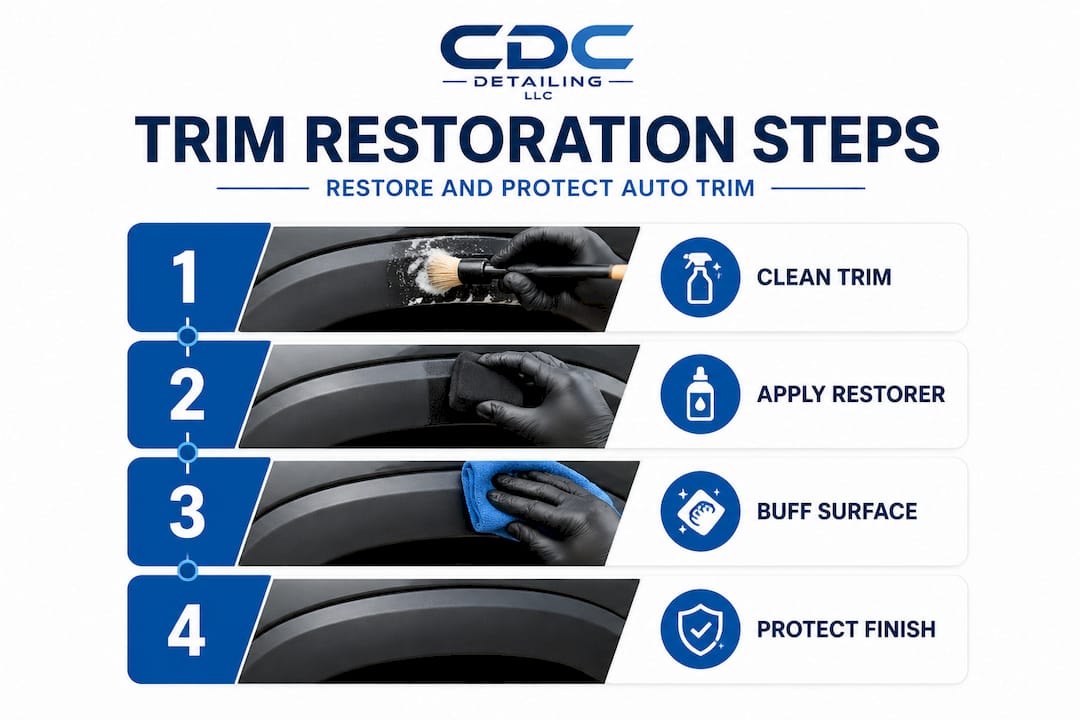
Here is how a proper trim restoration is performed:
- Surface cleaning: Remove all dirt, grease, old protectants, and contaminants. Any residue left on the surface will block the restorer from bonding properly.
- Surface preparation: Depending on the product, this may involve light abrasive scrubbing to open the pores of the plastic or using an isopropyl alcohol wipe to strip any wax or silicone.
- Product application: Apply the restorer evenly using an applicator pad, foam block, or brush. Work in small sections to ensure full coverage.
- Cure time: Allow the product to penetrate and bond to the surface. Some gels take just minutes; ceramic-based options may need several hours to fully cure.
- Wipe and buff: Remove any excess product with a microfiber cloth to avoid streaks or greasy spots.
- Optional sealing: For extended durability, apply a dedicated trim sealant or UV protectant over the restorer once it has cured.
The most common product types include petroleum-based gels, water-based sprays, and ceramic-infused solutions. Gels tend to offer immediate, deep color restoration. Sprays are convenient and good for quick touch-ups. Ceramic options require more careful application but deliver the longest protection. According to Car Magazine’s group test, restorers last from 2 to 24 months depending on type and conditions.
For exterior plastic surfaces that have more than just color loss but also light surface scratches, combining restoration with paint correction for exterior plastics can produce a dramatically more refined result.
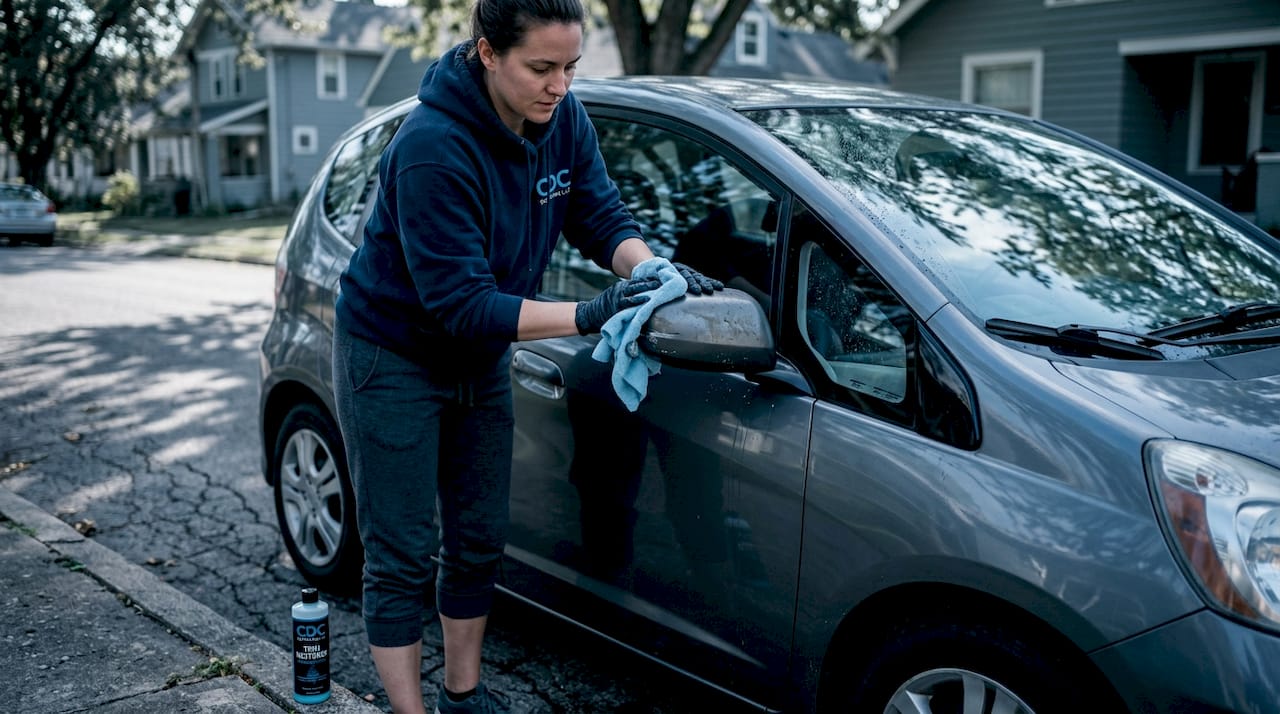
Pro Tip: Skipping the cleaning step is the number one reason DIY trim restoration looks blotchy or fades quickly. Even if the trim looks relatively clean, always degrease it before applying any restorer.
Comparing types of trim restorers: Longevity and results
Not all restorers are created equal. Choosing the right product for your situation involves weighing how long you want results to last, how much you are willing to spend, and how often you can maintain the finish. Here is a practical comparison of the three main categories:
| Product type | Typical durability | Appearance result | Ease of use | Best for |
|---|---|---|---|---|
| Gel restorer | 2 to 4 months | Deep, rich black | Easy | Quick refresh |
| Spray restorer | 1 to 3 months | Moderate color boost | Very easy | Touch-ups |
| Ceramic restorer | Up to 24 months | Deep, long-lasting | Moderate | Long-term protection |
The numbers in that table reflect real-world testing. Most everyday products fall in the 2 to 4 month range when used on vehicles that see regular washing and sun exposure. Premium ceramic options are a different story. Gtechniq C4 claims up to two years of durability, though most products last just 2 to 4 months in daily use. That gap matters when you are deciding whether to spend $15 on a gel or $50 on a ceramic solution.
Several factors will shorten or extend how long your trim restoration holds up:
- Frequency of washing: Frequent car washes, especially automated ones with harsh brushes, strip restorers faster.
- Sun exposure: Parking outdoors in South Jersey’s summer sun accelerates UV degradation.
- Product quality: Budget sprays use lighter oils that evaporate quickly. Ceramic formulas bond at a chemical level.
- Surface porosity: Heavily oxidized or porous trim absorbs and releases products faster than smoother surfaces.
- Application quality: Thin, uneven application reduces effective coverage and bonding.
The takeaway here is straightforward. If you want to minimize how often you redo the job, invest in a better product and take the time to prep the surface correctly. A $50 ceramic product applied correctly to a clean surface will almost always outperform a $15 gel applied to a dusty one.
Caring for restored trim: Maintenance and protection tips
Getting the restoration done is only half the job. What you do afterward determines whether your trim looks great for two months or much longer. Maintenance does not have to be complicated, but it does need to be consistent, especially in South Jersey’s climate.
Key maintenance habits to build:
- Wash gently: Use a pH-neutral car shampoo and avoid harsh degreasers near trim. Dish soap is a common mistake that strips protectants fast.
- Dry carefully: Pat trim dry rather than letting it air dry. Water spots left on fresh restorer can affect the finish.
- Apply UV protectant regularly: Between full restorations, a quick UV spray keeps the trim from fading as quickly.
- Reapply on schedule: Do not wait for the trim to look fully faded again. A light maintenance coat every couple of months keeps the protection active.
- Park smart: Whenever possible, use covered parking or a car cover, especially in the peak summer months.
Reapplication is needed to maintain results, especially after heavy sun or repeated washes. South Jersey’s weather pattern makes this particularly relevant. The combination of hot, humid summers and road salt in winter creates an aggressive environment for all exterior surfaces, and trim is no exception.
For a thorough approach to keeping your vehicle’s interior in shape alongside your trim care, reviewing a solid interior trim detailing routine adds real value. Pairing that with consistent detail maintenance tips keeps the whole vehicle looking sharp between professional visits. If you want a structured approach to your interior surfaces specifically, a step-by-step interior cleaning guide can walk you through exactly what to do and in what order.
Pro Tip: Apply a dedicated trim protectant spray between full restoration treatments. These products are not as deep-acting as restorers, but they add a meaningful UV barrier that buys you extra weeks of fresh-looking trim without a full reapplication effort.
DIY vs. professional trim restoration: Which is best for you?
There is a real case to be made for both approaches. Your decision should depend on your budget, time, the current condition of your trim, and how long you want the results to last. Here is a direct comparison:
| Factor | DIY | Professional mobile detailing |
|---|---|---|
| Upfront cost | Lower ($10 to $60) | Higher ($80 to $200+) |
| Durability | Varies, often shorter | Better prep leads to longer results |
| Labor | Your time and effort | Handled for you |
| Convenience | High (do it when you want) | Very high (comes to your location) |
| Result quality | Depends on skill and product | Consistently professional |
Professional services deliver better prep and durability, but routine reapplication is still necessary regardless of who does the work. The advantage a professional brings is not magic product. It is thorough prep, product knowledge, and application technique built up through experience.
Situations where hiring a professional makes the most sense:
- Your trim is severely oxidized or has been neglected for several years.
- You want ceramic-grade results that require precise application and curing.
- You have multiple vehicles or a large SUV or truck with extensive trim surfaces.
- You simply do not have the time or space to do it properly at home.
- You want the job done right the first time without trial and error.
For truck owners who want a sense of what a complete professional approach looks like, the DIY truck detailing guide offers a useful frame of reference for what professional prep actually involves.
Mobile detailing makes the professional option far more accessible. Instead of driving to a shop and waiting, a certified detailer comes to your driveway in Voorhees, Vineland, Cherry Hill, or anywhere across South Jersey, handles everything on the spot, and leaves your vehicle looking dramatically better without disrupting your day.
What most guides miss about trim restoration
Here is the part most online guides skip because it does not make for exciting product recommendations. There is no magic restorer that makes your trim look factory new forever. Every single product on the market, from the $10 spray at the auto parts store to the $80 professional ceramic coating, requires maintenance and reapplication. The difference is in how long the intervals between those applications can be stretched, not whether you eventually need to do it again.
South Jersey’s climate makes this harder to ignore than in more temperate parts of the country. The humidity means mold and mildew can accumulate in rubber trim channels. The summer sun is intense and relentless from June through September. And if you drive through winter road salt, you are dealing with a chemical that aggressively attacks unprotected surfaces. One restoration in April does not carry you through the year. It is a starting point, not a finish line.
The smarter framing is to think of trim restoration as part of a full care routine rather than an occasional fix. Owners who do this stay ahead of oxidation rather than fighting it. They spend less money overall, because catching trim early means lighter products and less labor. Those who wait until trim looks truly terrible face longer treatments, sometimes multiple applications to get the color back, and greater risk that the damage has gone past the point where restoration alone is enough.
Even the best professional detailers will tell you that they can extend the time between restorations and deliver a far better result than a rushed DIY job, but they cannot permanently stop the clock on plastic aging. That honesty is worth more than any product claim. If you are ever unsure whether your vehicle has crossed the line from maintenance territory into needing more hands-on intervention, checking the signs professional detailing is needed can help you make that call clearly rather than guessing.
Restore and protect your trim with mobile South Jersey experts
If your trim has already started looking chalky, faded, or just plain tired, now is the right time to act before the damage goes deeper into the material.

At CDC Auto Detailing, we bring professional-grade trim restoration directly to your driveway across South Jersey, from Pitman to Cherry Hill, Gloucester County to Cumberland County. We use quality products with proper prep, so your results last longer and look better than a quick off-the-shelf fix. Browse the full range of auto detailing services we offer, including interior and exterior trim care, ceramic options, and full detail packages. Ready to book or want to know what to expect? Walk through our mobile detailing process to see exactly how we work and how easy it is to get started.
Frequently asked questions
How long does trim restoration really last?
Most trim restorers last 2 to 4 months, though premium products can extend protection up to two years with ideal care and proper prep.
Is trim restoration safe for all vehicles?
When used as directed, modern restorers are safe for most plastics, rubbers, and vinyl, but always check your car’s owner manual for any surface-specific restrictions before applying.
Can I restore interior trim as well as exterior?
Yes, restoration works for both interiors and exteriors, but choose products designed specifically for your surface type since interior plastics and exterior rubber have different absorption rates.
What’s the main cause of faded trim?
The primary causes are UV sunlight breaking down plastic polymers, harsh weather including rain and road salt, and natural age-related oxidation that pulls moisture out of rubber and vinyl materials.