
TL;DR:
- Real odor removal addresses underlying mold, bacteria, and chemical contamination, not just masking scents.
- Professional methods like steam cleaning, enzyme cleaners, and ozone treatments ensure lasting results.
- Preventative habits and timely professional treatment keep vehicles fresh and maintain resale value.
Most South Jersey drivers assume a pine-scented air freshener hanging from the rearview mirror counts as odor control. It does not. What feels like a fresh car is often a masked problem, where mold, bacteria, or embedded smoke particles keep growing beneath that sweet fragrance. Odor removal in vehicles goes far beyond the smell itself, touching your health, your daily comfort behind the wheel, and even what your car is worth when you trade it in. This article breaks down why real odor elimination matters, what causes stubborn smells, and what it actually takes to fix them for good.
Table of Contents
- Understanding the hidden impact of car odors
- Common causes of stubborn odors in your vehicle
- Proven methods: How experts remove vehicle odors
- Odor removal vs. odor masking: What really works?
- Odor prevention: Keeping your car fresh in South Jersey
- Why a professional touch makes all the difference
- Ready to reclaim a fresh, healthy ride?
- Frequently asked questions
Key Takeaways
| Point | Details |
|---|---|
| Root cause matters | Proper odor removal targets the source, not just the smell, which is vital for lasting results. |
| Boosts comfort and value | Eliminating odors improves your driving experience and increases your car’s resale value. |
| DIY vs pro techniques | Severe odors usually require professional equipment and expertise, especially in humid climates. |
| Prevention is best | Regular maintenance and ventilation are key to keeping your vehicle smelling fresh in the long run. |
Understanding the hidden impact of car odors
A smell in your car is rarely just a smell. It is almost always a signal that something physical is happening inside your vehicle, whether that is active mold growth, decaying organic matter, or off-gassing from chemical contaminants. In South Jersey, where summer humidity can stay high for weeks at a time, that signal is worth taking seriously.
One of the biggest misconceptions is that once you can not smell something anymore, the problem is gone. An air freshener changes your nose’s perception, not the air itself. Mold spores, pet dander, and smoke particles do not disappear when you spray something over them. They keep circulating through your HVAC system every time you run the heat or air conditioning, and every time you breathe them in.
The real-world consequences add up fast:
- Health effects: Poor in-cabin air quality can aggravate asthma, trigger allergy flare-ups, and cause headaches during long commutes.
- Resale value: Buyers notice persistent odors immediately. A smelly interior can reduce your vehicle’s perceived value by hundreds of dollars.
- Daily comfort: Driving becomes stressful and unpleasant when you are constantly aware of an unpleasant smell.
- Hidden damage: Many odors are symptoms of moisture damage or pest activity that will only get worse over time.
Understanding car odor removal basics is the first step toward protecting both your health and your investment. The air quality and allergen connection in vehicles is especially relevant here in South Jersey, where seasonal allergies are already a challenge for many residents.
“Odor removal in vehicles enhances air quality, reduces allergens, prevents health issues, improves driving comfort, and boosts resale value.”
That last point is worth repeating. A car that smells clean communicates that it has been taken care of. One that smells like mildew, smoke, or wet dog tells the opposite story, whether it is true or not.
Common causes of stubborn odors in your vehicle
Not all car odors are created equal. Some disappear with a quick vacuuming and an open window. Others survive multiple cleanings and every air freshener brand on the shelf. Knowing what you are dealing with determines how to approach it.
Here are the most common odor culprits in South Jersey vehicles:
- Food and coffee spills: Organic matter breaks down and ferments inside carpet fibers and seat foam, producing persistent sour or musty smells.
- Pet odors: Dander and hair are bad enough, but urine is in a different category. It soaks through carpet into the subfloor padding.
- Cigarette and cannabis smoke: Smoke particles bond to fabric, headliner material, and even the foam beneath seat covers.
- Moisture and mold: Wet floor mats, leaking window seals, or a clogged AC drain can create the perfect environment for mold to grow inside your car.
- HVAC contamination: Bacteria and mold thrive on the evaporator coil inside your AC system, and you breathe whatever grows there.
| Odor type | Primary location | Removal difficulty |
|---|---|---|
| Food/coffee | Carpet, seat fabric | Moderate |
| Pet urine | Carpet, subfloor padding | High |
| Smoke | Headliner, seat foam | Very high |
| Mold/mildew | Carpet, HVAC system | High |
| HVAC bacteria | Evaporator coil | Moderate to high |
Some odors demand specialized approaches. Smoke embeds into headliner and seat foam, requiring ozone or chlorine dioxide treatment to break the bond. Pet urine needs enzyme saturation, not just surface cleaning, because enzymes are what actually break down the uric acid crystals that cause the smell. Mold from wet carpets or a blocked AC drain needs full extraction and drying before any chemical treatment works.
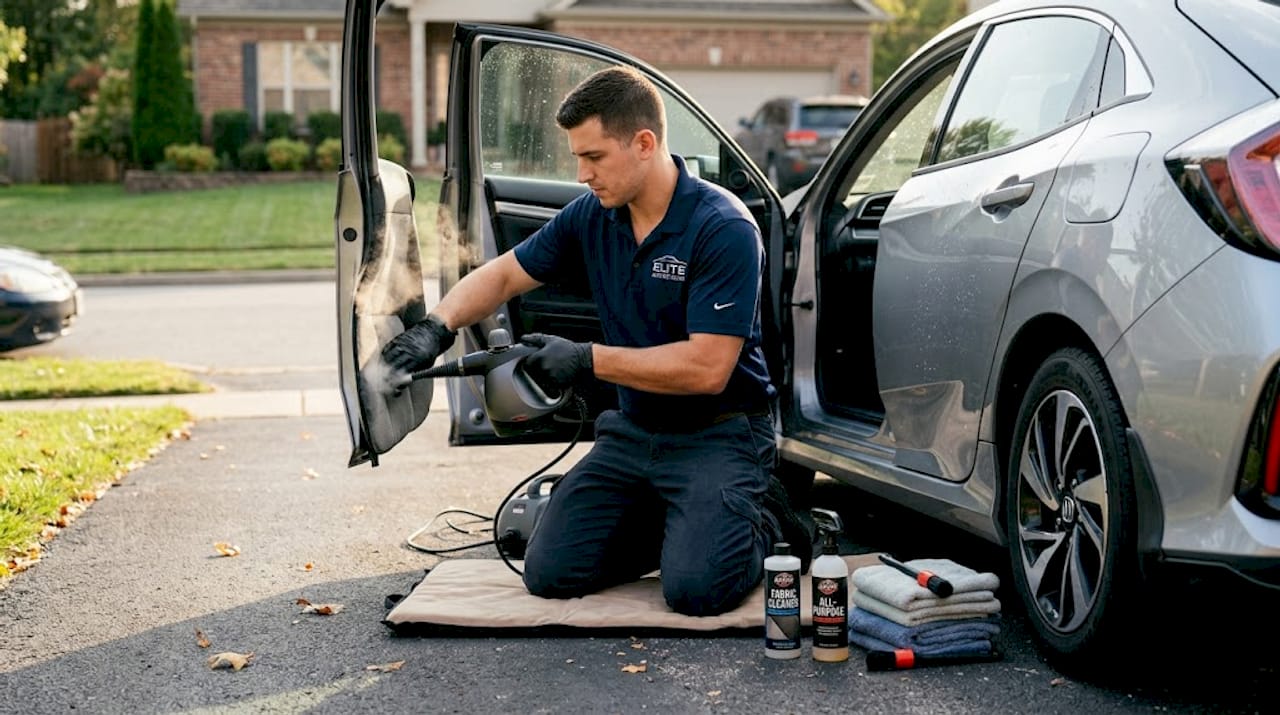
For practical pet odor solutions, the approach must go deeper than what most DIYers attempt. Surface sprays just do not reach the source.
Proven methods: How experts remove vehicle odors
Knowing what causes an odor is half the battle. Knowing how to actually remove it is where things get more technical. Here is how professionals approach it, step by step.
- Identify and locate the source. You can not treat what you can not find. Pros use their nose, moisture meters, and black lights to pinpoint contamination.
- Physical removal first. Everything loose comes out: floor mats, seat covers where possible, and any debris. Deep vacuuming follows.
- Steam cleaning. High-temperature steam loosens embedded particles in fabric and kills bacteria without harsh chemicals.
- Apply the right chemical treatment. Enzyme cleaners work for organic matter. Antimicrobial sprays handle bacteria. Ozone generators address smoke and mold at a molecular level.
- Treat the HVAC system. A cabin filter replacement plus an evaporator coil treatment stops odors from recycling through the air system.
- Dry everything completely. Moisture left behind is just a new mold problem waiting to happen.
The interior cleaning workflow that professionals follow ensures nothing is skipped. The full step-by-step interior cleaning process matters because skipping even one stage often means the odor returns within days.
Core methods include deep vacuuming, steam cleaning, enzyme cleaners, ozone generators, and HVAC treatments, each playing a specific role depending on the odor type.
Pro Tip: Ozone generators are powerful, but they are also hazardous if used improperly. Ozone must be run in an unoccupied vehicle and allowed to fully dissipate before anyone gets back inside. This is one step best left to professionals who know the correct exposure times and ventilation requirements.
Odor removal vs. odor masking: What really works?
This is where a lot of car owners get frustrated. You buy a high-quality air freshener, maybe even a baking soda product or a charcoal bag, and the smell keeps coming back. That is because masking and removing are fundamentally different actions.
Masking adds a competing smell on top of the existing one. Your nose eventually adapts and stops noticing the fragrance, then the original odor is front and center again. Odor removal physically eliminates the source: the bacteria, the uric acid crystals, the smoke particles.
Here is where each approach stands:
- Air fresheners: Work for mild, short-lived odors only. Zero impact on mold, smoke, or pet urine.
- Baking soda and charcoal bags: Absorb some odor molecules from the air but do not penetrate fabric or foam.
- Enzyme cleaners: Actually break down organic odor sources. Highly effective for food, pet waste, and sweat odors.
- Ozone treatment: Neutralizes complex odors at a molecular level, but ozone can be hazardous if mishandled.
- Professional deep cleaning: Combines multiple methods, addresses hidden sources, and delivers lasting results.
Masking odors with air fresheners does not address the root cause. Long-term, only targeted removal strategies deliver results that actually last.
In humid South Jersey summers, odors that seem manageable in spring can become overwhelming by August. Mold that was just starting to grow in April will be established by July if not treated. Knowing when to seek professional help instead of reaching for another air freshener can save you significant time, money, and frustration.
Pro Tip: If you have tried two or more DIY methods and the odor keeps returning, stop masking and call a professional. Every extra week of delay typically means deeper contamination and a higher treatment cost.
Odor prevention: Keeping your car fresh in South Jersey
The best odor removal is the one you never need. A few consistent habits can keep your car smelling clean year-round, even through South Jersey’s notorious humid summers.
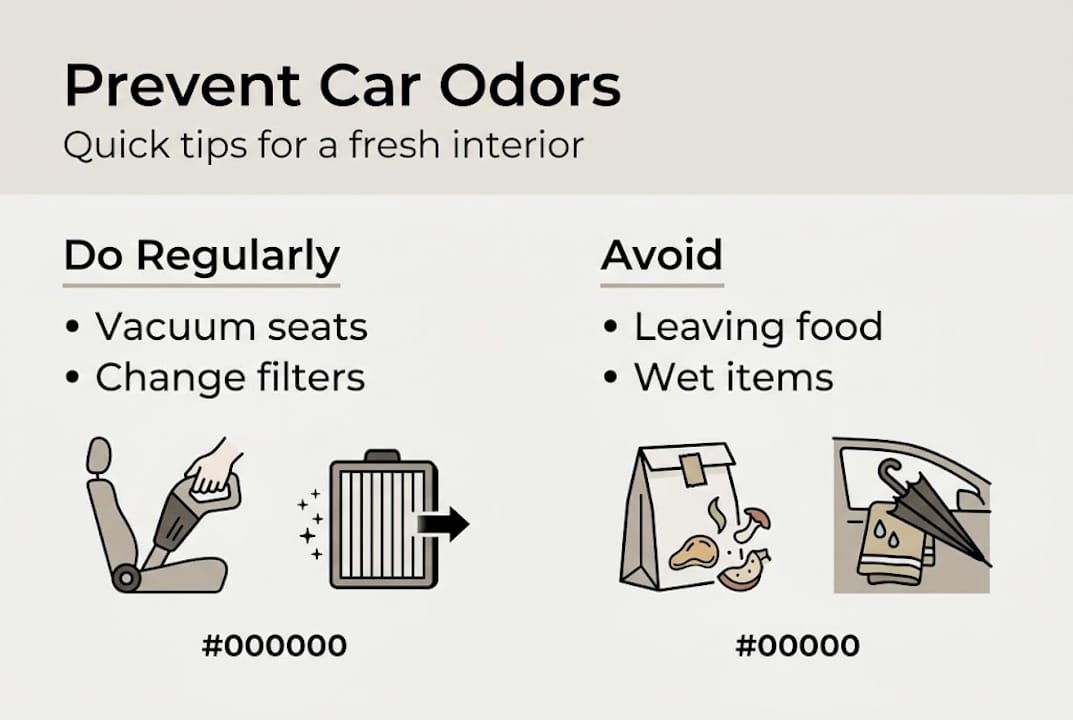
- Ventilate after every drive. Leave windows cracked for a few minutes to allow moisture to escape, especially after rain or if passengers have been in the car.
- Address spills immediately. Blot liquids out rather than rubbing them in. The faster you act, the less chance organic matter has to break down.
- Replace your cabin air filter every 12,000 to 15,000 miles. A clogged filter recirculates dirty air and can harbor bacteria that contribute to that stale car smell.
- Keep floor mats dry. Remove and air them out seasonally, and inspect the carpet underneath for any moisture.
- Run your AC on fresh air mode occasionally. This helps dry out the evaporator coil and reduce bacterial buildup.
- Inspect your car after heavy rain. Check window seals and door drains to make sure water is not pooling inside the vehicle.
The interior detailing checklist we follow covers all these prevention points and more. South Jersey’s climate makes these steps more important than in drier parts of the country.
Maintaining filter changes and ventilation alongside prompt physical cleaning is the core of any prevention strategy that actually works.
Pro Tip: A small moisture absorber placed under the seat can make a real difference during humid months. Replace it every 30 to 60 days and you will notice your car feels noticeably fresher between detail appointments.
Why a professional touch makes all the difference
Here is something most online odor guides will not tell you: the majority of DIY failures come from treating only what you can see. A homeowner cleans the seat surface, sprays an enzyme cleaner, and calls it done. But the odor source is often in the headliner above, the seat foam below, or the HVAC evaporator coil that no one ever looks at.
Professionals bring equipment that simply is not available in a consumer context: commercial steam extractors, ozone chambers, chlorine dioxide foggers, and moisture meters that identify contamination zones before a single product is applied. More importantly, pros know the sequence. Applying ozone before physically removing the source, for example, is a common DIY mistake that extends the problem.
For persistent odors in a humid climate like New Jersey’s, a professional multi-stage treatment is often the only approach that delivers permanent results. Skipping the professional step to save money often costs more in the long run when the problem worsens. Investing in detailer-level allergen defense pays for itself in health benefits alone.
Ready to reclaim a fresh, healthy ride?
If you have been living with a persistent smell in your car, you already know how much it affects your daily drive. The good news is that professional odor removal is not a luxury. It is a practical solution with real, measurable results for your health, your comfort, and your vehicle’s value.

At CDC Auto Detailing, we bring professional-grade odor removal directly to your driveway throughout South Jersey. From enzyme treatments for pet odors to full ozone sessions for smoke contamination, our mobile team handles it all. Explore real-world auto detailing examples or learn more about our detailing process overview to see exactly what we do. Booking is simple, and results speak for themselves.
Frequently asked questions
What types of odors are hardest to remove from cars?
Smoke, pet urine, and mold are the most stubborn because they penetrate deep into materials. Smoke embeds in headliner and foam, while pet urine requires enzyme saturation and mold needs full extraction before any chemical treatment works.
Is ozone treatment safe for car odor removal?
Ozone is effective but hazardous when mishandled, so it must be applied in an unoccupied vehicle with proper ventilation time before anyone re-enters. Professional application is strongly recommended.
How often should I have odor removal done in my vehicle?
At minimum, schedule an odor check seasonally and act immediately after any spill, moisture event, or persistent smell. Consistent attention prevents buildup that becomes far harder to treat.
Can regular cleaning prevent car odors?
Yes. Routine cleaning, proper ventilation, and scheduled cabin filter replacement prevent most odor problems before they start. Filter changes and ventilation are the two most overlooked yet effective habits for keeping a car smelling clean.