
TL;DR:
- Window tinting applies a protective film to vehicle glass, blocking UV rays and reducing interior heat. It enhances safety, protects interiors, and can increase vehicle value when installed professionally. Selecting the right film type and complying with local laws ensures optimal performance and legal safety.
Window tinting is defined as the application of a thin protective film to vehicle glass to block UV radiation, reduce solar heat, and improve privacy. The advantage window tinting delivers goes far beyond appearance. Quality films block up to 99% of UV rays and reduce interior heat by up to 15°F, protecting your upholstery, lowering your AC load, and making every drive more comfortable. Whether you own a single vehicle or manage a commercial fleet in South Jersey, understanding the full range of window tinting advantages helps you make a smarter investment.
How does window tinting work to reduce heat and UV damage?
Window tinting works by applying a polyester-based film to the interior surface of vehicle glass. The film contains dyes, metals, ceramics, or a combination of these materials. Each material interacts differently with sunlight to absorb, reflect, or scatter solar energy before it enters the cabin.
The most important distinction is between visible light transmission (VLT) and heat rejection. VLT measures how much light passes through the film. Heat rejection measures how much infrared radiation the film blocks. These two numbers are independent of each other. Heat rejection depends on technology, not tint darkness. A near-clear ceramic film can outperform a very dark dyed film in keeping your car cool.
Advanced ceramic films reject 98–99% of infrared heat and up to 99.9% of UV rays. That level of performance protects both passengers and interior materials from long-term sun damage. Carbon films perform similarly well without the metallic interference issues that affect GPS and cell signals.
Pro Tip: When comparing films, ask for the infrared rejection (IRR) percentage, not just the VLT number. A 70% VLT ceramic film can reject more heat than a 20% VLT dyed film.
Key factors that determine film performance:
- Ceramic films: Highest heat and UV rejection, no signal interference, premium price
- Carbon films: Strong infrared blocking, matte finish, no metallic content
- Dyed films: Absorb light rather than reflect it, lower cost, fade over time
- Metallic films: Reflect heat effectively but can disrupt radio, GPS, and cell signals
What are the different types of window tint films and their advantages?
Choosing the right film type is the single most consequential decision in the tinting process. Each film category offers a different balance of performance, appearance, durability, and cost. Knowing the differences helps you choose window tinting that fits your priorities and budget.
Dyed films are the most affordable option. They absorb solar energy rather than reflecting it, which means they heat up and transfer some warmth into the cabin over time. They also fade faster than other film types, often turning purple within a few years of sun exposure. For drivers on a tight budget who want privacy and basic glare reduction, dyed films are a starting point but not a long-term solution.
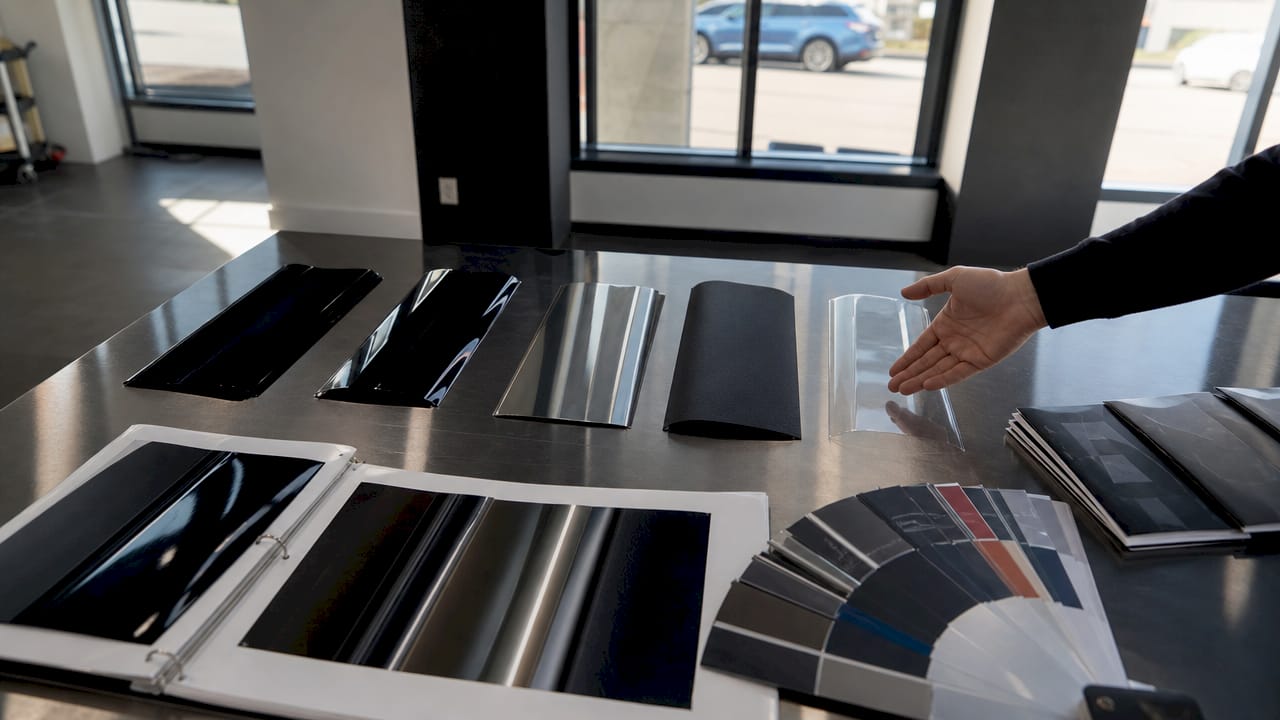
Metallic films reflect heat more effectively than dyed films and resist fading. The downside is signal interference. The metallic particles in the film can block or degrade radio, Bluetooth, GPS, and cellular signals. For drivers who rely on navigation or hands-free calling, this is a real drawback.
Carbon films deliver strong infrared blocking without metallic content. They hold their color well over time and offer a clean, matte appearance that many vehicle owners prefer. Carbon films sit in the mid-range for price and are a solid choice for drivers who want performance without signal concerns.
Ceramic films are the top tier. They protect vehicle interiors better than any other film type, block the most UV and infrared radiation, and cause zero signal interference. They also last the longest. The higher upfront cost pays off in durability and comfort over the life of the vehicle.
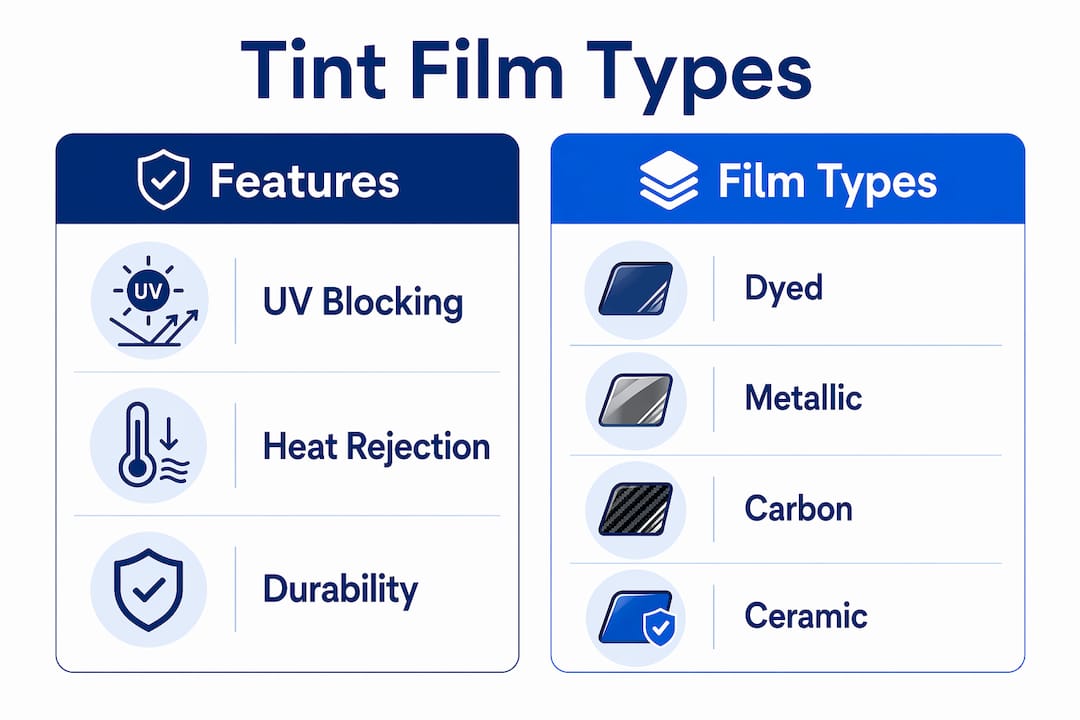
| Film Type | UV Blocking | Heat Rejection | Signal Interference | Durability |
|---|---|---|---|---|
| Dyed | Moderate | Low | None | Low |
| Metallic | Good | Good | Yes | Medium |
| Carbon | Very Good | Very Good | None | High |
| Ceramic | Excellent | Excellent | None | Highest |
Why does professional installation matter for window tinting?
Professional installation is not optional if you want tinting that lasts and performs. DIY tinting frequently leads to bubbling and purpling, and amateur work rarely qualifies for any warranty coverage. The film may look acceptable on day one but degrade within months.
A professional shop controls the installation environment. The process requires deep glass cleaning, dust-free conditions, and factory-cut film patterns matched to your specific vehicle model. Any dust or moisture trapped under the film creates permanent bubbles. Professionals use computer-cut templates to eliminate guesswork and edge gaps.
After installation, the film needs time to cure. Curing takes 3–5 days, during which you must not roll the windows down. Rolling them down too early shifts the film before the adhesive sets, causing peeling at the edges. Most vehicle owners do not know this, which is why DIY jobs fail so often.
Pro Tip: Before booking an installer, ask specifically whether the warranty covers delamination, bubbling, and color change. A lifetime warranty on materials means nothing if labor defects are excluded.
For a detailed walkthrough of what professional installation involves, the window tinting step-by-step guide from Cdcautodetailing covers the full process from prep to cure.
What legal considerations should vehicle owners know about window tinting?
Window tinting laws vary by state and govern how dark your tint can be on each window. Exceeding local VLT limits can result in fines and mandatory film removal. The cost of non-compliance, including removal and reinstallation, can easily exceed the original tinting cost. Understanding the rules before you choose a film shade is non-negotiable.
VLT percentage defines how much light passes through the glass. A lower VLT means a darker tint. Most states set different limits for the windshield, front side windows, rear side windows, and rear window. Windshields typically allow only a non-reflective strip at the top. Front side windows in many states must allow at least 35% light transmission.
Professional shops measure and verify compliance before applying any film. This protects you from accidental violations and ensures the finished product meets local standards. For a full breakdown of current regulations, the 2025 tinting laws guide from Cdcautodetailing covers state-specific limits in detail.
Key legal points to keep in mind:
- Windshield: Most states permit only a top strip, typically 4–6 inches
- Front side windows: Commonly require 35% VLT or higher
- Rear side windows: Often allow darker tints, sometimes 20% VLT or lower
- Rear window: Usually the most flexible, but check your state’s rules
- Reflectivity: Many states also cap how reflective a film can be, not just how dark
How does window tinting improve vehicle value, comfort, and security?
The protective window film benefits extend well beyond keeping the cabin cool. Tinting addresses several real costs and risks that vehicle owners face every day.
-
UV protection for the interior. UV rays fade and crack dashboards, door panels, and upholstery over time. Blocking up to 99% of UV radiation slows this degradation significantly. A well-preserved interior holds resale value better than one with sun-damaged materials.
-
Reduced AC load and fuel savings. Cutting solar heat gain by up to 15°F means your air conditioning system works less hard. Less AC use translates directly to lower fuel consumption, which adds up over years of ownership.
-
Glare reduction for driver safety. Glare from direct sunlight or oncoming headlights at night reduces reaction time. Tinted windows cut glare without blocking visibility, improving driving safety in bright conditions.
-
Glass retention during accidents. Window film holds shattered glass together during impacts, reducing the risk of injury from flying glass fragments. This is a genuine safety benefit that most vehicle owners overlook when evaluating tinting options.
-
Privacy and theft deterrence. Tinted windows make it harder for thieves to see valuables inside your vehicle. For business owners with fleet vehicles carrying equipment, this is a practical security measure with a direct financial impact.
Key Takeaways
Window tinting is a functional investment that protects vehicle interiors, reduces heat, improves safety, and preserves resale value when the right film and professional installation are chosen.
| Point | Details |
|---|---|
| Film technology drives performance | Ceramic and carbon films outperform dyed films in heat and UV rejection regardless of tint darkness. |
| Professional installation is non-negotiable | DIY tinting causes bubbling and voids warranties; professional shops use dust-free environments and factory-cut patterns. |
| Legal compliance protects your investment | Exceeding state VLT limits leads to fines and mandatory removal; verify limits before choosing a shade. |
| Safety benefits are often overlooked | Window film holds broken glass together during accidents, reducing injury risk from shattered windows. |
| Interior preservation adds resale value | Blocking UV rays slows fading and cracking of dashboards and upholstery, keeping interior condition higher over time. |
Why I think most vehicle owners underestimate window tinting
The market has shifted. Vehicle owners used to choose tinting for looks. Now the real value is functional. Ceramic films that protect against long-term UV damage and reduce fuel costs are the smarter long-term play, and the price gap between ceramic and dyed films has narrowed considerably.
The biggest misconception I see is the belief that darker tint means better heat rejection. It does not. Infrared rejection percentage is the number that matters, and a light ceramic film beats a dark dyed film every time on that metric. Choosing by VLT alone is like choosing sunscreen by color instead of SPF.
My honest advice: invest in ceramic or carbon film, use a professional installer who offers a documented warranty, and verify your state’s VLT limits before you commit to a shade. The upfront cost is higher, but the comfort, protection, and durability you get in return make it worth every dollar. Tinting done right is one of the few automotive upgrades that pays you back in fuel savings, interior preservation, and reduced wear on your AC system over the life of the vehicle.
— Charles
Cdcautodetailing brings professional window tinting to South Jersey
Cdcautodetailing is a mobile auto detailing service based in Pitman, New Jersey, serving vehicle owners and fleet operators across South Jersey with professional-grade window tinting and protective film services.
The team at Cdcautodetailing installs ceramic and carbon window films with full attention to legal compliance, curing protocols, and warranty coverage. Whether you need tinting for a single vehicle or a full commercial fleet, the process is handled at your location with no shop visit required. For vehicle owners ready to protect their investment, the complete window tinting guide covers everything from film selection to aftercare. Businesses managing multiple vehicles can also explore fleet detailing packages designed to keep every unit protected and looking professional.
FAQ
What does advantage window tinting actually mean?
Advantage window tinting refers to the full range of functional and protective benefits that quality window film delivers, including UV blocking, heat reduction, glare control, and safety. It goes beyond aesthetics to provide measurable improvements in comfort, interior preservation, and fuel efficiency.
Is window tinting worth it for everyday vehicles?
Window tinting is worth it for any vehicle regularly exposed to sunlight. Films that block up to 99% UV rays protect interiors from fading and reduce AC load, delivering long-term savings that offset the installation cost.
How do I know which tint film is best for my car?
Ceramic films offer the best overall performance for heat rejection, UV blocking, and durability without signal interference. For guidance on matching film type to your vehicle and local laws, the how to choose window tinting resource from Cdcautodetailing is a practical starting point.
Can window tinting get me in trouble with the law?
Yes. Each state sets VLT limits for different windows, and exceeding them can result in fines and required removal. A professional installer measures compliance before application to keep you within legal limits.
How long does window tinting last?
High-quality ceramic and carbon films last the life of the vehicle when professionally installed. Dyed films typically fade and purple within a few years. Lifetime warranties from reputable installers cover delamination and color change on premium film products.