
Believing the wrong car care advice can cost you hundreds in unnecessary repairs and leave your vehicle looking worse than before. Many South Jersey vehicle owners unknowingly follow outdated tips or myths passed down from friends and online forums, resulting in damaged paint, faded finishes, and wasted money. This article cuts through the confusion by debunking the most common car care myths with expert-backed facts. You’ll discover the real best practices for washing, waxing, and protecting your vehicle’s appearance in South Jersey’s challenging climate.
Table of Contents
- Common Car Care Myths And How To Evaluate Them
- Myth 1: Frequent Washing Harms Car Paint
- Myth 2: Waxing Is Outdated, And Sealants Or Coatings Replace It Completely
- Myth 3: Detailing Is Just Washing And Doesn’t Add Lasting Value
- Comparing Car Care Methods: Which Myths Cause Most Damage?
- Protect Your Car With Professional Auto Detailing In South Jersey
- FAQ
Key takeaways
| Point | Details |
|---|---|
| Myths harm vehicles | Common car care myths can damage your vehicle’s finish if you believe them without questioning their validity. |
| Proper washing protects | Correct washing and waxing techniques protect paint far better than skipping maintenance or using wrong methods. |
| Coatings offer longevity | Ceramic coatings provide long-term protection that goes beyond what traditional waxing can achieve alone. |
| Professional care differs | Not all detailing services deliver equal results, and professional care makes a measurable difference in vehicle longevity. |
| Knowledge saves money | Understanding true car care practices helps you avoid costly mistakes and keeps your car looking great for years. |
Common car care myths and how to evaluate them
Differentiating myth from fact is critical for protecting your vehicle’s longevity and appearance. Without a clear framework, you risk following advice that sounds reasonable but actually damages your car’s finish or wastes your time and money. Proper car care requires evaluating myths against verified practices to avoid costly mistakes.
When judging car care claims, use these criteria to separate truth from fiction:
- Evidence basis: Does the advice come from scientific testing or professional experience?
- Expert consensus: Do certified detailers and automotive specialists agree on this practice?
- Proven results: Can you find documented examples of this method working effectively?
- Vehicle compatibility: Does this approach suit your specific car type and local climate conditions?
Many myths originate from anecdotal advice shared at family gatherings or outdated tips from decades ago when car paint technology was different. Social media amplifies these misconceptions, making them seem credible through repetition rather than accuracy. Prioritize methods backed by professional detailers and automotive research instead of following what sounds convenient or matches what your neighbor does.
Myth 1: Frequent washing harms car paint
This myth causes many vehicle owners to avoid washing their cars regularly, allowing harmful contaminants to build up and actually damage the paint over time. The truth is that dirt, road salt, bird droppings, and pollutants harm your paint far more than proper washing ever could. Regular proper washing does not harm paint because it removes these contaminants before they etch into the clear coat.
South Jersey’s weather presents unique challenges that make frequent washing even more important. Winter road salt can corrode paint and metal if left on your vehicle for extended periods. Spring pollen creates a sticky film that traps moisture against your paint. Summer heat bakes contaminants into the finish, making them harder to remove later.
Follow these washing best practices to protect your paint:
- Use automotive-specific soap designed for car finishes, never dish detergent
- Choose soft microfiber mitts or sponges to minimize scratching
- Rinse thoroughly before washing to remove loose dirt particles
- Dry with clean microfiber towels to prevent water spots and swirl marks
Pro Tip: Wash your car in shaded areas during cooler parts of the day to prevent soap from drying on the paint before you can rinse it off, which leaves spots and streaks.
Myth 2: Waxing is outdated, and sealants or coatings replace it completely
The explosion of ceramic coating popularity has led many to believe that traditional waxing serves no purpose anymore. Understanding the differences between waxing, synthetic sealants, and ceramic coatings helps you choose the right protection for your budget and needs. Waxing remains vital for enhancing shine and hydrophobic properties, even though ceramic coatings provide superior durability.
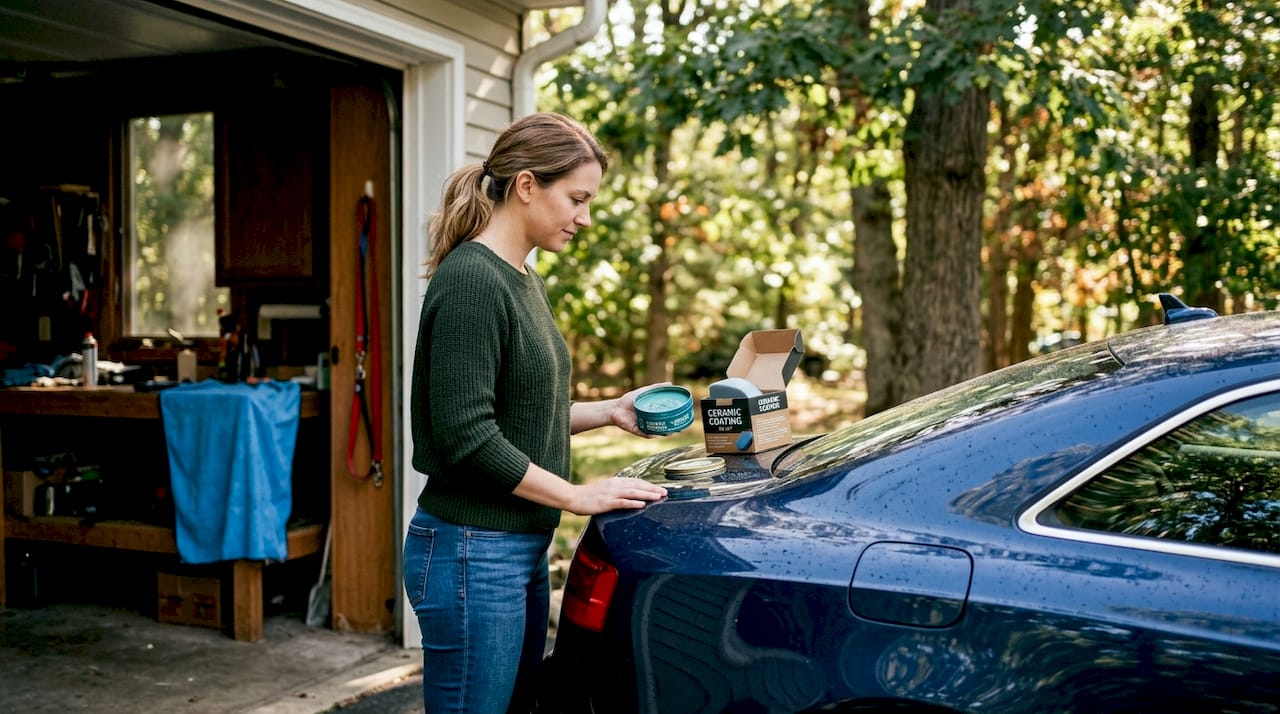
Each protection method offers distinct advantages:
| Protection Type | Durability | Application Ease | Cost | Protection Level |
|---|---|---|---|---|
| Traditional Wax | 1-3 months | Easy, DIY friendly | Low | Good gloss and water beading |
| Synthetic Sealant | 3-6 months | Moderate | Medium | Enhanced chemical resistance |
| Ceramic Coating | 2-5 years | Professional required | High | Superior scratch and UV protection |
Traditional waxing enhances your vehicle’s gloss and creates impressive water beading, but requires reapplication every few months to maintain protection. The natural carnauba wax provides a warm, deep shine that many enthusiasts prefer over synthetic options. Synthetic sealants bond to paint more strongly than wax, offering longer protection against environmental contaminants and UV damage.
Ceramic coatings protect paint with a semi-permanent layer that resists scratches, chemical etching, and oxidation far better than wax or sealants. However, they require professional application and proper paint preparation including correction of existing defects. The initial investment is higher, but the long-term protection and reduced maintenance needs often justify the cost for vehicle owners who plan to keep their cars for years.
Pro Tip: For budget-conscious owners, applying quality wax every three months combined with an occasional synthetic sealant delivers effective protection without the ceramic coating investment.
Myth 3: Detailing is just washing and doesn’t add lasting value
Many people assume that paying for professional detailing is wasteful when they can wash their car at home for a few dollars. This misconception ignores the comprehensive nature of true detailing and its impact on vehicle preservation. Detailing extends vehicle lifespan by removing contaminants, protecting surfaces, and addressing wear areas that regular washing cannot fix.
Professional detailing involves multiple specialized steps:
- Thorough exterior wash using pH-balanced solutions
- Clay bar treatment to remove embedded contaminants from paint
- Paint correction through polishing to eliminate swirl marks and minor scratches
- Protection application with wax, sealant, or ceramic coating
- Deep interior cleaning including carpet extraction and leather conditioning
These processes remove embedded dirt, industrial fallout, and oxidation that washing alone cannot address. The difference between detailing and a car wash becomes obvious when you see how much smoother and glossier your paint looks after proper clay bar treatment and polishing.
South Jersey’s environment exposes vehicles to road salt, humidity, and UV radiation that accelerate wear. Professional detailing creates protective barriers against these elements while restoring the appearance of aging surfaces. This preservation directly impacts resale value, with well-maintained vehicles commanding significantly higher prices than neglected ones.
Professional detailing is an investment in your vehicle’s longevity and appearance, not just an expense for making it look pretty temporarily.
Comparing car care methods: which myths cause most damage?
Understanding which misconceptions create the worst consequences helps you prioritize proper care practices. Misunderstanding car care myths results in preventable paint damage, premature wear, and financial loss that could be avoided with accurate information.
| Myth | Common Consequences | Recommended Action |
|---|---|---|
| Washing harms paint | Contaminant buildup, paint etching, rust formation | Wash every 1-2 weeks with proper automotive soap |
| Waxing is obsolete | Reduced UV protection, faster oxidation, dull finish | Apply wax quarterly or invest in ceramic coating |
| Detailing adds no value | Embedded dirt, swirl marks, lower resale value | Schedule professional detailing twice yearly |
| Any soap works fine | Stripped protective layers, accelerated fading | Use only pH-balanced automotive cleaning products |
Ranking these myths by damage potential reveals that skipping regular washing causes the most immediate harm. Road salt and environmental fallout begin etching paint within days of exposure. Neglecting protection through waxing or coating ranks second, as UV damage and oxidation accumulate gradually but irreversibly over months and years.
Implement this sequential approach for effective car care:
- Establish a regular washing schedule based on your driving conditions and local weather
- Apply protective wax or sealant every three to six months depending on product durability
- Schedule professional detailing annually to address paint imperfections and deep clean interiors
- Consider ceramic coating investment if you plan to keep your vehicle long-term
- Monitor your vehicle’s condition and adjust maintenance frequency as needed
Balancing these practices according to your budget and time availability delivers better results than following any single approach exclusively. Regular washing forms your foundation, protection products extend your paint’s life, and professional detailing addresses issues beyond DIY capability.
Protect your car with professional auto detailing in South Jersey
Now that you understand the truth behind common car care myths, applying this knowledge through expert services makes maintaining your vehicle easier and more effective. CDC Detailing offers comprehensive auto detailing services throughout South Jersey, bringing professional care directly to your location with mobile convenience.

Our ceramic coating service provides the long-term protection discussed in this article, applied by certified technicians who properly prepare your paint for optimal bonding. We correct the misconceptions that lead to poor vehicle care by delivering results backed by professional expertise and premium products. Whether you need paint correction to remove years of swirl marks or protection to prevent future damage, our team handles every detail.
Booking mobile detailing eliminates the hassle of driving to a shop and waiting for service. We come to your home or workplace in Pitman and surrounding South Jersey areas, working around your schedule while you focus on other priorities. Contact us today to schedule your appointment and experience the difference that professional care makes for your vehicle’s appearance and longevity.
FAQ
What is the best frequency to wash my car in South Jersey?
Wash your vehicle every one to two weeks under normal conditions, increasing to weekly during winter months when road salt exposure is heavy. South Jersey’s seasonal challenges require more frequent attention than milder climates. Use the two-bucket method with automotive soap and microfiber mitts to avoid common detailing mistakes that scratch paint during washing.
Are ceramic coatings worth the investment compared to waxing?
Ceramic coatings deliver superior protection lasting two to five years with proper maintenance, while waxing requires reapplication every few months. The higher upfront cost of ceramic coatings is offset by reduced maintenance needs and stronger resistance to scratches, chemicals, and UV damage. Choose ceramic coating if you plan to keep your vehicle long-term and want maximum protection.
Can I do professional-level detailing at home?
DIY detailing cannot match the results achieved with professional tools, commercial-grade products, and expert technique developed through years of experience. Professional detailers use specialized equipment like dual-action polishers and paint thickness gauges that most homeowners cannot justify purchasing. Professional auto detailing achieves deeper cleaning, better paint correction, and longer-lasting protection than home methods.
How does South Jersey weather affect my car’s finish?
South Jersey’s climate combines winter road salt, spring pollen, summer UV intensity, and fall moisture that each attack your paint in different ways. Road salt causes corrosion and paint etching if not removed promptly. High humidity accelerates oxidation and promotes mold growth in interiors. Regular washing and protective coatings defend against these environmental threats more effectively than occasional care.
What’s the biggest mistake vehicle owners make with car care?
The most damaging mistake is delaying maintenance until visible problems appear, by which point permanent damage has often occurred. Paint oxidation, clear coat failure, and interior staining become exponentially harder and more expensive to fix once established. Preventive care through regular washing, timely protection application, and professional detailing costs far less than restoration of neglected vehicles.