
TL;DR:
- Car window tinting with specialized films blocks up to 99% of harmful UV radiation, protecting skin and interiors.
- The effectiveness depends on the film’s UV rejection rating, not darkness, and ceramic films provide the highest protection.
Car window tinting for UV protection is the process of applying a specialized film that blocks up to 99% of harmful UVA and UVB radiation entering your vehicle, protecting both your skin and your interior materials. Factory glass alone filters very little UV radiation, leaving drivers and passengers exposed on every trip. The Skin Cancer Foundation awards its Seal of Recommendation only to films that block 99% or more UV, which tells you exactly what standard to hold any film to. The dual benefit is real: your skin stays safer, and your dashboard, seats, and plastics last significantly longer.
How does car window tinting for UV protection actually work?
Window film blocks UV radiation through chemistry, not darkness. Each film layer contains UV-absorbing molecular compounds that intercept ultraviolet wavelengths before they reach the cabin. The film converts UV energy into a small amount of heat, which dissipates through the glass rather than passing through to occupants.
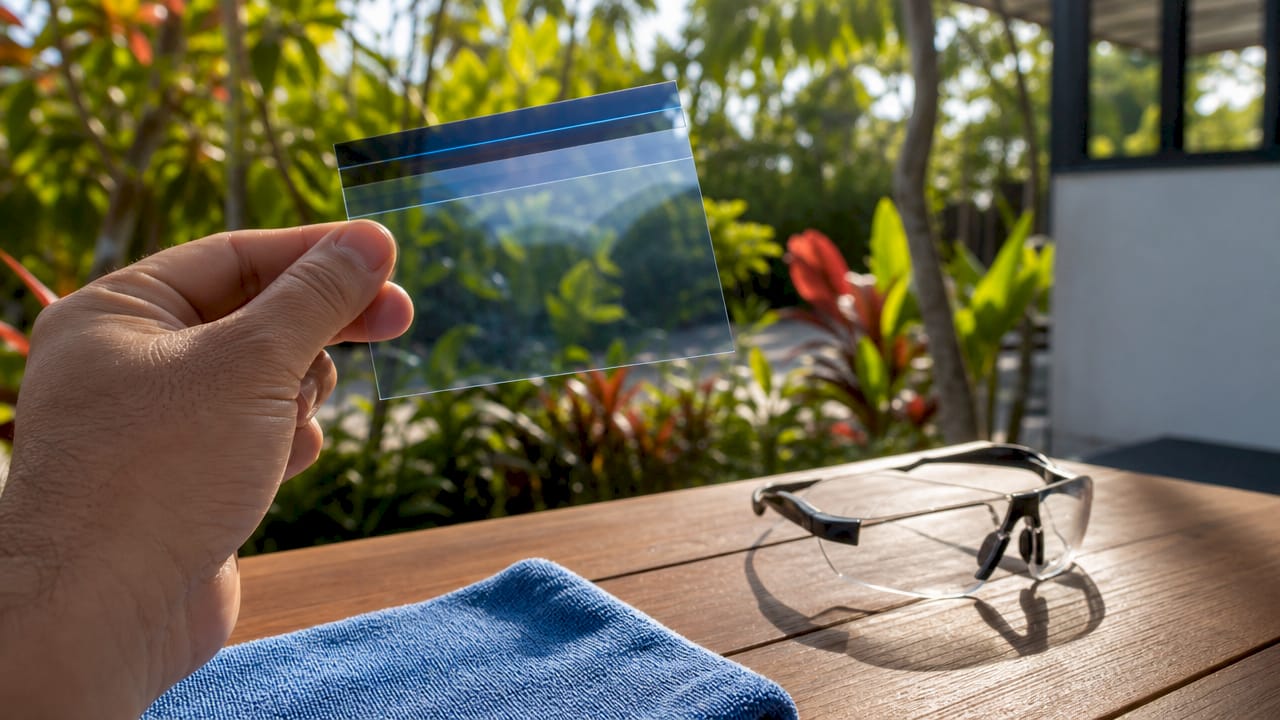
Understanding the three types of solar energy helps here. UV radiation causes skin damage and material fading. Infrared (IR) radiation generates heat inside the cabin. Visible light is what you see through the glass. A quality window film targets UV and IR independently of how much visible light it allows through.
Visible Light Transmission (VLT) is the percentage of visible light a film lets through. A 70% VLT film looks nearly clear. A 5% VLT film looks very dark. Both can block identical amounts of UV radiation. UV blocking comes from the molecular absorbers embedded in the film, not from how dark the film appears.
Ceramic films achieve this through nano-ceramic particles suspended in the film matrix. These particles absorb UV and IR radiation while maintaining high optical clarity. The result is a film that can be nearly transparent yet still carry an equivalent SPF of 1,000+ for occupants inside the vehicle.
Pro Tip: Ask any installer for the film’s UV rejection percentage on the spec sheet, not just the VLT number. Those are two separate measurements, and only UV rejection tells you how much protection you are actually getting.
What types of window film offer the best UV protection?
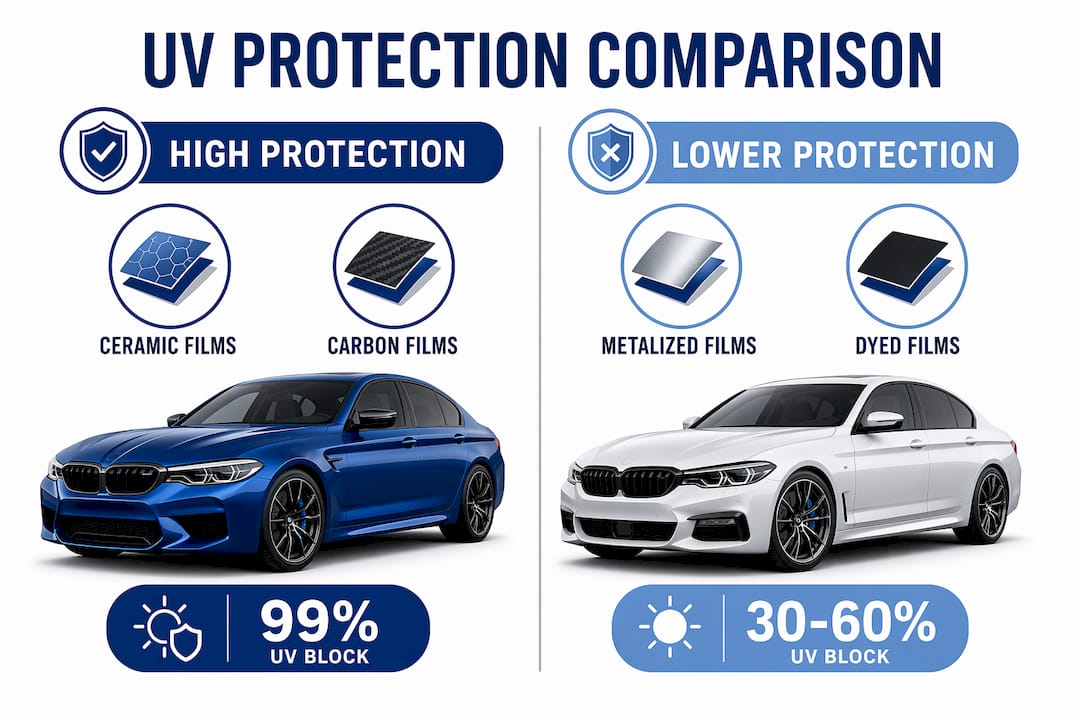
Not all window films perform equally. Film technology determines UV rejection far more than price point or brand name. The four main categories are ceramic, carbon, metalized, and dyed, and they differ significantly in performance and longevity.
Ceramic films
Ceramic films are the top performers for UV protection. Ceramic and carbon films provide 99%+ UV block and reject 50–80% of infrared heat while maintaining signal clarity without GPS or mobile interference. Ceramic films also carry manufacturer warranties exceeding 10 years. For car owners who want maximum protection with no trade-offs in clarity or electronics performance, ceramic is the clear choice. Learn more about ceramic vs. carbon film performance before deciding.
Carbon films
Carbon films deliver strong UV protection at a lower price than ceramic. They block UV effectively and reject meaningful amounts of IR heat. Their matte finish appeals to car owners who prefer a non-reflective look. Carbon films do not interfere with electronics, making them a practical step up from entry-level options.
Metalized films
Metalized films use metallic particles to reflect solar energy. They provide solid UV rejection but create signal interference with GPS, cell phones, and satellite radio. For most car owners, the electronics trade-off makes metalized films a poor choice compared to ceramic or carbon alternatives.
Dyed films
Dyed films offer minimal UV protection compared to ceramic or carbon films. They may start at 30–60% UV block but fade quickly and develop bubbling, losing effectiveness over time. Dyed films are the least expensive option and also the least reliable for anyone prioritizing UV protection. Choosing a dyed film to save money upfront typically means replacing it within a few years.
| Film type | UV rejection | IR heat rejection | Longevity | Signal interference |
|---|---|---|---|---|
| Ceramic | 99–99.9% | 50–80% | 10+ years | None |
| Carbon | 99%+ | Moderate | 7–10 years | None |
| Metalized | High | High | 7–10 years | Yes |
| Dyed | 30–60% (degrades) | Low | 2–5 years | None |
Does tint darkness affect UV protection?
Tint darkness does not determine UV protection. This is the most common misconception car owners bring to tint shops. A nearly clear film with 70% VLT can block the same amount of UV radiation as a very dark 5% VLT film, provided both use the same UV-absorbing technology.
This distinction matters enormously for windshield protection. Most states prohibit dark tinting on windshields for safety reasons. Clear ceramic films legally applied to windshields provide full UV and infrared protection without darkening the glass, enabling compliance with tint laws while maximizing protection. Drivers who spend long hours behind the wheel get meaningful skin protection without any visibility compromise.
State tint laws govern the minimum VLT allowed on each window. Side windows, rear windows, and windshields each carry different legal limits. New Jersey, for example, sets specific VLT requirements that vary by window position. Choosing a film that meets your state’s legal limits while carrying verified 99%+ UV rejection gives you both compliance and protection. Check current window tinting laws before selecting a film shade.
Pro Tip: If you drive frequently and want windshield UV protection, ask specifically for a clear ceramic film rated for windshield use. Most car owners do not know this option exists, and it is one of the highest-value upgrades available.
Key legal considerations when choosing a film shade:
- Verify your state’s VLT minimums for front side windows, rear side windows, and windshields separately.
- Confirm the film carries a manufacturer certificate showing UV rejection percentage.
- Request a window tint certificate from your installer to keep in the vehicle.
- Never assume a darker film offers more UV protection. Always check the spec sheet.
What are the practical benefits of UV blocking car tints?
UV protection from window film extends well beyond skin safety. High-quality window film reduces average UV irradiance inside a vehicle from 3.92 mW/cm² to 0.32 mW/cm², a reduction of over 90%. That drop in UV exposure directly slows the degradation of every material inside your car.
Dashboards crack and fade because UV radiation breaks down plastics and vinyl at the molecular level. Leather and fabric seats lose color and texture through the same process. UV-blocking window film acts as a barrier that substantially delays this wear, preserving the interior’s appearance and the vehicle’s resale value. Window tinting preserves interior materials by blocking the radiation that causes fading and cracking, making it one of the most cost-effective interior protection upgrades available.
Comfort improvements are equally significant. High-quality ceramic window tint rejects 50–80% of infrared heat, reducing cabin temperature on hot days. A cooler cabin means less air conditioning load, which translates to modest fuel savings over time. Glare reduction also decreases eye strain on long drives, particularly during morning and afternoon commutes when sun angles are low.
Dermatologists describe professional window tinting as one of the closest options to permanent sun protection inside vehicles, which is especially relevant for frequent drivers. Cumulative UV exposure through car windows adds up over years of commuting. A quality film installed once provides continuous protection without the need to reapply sunscreen before every drive.
The benefits of UV blocking car tints at a glance:
- Blocks 99%+ of UVA and UVB radiation reaching occupants and interior surfaces.
- Reduces interior UV irradiance by over 90%, slowing material fading and cracking.
- Rejects 50–80% of infrared heat, lowering cabin temperature and air conditioning demand.
- Reduces glare, improving driver comfort and reducing eye strain.
- Preserves resale value by protecting dashboard, upholstery, and plastics from UV degradation.
How to choose and install window film for maximum UV protection
Start with the film’s UV rejection rating. Any film worth installing should carry a verified 99%+ UV rejection rating and a manufacturer warranty of at least 10 years. Ceramic films meet both criteria consistently. Carbon films are a strong second choice for car owners working with a tighter budget.
For windshields, specify a clear ceramic film rated for windshield application. Professional installation ensures durable adhesion, optical clarity, and avoids optical distortion common with DIY or inappropriate films. A poorly installed film can develop bubbles, peeling edges, and adhesion failures that reduce UV blocking effectiveness over time. The rated performance on the spec sheet only holds when the film is installed correctly.
Follow these steps when selecting a professional installer:
- Request the film’s UV rejection percentage in writing before committing to any product.
- Confirm the installer uses automotive-grade films, not residential or commercial window film.
- Ask for a manufacturer certificate and a window tint certificate for your vehicle records.
- Verify the film’s VLT complies with your state’s tint laws for each window position.
- Follow the installer’s post-installation care instructions, typically avoiding window cleaning for 3–5 days while the adhesive cures.
Pro Tip: Automotive window tinting is a long-term investment. A ceramic film with a lifetime warranty costs more upfront but eliminates the cost of replacing a failed dyed film every few years. Calculate the total cost over 10 years, not just the installation price.
A step-by-step window tinting guide can help you understand what a professional installation involves before you book an appointment.
Key Takeaways
Ceramic window film with verified 99%+ UV rejection is the single most effective upgrade for protecting both occupants and vehicle interiors from UV radiation, regardless of tint darkness.
| Point | Details |
|---|---|
| UV rejection beats darkness | A clear 70% VLT ceramic film blocks the same UV as a dark 5% tint. |
| Ceramic films lead on performance | Ceramic films block 99–99.9% UV and reject 50–80% of infrared heat with no signal interference. |
| Windshield protection is possible | Clear ceramic films applied to windshields provide full UV protection while meeting legal requirements. |
| Interior preservation is measurable | UV film reduces interior UV irradiance by over 90%, slowing fading and cracking of materials. |
| Professional installation is non-negotiable | Proper installation is required to achieve the film’s rated UV rejection and longevity. |
What I’ve learned after years of watching car owners choose the wrong tint
The most expensive mistake I see car owners make is choosing a film based on how dark it looks. A very dark tint feels like serious protection. It is not. The UV rejection rating on the spec sheet is the only number that matters for skin and interior protection, and that number has nothing to do with darkness.
The second mistake is skipping the windshield. Most car owners tint their side and rear windows and leave the windshield untreated because they assume it cannot be done legally. Clear ceramic windshield films exist precisely for this situation. They are legal, nearly invisible, and provide the same UV and heat rejection as any other ceramic film. Drivers who spend two or more hours a day behind the wheel are accumulating meaningful UV exposure through an untreated windshield.
I also see car owners underestimate the interior preservation argument. Replacing a cracked dashboard or faded leather seats costs far more than a quality tint installation. Viewing window film as a high-tech investment for interior protection rather than a cosmetic upgrade changes the math entirely. The film pays for itself in delayed wear and maintained resale value.
Finally, warranty matters. A ceramic film with a lifetime warranty from a reputable manufacturer is a fundamentally different product from a budget dyed film with no warranty. The price difference is real. So is the performance difference.
— Charles
Cdcautodetailing’s professional window tinting services in South Jersey
Cdcautodetailing installs professional-grade ceramic and carbon window films with certified 99%+ UV rejection for car owners across South Jersey. Every installation is performed by trained technicians using automotive-grade films that meet or exceed the Skin Cancer Foundation’s UV protection standards.
Whether you want a nearly clear ceramic film for your windshield or a darker shade for your side windows, Cdcautodetailing matches the right film to your protection goals and your state’s legal requirements. The result is maximum UV blocking, a cooler cabin, and interior materials that stay in better condition longer. Explore the full range of window tinting options or book your mobile detailing appointment directly from your phone. Cdcautodetailing comes to you.
FAQ
What percentage of UV does car window tint block?
Top-tier ceramic window films block up to 99.9% of UVA and UVB radiation. The Skin Cancer Foundation’s Seal of Recommendation requires a minimum of 99% UV rejection.
Does a darker tint mean better UV protection?
No. UV protection comes from the molecular absorbers in the film, not its darkness. A clear 70% VLT ceramic film can block the same UV as a very dark 5% VLT film.
Can I tint my windshield for UV protection?
Yes. Clear ceramic films designed for windshield use provide full UV and infrared protection without darkening the glass, keeping the installation legal in most states.
How long does UV-blocking window film last?
High-quality ceramic and carbon films last 10 or more years with a manufacturer warranty. Dyed films degrade significantly faster, often losing UV effectiveness within 2–5 years.
Is professional installation necessary for UV protection?
Professional installation is required to achieve the film’s rated UV rejection. DIY installation risks bubbling, adhesion failure, and optical distortion that reduce the film’s protective performance.