
TL;DR:
- Regular cleaning and disinfecting of high-touch surfaces reduce germ buildup in cars.
- Use EPA-registered disinfectants, ensuring proper wet contact time for effective sanitization.
- Consistent routine hygiene is more effective than occasional deep cleans, especially during flu season.
Your car’s steering wheel can harbor up to 700 bacteria per square inch, and the flu virus can survive on interior surfaces for hours or even days. Most South Jersey drivers never think twice about this. You wipe down your kitchen counters, wash your hands before meals, and maybe even sanitize your phone. But your car? It gets a pass. This article walks you through ten evidence-based sanitization tips that protect your health year-round, with extra urgency during flu season. Whether you’re a daily commuter, a parent running kids around South Jersey, or someone who’s been through a pandemic scare, these practical steps give you real peace of mind.
Table of Contents
- Start with a cleaning foundation: Remove dirt before disinfecting
- Disinfect high-touch hot spots in your car
- Choose effective disinfectants and master ‘wet time’
- Electronics, upholstery, and advanced materials: Special sanitization needs
- How often to sanitize? Creating a practical schedule
- The real cost of neglect: Why consistent sanitization matters more than a single deep clean
- Get professional-grade results with CDC Detailing
- Frequently asked questions
Key Takeaways
| Point | Details |
|---|---|
| Clean before disinfecting | Always remove dirt and debris so disinfectants can work as intended. |
| Target high-touch areas | Focus on steering wheels, handles, buttons, and seat belts for maximum safety. |
| Use EPA-listed products | Select disinfectants proven to kill viruses and use them for the full label ‘wet time.’ |
| Handle sensitive materials carefully | Use alcohol wipes on electronics and gentle techniques on upholstery to avoid damage. |
| Sanitize regularly | Daily wipe-downs and weekly deep cleans keep your car safe during flu and pandemic seasons. |
Start with a cleaning foundation: Remove dirt before disinfecting
Before you reach for any disinfectant spray or wipe, you need to remove the physical mess first. This step is not optional. Crumbs, dust, pet hair, and grime act as a physical shield that blocks disinfectants from reaching the surface beneath. A disinfectant sitting on top of debris is not killing germs. It’s just sitting there.
The right order matters: clean first with soap and water to remove dirt, then disinfect. Skipping the cleaning step or reversing the order is one of the most common mistakes vehicle owners make. A surface that looks clean is not the same as a surface that is germ-free. Visible cleanliness and microbial safety are two different things.
Here’s a simple starting checklist:
- Vacuum all seats, floor mats, and crevices thoroughly
- Remove all trash, food wrappers, and loose items
- Wipe hard surfaces with a damp microfiber cloth and mild soap
- Let surfaces dry before applying any disinfectant
- Pay attention to cup holders and seat gaps where debris collects
Following a solid car interior cleaning workflow before disinfecting ensures your products actually work. Once you’ve done the foundational prep, the disinfection step becomes far more effective.
Pro Tip: Microfiber cloths trap significantly more particles than paper towels or regular rags. They physically grab and hold bacteria instead of just pushing it around. Keep a few clean ones in your glove box for quick wipe-downs between deeper cleans. For a full breakdown of what to do in order, the interior cleaning steps guide covers each stage in detail.
Disinfect high-touch hot spots in your car
Once the base is clean, focus your attention on the surfaces that matter most for health and safety. Not all interior surfaces carry the same risk. The ones your hands touch repeatedly, every single trip, are the real danger zones.
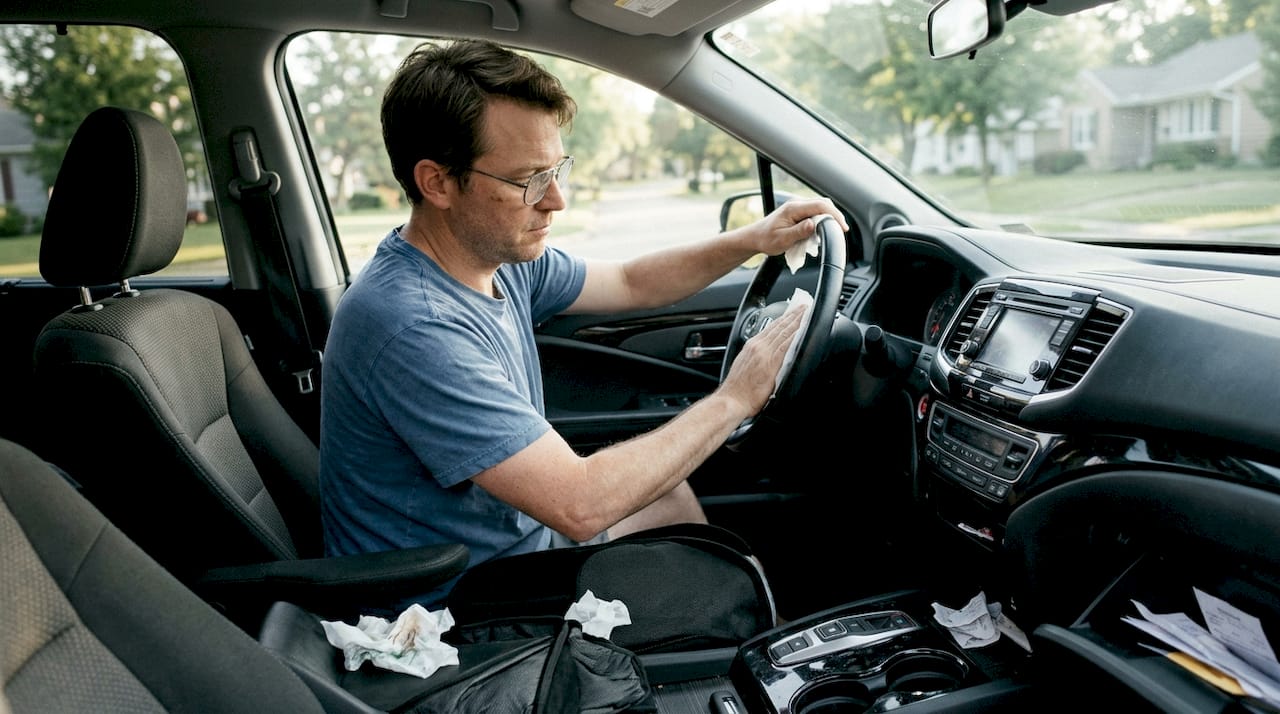
According to CDC guidance on disinfecting, the highest-priority surfaces include the steering wheel, door handles, seat belts, gear shift, dashboard, center console, mirrors, visors, buttons, and cup holders. And the steering wheel alone can harbor up to 700 bacteria per square inch, which is more than most public restroom surfaces.
Here are the hot spots you should never skip:
- Steering wheel (top, sides, and back)
- Gear shift and surrounding console
- Interior and exterior door handles
- Seat belt buckles and straps
- Touchscreen displays and physical buttons
- Ventilation knobs and air vents
- Rearview and side mirror adjusters
| Surface | Recommended cleaning frequency |
|---|---|
| Steering wheel | After every use during flu season |
| Door handles | Daily |
| Touchscreen | Every 2 to 3 days |
| Gear shift | Daily |
| Seat belts | Weekly |
| Cup holders | Weekly or after spills |
| Visors and mirrors | Weekly |
Use the detailing checklist to track which surfaces you’ve covered on each pass. This step-by-step cleaning guide also walks you through the full process in a logical order.
Pro Tip: Work front to back, top to bottom. Start at the dashboard and move toward the rear seats. This pattern prevents you from dripping disinfectant onto already-cleaned surfaces and ensures nothing gets missed.
Choose effective disinfectants and master ‘wet time’
With risky areas in mind, make sure the products and process you use are up to the sanitization challenge. Not all cleaning products are disinfectants, and not all disinfectants are equal.
Cleaning products remove dirt and some surface germs. Disinfectants kill pathogens. For vehicle sanitization, you want EPA-registered disinfectants from List N, which are tested and approved for emerging pathogens including flu viruses. These products must be used on hard, non-porous surfaces with full contact time, typically 3 to 10 minutes of wet surface contact.
The most common mistake? Wiping the disinfectant off too soon. If you spray and wipe immediately, you’ve cleaned the surface but not disinfected it. The product needs time to do its job.
| Product type | Germ-killing ability | Safe for car surfaces |
|---|---|---|
| Household all-purpose cleaner | Low | Sometimes |
| Bleach-based cleaner | High | No, damages materials |
| EPA List N disinfectant wipe | High | Yes, for hard surfaces |
| 70% isopropyl alcohol | High | Yes, for most hard surfaces |
| Vehicle-specific sanitizer | High | Yes |
How to apply disinfectant for maximum effect:
- Clean the surface first with soap and water, then dry
- Apply the EPA-registered disinfectant generously to the surface
- Check the label for required wet time (usually 3 to 10 minutes)
- Let the product sit for the full wet time without wiping
- Allow to air dry or wipe with a clean cloth after the time is up
For products that meet both safety and effectiveness standards, EPA Safer Choice offers a searchable database. Avoiding detailing mistakes to avoid like premature wiping can make the difference between a surface that looks clean and one that actually is.
Electronics, upholstery, and advanced materials: Special sanitization needs
Not all surfaces inside your car can handle disinfectants the same way. Specialized care ensures both protection and effectiveness when you’re dealing with screens, leather, and fabric.
Touchscreens are among the most-touched surfaces in modern vehicles, but they’re also the most vulnerable to damage from harsh chemicals. For electronics and screens, use 70% alcohol wipes or alcohol-based cleaners, and never spray any liquid directly onto a screen or electronic component.
Never spray disinfectant directly onto screens, buttons, or any electronic surface. Apply to a cloth first, then wipe gently. Direct spraying can cause liquid to seep into gaps and damage internal components.
For upholstery and fabric seats:
- Use a fabric-safe disinfectant spray, not a bleach-based product
- Mist lightly rather than saturating the material
- Allow fabric to dry fully before sitting to prevent mold growth
- Use a soft brush to work product into textured surfaces
Leather and suede need even more careful handling. Harsh disinfectants strip the natural oils from leather, causing cracking and fading over time. Use a leather-safe cleaner and follow up with a conditioner. For deep cleaning of fabric seats, the interior shampooing tips guide covers the right products and methods. If you’re dealing with stains alongside sanitization, the stain removal for seats resource walks through natural, material-safe options.
How often to sanitize? Creating a practical schedule
With techniques in hand, set a rhythm that makes sanitization a sustainable habit rather than a panic response. Frequency matters more than intensity when it comes to vehicle hygiene.
During flu season, a daily high-touch wipe-down of the steering wheel, door handles, and gear shift takes less than two minutes and dramatically reduces germ buildup. A full interior sanitization should happen once a week for typical use.
Here’s a practical schedule to follow:
- Daily (flu season): Wipe steering wheel, door handles, gear shift, and seat belt buckles
- Weekly: Full interior wipe-down of all high-touch surfaces listed in the table above
- After transporting a sick passenger: Full sanitization of all surfaces immediately
- After a long road trip: Full interior clean and disinfect
- Seasonally: Deep clean including upholstery, vents, and trunk area
One important edge case: if a passenger with flu or COVID was in your car, wait 24 hours if possible before disinfecting. This allows viral particles to settle and reduces your exposure risk during the cleaning process. Then do a thorough wipe-down of every surface the person may have touched.
Set a weekly phone reminder labeled “car wipe-down” and keep a small kit in your vehicle: a few microfiber cloths, a travel-size EPA-registered disinfectant, and a trash bag. The 7-step sanitization checklist makes it easy to stay on track without overthinking it.
The real cost of neglect: Why consistent sanitization matters more than a single deep clean
Here’s something most people don’t want to hear: one thorough deep clean does not make your car safe for the next six months. Yet that’s exactly how most drivers treat vehicle hygiene. They scrub everything down after getting sick, feel good about it, and then ignore the interior until the next scare.
The problem is that germs don’t wait for your annual spring cleaning. They accumulate daily. Every trip to the grocery store, every passenger, every fast food bag adds to the microbial load on your surfaces. Small, consistent wipe-downs interrupt that cycle before it becomes a health risk.
South Jersey’s seasonal shifts make this even more pressing. Humid summers create conditions where bacteria thrive on fabric and porous surfaces. Cold winters mean windows stay closed, trapping airborne particles inside the cabin. Skipping routine sanitization during these months is one of the most common detailing mistakes vehicle owners make.
Think of vehicle hygiene the way you think of brushing your teeth. Nobody expects one deep dental cleaning to replace daily brushing. Prevention is a practice, not an event. A two-minute daily wipe-down during flu season protects you more than a single four-hour deep clean every few months.
Get professional-grade results with CDC Detailing
If you want to go beyond what a wipe-down can do, or if you’re not confident about handling leather, electronics, or deep fabric sanitization on your own, professional help makes a real difference.
At CDC Detailing, we specialize in thorough interior cleaning and sanitization for South Jersey vehicle owners. From targeted high-touch disinfection to full interior treatments, we bring professional-grade results to your driveway. Explore examples of professional auto detailing to see what a proper service covers, and when you’re ready, book mobile detailing directly through our site. No shop visit required.
Frequently asked questions
What surfaces in my car should I disinfect most often?
Focus on high-touch areas like the steering wheel, door handles, seat belts, gear shift, dashboard buttons, and touchscreens. The CDC recommends these as the highest-priority surfaces for regular disinfection.
How long should disinfectants stay wet on surfaces?
Most EPA-registered disinfectants require surfaces to stay wet for 3 to 10 minutes to effectively kill germs. Always check the product label for the specific contact time.
Can I use regular household cleaners on my car interior?
It’s safest to use vehicle-friendly cleaners and EPA Safer Choice products intended for non-porous car surfaces. Many household cleaners can damage leather, plastic, or electronic coatings.
How often should I sanitize my car during flu season?
Wipe high-touch surfaces daily and deep clean the interior once a week, or immediately after transporting a sick person.
What should I do if a passenger with flu or COVID was in my car?
Wait 24 hours if possible before disinfecting to reduce your exposure risk, then thoroughly wipe down every surface the passenger may have touched.