
TL;DR:
- Glass coating bonds at a molecular level, providing long-lasting protection for vehicle glass.
- It enhances water repellency, UV resistance, and scratch resistance compared to traditional treatments.
- Professional application ensures optimal durability, performance, and clarity, especially in coastal or harsh environments.
Most vehicle owners in South Jersey assume that a fresh coat of wax or a quick spray of rain repellent is enough to protect their car’s glass. It feels logical. But the reality is that these treatments wear off in weeks, leaving your windshield and windows exposed to UV rays, road grime, salt, and water spots. Glass coating is a fundamentally different approach, one that bonds to your glass at a molecular level and delivers protection that actually lasts. This article covers what glass coating is, how it works, its real-world benefits, the application process, and what to consider before getting it done.
Table of Contents
- What is glass coating? The essentials explained
- How does glass coating work? Science and daily impact
- Benefits of glass coating for your car
- How glass coating is applied (and what to consider)
- Why most owners underrate glass coating’s value
- Upgrade your protection with expert glass coating
- Frequently asked questions
Key Takeaways
| Point | Details |
|---|---|
| Superior durability | Glass coating can last from one to four years, outlasting wax and rain repellents. |
| Enhanced safety | It keeps your glass cleaner and clearer, improving driving visibility year-round. |
| Low maintenance | Glass coating dramatically reduces the need for frequent cleaning and reapplication. |
| Best applied by pros | Professional installation ensures even coverage and the full performance of the coating. |
What is glass coating? The essentials explained
Glass coating is an ultra-thin, nano-ceramic formula that chemically bonds to the surface of your car’s glass. Unlike wax or standard rain repellents, it doesn’t sit on top of the glass waiting to be washed away. It fuses with the surface and creates a permanent-like layer that repels water, blocks UV rays, and resists chemical damage from road salt, bird droppings, and environmental pollutants.
It’s worth clearing up a common point of confusion. Glass coating as used in auto detailing is not the same as industrial coatings like PVD (physical vapor deposition) or CVD (chemical vapor deposition) used in manufacturing. Those are high-temperature industrial processes. Auto glass coating is a liquid-applied nano-ceramic product designed specifically for vehicle surfaces.
“Glass coating outperforms temporary rain repellents and lasts 1 to 4+ years depending on the product and application quality.”
Here’s what sets a quality glass coating apart:
- Transparency: Once cured, it’s completely invisible and won’t distort your view or alter glass clarity.
- Hydrophobicity: Water beads up and rolls off at highway speeds, reducing the need for wipers.
- UV resistance: Blocks ultraviolet radiation that degrades glass and causes interior fading.
- Chemical resistance: Stands up to road salt, acid rain, and cleaning solvents that eat through wax quickly.
- Scratch resistance: Adds a thin but measurable layer of hardness that helps resist minor abrasions.
For a deeper look at how professional-grade products are applied to your vehicle’s surfaces, check out this guide on ceramic coating application. The principles overlap significantly with glass-specific coatings, and understanding the process helps you make a smarter decision.
The bottom line is that glass coating is a long-term investment in your car’s glass, not a quick fix. It changes the surface behavior of your windows at a level that no wax or spray can match.
How does glass coating work? Science and daily impact
Having defined what glass coating is, let’s explore what makes its performance different on a technical and practical level.
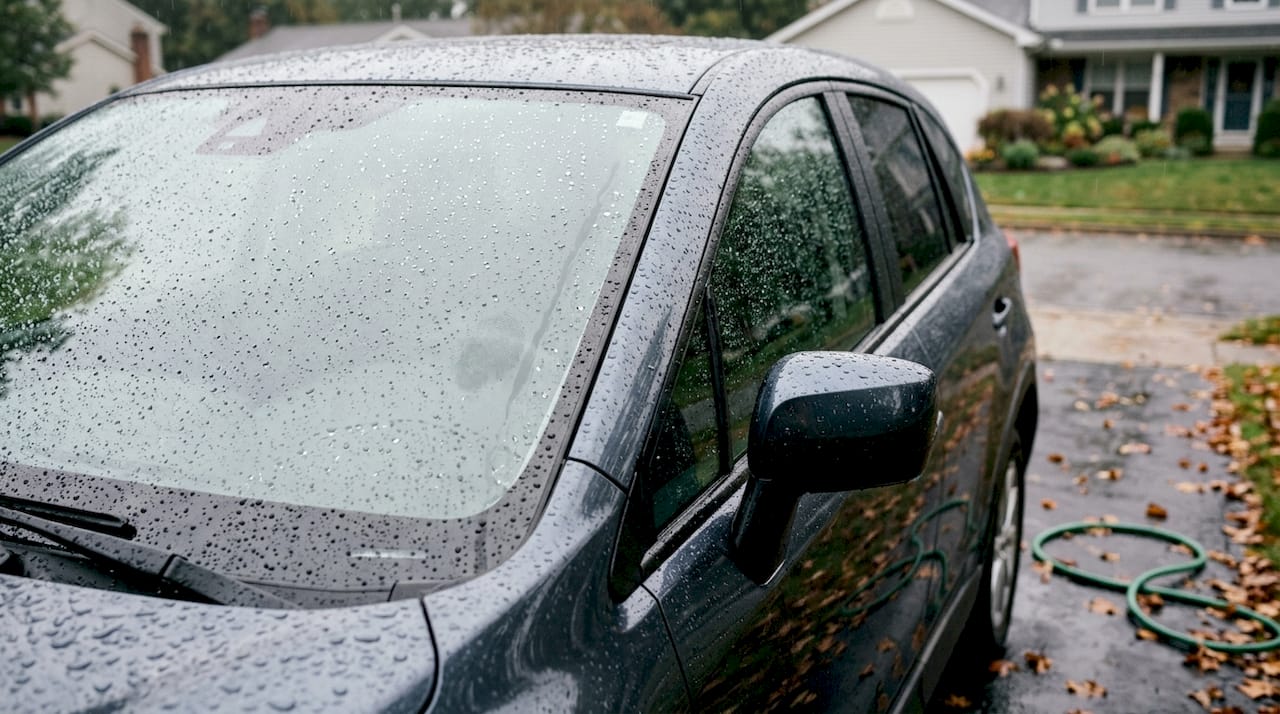
At the heart of glass coating is the hydrophobic effect. When water hits a coated surface, it forms tight beads instead of spreading out in sheets. Those beads roll off the glass, taking dirt and debris with them. At highway speeds, rain practically clears itself from your windshield without wipers. That’s not a marketing claim. It’s measurable physics.
Glass surfaces, even brand-new ones, are covered in microscopic pits and imperfections. Water and grime collect in those tiny valleys, making your glass look dirty fast and reducing nighttime visibility. The nano-ceramic formula fills in those micro-imperfections, creating a smoother surface that dirt simply can’t grip.
Here’s how the chemical bonding process works:
- Surface preparation: The glass is cleaned, polished, and decontaminated to remove any existing residue or water spots.
- Application: The liquid coating is applied in thin, even layers using a specialized applicator.
- Initial flash: The coating begins to cure and bond with the glass molecules within minutes.
- Full cure: Over 24 to 72 hours, the formula hardens into a durable, hydrophobic layer.
- Performance phase: The coated glass repels water, resists staining, and maintains clarity for years.
In real-world testing, contact angles of 110 to 115 degrees were recorded initially, with strong salt and UV resistance confirmed after seven months of coastal exposure. That’s a meaningful number. A standard untreated windshield has a contact angle closer to 20 to 30 degrees, meaning water spreads and sticks instead of rolling away.
The practical impact for South Jersey drivers is significant. Cleaner glass means better visibility in rain, less time scrubbing water spots off your windows, and safer driving at night when glare from wet roads is a real hazard. You can also pair glass coating with ceramic tint benefits and window tinting advantages for a complete glass protection setup.
Pro Tip: Always use a clean microfiber towel when wiping coated glass. Rough towels or paper products can scratch the nano-ceramic layer and reduce the hydrophobic effect faster than normal wear.
Benefits of glass coating for your car
With the science and mechanics in mind, the next step is to connect these characteristics to actual advantages for your car and wallet.
Let’s start with a direct comparison so you can see exactly where glass coating stands relative to other common treatments.
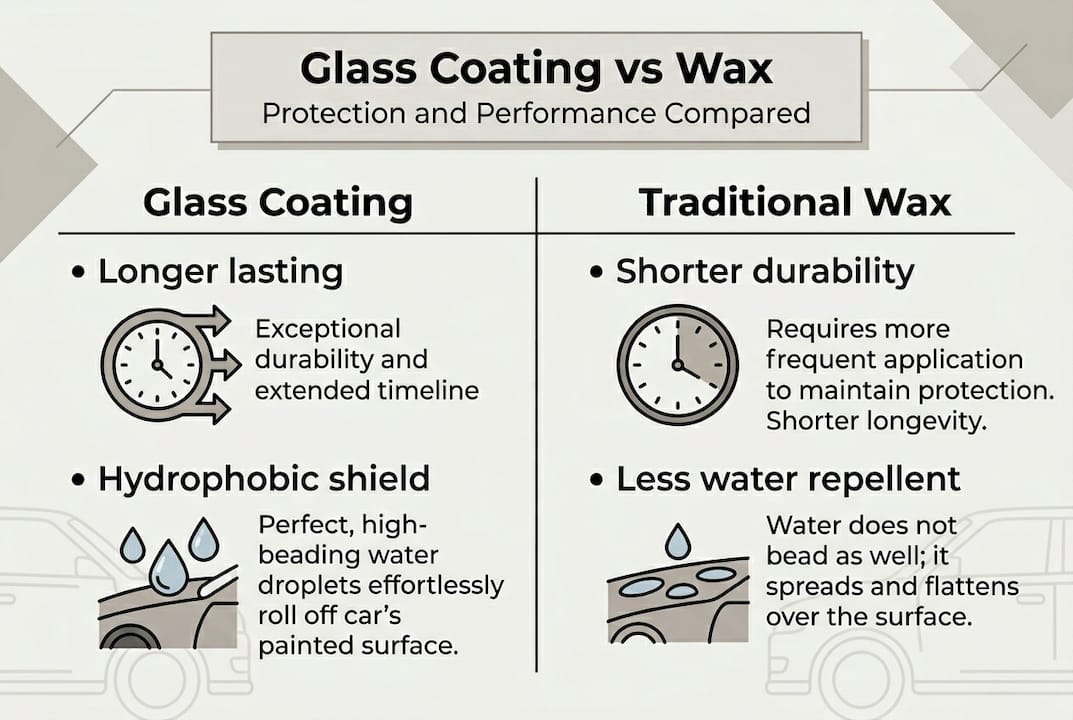
| Treatment | Durability | Hydrophobic strength | Chemical resistance | Avg. cost range |
|---|---|---|---|---|
| Wax | 4 to 8 weeks | Low | Very low | $20 to $60 |
| Paint sealant | 3 to 6 months | Moderate | Low | $50 to $150 |
| Rain repellent spray | 2 to 6 weeks | Moderate | Very low | $10 to $30 |
| Glass coating | 1 to 4+ years | Very high | High | $100 to $400+ |
As you can see, glass coating outperforms wax, sealant, and temporary treatments in both durability and chemical resistance by a wide margin. That gap matters when you’re calculating real costs over two or three years of ownership.
Here’s what that translates to in everyday life:
- Fewer cleaning sessions: Coated glass stays cleaner longer, cutting your weekend wash time significantly.
- Reduced water spots: Hard water minerals can’t bond to the smooth, coated surface the way they do on bare glass.
- Better night visibility: A cleaner, smoother windshield scatters less light, which reduces glare from oncoming headlights.
- Stain resistance: Tree sap, bug splatter, and road tar wipe off far more easily from a coated surface.
- Long-term savings: When you stop buying rain repellent every few weeks and reduce professional cleaning frequency, the math works in your favor.
For South Jersey drivers dealing with coastal salt air, humid summers, and winter road treatments, glass coating is especially practical. Salt is one of the most aggressive enemies of untreated glass, and a quality coating resists it effectively. You can also explore how professionals apply ceramic coating to the rest of your vehicle’s surfaces, and why waxing your car still has a role in a complete detailing routine.
How glass coating is applied (and what to consider)
You understand the ‘why,’ here’s what’s actually involved in the ‘how’ if you’re ready to add glass coating to your car.
The application process follows a clear sequence, whether you’re going the DIY route or working with a professional detailer.
- Wash and dry: Start with a thorough wash to remove loose dirt, salt, and debris from all glass surfaces.
- Decontamination: Use an iron remover or clay bar to pull embedded contaminants from the glass. This step is critical for bonding. For more on proper surface prep, see these surface cleaning tips.
- Polish if needed: Water spots or light scratches should be polished out before coating. Coating over damage locks it in permanently.
- Apply the coating: Work in small sections, applying the product with a foam or suede applicator in straight, overlapping passes.
- Allow to flash: Let the coating haze slightly (usually 1 to 3 minutes) before buffing with a clean microfiber towel.
- Cure time: Keep the vehicle dry for 24 to 72 hours to allow full bonding.
Pro Tip: Prep is half the battle. Skipping the decontamination step is the number one reason DIY glass coatings fail to bond properly or develop streaks after curing.
Here’s a quick look at how different products compare for South Jersey conditions:
| Product | Lifespan | Maintenance needed | Climate notes |
|---|---|---|---|
| CFX LF Glass Coating | 4+ years | Annual inspection | Excellent salt/UV resistance |
| System X Glass+ | Up to 2 years | Bi-annual check | Good UV performance |
| DIY nano-spray kits | 3 to 6 months | Monthly reapplication | Moderate performance |
The honest reality is that glass coating is more expensive and DIY-challenging than simpler options, but it outlasts them significantly. Uneven application, streaking, or missed spots are common DIY pitfalls that are hard to fix once the product cures. That’s why many South Jersey owners trust a professional detailer for this job. You can see a full breakdown of the step by step coating process or explore local options like auto detailing in Glassboro to find qualified installers near you.
Why most owners underrate glass coating’s value
Now that you know the process, it’s worth considering why so many car owners still hesitate or misunderstand the full value of glass coating.
We’ve seen a consistent pattern at CDC Auto Detailing. Owners come to us after a costly windshield replacement or after spending months fighting stubborn water spots, and the first thing they ask is why nobody told them about glass coating sooner. The short-term appeal of a $10 rain repellent spray is real. It’s cheap, it’s fast, and it works for about three weeks. But over a year, you’re buying it repeatedly, spending time reapplying it, and still dealing with water spots and salt damage.
The uncomfortable truth is that glass protection is one of the most overlooked categories in car care, even among enthusiasts who obsess over paint protection examples and ceramic body coatings. Glass takes the same environmental punishment as your paint but rarely gets the same level of care. A quality glass coating applied once lasts years and costs less over time than the cycle of cheap sprays and repeated cleaning. The owners who get it done early are the ones who never have to think about it again.
Upgrade your protection with expert glass coating
When you’re ready for a next-level upgrade, here’s how to get started.
At CDC Auto Detailing, we specialize in professional-grade glass coating for vehicle owners across South Jersey who want results that actually last. Our mobile service brings expert prep and flawless application directly to your driveway, so you don’t have to rearrange your schedule.

If you’re serious about protecting your entire vehicle, explore our ceramic coating services in Pitman, NJ for full-body protection, browse auto detailing service examples to see what’s possible, or ask us about paint protection film for the ultimate defense against chips and scratches. Book a consultation and let’s build the right protection plan for your vehicle.
Frequently asked questions
How long does glass coating last on car windows?
Durability ranges from 1 to 4+ years depending on the product and environmental conditions. For example, System X Glass+ lasts up to 2 years, while CFX LF Glass Coating is rated for 4+ years with proper maintenance.
Is glass coating better than basic rain repellent?
Yes, significantly. Glass coating outperforms temporary rain repellents in durability and offers far higher resistance to UV, salt, and chemicals, with stronger hydrophobic performance confirmed even after months of coastal exposure.
Can I apply glass coating myself?
DIY application is possible, but uneven results are common without proper prep and technique. Professional installers deliver more consistent bonding and longer-lasting performance.
Does glass coating affect car visibility?
It actually improves it. The hydrophobic effect and smoother surface keep windows cleaner and reduce water spots, which directly improves visibility during rain and at night.