
TL;DR:
- Paint sealants provide longer-lasting, more durable protection than traditional wax under South Jersey conditions.
- Proper surface prep and regular maintenance are essential for sealant effectiveness and longevity.
- Sealants are ideal for seasonal, leased, or budget-conscious drivers seeking effective protection without the higher cost of ceramic coatings.
Most car owners in South Jersey assume a fresh coat of wax is all their paint needs. It feels right, it looks great for a few weeks, and then the shine fades faster than expected. What many drivers don’t realize is that traditional wax breaks down quickly under heat, UV rays, and road salt, leaving paint exposed longer than it should be. Paint sealants, made from synthetic polymers, bond to your car’s clear coat and hold up far better under real-world conditions. This guide explains exactly how sealants work, why they outperform wax, and how to get the most out of them on South Jersey roads.
Table of Contents
- What are paint sealants and how do they work?
- Benefits of paint sealants for South Jersey car owners
- Paint sealants vs. ceramic coatings: What’s the difference?
- Maximizing paint sealant performance: Care and pitfalls
- Why most car owners underestimate paint sealants
- Discover professional detailing and paint protection solutions
- Frequently asked questions
Key Takeaways
| Point | Details |
|---|---|
| Longer-lasting protection | Paint sealants outlast wax for shine and defense, typically lasting several months. |
| Resistant to harsh conditions | Sealants offer strong protection against heat, contaminants, and South Jersey weather extremes. |
| Easy maintenance routines | Vehicles treated with sealant are easier to wash and maintain, reducing ongoing hassle. |
| Not permanent like ceramic | Sealants are effective but need regular reapplication, unlike ceramic coatings that last years. |
What are paint sealants and how do they work?
Now that you know why wax isn’t always enough, let’s break down what paint sealants actually are and how they work.
A paint sealant is a synthetic polymer-based product designed to bond chemically with your car’s clear coat. Unlike natural wax, which sits on top of the paint surface and melts away under heat, a sealant forms a harder, more durable layer that resists environmental damage over a longer period. Think of it like the difference between a raincoat and an umbrella. Both keep you dry, but one holds up far better in a storm.
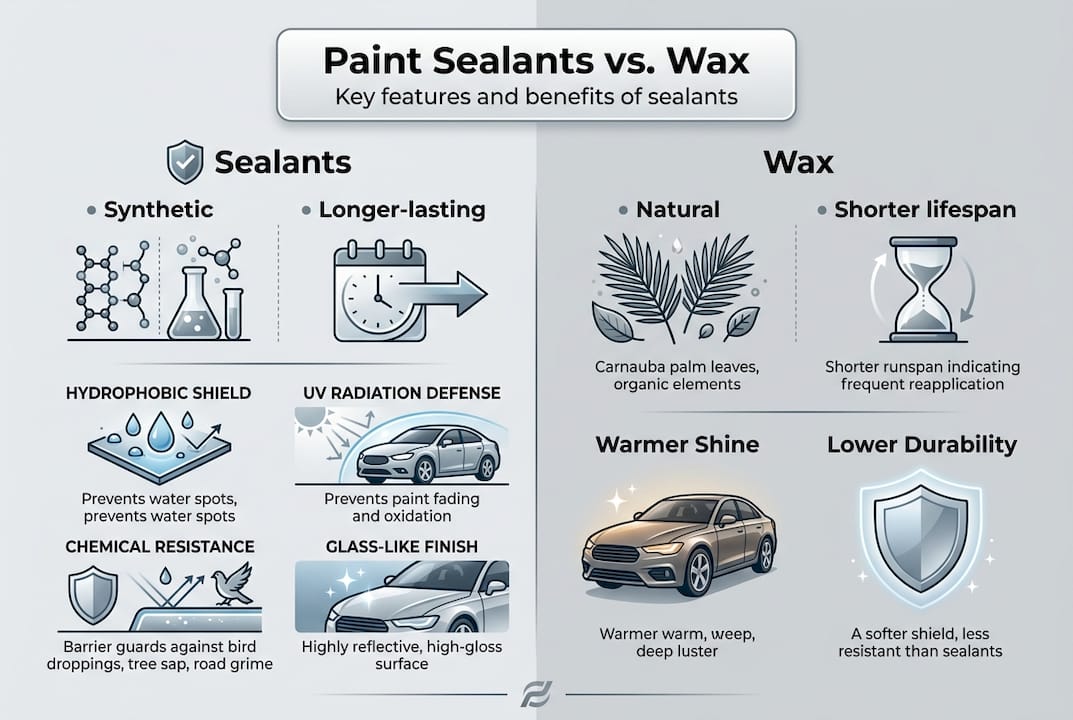
The main ingredient in most sealants is a group of synthetic polymers (long-chain molecules engineered for adhesion and durability). When applied to clean paint, these polymers cross-link together, creating a tight, smooth layer that repels water, blocks UV rays, and resists common contaminants like road grime and bird droppings. The result is a surface that stays cleaner longer and requires less effort to maintain.
Sealants also handle heat much better than wax. Sealants resist heat up to 500°F, which matters when your dark-colored car bakes in a South Jersey parking lot all summer. Wax starts to break down well below that threshold, which explains why wax jobs fade so quickly in July and August around here.
Here’s what makes sealants stand out compared to wax:
- Longer protection: Sealants last 4 to 6 months versus 4 to 8 weeks for wax
- Better UV resistance: Polymers actively block ultraviolet rays that fade paint
- Heat tolerance: Holds up under high temperatures where wax softens and breaks down
- Water repellency: Hydrophobic surface causes water to bead and roll off
- Easier maintenance: Bonded layer means dirt doesn’t stick as easily
The application process follows a specific order. First, the paint must be completely clean and decontaminated. Any oils, wax residue, or embedded contaminants will prevent the sealant from bonding properly. Then the sealant is applied in thin, even layers using an applicator pad, allowed to cure (harden), and buffed off. Most sealants cure in 20 to 60 minutes depending on the product and temperature.
Pro Tip: Skipping the decontamination step is the single biggest mistake people make before applying sealant. Clay bar treatment removes embedded particles that washing alone can’t reach, and that clean surface is what lets the sealant bond fully. Check out paint protection examples to see the difference proper prep makes on real vehicles.
Benefits of paint sealants for South Jersey car owners
Understanding what sealants do, let’s see why they’re especially valuable for South Jersey drivers.
South Jersey throws a lot at your car’s paint. Summer brings intense UV exposure and heat radiating off asphalt. Winter means road salt, sand, and slush that eat into unprotected clear coats. Spring adds pollen and acid rain. Fall brings tree sap and falling debris. A standard wax job simply doesn’t hold up through all four seasons, but a paint sealant can cover you for the better part of a year with the right care.
Here are the biggest advantages sealants offer local drivers:
- UV protection: Blocks the rays that fade color and break down clear coat over time
- Salt resistance: Creates a barrier between road salt and your paint during winter months
- Acid rain defense: Polymer layer reduces the chance of acidic water etching into clear coat
- Extended shine: Sealants maintain gloss for up to 6 months, compared to a few weeks with wax
- Hydrophobic surface: Water beads up and carries contaminants away instead of sitting on paint
The shine factor alone is a big deal for drivers who care about their vehicle’s appearance. Wax gives a warmer, slightly yellowish glow that looks beautiful right after application. Sealants deliver a crisper, glass-like shine that holds its look far longer. For newer vehicles or freshly painted cars, that lasting gloss is worth a lot.
Maintenance also gets easier with a sealant in place. Dirt, pollen, and road film don’t bond as aggressively to the slick polymer surface. That means your weekly wash takes less time and effort, and you’re less likely to cause swirl marks by scrubbing hard at stuck-on grime.
It’s worth being clear about what sealants don’t do. They are not scratch-proof. A rock chip or key scratch will still cut through the sealant and into your paint. They also won’t hold up forever under neglect. Skipping washes or leaving acidic bird droppings sitting on your hood will shorten the sealant’s life considerably. Pair your sealant application with solid detailing maintenance tips to get the full protection period.
Paint sealants vs. ceramic coatings: What’s the difference?
Having seen the benefits, let’s compare paint sealants to other major options like ceramic coatings.
If you’ve been researching paint protection, you’ve probably come across ceramic coatings. They’re often marketed as the ultimate solution, and in some ways they are. But that doesn’t automatically make them the right choice for every South Jersey vehicle owner.
Here’s a side-by-side look at the two options:
| Feature | Paint sealant | Ceramic coating |
|---|---|---|
| Protection lifespan | 4 to 6 months | 2 to 5 years |
| Cost | Lower | Higher |
| Application difficulty | Moderate (DIY-friendly) | High (professional recommended) |
| Scratch resistance | Minor only | Better, but not scratch-proof |
| UV protection | Good | Excellent |
| Chemical resistance | Moderate | High |
| Ideal for | Seasonal care, leased cars | Long-term ownership |
The core trade-off is straightforward. Ceramic coatings last years while sealants last months, but ceramics cost significantly more and require more careful application. A poorly applied ceramic coating can be difficult and expensive to correct, which is why professional installation is strongly recommended.
Sealants make more sense in several common situations:
- You lease your vehicle and don’t plan to keep it long-term
- Your budget doesn’t allow for a full ceramic treatment right now
- You want to protect a seasonal vehicle between active months
- You’re testing paint protection options before committing to ceramics
- You drive a high-mileage daily driver where paint perfection isn’t the priority
Ceramic coatings win when you own your vehicle long-term and want maximum protection with minimal reapplication. For a deeper look at how these two options stack up, the wax vs ceramic coating comparison covers the full picture.
Sealants are not as permanent as ceramic (months vs. years), but they offer real, meaningful protection at a fraction of the investment. For many South Jersey drivers, that’s exactly what they need.
Pro Tip: If you’re unsure which option fits your situation, start with a sealant. It gives you a chance to experience the benefits of polymer paint protection without the upfront cost or commitment of a ceramic coating.
Maximizing paint sealant performance: Care and pitfalls
Once you’ve chosen a paint sealant, ongoing care is key to keeping that shine and protection.
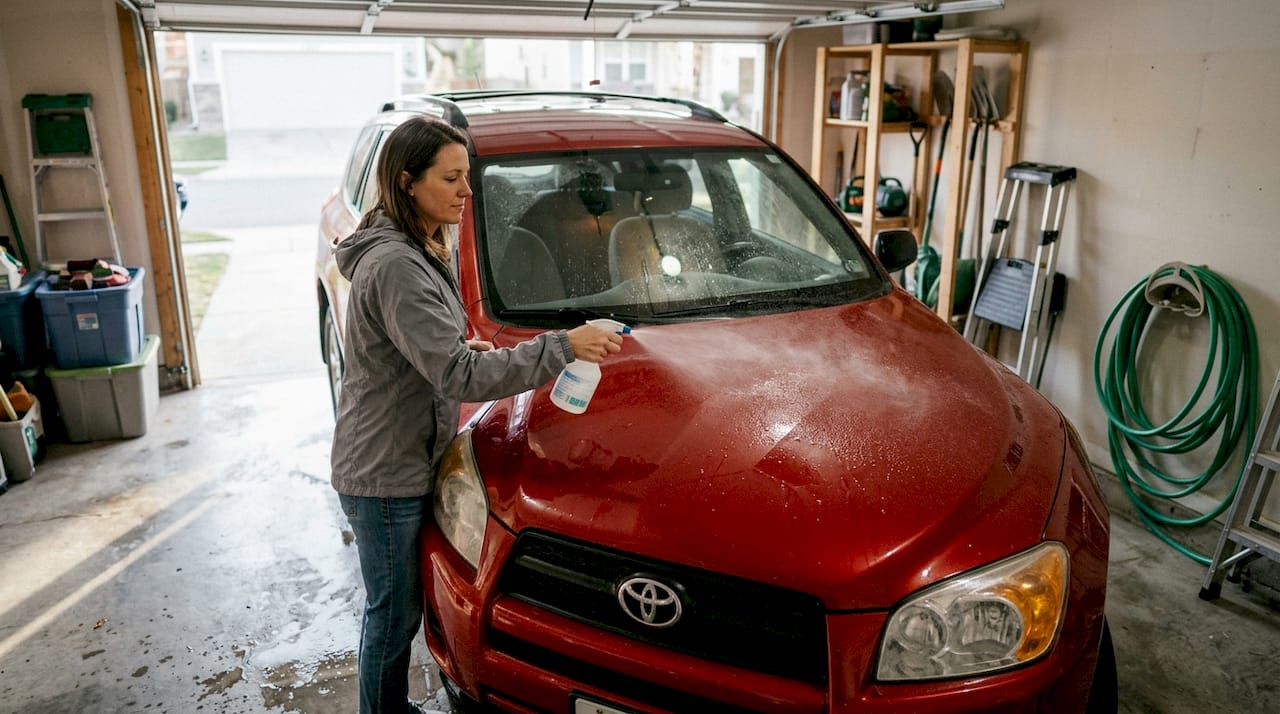
The sealant does the heavy lifting, but you still have responsibilities. A good care routine will push your sealant to its maximum lifespan. Neglect will cut it short by months.
Here’s what a solid maintenance routine looks like:
- Wash weekly: Regular washing prevents contaminants from building up and breaking down the sealant layer
- Use pH-neutral soap: Harsh detergents strip the polymer bonds faster than normal wear
- Rinse thoroughly: Soap residue left on the surface can dull the finish over time
- Dry with a microfiber towel: Rough materials cause micro-scratches that degrade the sealant surface
- Avoid automatic car washes: Spinning brushes are abrasive and can weaken the sealant prematurely
Common mistakes that shorten sealant life:
| Mistake | Effect on sealant |
|---|---|
| Skipping pre-application prep | Poor bonding, early failure |
| Using dish soap for washing | Strips polymer layer |
| Leaving bird droppings on paint | Acid etches through sealant |
| Infrequent washing | Contaminants degrade the layer |
| Applying over oily or dirty paint | Sealant won’t cure properly |
The prep stage before application deserves special attention. Sealants can fail if oils or residue remain on the surface, and acidic contaminants will etch through even a properly applied sealant if left too long. Most DIYers skip or rush the prep, then wonder why their sealant didn’t last.
“The sealant is only as good as the surface underneath it. Prep isn’t optional. It’s the whole job.”
Pro Tip: Every 6 to 8 weeks, check your paint in direct sunlight by looking at how water behaves on the surface. If it sheets off instead of beading up into tight droplets, your sealant is thinning out and it’s time to reapply. This quick check takes two minutes and saves you from going weeks with zero protection.
Keeping up with detailing maintenance tips and reviewing paint protection examples from real vehicles will help you understand what good sealant performance actually looks like versus early wear.
Why most car owners underestimate paint sealants
Beyond general advice, here’s our perspective from years of detailing cars in South Jersey.
We’ve detailed hundreds of vehicles across South Jersey, and the pattern is consistent. Car owners either skip paint protection entirely or assume any product they grab off a shelf will do the job. The result is the same either way: paint that fades, oxidizes, and loses its depth years before it should.
The biggest misconception we see is that all coatings are essentially equal. People treat sealants, wax, and ceramics as interchangeable. They’re not. Each has a specific role, a specific lifespan, and a specific level of prep required to work properly.
Sealants are actually the most underrated option in the lineup. They’re flexible enough for leased vehicles, seasonal cars, and drivers who want solid protection without a major investment. But they only deliver on that promise when the prep work is done right and the maintenance is consistent. Neglect is the number one cause of early sealant failure, not product quality.
If you’re unsure where your car stands, looking at paint protection examples from comparable vehicles gives you a realistic baseline. Protection is not one-size-fits-all, and the right choice depends on how long you own your car, how often you wash it, and what South Jersey conditions it faces daily.
Discover professional detailing and paint protection solutions
If reading this made you realize your car’s paint deserves more than a quick wax job, you’re not alone. Most drivers in South Jersey are driving around with less protection than they think.

At CDC Auto Detailing, we specialize in professional paint sealant application, ceramic coatings, and paint protection film for vehicle owners across South Jersey. Our mobile service comes directly to you, so there’s no drop-off, no waiting, and no hassle. We handle the prep work that makes the difference between a sealant that lasts and one that fails early. Explore your premium paint protection options or take two minutes to book mobile detailing and schedule a visit that works for you.
Frequently asked questions
How long does paint sealant last on a car?
Paint sealant typically lasts 4 to 6 months, though sun exposure, washing frequency, and neglected maintenance can all shorten that window. Sealants resist heat up to 500°F but degrade faster without regular care.
Is paint sealant better than regular wax?
Yes, for most drivers. Sealants bond more durably to clear coat, resist heat better, and last significantly longer than traditional wax, especially in high-UV or high-salt environments like South Jersey.
Do paint sealants protect against scratches?
Sealants offer only minor scratch resistance and are not scratch-proof. Acidic contaminants and neglect can still damage paint through the sealant layer, especially if the protective polymer has thinned out.
Can paint sealant be applied at home or should I use a professional?
Home application is possible with the right products and prep, but sealants fail with poor prep more often than not. Professional detailing ensures the surface is truly clean and ready, which is what determines whether the sealant bonds correctly and lasts.