
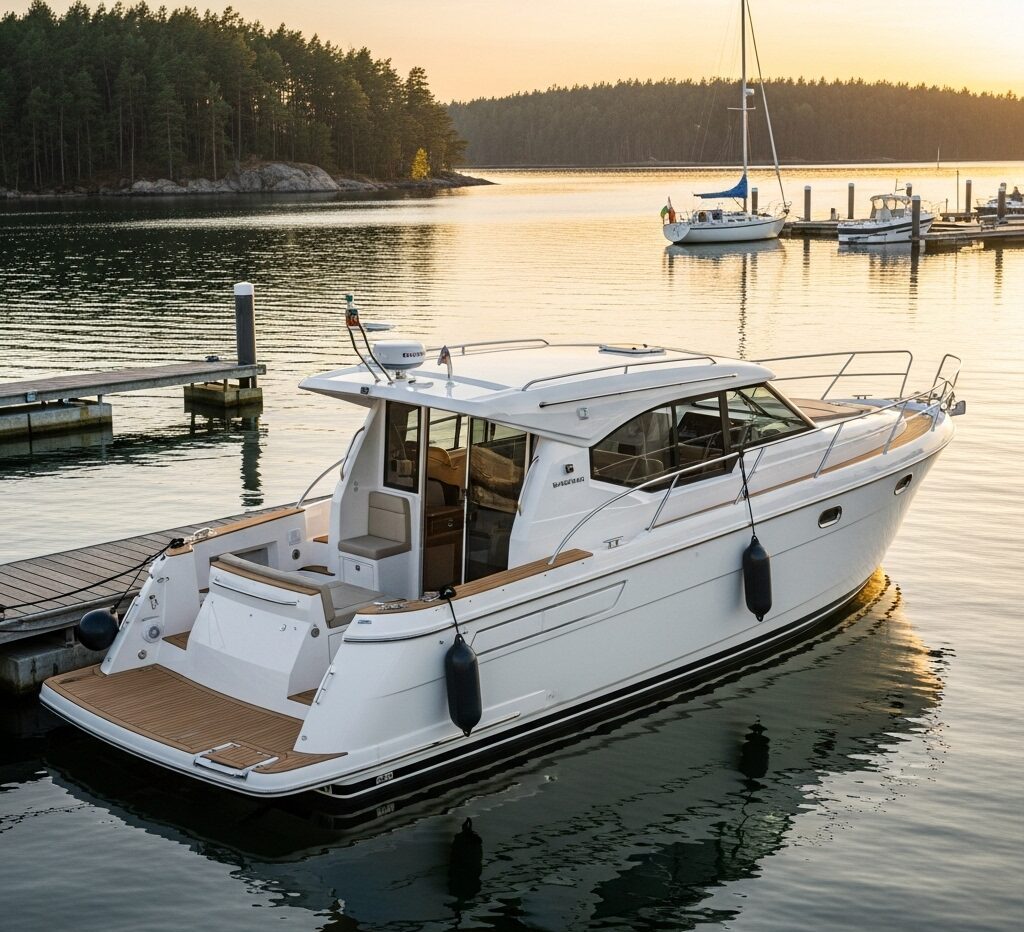
If your boat’s gelcoat looks chalky, the vinyl feels brittle, or a green film is creeping up the hull, your vessel is telling you something important. South Jersey boat owners on the Delaware River and surrounding waterways face UV damage, humidity, algae, and mineral deposits year-round. Professional detailing reverses these problems before they become expensive repairs.
Why Boat Owners in Gloucester County, NJ Need to Pay Attention
New Jersey is one of the most active boating states in the country. According to the New Jersey Department of Environmental Protection, recreational boating continues to rise, with nearly a quarter-million registered vessels operating across the state’s rivers, lakes, bays, and coastal waters. That is a significant investment sitting in a driveway or at a marina slip, and every one of those boats is fighting a losing battle against the environment if it is not properly maintained.
For boaters in Pitman, Gloucester County, and the broader South Jersey region, the Delaware River presents conditions that differ from pure saltwater exposure but are no less damaging. UV radiation, brackish water, mineral deposits, high summer humidity, and organic growth from slow-moving river water all continuously attack gelcoat, vinyl, metal, and upholstery. Most national detailing guides focus exclusively on oceangoing vessels. That leaves river and inland lake boat owners without the hyper-local advice they actually need, and it leaves their hulls paying the price.
CDC Detailing LLC serves Pitman and the surrounding area from its in-shop location and through fully equipped mobile crews that reach marinas and driveways within a 25-minute radius. The team works on boats that have seen everything from long storage winters to full summer seasons on the river, and the signs they encounter most often are almost always the same.
What Are the Signs That Your Boat Needs Detailing?
Most boat owners notice the obvious things first: a dull finish, some staining, maybe a smell in the cabin. But the signs that really matter go deeper than surface-level grime. Here are the seven most telling indicators that your vessel is overdue for professional attention.
1. Chalky or Faded Gelcoat
Run your hand along the hull. If it comes away with a white, powdery residue, your gelcoat is oxidizing. Oxidation is what happens when UV radiation breaks down the resin in the gelcoat layer, leaving the surface dull, chalky, and increasingly porous. In South Jersey summers, with intense UV and reflective water amplifying sun exposure, this process accelerates faster than most owners expect. Light oxidation can be corrected with a polish and wax. Heavy oxidation requires multi-stage compounding. If it is left untreated long enough, the gelcoat becomes too thin to restore without a full repaint, a cost that runs into the thousands.
2. Stubborn Water Spots and Mineral Deposits
Delaware River water carries dissolved minerals that leave behind white, hazy spots when droplets evaporate on the hull, glass, and metal surfaces. Over time these deposits etch into the gelcoat and cannot be removed with a garden hose. They require a chemical decontamination step followed by polishing to restore clarity. If your boat looks clean from ten feet away but dull and spotted up close, mineral etching is almost certainly the cause.
3. Vinyl That Looks Dry, Cracked, or Faded
Boat seats and upholstery are made to handle moisture, but they are not immune to UV degradation or mold. When vinyl starts to feel stiff, shows surface cracking, or fades from a rich color to a washed-out one, it is losing its protective plasticizers. A professional cleaning and conditioning treatment can restore flexibility and color while applying a UV protectant that slows future fading. Ignore it long enough and the vinyl tears, at which point you are replacing cushions rather than conditioning them.
4. Algae, Mildew, or Green Film on the Hull
River boaters in Gloucester County see this more than coastal boaters. Slow-moving water, shade from marina docks, and summer humidity create ideal conditions for algae and mildew to colonize the hull’s waterline and any surface that stays damp. Beyond being unsightly, organic growth embeds itself into the gelcoat’s pores and creates a surface that attracts more contamination. A thorough chemical wash and decontamination treatment removes the growth and closes those pores with a protective coating so the cycle does not restart immediately.
5. Metal Fittings That Show Rust Streaks or Corrosion
Stainless steel cleats, railings, and hardware are corrosion-resistant, but they are not corrosion-proof. When the protective oxide layer on stainless steel breaks down, rust blooms appear and stain the surrounding gelcoat with orange or brown streaks. Salt spray accelerates this on coastal boats, but river minerals and humidity do similar work on a slower timeline. Metal polishing, followed by a sealant application, removes existing oxidation and buys the fittings significantly more time before the problem returns.
6. Interior Odors, Staining, or Grimy Upholstery
The interior of a boat takes punishment that no car interior endures: wet swimsuits, fish, bait, spilled drinks, and months of closed-up storage. Mold and mildew can colonize carpet, storage compartments, and under-seat areas without ever being visible until the smell becomes impossible to ignore. A proper interior detail includes vacuuming, steam cleaning or shampooing of soft surfaces, vinyl conditioning, and odor treatment. If your boat smells musty the moment you open the hatch, that odor is biological contamination, not just stale air.
7. It Has Been More Than a Season Since the Last Detail
This one catches people off guard. There does not have to be a dramatic visible problem for a boat to need detailing. Protective wax and sealant coatings wear off over a full season of sun, water, and use. Once that protection is gone, the gelcoat is exposed to everything. A preventive detail every season maintains the protective barrier before deterioration begins, which is always cheaper than restoring a surface that has been unprotected for multiple years.
How Often Should You Detail a Boat?
For most recreational boats used regularly on South Jersey waterways, a full detail once per season is the minimum responsible standard. Boats stored outdoors, used frequently, or kept at a marina slip benefit from more frequent maintenance washes in between full details. Pre-storage detailing in the fall is especially important because contaminants like water spots, algae residue, bird droppings, and organic film can etch into surfaces over a long winter storage period. A full exterior and interior detail before winterizing, paired with a fresh coat of wax or sealant, protects the boat through the off-season and means it is ready to launch in the spring without emergency restoration work.
Boat detailing in this region should follow the same seasonal rhythm as the boating calendar: a spring launch detail to remove winter storage damage, mid-season maintenance washes as needed, and a fall pre-storage detail before the boat goes away for the winter. That three-point schedule keeps most vessels in excellent condition year after year.
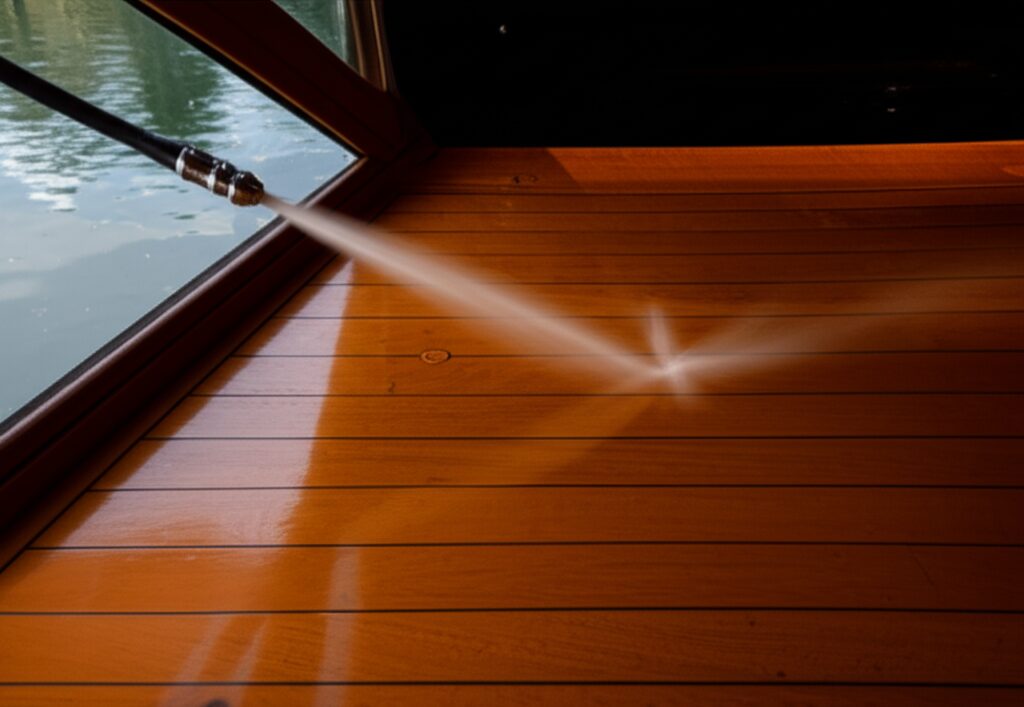
How Much Does It Cost to Detail a Boat?
Pricing in the marine detailing industry is calculated per linear foot, which accounts for the fact that a 20-foot boat and a 35-foot boat represent dramatically different amounts of surface area and labor. The table below reflects national ranges and local South Jersey rates based on available market data.
| Service Tier | National Range (per foot) | South NJ Market Rate (per foot) |
|---|---|---|
| Basic Wash and Spray Wax | $7 to $10 | $10 |
| Full Detail (Interior and Exterior) | $10 to $25 | $12 to $25 |
| Buff, Polish, and Wax / Mild Oxidation | $15 to $30 | $15+ |
| Heavy Oxidation Compounding | $25 to $70 | $25+ |
| Ceramic Coating Application | $40 to $125 | $75 to $125 |
Coastal and near-coastal markets like South Jersey typically run 10 to 20 percent above purely inland pricing, reflecting the heavier contamination loads and more demanding surface conditions. On a 25-foot vessel, a basic exterior cleaning might cost $250 to $600, while a full interior and exterior restoration on a neglected boat can exceed $3,000. The strongest cost lever is surface condition, specifically oxidation severity and how many correction stages the gelcoat requires. Catching deterioration early is always less expensive than correcting it after it has progressed.
Is Boat Detailing Worth It? The Resale and Safety Case
There is a financial argument for professional detailing that most boat owners do not fully consider. A professional detail before listing a boat for sale typically costs between $800 and $3,000 depending on size and condition, but boats that present well routinely sell 30 to 50 percent faster and return $3,000 to $10,000 more in sale price than comparable vessels that show visible neglect. The gelcoat, vinyl, and metal condition is one of the first things a serious buyer evaluates, and a boat that looks neglected loses negotiating leverage immediately. Regular detailing over ownership builds a maintained, presentable vessel that commands full market value at resale.
There is also a safety dimension that rarely gets discussed in detailing content. The U.S. Coast Guard Office of Boating Safety reported 3,844 recreational boating accidents in 2023, resulting in 564 deaths, 2,126 injuries, and over $63 million in property damage. While accidents have many causes, a properly detailed vessel contributes to safer operation: clean, non-hazy windshields improve visibility, non-slippery cleaned decks reduce falls, and corrosion-free hardware ensures cleats, railings, and fittings hold under load. Detailing is maintenance, and maintenance is safety.
The National Marine Manufacturers Association estimates over 11.8 million registered and documented boats in the U.S., with an additional 3.6 million non-registered vessels on the water. That scale of investment in recreational boating underscores how widespread the need for proper care actually is. These are not cheap assets to neglect.
Why Using Car Products on Your Boat Is a Costly Mistake
One of the most common and damaging errors DIY boat owners make is reaching for car cleaning products out of convenience. Car soaps, waxes, and polishes are formulated for painted automotive finishes, not marine gelcoat. Using them on a boat strips the gelcoat of its protective properties, leaves it more vulnerable to oxidation, and can void manufacturer warranties on newer vessels. Marine detailing products are pH-balanced and formulated specifically for fiberglass, vinyl, and gel surfaces. This is one of the most concrete reasons why hiring a professional who works exclusively with marine surfaces produces results that protect your investment rather than accelerating its decline.
What to Expect From a Professional Marine Detail
A proper boat detail is not a wash-down. It is a comprehensive, inside-and-out reconditioning of every surface on the vessel. Exterior work covers decontamination of the hull, oxidation correction and polishing of the gelcoat, cleaning and polishing of metal fittings, and application of a protective wax, sealant, or ceramic coating. Interior work covers vacuuming, deep cleaning of soft surfaces, vinyl cleaning and conditioning, window and glass polishing, and odor treatment. The result is a vessel that looks significantly better, is protected against the next season of deterioration, and has had its resale value actively preserved.
To schedule service or ask about what your specific boat needs, contact us directly and get a clear, honest assessment before any work begins.
Frequently Asked Questions
What are the signs that your boat needs detailing?
The clearest signs are chalky or faded gelcoat from oxidation, stubborn water spots or mineral deposits, cracked or faded vinyl, algae or mildew growth on the hull, rust streaks from metal fittings, interior odors, and visible staining. If any one of these is present, professional detailing will address it and prevent the damage from progressing to a point where repair, rather than restoration, becomes necessary.
How often should you detail a boat?
Most recreational boats benefit from a full professional detail at least once per season. Boats stored outdoors, kept at marina slips, or used heavily may need more frequent maintenance washes between full details. A pre-storage fall detail and a spring launch detail are the two most important appointments for South Jersey boat owners dealing with seasonal storage and regional weather conditions.
What is the difference between boat washing and boat detailing?
A wash removes loose surface dirt and is a basic maintenance step. Detailing goes far deeper: it includes chemical decontamination, oxidation correction through compounding and polishing, vinyl cleaning and conditioning, metal polishing, glass clarification, and application of a long-term protective coating. Washing maintains a boat that is already in good condition. Detailing restores and protects one that needs more than surface cleaning.
Can detailing remove oxidation from a boat?
Yes, in most cases, professional detailing can remove oxidation. Light to moderate oxidation is addressed through a polish and wax process. Heavy oxidation requires multi-stage machine compounding before polishing and sealing. Severely oxidized gelcoat that has been neglected for many years may be too thin to safely compound and could require professional evaluation to determine whether restoration or repainting is the correct path forward.
Should I get my boat detailed before selling it?
Absolutely. A professionally detailed boat sells faster and commands a meaningfully higher asking price than one showing visible neglect. Buyers inspect gelcoat condition, vinyl, upholstery, and metal hardware closely. A clean, polished, well-maintained presentation signals responsible ownership and removes buyer hesitation. The return on a pre-sale detail consistently exceeds its cost, often by a significant margin, making it one of the highest-return investments a seller can make before listing.
How do I know if my boat’s gelcoat is oxidized?
Rub a dark cloth firmly across the hull surface. If a white, chalky residue transfers onto the cloth, the gelcoat is oxidizing. Visual signs include a dull, hazy appearance instead of a glossy shine, and a surface that looks flat even after washing. Mild oxidation feels slightly rough. Heavy oxidation leaves the surface looking chalky white and may cause it to feel dry or powdery to the touch.
Your boat represents a significant investment, and Gloucester County’s combination of UV intensity, summer humidity, and river-area water conditions means that investment faces real, ongoing threats every season it is on the water. The difference between a vessel that holds its value and one that becomes a costly restoration project often comes down to whether its owner acted on the early signs or waited. Whether your boat shows one warning sign or six, now is the right time to schedule a professional assessment. Find the team at CDC Detailing LLC on Google, check their work, read their reviews, and book a detail before the next season gets away from you. Your hull will thank you, and so will your wallet when it is time to sell.
Ready to protect your investment? Visit CDC Detailing LLC to find the shop location and get directions, or reach out today to schedule your boat’s next professional detail in Pitman, NJ.