
TL;DR:
- Home window tint UV protection blocks up to 99.9% of UVA and UVB rays entering through untreated glass.
- Professional films improve energy efficiency by reducing cooling costs and protecting interiors from fading.
Home window tint UV protection is a window film technology that blocks up to 99.9% of UVA and UVB radiation entering your home through untreated glass. The Skin Cancer Foundation endorses films that meet this standard, which makes residential window tinting one of the most practical upgrades a homeowner or renter can make. Beyond protecting your skin, these films prevent interior fading, cut cooling costs, and maintain natural daylight. Understanding the film types, installation process, and real limitations will help you choose the right solution for your home.
What types of window films offer the best UV protection for homes?
Window films fall into four main categories, and each handles UV blocking differently. Knowing the difference saves you money and prevents a mismatch between your windows and your film.
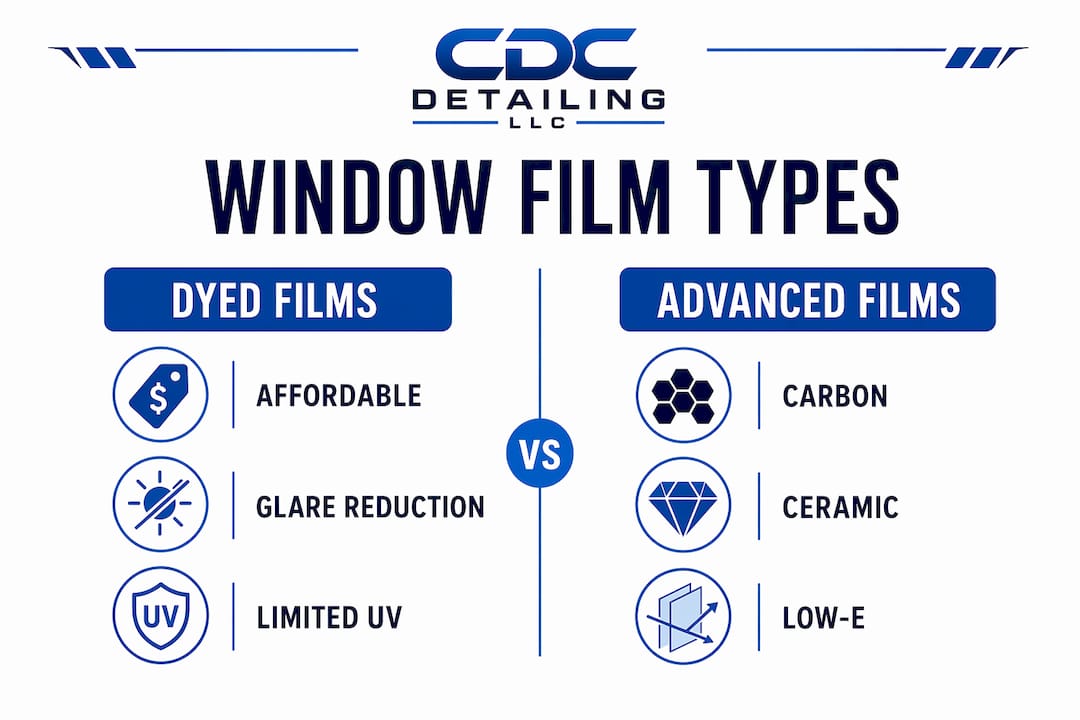
Dyed films
Dyed films are the most affordable entry point. They absorb some solar energy and reduce glare, but they offer limited UV rejection compared to higher-grade options. Their lifespan is shorter, typically under 10 years, and they fade over time. For homeowners who want basic UV blocking on a tight budget, dyed films are a starting point, not a long-term solution.
Carbon films
Carbon films perform better than dyed films on heat rejection and UV blocking. They do not fade, and they hold their color over time. Carbon films are a solid mid-range choice for renters or homeowners who want meaningful protection without paying for the top tier.
Ceramic and nano-ceramic films
Ceramic films block up to 99.9% UV and reject up to 79% of solar heat while maintaining visible light transmission near 70%. That combination is the key advantage. You get maximum UV and heat rejection without darkening your rooms. Nano-ceramic films use microscopic layers of ceramic particles to achieve this invisibly. The Skin Cancer Foundation recommends films in this performance range for occupant health protection.
Low-E films
Low-E (low emissivity) films add a metallic layer that reflects heat in both directions. They work well in climates with both hot summers and cold winters, reducing heat loss in winter and solar gain in summer. They sit at the top of the cost range.
Pro Tip: If you want maximum UV protection without sacrificing natural light, nano-ceramic film is the clear winner. It performs at the same level as much darker films while keeping your rooms bright.
The cost breakdown for professional installation in 2026 reflects these performance tiers:
| Film type | Cost per sq ft | UV rejection | Best for |
|---|---|---|---|
| Standard solar control | $6–$9 | Up to 99% | Budget-conscious homeowners |
| Ceramic / spectrally selective | $10–$14 | Up to 99.9% | Maximum UV and heat performance |
| Low-E energy film | $11–$15 | Up to 99.9% | Year-round climate control |
These cost ranges for 2026 reflect professional installation with manufacturer-backed films. DIY kits cost less upfront but lack the warranty coverage and compatibility testing that protect your windows long term. For a deeper look at how ceramic and carbon films compare on UV and heat performance, the carbon vs. ceramic tint breakdown at Cdcautodetailing covers the key differences clearly.
How does window tinting improve home energy efficiency and comfort?
Residential window films reduce cooling costs by 25–30% annually by rejecting solar heat and infrared radiation while keeping daylight intact. That is a meaningful reduction for any home with significant south or west-facing glass exposure.
The mechanism is straightforward. Films filter the solar spectrum selectively. They block infrared radiation, which carries heat, and ultraviolet radiation, which causes fading and skin damage, while allowing visible light to pass through. High-performance films can reject up to 78% of solar heat and up to 97% of infrared light, with total solar energy rejection reaching 60%.
The comfort benefits go beyond temperature. Glare reduction makes rooms more usable during peak sun hours without requiring blinds or curtains. Homeowners with home offices or living rooms facing afternoon sun notice the difference immediately.
UV-related fading is responsible for about 40% of fading damage to indoor furnishings. Hardwood floors, upholstered furniture, artwork, and rugs all degrade faster when exposed to unfiltered UV light through standard glass. A quality window film UV filter extends the life of these items significantly.
The energy savings work in both directions. In winter, certain film types reduce heat loss through the glass, lowering heating costs. The combination of UV blocking, heat rejection, and glare control also reduces the load on your HVAC system year-round. For homeowners looking at the full picture of energy-saving window tint benefits, the cost reduction compounds across seasons.
What is the typical process and cost for professional home window tint installation?
Professional installation follows a clear sequence. Knowing what to expect helps you prepare your home and ask the right questions before signing a contract.
-
In-home assessment. A professional installer evaluates your window types, glass construction, and sun exposure. This step determines which films are compatible with your specific windows and which will deliver the best UV and heat performance for your orientation.
-
Window compatibility check. Not all films work on all glass types. Tempered glass, double-pane units, and low-E glass already installed each require specific film selections. Skipping this step risks thermal stress damage.
-
Surface preparation. The installer cleans the interior glass surface thoroughly. Any contamination under the film causes bubbles and reduces adhesion over time.
-
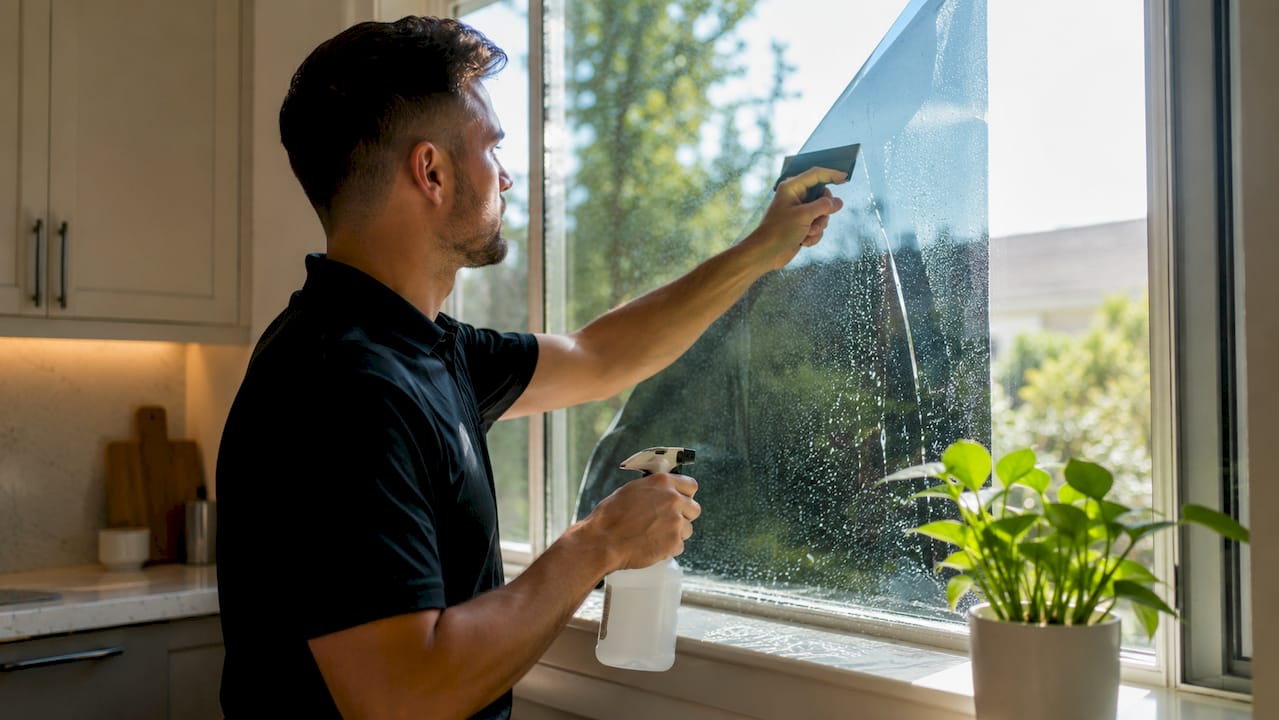
Film application. Professional films are applied to the interior side of the glass. The process for a standard home typically takes one to two days depending on the number of windows and their size.
-
Curing period. Films require a curing period after installation, usually a few days to a few weeks depending on the film type and climate. During this time, minor haziness or small water bubbles are normal and resolve on their own.
The payback period for window film ranges from 2–5 years, which is significantly shorter than full window replacement. Film lifespan runs from 10–25 years depending on film quality and installation. Lifetime warranties are common with professional-grade films, which is a strong argument for choosing a certified installer over a DIY approach.
Pro Tip: Get your installation done in spring or fall. Moderate temperatures help the film cure evenly and reduce the risk of adhesion issues caused by extreme heat or cold during the curing window.
Window film is also a practical retrofit alternative to full window replacement. You preserve your existing frames and glass while upgrading the performance of your windows at a fraction of the replacement cost.
Are there important considerations homeowners should know before buying?
Several factors can affect whether your window film performs as expected or causes problems. These are not edge cases. They come up regularly in professional assessments.
Glass type compatibility. Applying incompatible film to tempered or double-pane glass can cause thermal shock and cracking. The heat absorbed by the film creates stress in the glass if the film is not rated for that glass type. A professional installer tests compatibility before recommending a product.
UV protection is not the same as tint darkness. This is the most common misconception homeowners carry into the buying process. Nano-ceramic films achieve 99.9% UV rejection with roughly 70% visible light transmission. A very dark film does not automatically block more UV than a lighter one. The UV blocking capability is built into the film’s chemical or ceramic layers, not its darkness.
HOA and building rules. Residential window tinting has no federal visible light transmission regulations the way automotive tinting does. However, homeowners associations may have appearance guidelines that restrict reflective or very dark films on exterior-facing windows. Check your HOA rules before ordering.
Manufacturer warranties matter. Professional-grade films come with manufacturer warranties that cover peeling, bubbling, and color change. DIY films from general retail sources typically lack this coverage and have not been tested for compatibility with specific glass types.
Renter considerations. Renters can often install window films since the application is interior-side and removable. Check your lease and confirm with your landlord before installation. Most landlords accept clear or lightly tinted films without objection. For a broader view of how UV protection technology works across different film applications, the UV protection in window films guide at Cdcautodetailing explains the underlying technology clearly.
Key Takeaways
Home window tint UV protection delivers its best results when you match the right film type to your glass, budget, and climate, and have it installed by a certified professional.
| Point | Details |
|---|---|
| Ceramic films lead on performance | Nano-ceramic films block up to 99.9% UV while keeping visible light near 70%. |
| UV protection is not about darkness | Film chemistry, not tint shade, determines UV and heat rejection capability. |
| Professional installation pays back | Payback periods run 2–5 years; film lifespan reaches 10–25 years with warranties. |
| Cooling costs drop measurably | Quality films reduce annual cooling costs by 25–30% through solar heat rejection. |
| Glass compatibility is non-negotiable | Incompatible films on tempered or double-pane glass can cause cracking and void warranties. |
What I’ve learned after years of working with window films
Most homeowners come in focused on the wrong question. They ask how dark the tint will be. The better question is how much UV and infrared the film rejects at a given visible light level. Those are two completely different specs, and confusing them leads to bad purchases.
I have seen homeowners install very dark films thinking they were getting maximum protection, only to end up with dim rooms and mediocre UV rejection. I have also seen nearly clear nano-ceramic films outperform them on every measurable metric. The film industry has moved well past the idea that darkness equals protection. If your installer cannot explain the difference between visible light transmission and total solar energy rejection, find a different installer.
The other thing I tell every homeowner: do not skip the glass compatibility check. It is not a formality. Thermal shock damage from an incompatible film is real, and it is not covered by most home insurance policies. A five-minute compatibility assessment prevents a very expensive mistake.
Maintenance is simple once the film is installed. Clean with a soft cloth and a mild, ammonia-free cleaner. Avoid abrasive pads. Most professional films hold their performance for well over a decade with basic care. The combination of UV blocking, heat rejection, and glare control makes residential window film one of the highest-return upgrades you can make to a home without touching the structure.
— Charles
Window tinting expertise from Cdcautodetailing
Cdcautodetailing brings the same precision it applies to ceramic coatings and paint protection film to the world of window tinting. Whether you are protecting your vehicle or your home, the film technology and installation standards overlap more than most people realize.

The complete window tinting guide at Cdcautodetailing covers film types, UV rejection specs, and what to expect from a professional installation. If you are weighing the benefits of ceramic coating alongside UV-blocking window film for your vehicle, the ceramic coating service page explains how these protective layers work together. Cdcautodetailing serves South Jersey homeowners and vehicle owners with professional-grade results and manufacturer-backed warranties on every job.
FAQ
How much UV does home window film actually block?
High-quality residential window films block up to 99.9% of UVA and UVB radiation. Films endorsed by the Skin Cancer Foundation meet a minimum 99% UV rejection threshold in the 300nm–380nm range.
Does darker window tint mean better UV protection?
No. UV protection comes from the film’s chemical or ceramic composition, not its darkness. Nano-ceramic films achieve 99.9% UV rejection at roughly 70% visible light transmission, which is nearly clear.
How long does residential window film last?
Professional window films last 10–25 years depending on film quality and installation. Most professional-grade films include manufacturer warranties covering peeling, bubbling, and color degradation.
Can renters install window film without damaging the glass?
Most residential window films apply to the interior glass surface and are removable without damage. Renters should confirm with their landlord before installation, but interior-side films typically leave no permanent mark on the glass.
What is the payback period for home window tinting?
The payback period runs 2–5 years for most professional installations, driven by annual cooling cost reductions of 25–30%. That timeline is significantly shorter than full window replacement.