
TL;DR:
- Hydrophobic coatings bond at a molecular level, providing long-lasting water and contaminant resistance.
- They outperform wax and sealants in durability, hydrophobicity, UV, and chemical protection.
- Professional application ensures optimal results, but DIY options offer temporary hydrophobic benefits.
Most drivers assume a fresh coat of wax is all their car needs to stay protected. It feels smooth, looks shiny, and beads water after a rain. But wax fades in four to eight weeks, leaving your paint exposed to UV rays, road salt, and acid rain. Hydrophobic coatings are a different category entirely. They bond to your paint at a molecular level, repel water and contaminants far more aggressively, and can last years instead of weeks. This guide breaks down what hydrophobic coatings are, how they compare to wax and sealants, why they matter specifically for South Jersey drivers, and how to choose the right option for your car and budget.
Table of Contents
- What is hydrophobic coating? Understanding the basics
- Hydrophobic coatings vs. wax and sealants: Key differences
- Benefits of hydrophobic coatings for South Jersey vehicle owners
- Professional vs. DIY hydrophobic coatings: Choosing the right option
- Why hydrophobic coatings can be a game-changer—if you choose wisely
- Protect your investment with expert hydrophobic coating services
- Frequently asked questions
Key Takeaways
| Point | Details |
|---|---|
| Superior protection | Hydrophobic coatings significantly outperform wax and sealants for long-term vehicle protection. |
| Choose the right solution | DIY options work for short-term results, but professional coatings deliver years of durability. |
| Maximize car value | Investing in hydrophobic coatings helps maintain your car’s appearance and resale value longer. |
| Prep and maintenance count | Proper surface preparation and ongoing care are essential for optimal hydrophobic coating performance. |
What is hydrophobic coating? Understanding the basics
The word “hydrophobic” comes from the Greek roots for “water” and “fear.” In practical terms, a hydrophobic coating is a protective layer applied to your car’s surface that causes water to bead up and roll off rather than spread out and sit. That rolling action also carries away dirt, pollen, and road grime, which is exactly why coated cars stay cleaner between washes.
The science behind this is straightforward. Every surface has what’s called a contact angle, which is the angle at which a water droplet meets the surface. A flat, uncoated surface has a low contact angle, meaning water spreads out and clings. A hydrophobic coating raises that contact angle dramatically, often above 100 degrees, so water forms tight beads and slides off. Hydrophobic coatings work by creating a water-repellent surface that allows water to bead and roll off easily, taking contaminants with it.
For automotive use, hydrophobic coatings are applied as part of a professional detailing process or as a DIY product. They sit on top of or bond into your clear coat, creating a slick, low-friction barrier. Here are the main types you’ll encounter:
- Ceramic coatings: SiO2 (silicon dioxide) based formulas that chemically bond to the paint surface. These are the most durable and offer the best protection.
- SiO2 spray coatings: Entry-level versions of ceramic technology in spray form. Easier to apply but less durable.
- Hybrid coatings: A blend of ceramic and polymer technology, balancing ease of application with moderate durability.
- Polymer sealants: Synthetic formulas that sit on top of paint and offer better durability than wax but less than full ceramic.
Understanding why use protective coatings matters especially if you’re weighing the cost of professional treatment against long-term paint preservation. For fleet owners, ceramic coatings for fleets offer the same science scaled across multiple vehicles, cutting maintenance time and cost significantly.
Hydrophobic coatings vs. wax and sealants: Key differences
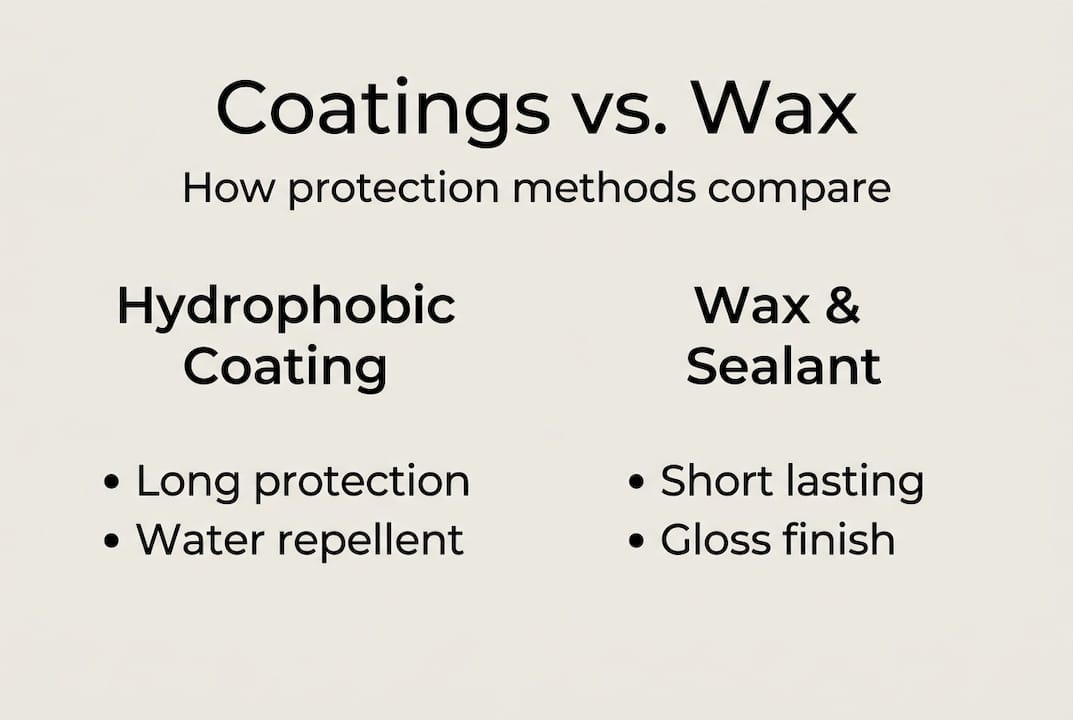
Wax has been around for decades, and it does a decent job of adding gloss and a thin layer of protection. But it’s made from natural carnauba or synthetic blends that sit on top of your paint without bonding to it. Heat, UV exposure, and car washes break it down fast. Most wax jobs need to be redone every four to eight weeks.
Paint sealants are a step up. They’re synthetic polymers that last longer than wax, typically four to eight months, and offer better resistance to the elements. But they still can’t match what a true hydrophobic ceramic coating delivers.
Here’s a direct comparison:
| Feature | Wax | Paint sealant | Ceramic hydrophobic coating |
|---|---|---|---|
| Durability | 4 to 8 weeks | 4 to 8 months | 2 to 10 years |
| Water contact angle | 70 to 80 degrees | 85 to 95 degrees | 110 to 150 degrees |
| UV resistance | Low | Moderate | High |
| Chemical resistance | Low | Moderate | High |
| Application | DIY friendly | DIY friendly | Best with professional |
| Cost | Low | Low to moderate | Moderate to high |
Ceramic hydrophobic coatings last years (2 to 10) versus wax (4 to 8 weeks) or sealants (4 to 8 months), and have superior hydrophobicity and chemical and UV resistance. That’s not a minor upgrade. That’s a fundamentally different level of protection.
“Thinking of wax and ceramic coatings as the same category is like comparing a raincoat to a waterproof shell jacket. Both shed some water, but only one was built for serious conditions.”
Pro Tip: If you’re considering a ceramic spray coating alternative before committing to a full professional treatment, use it as a bridge, not a replacement. It will give you a feel for hydrophobic performance without the long-term commitment.
The key takeaway is that professional ceramic coatings require proper surface prep and curing time, which is why the results are so much better than a spray-on product. Learn more about how ceramic coatings protect paint at a chemical level if you want to understand why the bonding process matters so much.
Benefits of hydrophobic coatings for South Jersey vehicle owners
South Jersey isn’t always easy on vehicles. Between coastal humidity, road salt from winter treatments, UV exposure during hot summers, and acid rain from regional air pollution, your car’s paint takes a beating year-round. A hydrophobic coating addresses all of these stressors in one application.
Here’s what South Jersey drivers gain from a quality hydrophobic coating:
- Less frequent washing: Rain and road spray bead off instead of bonding to the surface, so your car stays cleaner longer.
- Salt protection: Winter road salt is one of the most corrosive threats to paint and clear coat. A ceramic coating creates a barrier that prevents salt from etching into the surface.
- UV resistance: South Jersey summers are intense. UV rays break down unprotected clear coats over time, causing fading and oxidation. Hydrophobic coatings block UV penetration significantly.
- Acid rain defense: Acid rain leaves mineral deposits and etch marks on bare paint. A hydrophobic surface causes acidic water to roll off before it can sit and damage.
- Gloss retention: Coated vehicles hold their shine longer, which directly supports resale value.
- Simplified maintenance: Busy commuters and parents who don’t have time for weekly washes benefit from a surface that practically cleans itself.
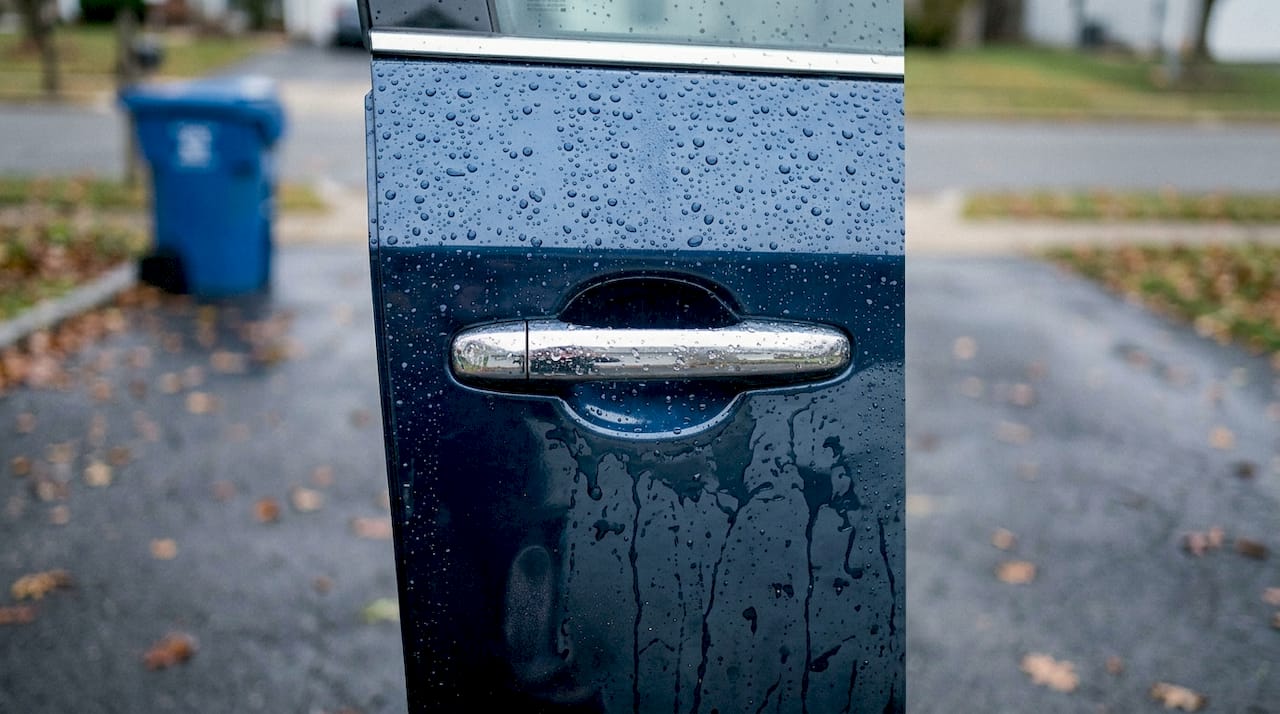
Hydrophobic coatings provide long-term protection against weather, road grime, and UV, preserving vehicle value over time. That’s not just about aesthetics. A well-maintained exterior can add hundreds to thousands of dollars to your car’s resale price.
For drivers who want to understand the full picture, how detailing prolongs car lifespan covers the broader relationship between regular care and long-term vehicle health. The bottom line is that a hydrophobic coating is one of the highest-return investments you can make in your vehicle’s future.
Professional vs. DIY hydrophobic coatings: Choosing the right option
Once you’re sold on the idea of hydrophobic protection, the next decision is how to get it applied. Both professional and DIY options exist, and each has a legitimate place depending on your goals and budget.
| Factor | Professional ceramic coating | DIY spray coating |
|---|---|---|
| Cost | $500 to $2,000+ | $20 to $80 |
| Durability | 2 to 10 years | 3 to 6 months |
| Application time | 1 to 2 days (with curing) | 30 to 60 minutes |
| Surface prep required | Full paint correction | Basic wash and dry |
| Results | Maximum gloss and protection | Moderate improvement |
Professional ceramic coatings offer better performance but require expert installation, while DIY sprays are more accessible but less durable. That trade-off is real and worth understanding before you spend money either way.
If you go the professional route, here’s what to expect:
- Paint decontamination: Clay bar treatment removes embedded contaminants from the surface.
- Paint correction: Any swirl marks, scratches, or oxidation are polished out before coating.
- Surface prep: The paint is wiped with an IPA (isopropyl alcohol) solution to remove oils.
- Coating application: The ceramic formula is applied panel by panel in a controlled environment.
- Curing time: The coating needs 24 to 48 hours to cure, during which the car should stay dry.
For a detailed walkthrough, applying ceramic coating explains the process step by step. You can also review the full ceramic coating application guide to understand what separates a great result from a mediocre one.
Pro Tip: Never apply a ceramic coating over contaminated or scratched paint. The coating locks in whatever is underneath it. If the surface isn’t perfect before application, the coating will preserve those imperfections for years.
DIY sprays are a fine starting point for drivers who want to test hydrophobic performance or protect a daily driver on a tight budget. Just go in with realistic expectations. You’ll get months of improved water beading and easier cleaning, but you won’t get the chemical resistance or longevity of a professional-grade product.
Why hydrophobic coatings can be a game-changer—if you choose wisely
Here’s something most detailing content won’t tell you: the coating itself is only half the equation. We’ve seen vehicles come in with professionally applied ceramic coatings that looked terrible within a year, not because the product failed, but because the prep work was rushed or the owner never maintained it properly.
Ceramic coatings are not set-it-and-forget-it armor. They amplify whatever surface they’re applied to. A car with swirl marks and oxidation that gets coated will have those flaws locked in and magnified. A car that gets coated without proper curing time will have adhesion problems. And a coated car that never gets a maintenance wash will lose its hydrophobic properties faster than expected.
The real value of hydrophobic protection comes from treating it as a system: professional prep, quality product, correct application, and consistent maintenance. When all four align, the results are genuinely impressive. You save time, protect your investment, and drive a car that looks better longer. Understanding auto detailing services explained helps you ask the right questions before committing to any coating service.
Don’t just shop for the cheapest coating. Shop for the best process.
Protect your investment with expert hydrophobic coating services
If you’ve made it this far, you already know that not all coatings are created equal and that professional application makes a measurable difference in how long your protection lasts.

At CDC Auto Detailing, we bring professional-grade ceramic coating service directly to South Jersey vehicle owners, with full paint prep, expert application, and results that hold up against everything the local climate throws at your car. For drivers who want the ultimate layer of defense, we also offer paint protection film as a complement to ceramic coatings, combining physical impact protection with hydrophobic performance. Ready to see what your car looks like fully protected? Reach out for a consultation and let’s build the right protection plan for your vehicle.
Frequently asked questions
How long does a hydrophobic coating last on my car?
A professionally applied ceramic hydrophobic coating can last from 2 to 10 years, while DIY sprays typically provide protection for a few months. Ceramic coatings last years compared to wax at 4 to 8 weeks or sealants at 4 to 8 months.
Is a hydrophobic coating better than wax for protecting my car’s paint?
Yes, hydrophobic coatings offer longer-lasting and more resistant protection than wax, which fades quickly and needs frequent reapplication. Superior hydrophobicity at 110 to 150 degrees versus wax’s fading water beading makes ceramic coatings the clear winner for paint preservation.
Can I apply hydrophobic coatings myself, or should I use a professional?
You can apply DIY sprays at home for temporary results, but professional installation is recommended for maximum durability and appearance. DIY sprays offer months of moderate protection, while professional coatings are built to last years.
Do hydrophobic coatings make my car completely scratch-proof?
No, while they offer better chemical and UV resistance, they do not make your car’s paint scratch-proof. Ceramic coatings are not scratch-proof, so pairing them with paint protection film is the best approach for full physical defense.