
TL;DR:
- Most vehicle owners treat stains as surface issues, but proper deep cleaning targets embedded fibers.
- Professional hot water extraction injects and immediately vacuums cleaning solution into upholstery, removing stains thoroughly.
You’ve scrubbed the coffee stain on your passenger seat three times, and it still looks like you lost a fight with a gas station cappuccino. That’s because most vehicle owners treat stain removal as a surface problem, when the real issue is buried in the fibers underneath. What is stain extraction, exactly? It’s a professional-grade deep cleaning process that injects hot water and cleaning solution directly into upholstery and carpet fibers, then immediately vacuums it all out — soils, residue, and dissolved contaminants included. It’s the difference between masking a problem and actually solving it.
Table of Contents
- Understanding stain extraction and how it works
- Why identifying your car stains is crucial before extraction
- Stain extraction versus steam cleaning: what vehicle owners should know
- Best practices for stain extraction in vehicle detailing
- Challenges with old stains and advanced extraction techniques
- Why most vehicle owners misunderstand stain extraction — and what really matters
- Professional stain extraction services for your vehicle in South Jersey
- Frequently asked questions
Key Takeaways
| Point | Details |
|---|---|
| Stain extraction basics | Hot water and cleaning agent are injected and immediately vacuumed to remove deep stains from vehicle fabrics. |
| Stain type matters | Identifying oily, biological, or dye stains guides chemical treatment choice for effective removal. |
| Extraction vs steam | Extraction cleans deep by injecting and removing water, while steam cleaning mainly freshens surfaces. |
| Timing and process | Quick stain treatment, pre-treatment dwell, and moisture control are critical for success. |
| Professional advantage | Experts use stronger equipment, chemistry knowledge, and precise techniques for lasting vehicle stain removal. |
Understanding stain extraction and how it works
Stain extraction, in the context of vehicle detailing, refers specifically to hot water extraction: a two-part process where a cleaning solution mixed with pressurized hot water is injected into fabric fibers and then immediately recovered by suction. Think of it as flushing out the interior of your car’s upholstery rather than wiping its surface. The hot water extraction process injects pressurized water mixed with cleaning agents into fibers and immediately vacuums to reduce leftover moisture, contaminants, and stains.
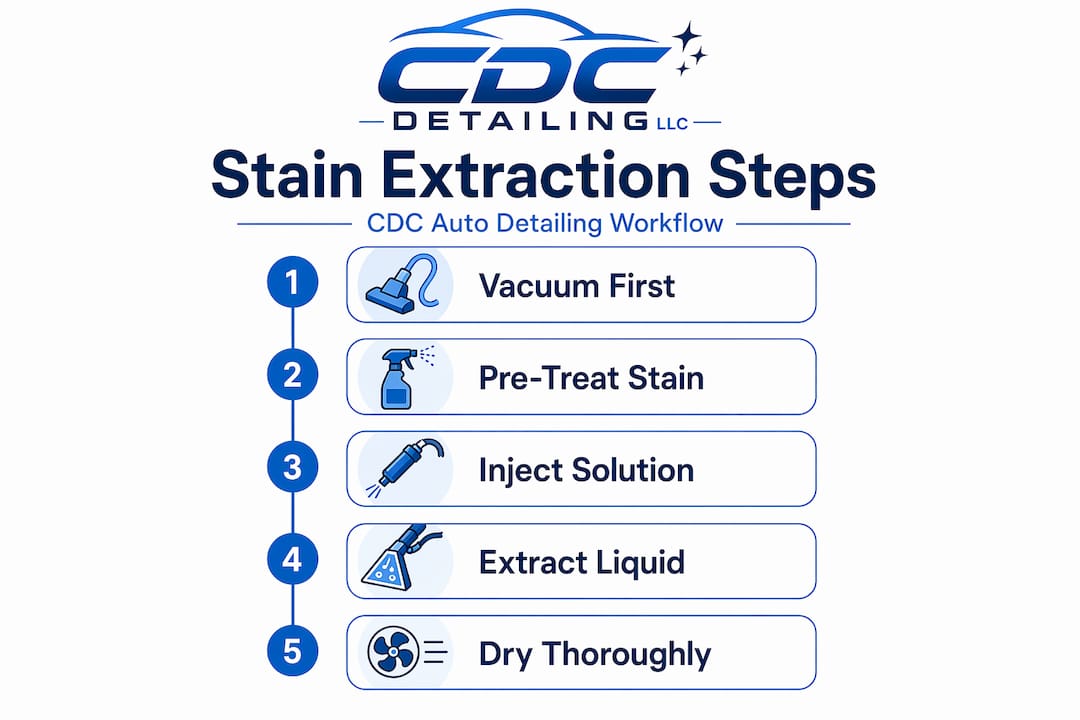
What makes this different from a basic wipe-down or spray-and-blot approach is the recovery cycle. The inject-and-extract cycle removes dissolved soils and residue rather than just loosening dirt and leaving it behind. Consumer steam cleaners and carpet cleaners push water in but lack the extraction power to pull it back out effectively. That leftover moisture becomes a breeding ground for mold and odor, especially in a closed vehicle interior.
Professional equipment operates at significantly higher temperatures and suction levels than anything you can rent at a hardware store. That gap in performance matters when you’re dealing with coffee, pet accidents, food spills, or mud that has dried into carpet backing.
Here’s what the stain extraction process typically covers in a vehicle detail:
- Carpet and floor mats: Where tracked-in dirt, pet hair, and food debris accumulate deepest
- Cloth and fabric seats: High-contact areas prone to body oil, sweat, food, and drink stains
- Headliners: Fabric ceilings that absorb smoke, humidity, and spray-on products
- Door panel fabric inserts: Smaller but equally neglected surfaces
Pro Tip: Before any extraction begins, thorough vacuuming removes loose debris so the extraction machine is working on embedded soils, not surface dirt. Skipping this step clogs extraction heads and reduces cleaning depth.
For a full picture of how extraction fits into the process, the interior car cleaning workflow at CDC Auto Detailing breaks down each stage. And if you’re already dealing with specific spots and marks, the guide to removing car stains goes deeper on targeted treatments.
Why identifying your car stains is crucial before extraction
Here’s where most DIY attempts fall apart. Vehicle owners grab whatever upholstery cleaner is under the sink and start scrubbing, not realizing that the wrong chemical can lock a stain permanently into the fibers. Effective stain extraction depends on identifying stain type because different chemicals target different contaminants. Solvents work on oils and grease. Enzyme-based cleaners break down organic matter like food, blood, and pet waste. Oxidizers tackle dye transfers and set-in color stains.
The most common stain categories you’ll encounter in a South Jersey vehicle interior are:
- Oil-based stains: Fast food grease, sunscreen, motor oil, cosmetics
- Biological stains: Pet urine, blood, vomit, sweat, baby formula
- Dye stains: Ink, berries, wine, some sports drinks
- Tannin stains: Coffee, tea, mud with organic content
Guessing the stain type is the biggest mistake in chemical selection, and it directly reduces removal success. If you apply an enzyme cleaner to an oil stain, you’ve just wasted time and potentially spread the stain further. If you use a solvent on biological waste, the organic proteins set harder.
Getting this right is also why pre-treatment matters as much as the extraction itself. The correct cleaning agent needs time to penetrate and chemically break down the stain before any water injection begins. That’s not something you can rush.
Pro Tip: When in doubt about stain type, test an inconspicuous area first. A small color change or texture shift tells you whether the chemical is compatible with the fabric before you commit to the full treatment.
For fabric seats specifically, the detailed process for removing stains from car seats offers practical guidance on choosing the right approach by stain type.
Stain extraction versus steam cleaning: what vehicle owners should know
The two terms get used interchangeably, but they describe meaningfully different processes. Steam cleaning uses hot vapor near the surface, while hot water extraction injects hot water and cleaning solution deep into fibers and immediately extracts it with suction. Steam is effective for sanitizing surfaces and freshening fabric, but it doesn’t flush out embedded soils the way extraction does.
Here’s a direct comparison:
| Feature | Steam cleaning | Hot water extraction |
|---|---|---|
| Method | Surface vapor application | Deep injection and suction recovery |
| Soil removal depth | Surface level | Deep fiber penetration |
| Moisture left behind | Moderate | Lower with professional equipment |
| Chemical use | Minimal | Targeted pre-treatment agents |
| Best for | Odor freshening, surface bacteria | Embedded stains, deep soil removal |
| Dry time | 1 to 3 hours | 2 to 6 hours depending on equipment |
| Residue flushing | Limited | Yes, part of the core process |
Steam has its place. After extraction removes the stain, a steam pass can sanitize and deodorize the area effectively. But if you’re dealing with a real stain, a food spill that’s been sitting, or mud that’s worked its way into carpet backing, extraction is the right tool.
The key factors that determine which method fits your situation:
- Stain severity: Light surface soil responds to steam; embedded stains need extraction
- Fabric type: Some delicate materials tolerate steam better than wet extraction
- Drying conditions: Humid days in South Jersey slow drying; professional extraction minimizes moisture left behind
- Time since the spill: Fresh stains can sometimes be surface-treated; older stains almost always need extraction
Understanding where each method fits helps you ask better questions when talking to a detailer. The step-by-step car interior cleaning guide walks through how professional detailers sequence these methods for best results.
Best practices for stain extraction in vehicle detailing
Timing is everything with vehicle stains. A coffee spill treated within minutes is a completely different job than the same spill treated a week later after it’s dried, set, and bonded with the fabric fibers. Treating stains early, pre-treating with proper soaking time, and avoiding heat before the stain is fully gone are principles that apply across all fabric cleaning, including vehicle interiors.
The professional approach follows a clear sequence:
- Identify the stain type before touching it with any chemical
- Apply the correct pre-treatment based on stain chemistry
- Allow proper dwell time so the agent breaks down the stain (typically 3 to 10 minutes)
- Agitate gently to help the chemical penetrate the fiber
- Extract with hot water injection using professional equipment
- Inspect the area under good lighting to check for remaining stain
- Repeat the cycle if any stain remains before drying
- Manage moisture by ensuring adequate ventilation or airflow after treatment
The T.A.C.T. framework guides effective pre-treatment: Time, Agitation, Chemistry, and Temperature. Insufficient dwell time is one of the most common reasons a stain survives extraction. The chemical hasn’t finished its job, and the extraction machine just pulls up water without the dissolved stain.
Pro Tip: Never apply heat to a stain before it’s fully removed. Heat bonds proteins and sugars to fabric fibers permanently, which is exactly why ironing a coffee stain or using a heated extractor prematurely can make an already-bad situation unrecoverable.
Challenges with old stains and advanced extraction techniques
Not every stain is a fresh spill. South Jersey summers and humidity mean that a stain left unaddressed for a few weeks can become a genuine restoration challenge. Old stains that have altered fiber color often require advanced chemistry beyond standard spotting and extraction to restore appearance.
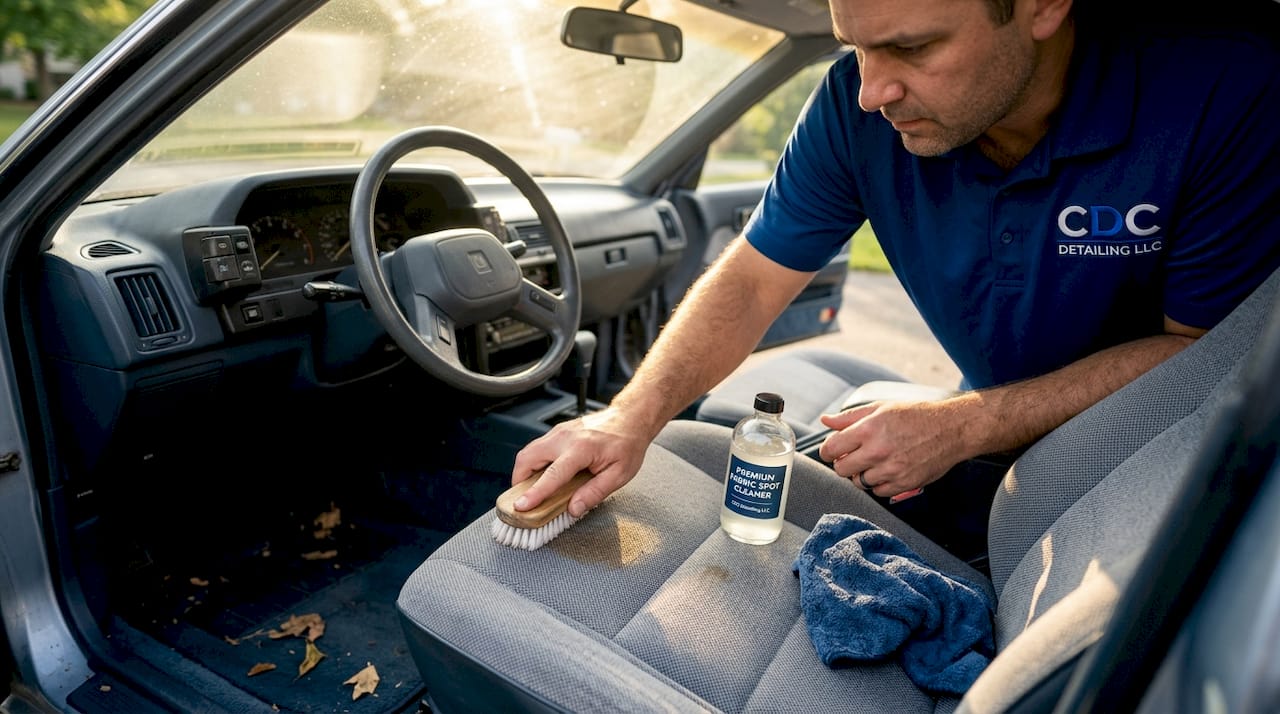
The distinction professionals make is between a spot and a stain. A spot sits on the fiber surface and extracts relatively easily. A true stain has chemically bonded with or altered the fiber itself. At that point, extraction is still part of the process, but it’s no longer sufficient on its own.
Advanced treatments for old or set-in stains include:
- Reducing agents: Break down dye-based stains by chemically reversing color changes
- Oxidizing agents: Bleach-adjacent chemistries used carefully on synthetic fibers
- Enzyme soak treatments: Extended dwell applications for biological stains that have fully dried
- Multiple extraction cycles: Each pass removes more of what the previous loosened
- Fiber-specific chemistry: Some vehicle fabrics require pH-balanced treatments to avoid damage
“Moisture management during extraction is as important as the stain chemistry itself. In humid conditions, moisture left in foam seat cores or carpet backing creates the perfect environment for mold and odor.”
This matters especially in South Jersey, where summer humidity is real. Immediate extraction after injection manages moisture in foam cores to reduce mildew and odor risks in humid regions. A professional detailer accounts for this by monitoring how wet the fabric feels after extraction and adjusting their process or drying approach accordingly.
If you’re seeing signs that a stain has gone beyond what surface methods can handle, the signs you need professional detailing guide is worth checking before you do more damage with the wrong product.
Why most vehicle owners misunderstand stain extraction — and what really matters
Here’s the uncomfortable truth: the reason most DIY stain removal fails isn’t the effort. It’s the sequence. Vehicle owners typically grab a product, scrub hard, and expect the stain to disappear. When it doesn’t, they assume the product is weak or the stain is permanent. In reality, they’ve often skipped the pre-treatment dwell time, used the wrong chemistry, or applied heat too early and bonded the stain to the fiber themselves.
Stain extraction is not a single action. It’s a controlled process with distinct stages, each of which affects the outcome. Miss one stage, and the rest of the effort is undermined. Professional detailers have the equipment to do it right, but the bigger advantage is the knowledge of when to stop, reassess, and change approach.
There’s also a patience problem. Extraction on a badly set stain often requires two or three full treatment cycles. Most people stop after one because it looks better, not because it’s done. That remaining residue reappears when the fabric dries, and suddenly a “removed” stain is back with a shadow.
The vehicle owners who get the best results from natural and targeted stain removal on car seats are the ones who treat stain removal as a process, not a product test. And when a stain genuinely requires professional chemistry and equipment, the fastest path to a clean interior is admitting that early rather than after three failed attempts have pushed the stain deeper.
Professional stain extraction services for your vehicle in South Jersey
Now that you understand how professional stain extraction works and why it matters, getting expert help locally is straightforward.

CDC Auto Detailing brings professional stain extraction directly to your driveway across South Jersey. Every job starts with stain identification and pre-treatment using the correct chemistry for your specific stain type, followed by hot water extraction using professional-grade equipment that consumer machines can’t match. Understanding what auto detailing services include and how the detailing process works helps you know exactly what you’re getting. Mobile scheduling means no drop-off hassles. You can book your mobile detailing appointment online or by phone, with flexible scheduling to fit your week. Your interior deserves more than a spray-and-wipe.
Frequently asked questions
What exactly does stain extraction do to car upholstery?
Stain extraction injects hot water and cleaning agents deep into upholstery fibers and immediately vacuums them out, removing dissolved soils, allergens, and stains that surface cleaning can’t reach.
Is stain extraction the same as steam cleaning?
No. Steam cleaning relies on surface vapor to freshen fabric, while stain extraction injects and recovers hot water and cleaning solution from deep within fibers to remove embedded dirt and stains.
Can I remove old, set-in stains from my car with stain extraction?
Old stains that have altered fiber color often require advanced chemistry and multiple treatment cycles beyond standard extraction to fully restore the fabric’s appearance.
How soon should I address a stain on my vehicle interior for best results?
Treating stains quickly and pre-treating with adequate soak time before extraction gives you the best chance of complete removal before the stain bonds to the fibers.
What makes professional stain extraction different from DIY methods?
Professional extraction uses higher temperature and extraction power than consumer equipment, combined with tailored pre-treatment chemistry and moisture management to recover deep soils without leaving residue or risking mold.