
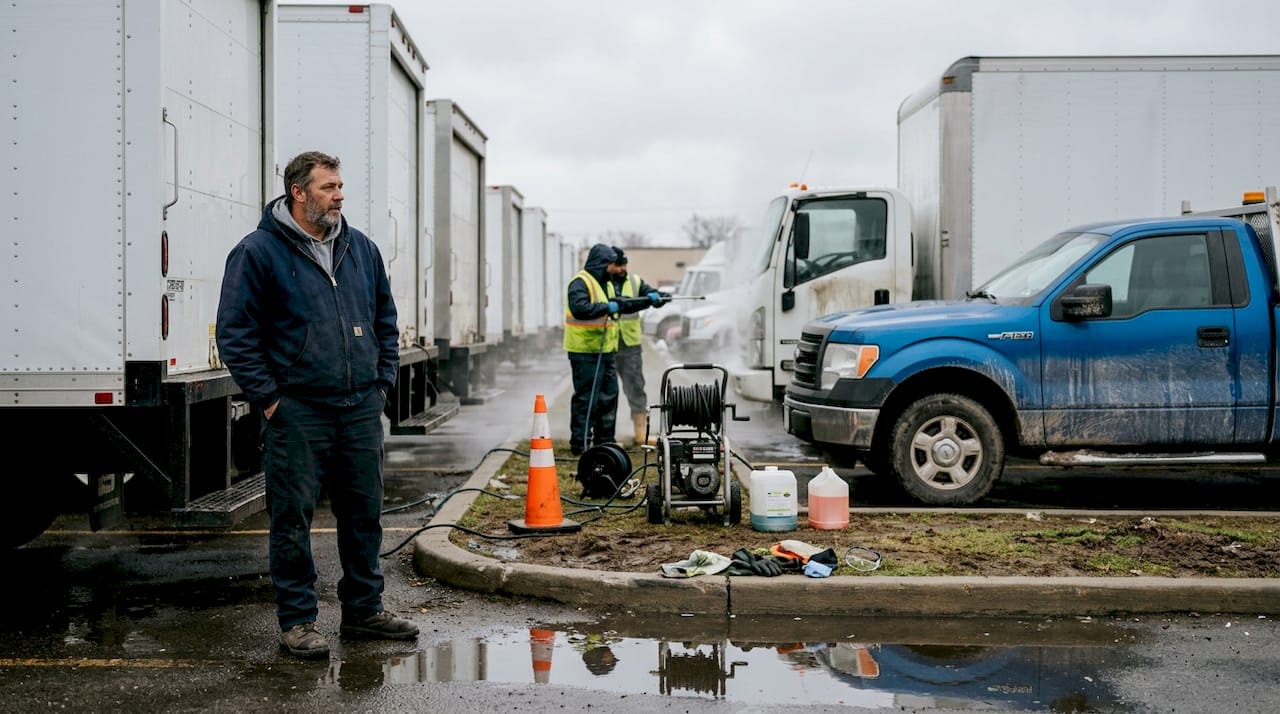
Many South Jersey business owners view fleet washing as an expensive disruption to daily operations. In reality, professional fleet cleaning reduces maintenance costs by 35% and prevents costly rust damage from winter salt exposure. Commercial fleet washing combines specialized techniques, eco-friendly products, and mobile convenience to protect your vehicles while keeping them road-ready. This guide breaks down everything you need to know about fleet washing methods, benefits, compliance requirements, and choosing the right provider for your South Jersey operation.
Table of Contents
- Key takeaways
- Understanding commercial fleet washing: what it is and why it matters
- Best practices and advanced methods in fleet washing
- Benefits of regular commercial fleet washing for South Jersey businesses
- Choosing and working with mobile fleet washing providers in South Jersey
- Enhance your fleet’s appearance with expert mobile detailing
- Frequently asked questions about commercial fleet washing
Key Takeaways
| Point | Details |
|---|---|
| Two step process | A two step touchless method uses an acid pre soak followed by an alkaline soap wash to remove mineral deposits and organic soils. |
| Cost and rust benefits | Professional fleet washing reduces maintenance costs and prevents rust damage from winter salt exposure. |
| On site mobile service | Mobile crews bring cleaning directly to your facility, eliminating downtime and transport logistics. |
| Regulatory compliance | The service emphasizes compliance with health codes for food transport and environmental runoff regulations. |
| Diverse fleet types | Cleaning protocols are tailored for delivery trucks vans flatbeds refrigerated units and specialty equipment. |
Understanding commercial fleet washing: what it is and why it matters
Commercial fleet washing removes dirt, grime, oil, salt, and bugs from trucks, vans, and equipment to protect assets and maintain brand image. This professional service goes far beyond a basic rinse, targeting specific contaminants that threaten vehicle longevity and appearance. Fleet managers in South Jersey face unique challenges from winter road salt, coastal moisture, and industrial pollutants that accelerate corrosion.
The process covers diverse vehicle types across your operation:
- Delivery trucks and box vans carrying your company branding
- Flatbed trucks and construction equipment exposed to heavy dirt
- Refrigerated vehicles requiring food-grade sanitation standards
- Service vans visiting customer locations as mobile billboards
- Specialty equipment like dump trucks and agricultural machinery
Professional fleet washing delivers three critical benefits. First, it protects your investment by removing corrosive materials before they damage paint and metal surfaces. Second, it ensures compliance with health codes for food transport and environmental regulations for runoff. Third, it maintains the professional appearance that influences customer perception every time your vehicles hit the road.
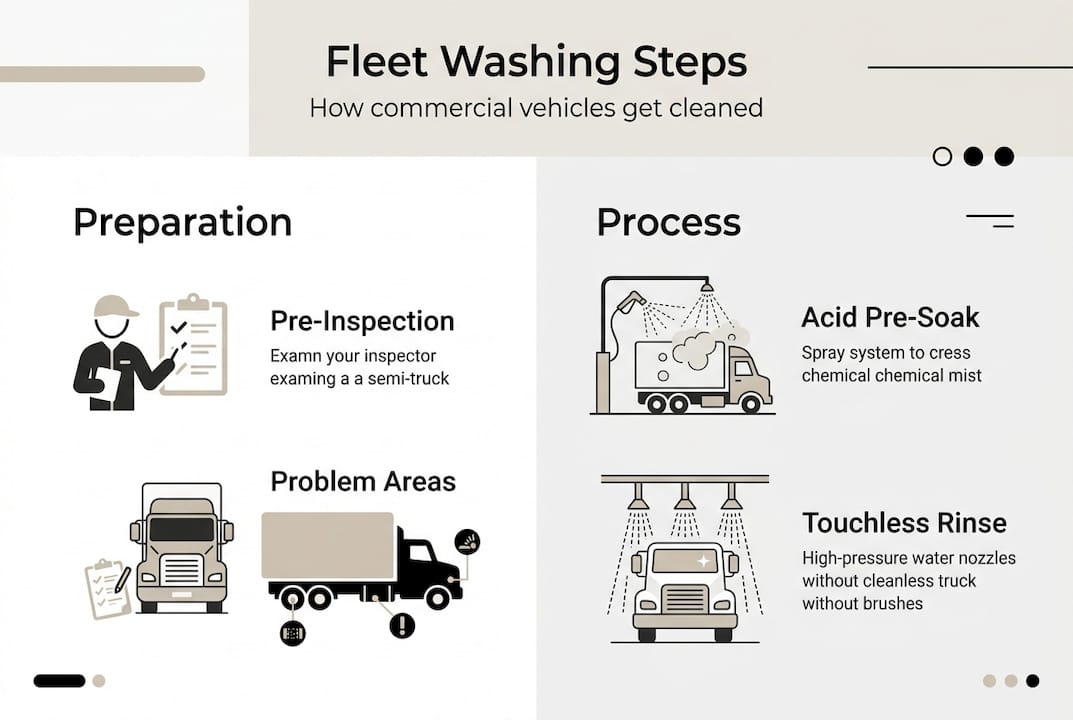
The typical washing sequence starts with a thorough pre-inspection to identify problem areas and material-specific needs. Technicians apply eco-friendly pretreatment solutions targeting stubborn contaminants like road tar and diesel residue. The main wash uses appropriate pressure and cleaning agents for each surface type, followed by a complete rinse that removes all chemical residue. A final inspection confirms quality and identifies any maintenance issues spotted during cleaning.
Mobile services bring this entire process to your facility, eliminating the need to pull vehicles from service or assign staff to drive them elsewhere. Self-contained trucks carry water, equipment, and cleaning solutions, completing the job while your fleet remains on-site and ready for the next dispatch. This convenience factor transforms fleet washing from a logistical headache into a seamless maintenance routine that actually reduces operational costs.
Understanding what commercial vehicle detailing involves helps you appreciate the difference between a quick spray and a thorough professional cleaning that extends vehicle life and protects your brand image.
Best practices and advanced methods in fleet washing
The two-step touchless process with acid pre-soak and alkaline soap delivers superior results while protecting polished surfaces from scratching. This method separates the cleaning chemistry into two targeted phases that work together more effectively than single-step approaches. Understanding these techniques helps you evaluate provider capabilities and ensure your fleet receives appropriate care.
Here’s how the two-step process works:
-
Acid Pre-Soak Application: Low pH solution dissolves mineral deposits, road film, and oxidation without scrubbing. This step targets the bonded contaminants that water alone cannot remove.
-
Alkaline Soap Wash: High pH detergent breaks down organic materials like grease, oil, bugs, and diesel soot. The alkaline chemistry neutralizes any remaining acid while lifting these substances from the surface.
-
Pressure Rinse: Clean water at appropriate PSI removes all chemical residue and loosened contaminants. Proper rinsing prevents streaking and ensures no cleaning agents remain to attract new dirt.
-
Spot Treatment: Stubborn areas receive targeted attention with specialized products or techniques suited to the specific contaminant and surface material.
-
Final Inspection: Technicians verify complete cleaning and document any damage or maintenance needs discovered during the process.
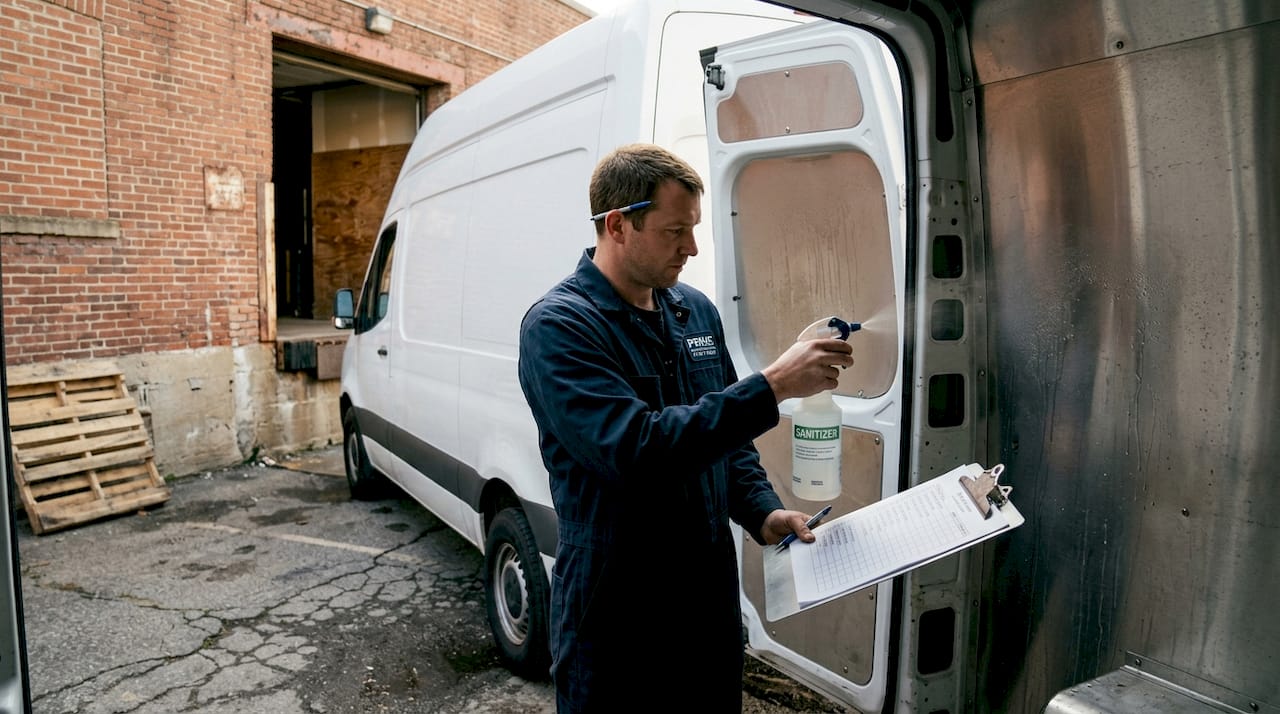
Different fleet types require adapted approaches. Food-grade vehicles need sanitizing agents that meet health department standards and complete rinse protocols that prevent chemical contamination. Construction trucks with heavy mud and concrete residue benefit from extended dwell times and higher pressure applications. Polished aluminum surfaces demand pH-neutral products and soft brushes to prevent dulling or scratching the finish.
EPA stormwater compliance requires water reclamation and proper detergent treatment before discharge. Professional mobile services use containment systems that capture runoff, filter solids, and treat water to meet local regulations. This protects your business from potential fines while supporting environmental responsibility.
| Method | Best For | Key Advantage | Limitation |
|---|---|---|---|
| Touchless Washing | Polished surfaces, daily cleaning | No scratch risk, fast processing | May miss heavy buildup |
| Soft Brush Scrubbing | Textured surfaces, heavy grime | Mechanical action on stubborn dirt | Requires careful technique |
| Steam Cleaning | Engine bays, undercarriages | Sanitizes and degreases deeply | Slower, higher cost |
| Chemical Degreasing | Oil/grease contamination | Powerful on petroleum products | Needs proper disposal |
Pro Tip: Schedule washing after your vehicles return from routes rather than before dispatch. This prevents road salt and contaminants from sitting on surfaces overnight, reducing corrosion risk during the hours when your fleet is parked.
Following a complete vehicle cleaning checklist ensures consistent results across your entire fleet and helps you hold providers accountable for thorough service.
Benefits of regular commercial fleet washing for South Jersey businesses
Monthly washing reduces rust costs by 35% while cutting unscheduled maintenance by 10% and improving resale value by 15-20%. These aren’t marginal gains, they represent substantial savings that directly impact your bottom line. For a 100-truck fleet, these percentages translate to tens of thousands of dollars in avoided repairs and higher returns when you cycle out older vehicles.
South Jersey’s winter road salt creates particularly aggressive corrosion conditions. Salt penetrates paint chips and accumulates in wheel wells, door seams, and undercarriage components. Without regular removal, this chemical assault causes rust that spreads beneath the surface, weakening structural components and creating safety hazards. Summer brings different challenges, with bug splatter and tree sap bonding to paint in the heat, causing permanent etching if left untreated.
The financial benefits break down across several categories:
- Corrosion Prevention: Removing salt and chemicals before they penetrate protective coatings saves thousands per vehicle in rust repair and replacement parts over the vehicle’s service life
- Fuel Efficiency: Clean, smooth surfaces reduce aerodynamic drag, delivering measurable fuel savings that compound across your entire fleet and thousands of miles
- Maintenance Reduction: Regular washing reveals minor issues like fluid leaks and loose components before they become expensive failures requiring emergency repairs
- Resale Value: Well-maintained appearance signals proper care to buyers, commanding premium prices that offset your washing investment many times over
- Brand Protection: Professional-looking vehicles strengthen customer confidence and prevent the reputation damage that comes from dirty, neglected fleet trucks
Real Numbers: A 100-truck fleet spending $50 per vehicle monthly on professional washing invests $60,000 annually. That same fleet typically saves $85,000 in avoided rust repairs, $15,000 in reduced unscheduled maintenance, and gains $120,000 in higher resale values over a five-year cycle. The return on investment exceeds 250%.
Pro Tip: Track your maintenance costs by vehicle and compare regularly washed units against those cleaned sporadically. You’ll see the correlation between washing frequency and repair expenses, providing concrete data to justify your fleet care budget.
Beyond dollars, regular washing improves driver pride and morale. Operators take better care of clean vehicles and feel more professional representing your company. This psychological benefit reduces abuse and encourages the kind of careful operation that extends vehicle life.
Discover why businesses need vehicle cleaning to cut costs by 20% through preventive maintenance and improved operational efficiency. Your fleet washing program becomes a profit center rather than an expense when you account for all the downstream benefits.
Choosing and working with mobile fleet washing providers in South Jersey
Mobile services minimize downtime and labor costs compared to in-house or fixed bay cleaning, making them ideal for South Jersey fleets operating on tight schedules. Instead of pulling vehicles from service, assigning drivers to transport them, and coordinating facility access, mobile providers bring professional equipment directly to your location. This convenience transforms fleet washing from a logistical challenge into a seamless process that happens during natural downtime.
South Jersey offers several specialized mobile fleet washing providers serving the region from Atlantic to Camden counties. These companies operate self-contained trucks carrying 500-800 gallons of water, pressure washing equipment, and eco-friendly cleaning solutions. They schedule service during your off-hours, weekends, or between shifts, ensuring minimal impact on operations. Many providers offer weekly, bi-weekly, or monthly contracts with priority scheduling and fleet management reporting.
When evaluating mobile providers, consider these critical factors:
- Environmental Compliance: Verify they use water reclamation systems and biodegradable detergents meeting EPA and New Jersey DEP requirements for stormwater discharge
- Insurance Coverage: Confirm adequate liability and workers compensation insurance protecting your business from potential claims during on-site service
- Equipment Quality: Professional-grade pressure washers, heated water capability, and diverse nozzles indicate serious investment in delivering consistent results
- Staff Training: Experienced technicians understand different surface materials, appropriate pressure levels, and chemical selection for various contaminants
- Scheduling Reliability: Consistent service windows and responsive communication prevent disruptions and ensure your fleet stays on schedule
- Reporting Systems: Digital documentation of service completion, vehicle conditions, and maintenance observations add value beyond basic cleaning
| Approach | Setup Time | Per-Vehicle Cost | Labor Required | Best For |
|---|---|---|---|---|
| In-House Washing | 2-4 hours | $15-25 | 1-2 staff | Small fleets, daily light cleaning |
| Fixed Bay Service | 30-60 min travel | $35-60 | Driver time | Specialty cleaning, detail work |
| Mobile Provider | None | $40-75 | Zero | Medium to large fleets, efficiency focus |
| Automated System | Permanent install | $20-30 | Minimal | High-volume, standardized vehicles |
Mobile services eliminate the hidden costs of in-house washing. You avoid purchasing and maintaining pressure washing equipment, training staff, managing water supply and drainage, and storing chemicals safely. Your team focuses on core business activities while professionals handle fleet cleaning with superior results and faster turnaround.
Pro Tip: Request a trial service on 5-10 vehicles before committing to a fleet-wide contract. This lets you evaluate quality, observe their process, and verify they can handle your specific vehicle types and contamination challenges.
Local expertise matters in South Jersey’s unique environment. Providers familiar with regional salt treatments, coastal moisture, and industrial pollutants understand the specific challenges your fleet faces. They adjust their methods seasonally, using more aggressive degreasing in summer and focusing on salt removal during winter months.
Explore comprehensive fleet washing services designed specifically for South Jersey businesses operating diverse vehicle types. Learning how to implement mobile detailing helps you integrate professional cleaning into your existing maintenance schedule without disrupting operations.
Enhance your fleet’s appearance with expert mobile detailing
Your fleet represents your business every time it rolls down the road. Professional appearance influences customer perception, builds trust, and differentiates your company from competitors operating dirty, neglected vehicles. Mobile detailing brings specialized expertise directly to your South Jersey facility, combining convenience with the quality results that protect your investment and strengthen your brand.
Local providers understand the specific challenges South Jersey fleets face, from winter salt damage to summer heat effects on paint and trim. They adapt their methods to your vehicle types, whether you operate delivery vans, construction equipment, or specialty vehicles requiring custom care. Professional mobile services eliminate the coordination headaches of traditional fleet maintenance while delivering superior results that extend vehicle life and maintain the professional image your customers expect.
Discover how fleet washing services in Pitman protect your vehicles and enhance your business image with convenient on-site care. Learn practical strategies for implementing mobile detailing that fits your operational schedule without disrupting daily business. Understand the role detailing plays in building customer confidence and supporting your brand reputation across South Jersey.
Frequently asked questions about commercial fleet washing
What vehicles are included in commercial fleet washing?
Commercial fleet washing covers all business-owned vehicles including delivery trucks, box vans, flatbeds, dump trucks, refrigerated vehicles, service vans, construction equipment, agricultural machinery, and specialty vehicles. The service adapts to each vehicle type’s specific materials, contamination levels, and cleaning requirements.
How often should fleets be washed in winter versus summer?
Winter requires weekly or bi-weekly washing to remove corrosive road salt before it penetrates paint and causes rust damage. Summer allows monthly washing for most fleets, though vehicles exposed to heavy dust, bugs, or tree sap benefit from bi-weekly service to prevent permanent staining.
Can fleet washing improve resale value?
Regular professional washing improves resale value by 15-20% by maintaining paint condition, preventing rust, and demonstrating proper maintenance to potential buyers. Clean vehicles with intact finishes command premium prices and sell faster than neglected units showing corrosion and poor care.
What environmental regulations affect fleet washing in New Jersey?
New Jersey follows EPA stormwater regulations requiring proper collection and treatment of wash water before discharge into storm drains or natural waterways. Professional mobile services use water reclamation systems and biodegradable detergents that meet state and federal environmental standards, protecting your business from potential violations.
Are mobile fleet washing services cost effective for small businesses?
Mobile services benefit small fleets by eliminating equipment purchases, staff training, and facility modifications required for in-house washing. Even with 5-10 vehicles, the convenience, superior results, and avoided maintenance costs typically justify professional mobile service over DIY approaches that consume staff time and deliver inconsistent quality.