
TL;DR:
- Wax provides a short-term shine and low-cost protection lasting 1-3 months.
- Ceramic coating offers long-term durability of 2-5 years with high resistance to environmental damage.
- Proper surface prep is essential for ceramic coatings, while wax requires frequent reapplication.
Most car owners assume that if their paint looks shiny, it’s protected. That’s a costly assumption. Not every glossy finish offers the same defense against UV rays, road salt, bird droppings, or South Jersey’s unpredictable weather swings. The difference between waxing and ceramic coating isn’t just about shine — it’s about how long that protection actually lasts and what it can handle. If you’re trying to decide which option is worth your money, this guide breaks down exactly how each one works, where each one falls short, and which choice makes the most sense for your vehicle and your lifestyle.
Table of Contents
- What is waxing? Key benefits and drawbacks
- What is ceramic coating? Features, protection, and longevity
- Direct comparison: Waxing vs. ceramic coating
- Choosing the right option for your vehicle and lifestyle
- Our take: What South Jersey drivers overlook about waxing and coating
- Ready to protect your car? Explore premium solutions
- Frequently asked questions
Key Takeaways
| Point | Details |
|---|---|
| Wax and coating differences | Wax gives shine and basic protection, while ceramic coatings deliver long-term, high-durability shielding. |
| Choose based on needs | Pick wax for budget or classic cars and ceramic for all-season, high-value, low-maintenance protection. |
| Maintenance matters | Both options require upkeep to perform well—ceramic lasts longer but still needs correct care. |
| Combine for special cases | Layering wax over ceramic can help with water spots, but is mostly unnecessary for everyday drivers. |
What is waxing? Key benefits and drawbacks
Car wax has been around for decades, and it remains one of the most popular ways to add shine and a layer of defense to your vehicle’s paint. Traditional wax is made from natural carnauba (a plant-based substance) or synthetic polymer blends, and it sits on top of your clear coat as a sacrificial protective layer. It doesn’t bond chemically to the paint — it simply rests on the surface and fills in minor imperfections to create that warm, classic glow.
Most detailers recommend reapplying wax every one to three months, depending on how much you drive, how you wash your car, and what the weather throws at it. In South Jersey, where summers are humid and winters bring road salt and temperature drops, wax tends to wear off faster than the label suggests.
Key advantages of waxing:
- Quick to apply, even as a DIY project
- Affordable upfront cost
- Creates a warm, deep shine that classic car enthusiasts love
- Easy to layer or remove
- Works well for show cars and low-use vehicles
Where wax falls short:
- Short durability, typically lasting just weeks to months
- Low chemical and scratch resistance, and softens or melts at temperatures around 180°F
- Washes away easily with frequent car washes or rain
- Needs constant reapplication to stay effective
Pro Tip: If you’re using wax on a daily driver, apply it after every third or fourth wash to keep the protection consistent. Skipping reapplication leaves your paint exposed without you even noticing.
“Wax is a great starting point for paint care, but it was never designed to be a long-term solution. Think of it as a seasonal coat — useful, but temporary.”
For drivers looking at premium paint protection options that go beyond basic wax, it helps to understand what the next level actually offers before committing. The wax and coating comparison guide from CarKitInfo is a solid starting point for digging deeper into the technical differences.
What is ceramic coating? Features, protection, and longevity
Ceramic coating is a liquid polymer that chemically bonds to your vehicle’s factory paint when applied correctly. Unlike wax, it doesn’t sit on top of the surface — it becomes part of it. Once cured, it creates a hard, glass-like shell that protects against UV damage, chemical contaminants, bird droppings, road grime, and even light scratches.
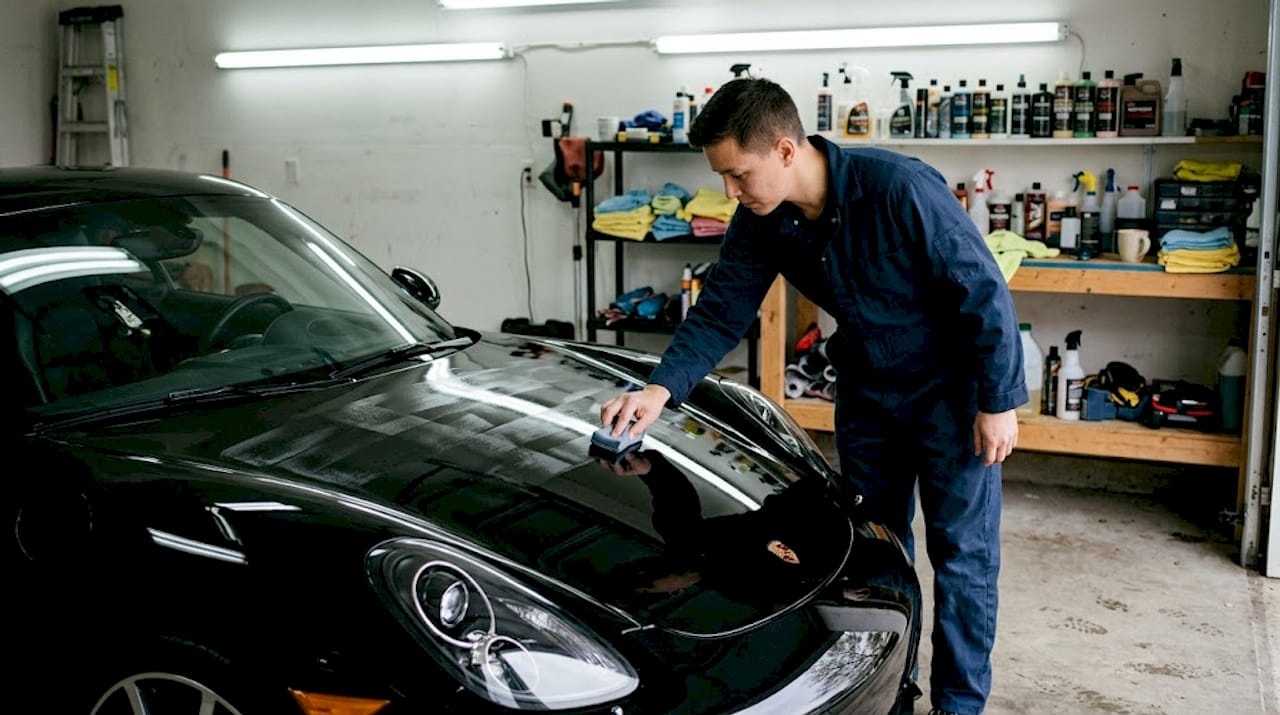
The numbers behind ceramic coating are impressive. It rates between 7H and 9H on the pencil hardness scale, meaning it’s significantly harder than wax and resistant to surface marring. It can also withstand temperatures up to 1000°F, which makes it far more stable in extreme heat compared to wax that softens at just 180°F.
Key advantages of ceramic coating:
- Lasts 2 to 5 years with proper maintenance
- Strong hydrophobic effect (water beads and rolls off effortlessly)
- High resistance to UV rays, chemicals, and environmental contaminants
- Delivers a glassy, high-reflection finish
- Reduces the frequency of washing and detailing needed
Who benefits most from ceramic coating:
- Daily drivers exposed to road salt, sun, and rain
- Luxury or high-value vehicles where paint preservation matters
- Owners who want long-term protection without constant reapplication
Pro Tip: Ceramic coating only performs at its best when applied to properly prepared paint. Any swirl marks, oxidation, or contamination trapped under the coating will be locked in permanently. Always start with a full paint correction before coating.
Understanding ceramic coatings’ protection in detail helps you set realistic expectations before investing. If you want to see how the process works from start to finish, the guide on applying ceramic coating walks through each step clearly. For a thorough breakdown of how ceramic stacks up against wax, the ceramic coating vs wax in depth piece from Jalopnik is worth reading.
Direct comparison: Waxing vs. ceramic coating
Now that you understand how each product works on its own, a side-by-side look makes the decision much easier.
| Feature | Car wax | Ceramic coating |
|---|---|---|
| Durability | 1 to 3 months | 2 to 5 years |
| Shine | Warm, deep glow | Glassy, high-gloss finish |
| UV protection | Basic | High |
| Chemical resistance | Low | High |
| Scratch resistance | Minimal | 7H to 9H hardness |
| Hydrophobic effect | Moderate, fades fast | Strong, long-lasting |
| Cost | Low | Higher upfront |
| Maintenance | Frequent reapplication | Periodic gentle washing |
| Best use | Classic/show cars, short-term | Daily drivers, long-term protection |
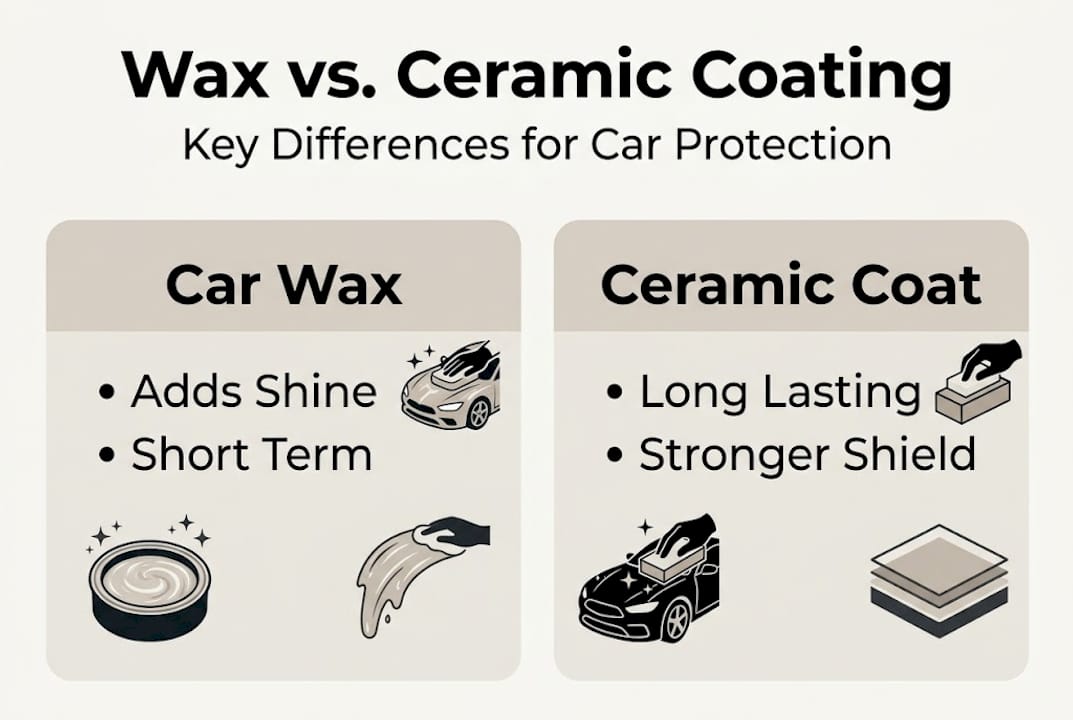
Car wax lasts just 1 to 3 months, while ceramic coating holds up for 2 to 5 years with far superior protection across nearly every category.
When wax makes more sense:
- You’re preparing a classic or show car for an event
- You want to layer over an existing ceramic coating for seasonal water spot protection
- Your budget is tight and you need short-term coverage
- Your car sits in a garage most of the time and sees minimal road exposure
When ceramic coating is the better call:
- You drive daily through South Jersey’s road salt, rain, and humidity
- You want to minimize time spent on regular detailing
- You own a luxury or high-value vehicle and want to preserve resale value
- You’re looking for protection that holds up in harsh outdoor environments
“Neither wax nor ceramic coating is invincible. Ceramic is still vulnerable to heavy abrasion and mineral buildup if not maintained properly. The best protection is the one you actually keep up with.”
For real-world examples of how different vehicles benefit from each approach, check out paint protection examples. And if you’ve already gone the ceramic route, the guide on winter tips for ceramic-coated cars is especially useful for South Jersey winters. The side-by-side wax vs ceramic breakdown from CarKitInfo is another helpful resource for making your final call.
Choosing the right option for your vehicle and lifestyle
You’ve seen the pros and cons. Now let’s make this practical for your lifestyle and driving needs.
Here’s a straightforward decision process to follow:
- Assess your budget. Wax costs a fraction of ceramic coating upfront. But factor in how often you’ll reapply wax over two years versus a single ceramic application that lasts the same period. Ceramic wins long-term ROI for daily drivers and high-value vehicles, even with the higher initial cost.
- Consider how you use your car. A weekend cruiser or show car benefits from wax’s warm finish. A vehicle driven daily through South Jersey’s mix of coastal humidity and winter salt needs ceramic’s tougher shield.
- Think about your maintenance tolerance. If you dislike frequent detailing, ceramic coating dramatically reduces how often you need to wash and treat your car.
- Evaluate your car’s current paint condition. Ceramic coating requires clean, corrected paint. If your paint has heavy swirls or oxidation, factor in the cost of paint correction before coating.
| South Jersey scenario | Best solution |
|---|---|
| Daily commuter on Route 55 | Ceramic coating |
| Classic car for weekend shows | Carnauba wax |
| New luxury vehicle, long-term ownership | Ceramic coating |
| Budget-conscious, DIY enthusiast | Synthetic wax |
| Beach town driver, salt air exposure | Ceramic coating |
| Low-use garage-kept vehicle | Wax or light sealant |
Pro Tip:
Wax can be applied over a fully cured ceramic coating for extra water spot protection in hard water areas, but it’s rarely necessary. If you do layer wax on top, use a light synthetic wax and avoid abrasive compounds.
For ongoing care, the guide on ceramic coating maintenance covers exactly what to do after application. If you’re still weighing your options, revisiting the full breakdown of how to choose paint protection can help you land on the right fit.
Our take: What South Jersey drivers overlook about waxing and coating
Here’s something most generic guides won’t tell you: the biggest mistake we see isn’t choosing the wrong product — it’s underestimating how fast South Jersey’s seasons destroy wax protection. A fresh wax job in October can be nearly gone by December after a few road salt encounters and temperature swings. Drivers assume they’re protected when they’re not.
On the ceramic coating side, the overlooked issue is preparation. Ceramic is only as good as the surface it bonds to. Rushing the prep work — or skipping paint correction entirely — locks in flaws and limits the coating’s performance. Done right, though, ceramic coating is genuinely low-maintenance in a way that wax simply cannot match.
The honest answer isn’t about what’s trending. It’s about your budget, your car, and how much South Jersey road reality your vehicle faces every week. For a clear walkthrough of the full process, the ceramic coating step-by-step tips page is a great place to start before making any decisions.
Ready to protect your car? Explore premium solutions
If this guide helped you see the real difference between waxing and ceramic coating, the next step is putting that knowledge to work for your vehicle. At CDC Auto Detailing, we bring professional-grade protection directly to you across South Jersey.

Whether you’re ready to invest in a long-lasting ceramic coating service or want to explore paint protection options that fit your budget and lifestyle, our team is here to help. Not sure where to start? Browse our auto detailing service examples to see what’s possible for your specific vehicle. We handle everything on-site, at your home or workplace, so protecting your car has never been more convenient.
Frequently asked questions
How long does wax last compared to ceramic coating?
Wax typically lasts 1 to 3 months, while ceramic coating endures 2 to 5 years with proper care. The gap in durability is significant for drivers who want protection without constant reapplication.
Can you apply wax over ceramic coating?
Yes, wax over cured ceramic is possible, but it’s usually unnecessary. Some drivers do it for extra seasonal water spot protection in hard water areas, but the ceramic coating alone handles most conditions well.
What are the main maintenance differences between wax and ceramic coating?
Wax needs frequent reapplication every one to three months, while ceramic needs less frequent care but still requires proper washing techniques to extend its life. Neither option is completely hands-off.
Are ceramic coatings completely scratch-proof?
No. Ceramic is still vulnerable to heavy abrasion and damage from poor maintenance habits. It resists minor surface scratches well, but it won’t stop deep scratches or rock chips on its own.