
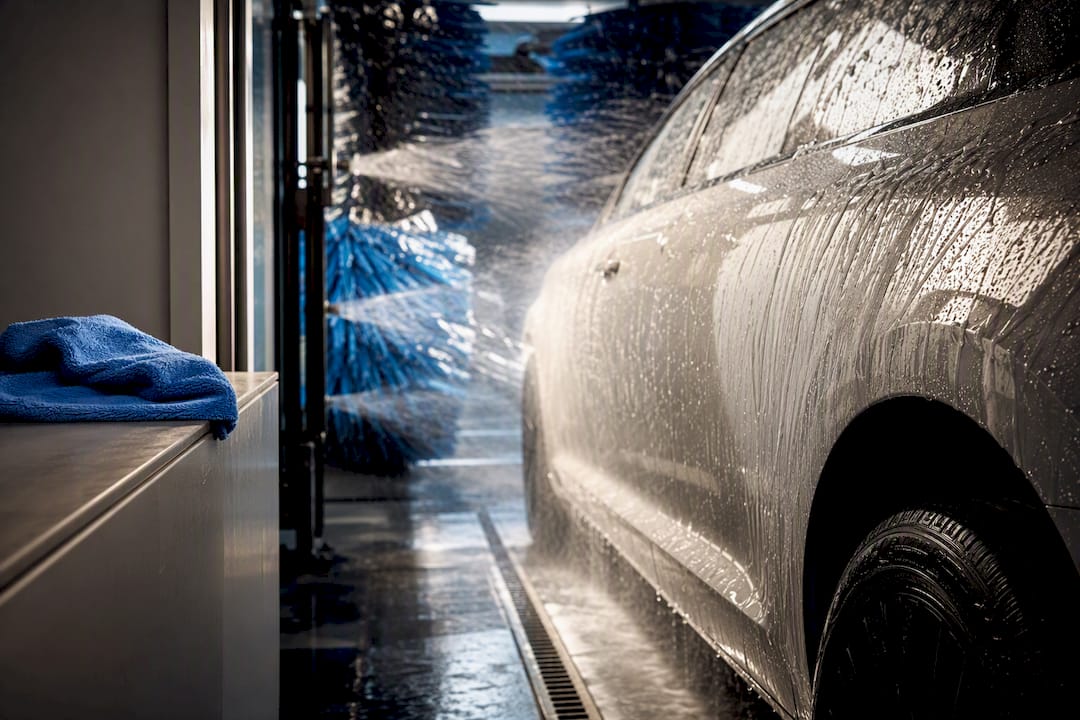
Modern, well-maintained automatic car washes rarely create new scratches. The real culprit behind most swirl marks is grit dragged across the clear coat by dirty brushes, matted media, or bad manual technique. Check the wash’s equipment condition, not just its price, and if you’re still nervous, touchless or a proper two-bucket hand wash will keep your paint safer.
TL;DR:
- Regular automatic car washes do not create new scratches if equipment is well-maintained; damage mostly stems from grit trapped in media.
- Dirty nylon bristle brushes and improperly maintained cloth or foam media significantly increase the risk of swirl marks and scratches.
- Touchless washes eliminate contact but may harm older or unprotected paint due to stronger chemical detergents, especially on dark or factory-coat cars.
- Hand washing using the two-bucket method with grit guards is often safer than poorly maintained automatic systems, especially if done with proper technique.
- Protective coatings like ceramic or paint protection film provide additional defense against swirl marks and scratches, especially for high-value or dark-colored vehicles.
Table of Contents
- What Causes Swirl Marks and Scratches on Car Paint
- Touchless, Soft-Cloth, Bristle, or Hand Wash: Which Is Actually Safest?
- How to Wash Your Car Without Scratching the Paint
- Found New Swirls or Scratches? Here’s What to Do
- Why a Professional Detailer’s View on Wash Safety Matters
- The Bottom Line on Automatic Wash Safety
- The Real Story Behind “Car Wash Scratches”
- Protect Your Paint Instead of Gambling on It
- Sources
What Causes Swirl Marks and Scratches on Car Paint
Swirl marks aren’t scratches in the deep-gouge sense. They’re a dense pattern of tiny, curved abrasions sitting in the clear coat, the sacrificial top layer that sits over your car’s color coat. Deep scratches cut through that clear coat into the pigment or primer below. Swirls just haze it, which is why they show up as spiderwebs under sunlight or gas station lighting rather than as visible grooves.
The mechanism is simple physics. Dirt, sand, road salt, and brake dust are all harder than automotive clear coat. When any abrasive particle gets trapped between a wiping surface and your paint and then dragged under pressure, it acts like sandpaper. That’s the whole story behind nearly every swirl mark you’ll ever see, whether it happened at a tunnel wash or in your own driveway with a dirty sponge.
Media type changes how much grit gets trapped and how hard it presses against the panel:
- Nylon bristles are stiffer and grip contaminants more aggressively, which is why older brush-style tunnels earned automatic washes their bad reputation in the first place.
- Cloth strips flex more and distribute pressure, but they mat down and hold grit if they’re not rinsed and replaced on schedule.
- Foam media is generally gentler and rinses cleaner, provided the wash actually maintains it.
- Hog’s hair brushes, still used in some tunnels, behave similarly to cloth when kept clean but turn abrasive fast once they’re caked in old dirt.
Industry reporting backs this up directly: soft-cloth and touchless systems are engineered to minimize abrasion, and most damage claims trace back to worn or dirty media rather than automatic washing itself, according to an analysis of where scratches actually originate. Supplier-side experts go further, warning that nylon bristles and poorly maintained brush media trap grit and transfer it car to car, which means the real risk sits with operator maintenance practices, not the wash format on the sign out front.
Pro Tip: Dark paint, especially black, and factory clear coats on many newer vehicles show swirl marks faster because there’s less pigment to hide the light-scattering pattern. If you drive a black or dark gray car, treat wash selection as a bigger deal than you would on a silver or white one.
Touchless, Soft-Cloth, Bristle, or Hand Wash: Which Is Actually Safest?
No single format wins automatically. Risk comes down to equipment condition and technique far more than whether the wash touches your car at all.
Touchless washes use high-pressure water and stronger detergents instead of any physical media, which eliminates contact-based marring entirely. The tradeoff is chemical: touchless formulas need more aggressive surfactants to break down grime without scrubbing, and that can be harder on wax layers, trim, and older paint over repeated visits. If your car has minimal protection, ask whether the touchless detergent is pH-balanced.
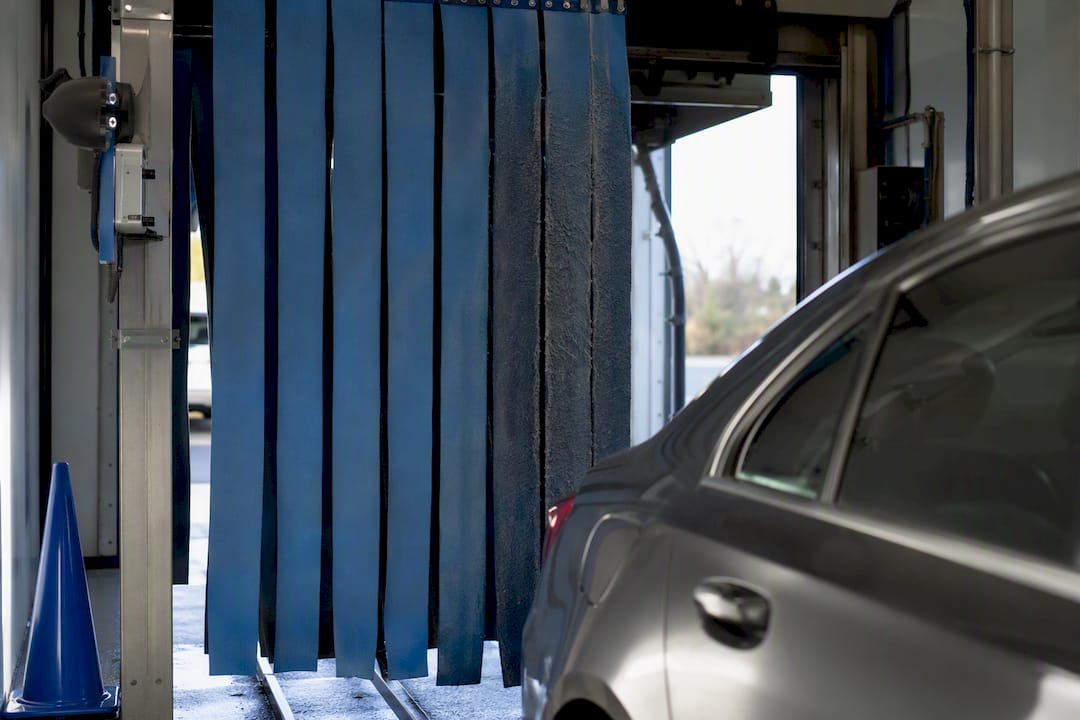
Soft-cloth and foam tunnels are safe when the operator actually maintains the equipment, which is the entire point of this article. Before you drive in, glance at the entrance curtain and brushes. Matted, discolored, or visibly dirty strips are a red flag worth skipping. A wash that runs a heavy pre-soak or snow-foam stage before contact is doing you a favor, since it lifts loose grit before anything touches the panel.
Nylon-bristle and self-serve wand setups carry the highest variability. Self-serve wands put the pressure washer and brush in the hands of whoever used the bay before you, and there’s no guarantee they rinsed the brush head between grimy trucks and your sedan. Bargain unlimited-wash memberships deserve extra scrutiny too. Operators running high volume for low prices tend to cut maintenance budgets first, and worn media is where that shows up.
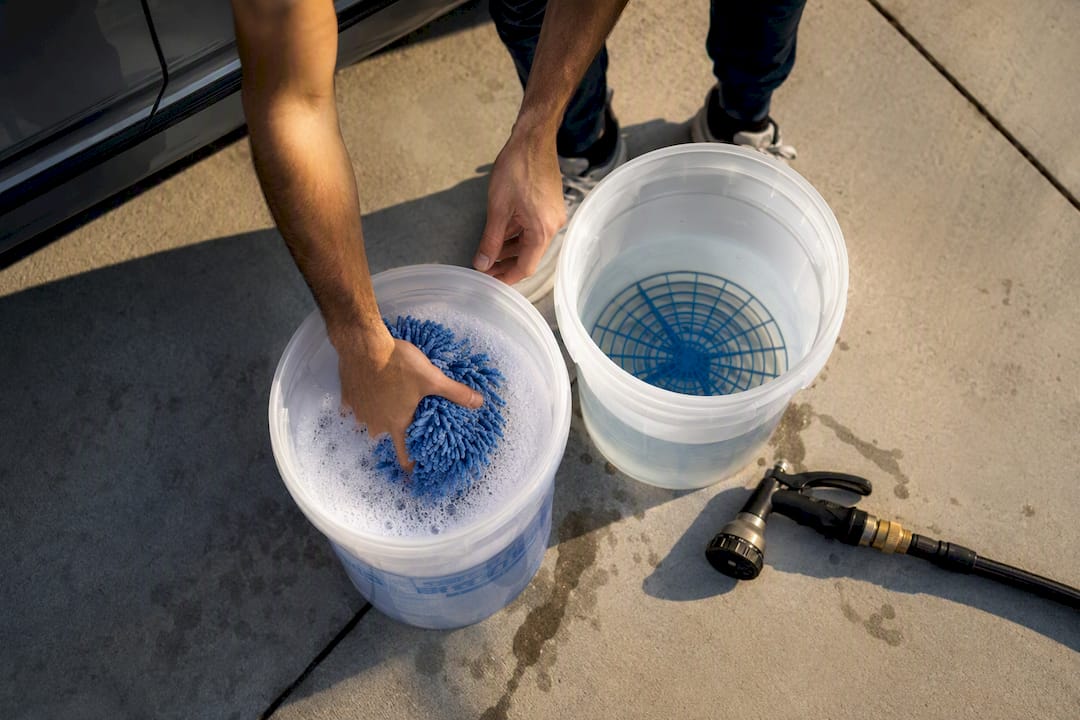
Hand washing done right can beat a mediocre automatic wash outright. Done wrong, with a single bucket and a garage-shelf sponge, it’s arguably worse, since you’re manually grinding the same grit back into the paint stroke after stroke. The two-bucket method with grit guards solves this: one bucket holds soapy wash solution, the other holds clean rinse water, and a plastic grit guard at the bottom of each lets contaminants sink below where your mitt reaches. This is well documented as one of the safer washing approaches available, often safer than a poorly maintained automatic wash when the alternative is unknown equipment and an unknown maintenance schedule.
How to Wash Your Car Without Scratching the Paint
Reducing risk isn’t about picking one perfect method and never varying it. It’s a sequence of small habits, whether you’re rolling into a tunnel or grabbing a hose in your driveway.
- Inspect before you commit. Look at the entrance media. Matted strips, visible grime buildup, or a facility that looks neglected in other ways (broken vacuums, trash everywhere) usually means brushes aren’t replaced on schedule either.
- Pre-soak or snow-foam first. Whether at home or via a wash’s pre-treatment stage, softening and lifting loose dirt before any contact stage dramatically cuts how much grit gets dragged across the surface.
- Wash wheels first, body last. Wheels and lower panels carry brake dust and road grime, the most abrasive contaminants on the car. Doing them first with a separate mitt or wheel brush keeps that grit out of your main wash bucket. Skip aggressive acid-based wheel cleaners unless the product is specifically labeled safe for your wheel finish.
- If hand washing, use two buckets with grit guards. Dunk, wash a small section, rinse the mitt in the clean bucket, repeat. Use a plush microfiber mitt, not a sponge, since sponges hold grit against the surface rather than releasing it.
- Wash in straight lines, not circles. Circular motion concentrates any trapped grit into a swirl pattern by definition. Straight lines spread the same risk into a less visually obvious linear scratch, and it’s easier to buff out later if needed.
- Rinse the mitt constantly. Every few square feet, not just when it looks visibly dirty. You can’t see individual grains of sand until you’re already dragging them.
- Dry with a clean, dedicated microfiber towel, using a blotting motion rather than wiping pressure. Dragging a towel across a wet panel is a common way owners scratch their own paint at home, no wash facility required.
Pro Tip: Keep a separate microfiber towel for wheels and a different one for paint, always. Cross-contaminating brake dust onto your hood towel is a classic self-inflicted scratch source.
If you want a layer of insurance beyond technique alone, protective coatings change the equation. A quality ceramic coating adds a hard, slick barrier that makes it harder for grit to bite into the clear coat and easier to rinse contaminants off before they ever get dragged. Paint protection film goes further on high-impact zones like the front bumper and hood, adding a sacrificial urethane layer that absorbs marring the clear coat would otherwise take directly. Experts generally point owners of newer or higher-value vehicles toward this kind of professional protection specifically because the speed of an automatic wash carries a small long-term tradeoff in surface clarity over years of repeated visits.
Found New Swirls or Scratches? Here’s What to Do
Before assuming a wash damaged your car, confirm what you’re actually looking at. Light matters more than most people realize: pull into direct sunlight or use a black-board reflection technique (holding a dark, flat surface at an angle behind the panel) to reveal swirl patterns that fluorescent garage lighting hides completely. Photograph from multiple angles before doing anything else, in case you need documentation for a wash’s damage claim process.
Not every mark needs the same fix:
- Light swirl marks and haze often respond to a quality polish and a careful finishing pass, which levels the clear coat surface just enough to restore clarity without removing excessive material.
- Deeper or isolated scratches that catch a fingernail usually need machine paint correction, or in severe cases a professional spot repair with touch-up paint and clear coat blending.
- Repeated correction attempts should be avoided. Every polishing pass removes a measurable amount of clear coat, and detailers recommend a conservative test-spot approach rather than aggressive cutting, since over-correction thins the coat permanently.
Cost and timeline depend on severity and panel count. A single-panel polish might take an hour; a full-car correction with multiple defect levels can run a full day or more in a professional shop. If PPF replacement or a spot repaint is needed, expect the timeline to stretch further depending on paint matching and cure time. Until you get it corrected, avoid rubbing the area with anything abrasive, and skip further automatic washes on that panel until you know what actually caused the marks.
Why a Professional Detailer’s View on Wash Safety Matters
Most of what circulates online about automatic washes is secondhand anecdote, not equipment knowledge. Charles, a professional contributor with hands-on detailing background at Cdcautodetailing, has spent enough time inspecting paint under raking light to know that the wash format on the sign matters far less than what’s actually happening inside the tunnel.
Detailers evaluate wash and protection choices the same way every time:
- Check media condition and contact pressure before recommending any facility to a client.
- Match protection level to the vehicle: a daily-driver commuter car has different risk tolerance than a collector piece or a brand-new delivery.
- Treat ceramic coating and paint correction as complementary, not competing, services. Correction fixes existing damage; coating reduces the odds of new damage accumulating.
- Recommend post-correction wash habits that protect the investment, since a fresh correction undone by a bad wash choice a month later is a common and preventable letdown.
The Bottom Line on Automatic Wash Safety
Automatic washes aren’t the villain their reputation suggests. Dirty media, cut-rate maintenance, and rushed technique are. Inspect the equipment before you drive in, favor touchless or well-maintained soft-cloth tunnels, and use the two-bucket method if you wash by hand. For dark, new, or collector cars, a ceramic coating or paint protection film adds real insurance against the marks that slip through anyway.
The Real Story Behind “Car Wash Scratches”
The conventional advice online treats “automatic” and “dangerous” as synonyms, and that framing is lazy. It survives because it’s simpler than the truth: risk tracks equipment maintenance, not wash category. A touchless system with weak detergent can leave water spots that etch over time; a soft-cloth tunnel with fresh media can be genuinely gentler than a rushed hand wash with a dirty sponge from the garage shelf.
What conventional advice gets wrong is treating this as a binary choice. It isn’t. It’s a maintenance audit you can do in ten seconds by looking at the brushes before you commit. What owners of dark or newer cars should prioritize first isn’t finding the “safe” wash type. It’s building the habit of checking media condition every single time, then layering on protection like a coating so the margin for someone else’s bad maintenance day gets a lot wider.
— Charles
Protect Your Paint Instead of Gambling on It
Cdcautodetailing gives South Jersey vehicle owners a way to stop guessing whether their local wash is safe and start controlling the outcome directly. Instead of relying on unknown wash operators and their maintenance schedules, a professional ceramic coating creates a hard, slick barrier that resists the grit-drag mechanism behind most swirl marks, while paint protection film adds a sacrificial layer on high-impact panels that takes the hit instead of your clear coat.

If you’ve already spotted new swirls or scratches, Cdcautodetailing’s mobile paint correction service comes to you across South Jersey rather than requiring a shop drop-off. Book a paint assessment or request a quote through the service overview to find out which protection level fits your specific vehicle and driving habits.
Sources
For deeper reading on the mechanics of wash damage, the origin of scratches and swirls breaks down media types in detail. For a supply-side view on maintenance risk, see why some car washes damage paint. For hands-on removal technique, DiamondBrite’s swirl mark guide covers correction steps in practical detail.
- The truth about the origins of scratches and swirls
- Car Washes Quietly Damaging Your Paint – Auto Wire
- Car wash damage: expert perspective (Motor1)
- How to remove swirl marks from black paint (DetailerMade)