

Most car owners never consider their vehicle a source of allergies, yet studies reveal that cabin allergens like pollen, dust mites, pet dander, and mold spores accumulate at surprisingly high concentrations inside cars. Many assume a quick vacuum or air freshener solves the problem, but these surface fixes barely scratch the surface of what lurks in upholstery, vents, and carpets. Professional detailing offers a proven solution that can dramatically reduce allergens and improve your breathing comfort every time you drive. This guide explains exactly how detailing prevents allergies in your vehicle and which methods deliver real health benefits for South Jersey car owners.
Table of Contents
- Key takeaways
- Understanding allergens in your vehicle
- How professional detailing reduces allergens
- Addressing special allergy challenges in South Jersey vehicles
- Maximizing allergy prevention with regular detailing and maintenance
- Explore specialized mobile detailing for allergy relief in South Jersey
- Frequently asked questions about detailing and allergy prevention
Key Takeaways
| Point | Details |
|---|---|
| High allergen reduction | Professional detailing can reduce cabin allergens by up to 90 percent through deep cleaning of upholstery, carpets, and vents. |
| HEPA and steam | HEPA vacuuming captures fine particles and steam cleaning penetrates fibers to kill mold and bacteria. |
| Pet hair and mold | Specialized approaches are recommended for pet hair and mold to address their unique buildup in upholstery and hidden areas. |
| Cabin filter checks | Regular cabin air filter checks help maintain lower allergen levels between cleanings. |
| Mobile detailing | Mobile detailing offers convenient on site allergen relief for busy drivers. |
Understanding allergens in your vehicle
Your car interior harbors more allergens than you might imagine. Common vehicle allergens include pollen tracked in from outside, dust mites thriving in fabric surfaces, pet dander from furry passengers, and mold spores growing in damp areas. These microscopic particles accumulate from multiple sources, entering through open windows, clinging to shoes and clothing, shedding from pets, and developing in moisture from leaks or spills.
For individuals with sensitivities, these allergens trigger symptoms ranging from sneezing and watery eyes to more severe respiratory reactions. The confined space of a vehicle concentrates these particles, making exposure unavoidable during your daily commute. Standard cleaning methods like wiping dashboards or shaking out floor mats barely touch the embedded allergens deep in upholstery fibers and carpet backing.
Car interiors create ideal conditions for allergen buildup when left untreated. Fabric seats absorb moisture and body oils, creating breeding grounds for dust mites. Climate control systems recirculate trapped particles throughout the cabin. Dark, damp areas under seats and in trunk wells foster mold growth. Without professional intervention, these allergens multiply and become increasingly difficult to eliminate.
Recognizing these signs you need professional detailing helps you address allergen problems before they affect your health. Persistent musty odors, visible dust on surfaces after cleaning, unexplained allergy symptoms during drives, and pet hair embedded in upholstery all signal that your vehicle needs more than basic maintenance. Understanding what you’re fighting makes the case for thorough professional cleaning clear.
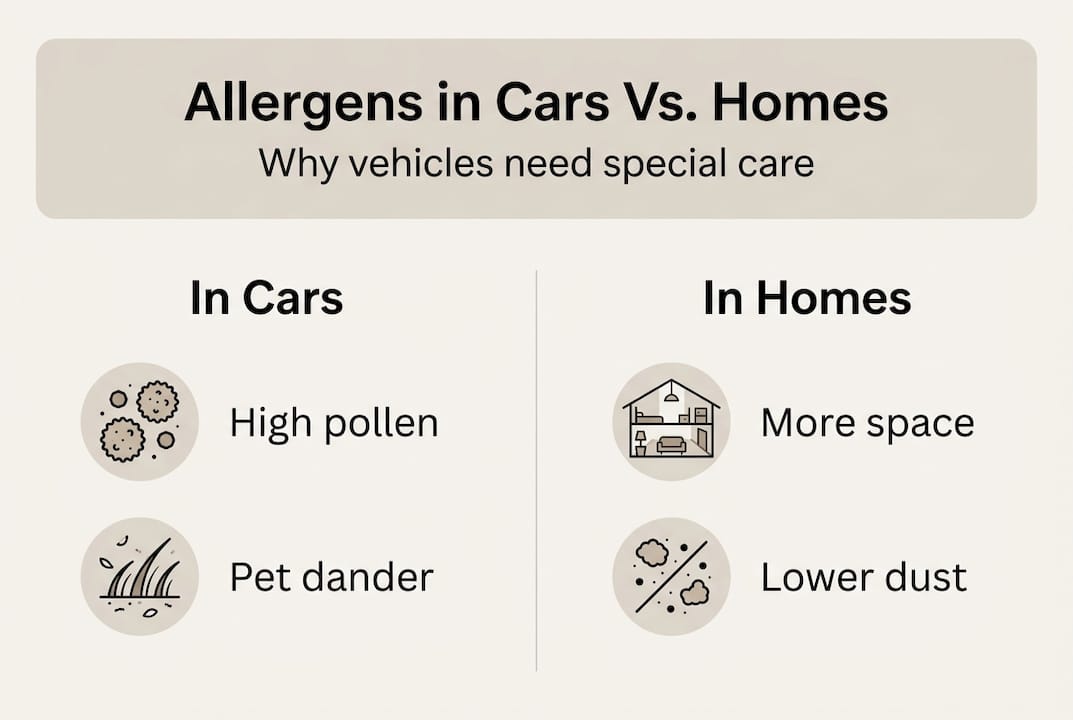
The concentration of allergens in vehicles often exceeds levels found in homes because cars have smaller air volumes and less frequent deep cleaning. Your vehicle’s interior surfaces trap particles efficiently, and every entry and exit stirs settled allergens back into the breathing zone. This cycle continues until professional equipment breaks it.
How professional detailing reduces allergens
Professional detailing achieves up to 90% allergen reduction through specialized techniques that target microscopic particles. HEPA vacuuming forms the foundation of effective allergen removal, using filters that trap particles as small as 0.3 microns. Standard vacuums simply recirculate fine allergens back into the air, but HEPA systems capture dust mites, pollen grains, and pet dander completely.
Steam cleaning delivers powerful allergen elimination without harsh chemicals. High-temperature steam penetrates fabric fibers, killing mold spores and bacteria while loosening embedded particles. The heat sanitizes surfaces naturally, making it ideal for families with chemical sensitivities or young children. Steam reaches crevices that traditional cleaning tools miss, including air vents, door jambs, and seat seams where allergens concentrate.
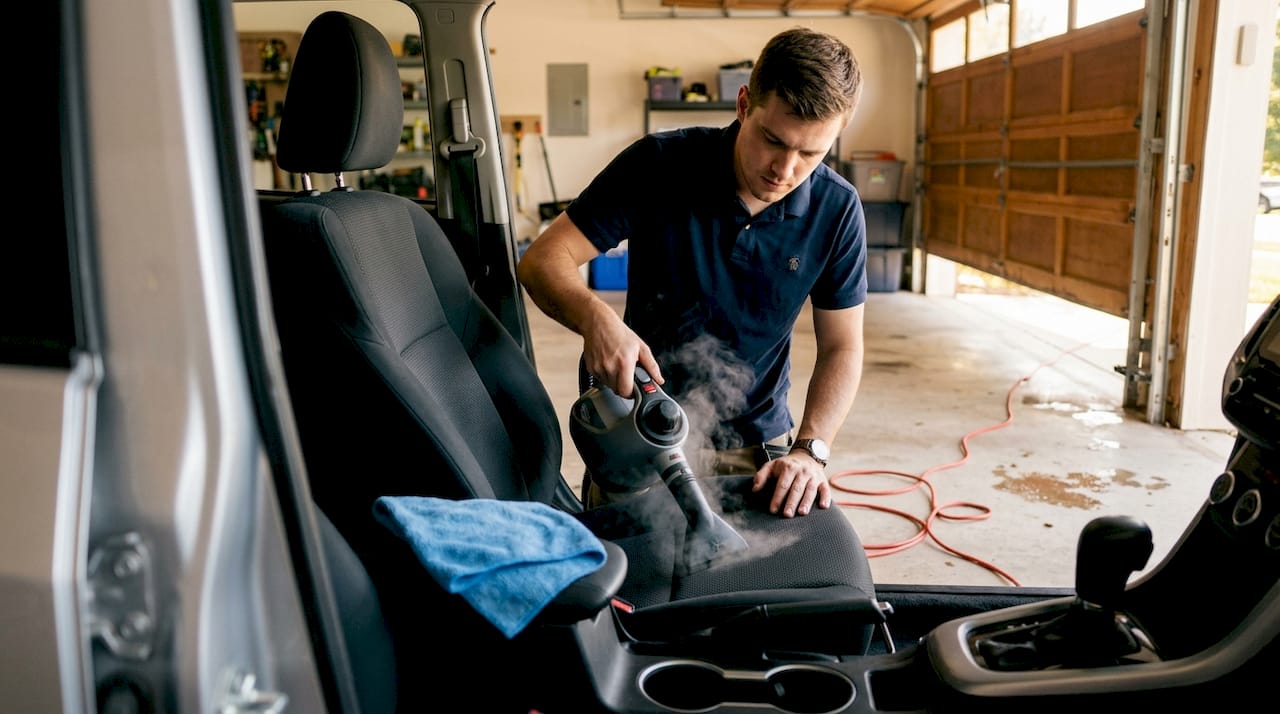
Upholstery extraction removes the hidden buildup that surface cleaning leaves behind. This process injects cleaning solution deep into fabric and carpet fibers, then extracts it along with dissolved dirt, oils, and allergens. The powerful suction pulls contaminants from the backing material and padding, areas where allergens accumulate over months and years. Extraction cleaning addresses the root of the problem rather than masking it.
Ozone treatments provide chemical-free allergen control by neutralizing odors and breaking down organic compounds. Professional detailers use ozone generators to flood the cabin with O3 molecules that oxidize odor-causing bacteria and chemical residues. This method works particularly well for vehicles with smoke damage or persistent smells that indicate deep-seated contamination. The treatment leaves no chemical residue, only fresh air.
Cabin air filter replacement or inspection prevents allergens from recirculating through your climate control system. Detailers check filter condition and recommend replacement when filters show clogging or damage. A clean cabin filter captures incoming pollen and dust before it enters your breathing space, working alongside interior cleaning to maintain allergen control. Combining filter maintenance with deep cleaning creates comprehensive protection.
Pro Tip: Schedule detailing during South Jersey’s peak pollen seasons in spring and fall to maximize allergy relief when outdoor allergen counts spike and track into your vehicle most heavily.
Following a thorough interior detailing checklist ensures no allergen source gets overlooked. Professional detailers systematically address every surface, from overhead consoles to under-seat storage areas. The benefits of mobile car detailing include having these comprehensive services performed at your home or office, saving time while ensuring your vehicle receives thorough allergen treatment.
Addressing special allergy challenges in South Jersey vehicles
Pet owners face unique allergen challenges that require specialized approaches. Excessive pet hair embeds deeply in carpet fibers and upholstery, carrying dander proteins that trigger allergic reactions. Professional detailers use specialized tools and techniques including rubber brushes, pet hair removal stones, and high-powered extraction to pull hair from fabric backing. Standard vacuuming barely touches embedded pet hair, but professional equipment removes it completely along with the allergenic proteins it carries.
Mold from leaks represents a serious allergen source requiring immediate attention. South Jersey’s humid climate increases mold risk, especially when sunroof drains clog, weatherstripping fails, or windshield seals deteriorate. Water intrusion creates damp conditions where mold spores multiply rapidly in carpets, under seats, and inside door panels. Steam cleaning provides the most effective mold treatment, using high heat to kill spores and prevent regrowth while extracting moisture that feeds contamination.
Chemical sensitivities demand careful product selection during detailing. Some individuals react to synthetic fragrances, harsh solvents, or residual cleaning agents left on surfaces. Ozone treatments offer a chemical-free alternative that neutralizes odors and allergens without leaving any substance behind. Professional detailers can customize treatments using hypoallergenic products and avoiding fragranced protectants when clients communicate their sensitivities upfront.
South Jersey’s seasonal weather patterns create specific allergen challenges. Spring pollen counts surge as trees and grasses release reproductive material. Summer humidity promotes mold growth in vehicles parked outdoors. Fall brings ragweed pollen and leaf debris. Winter road salt and moisture from snow create conditions for mold and mildew. Understanding these patterns helps you time detailing services for maximum impact.
Quick leak detection prevents minor moisture problems from becoming major allergen sources. Professional detailers inspect weatherstripping, drain tubes, and seals during service, alerting you to potential water intrusion before mold establishes. Addressing leaks immediately protects your investment and your respiratory health.
Pro Tip: Always inform your detailer about specific allergy concerns, pet situations, or chemical sensitivities before service begins so they can customize their approach and product selection for your needs.
The interior detailing for pet owners process addresses both visible pet hair and invisible dander proteins. Multiple passes with specialized tools ensure complete removal, while enzymatic treatments break down organic residues that cause persistent odors. This thorough approach delivers relief for pet owners who suffer allergies but refuse to leave their furry friends behind.
Maximizing allergy prevention with regular detailing and maintenance
Establishing a regular detailing schedule optimizes allergen reduction outcomes over time. Most allergy sufferers benefit from professional interior detailing every three to four months, with more frequent service during peak pollen seasons. This frequency prevents allergen accumulation from reaching levels that trigger symptoms, maintaining a consistently clean cabin environment. Vehicles with pets or frequent passenger traffic may require monthly attention to control dander and debris effectively.
Combining professional detailing with cabin filter replacement every 12,000 to 15,000 miles creates comprehensive allergen control. Your cabin air filter captures incoming particles before they circulate through vents, while interior cleaning removes allergens already present in fabrics and surfaces. This two-pronged approach addresses both new contamination and existing buildup, delivering maximum relief.
Mobile detailing eliminates scheduling hassles while ensuring professional thoroughness. Services performed at your home or workplace save the time and inconvenience of dropping off your vehicle at a shop. Professional mobile detailers bring commercial-grade equipment including HEPA vacuums, steam cleaners, and extraction machines directly to your location. You get the same quality results without disrupting your day.
Comparing professional and DIY approaches reveals significant differences in allergen control effectiveness:
| Factor | Professional Mobile Detailing | DIY Home Cleaning |
|---|---|---|
| Equipment | HEPA filtration, commercial steam cleaners, extraction machines | Consumer vacuums, spray bottles, brushes |
| Allergen removal | Up to 90% reduction in particles | 30 to 50% surface removal only |
| Time required | 2 to 3 hours for complete service | 4 to 6 hours for thorough attempt |
| Technique expertise | Trained in allergen-specific methods | Limited knowledge of proper procedures |
| Results duration | 3 to 4 months with proper maintenance | 2 to 4 weeks before reaccumulation |
| Cost consideration | $150 to $300 for comprehensive service | $50 to $100 in supplies plus labor |
Proper preparation helps detailers deliver optimal results quickly. Remove personal items, trash, and loose objects from your vehicle before service. Point out specific problem areas like pet stains or musty odors. Mention any recent spills or water intrusion that might require extra attention. These simple steps allow detailers to focus their expertise on allergen removal rather than preliminary cleanup.
Understanding how to prep your car for detailing ensures you get maximum value from professional service. Clear communication about your allergy concerns helps detailers prioritize the techniques most beneficial for your situation. When you book mobile detailing services, mention specific allergen issues so the service provider arrives prepared with appropriate equipment and products.
Maintaining results between professional services extends allergen control. Vacuum weekly with a quality home vacuum, wipe surfaces with microfiber cloths, and address spills immediately to prevent mold growth. These simple habits complement professional detailing, keeping allergen levels low year-round. For additional guidance on managing indoor air quality and allergen control principles, resources like cabin filter maintenance for allergies provide helpful context.
Explore specialized mobile detailing for allergy relief in South Jersey
If you’re ready to breathe easier in your vehicle, CDC Auto Detailing specializes in mobile services designed specifically for allergy prevention. Their team uses advanced HEPA vacuuming and steam cleaning techniques proven to eliminate up to 90% of vehicle allergens, bringing professional equipment directly to your South Jersey location.

Booking is simple through their online system, with flexible scheduling that works around your calendar. Whether you need comprehensive interior detailing, pet hair removal, or mold treatment, their experienced technicians customize each service to address your specific allergy concerns. Learn more about their complete range of auto detailing services explained or discover how to book mobile detailing for convenient at-home service. Understanding how auto detailing works helps you appreciate the thorough process that protects your health while maintaining your vehicle’s condition.
Frequently asked questions about detailing and allergy prevention
What allergens does detailing remove from cars?
Professional detailing removes pollen, dust mites, pet dander, mold spores, and bacteria from vehicle interiors. HEPA vacuuming captures microscopic particles while steam cleaning kills living organisms and extracts embedded contaminants from fabrics.
How often should I detail my car for allergy relief?
Most allergy sufferers benefit from professional interior detailing every three to four months. Increase frequency to monthly if you transport pets regularly or experience severe symptoms during high pollen seasons.
Can mobile detailing handle pet dander effectively?
Yes, mobile detailers bring the same commercial-grade equipment used in shops, including specialized pet hair tools and extraction machines. They effectively remove embedded hair and dander proteins that cause allergic reactions.
Is steam cleaning safe for all vehicle interiors?
Steam cleaning safely treats most modern vehicle interiors including cloth, vinyl, leather, and plastic surfaces. Professional detailers adjust temperature and pressure for delicate materials, avoiding damage while eliminating allergens.
Does cabin air filter replacement matter for allergies?
Cabin filter replacement significantly impacts allergen control by preventing pollen and dust from entering through your climate system. Replace filters every 12,000 to 15,000 miles or annually for best results.
Recommended
- Why Detail Your Car Regularly – Real Benefits for Owners
- Why Regular Detailing Matters for Your Vehicle
- Role of detailing in vehicle safety: South Jersey guide
- Interior detailing for pet owners: How to deal with hair and odors – CDC Detailing
- Managing Allergies in Louisville Homes – HVAC’s Impact – HVAC Service and Repair | Louisville, KY | Project Heating & Cooling