
What is ceramic window tint?
Ceramic window tint is a premium automotive film infused with nano-scale ceramic particles that block infrared heat and UV rays without darkening your windows or disrupting electronic signals. Unlike dyed or metallized films, it contains no metal and no dye pigments. The active ingredient is an engineered inorganic compound, typically titanium nitride, suspended uniformly through layers of polyester using a micro gravure coating process applied in a clean-room environment.
Here is what sets it apart at a glance:
- Blocks a high percentage of infrared heat and most harmful UV rays
- Maintains high visible light transmission even at lighter shades
- Contains no metal, so GPS, Bluetooth, cell service, and satellite radio pass through unimpeded
- Resists fading, bubbling, and discoloration over time
- Works at lighter shades without sacrificing heat rejection
Table of Contents
- How regular window tint films actually work
- The technology behind ceramic tint’s performance
- Ceramic tint vs. regular tint: how do they compare?
- Common misconceptions about ceramic tint
- Professional installation vs. DIY: what you should know
- Window tinting laws vary by state
- How to clean and maintain ceramic window tint
- Cdcautodetailing brings professional ceramic tinting to South Jersey
- Key Takeaways
How regular window tint films actually work
Standard dyed and metallized films take a fundamentally different approach. Dyed tint blocks heat primarily by darkening the glass. The dye absorbs solar energy, which means the film itself heats up and radiates warmth back into the cabin. That is a real limitation, not just a performance gap.
Metallized films improve on dyed tint by using tiny metal particles to reflect solar energy. The trade-off is signal interference. Metal particles attenuate cell phone, GPS, and radio signals, which is a consistent complaint from drivers who invested in metallic tint and then noticed degraded connectivity.
Common limitations of regular tint films:
- Heat rejection tied to shade darkness, not material technology
- Dye pigments fade with UV exposure, reducing effectiveness over time
- Metallic variants interfere with wireless signals
- Dyed films can develop a purple or hazy tint as they age
- Lower upfront cost, but shorter useful lifespan
The technology behind ceramic tint’s performance
The science here is worth understanding because it explains every practical benefit. Nano-ceramic particles work through radiative blocking rather than absorption. Instead of soaking up heat like a sponge, they reflect and disperse infrared radiation before it transfers into the cabin. The film stays cooler than a dyed film would under the same sun load.
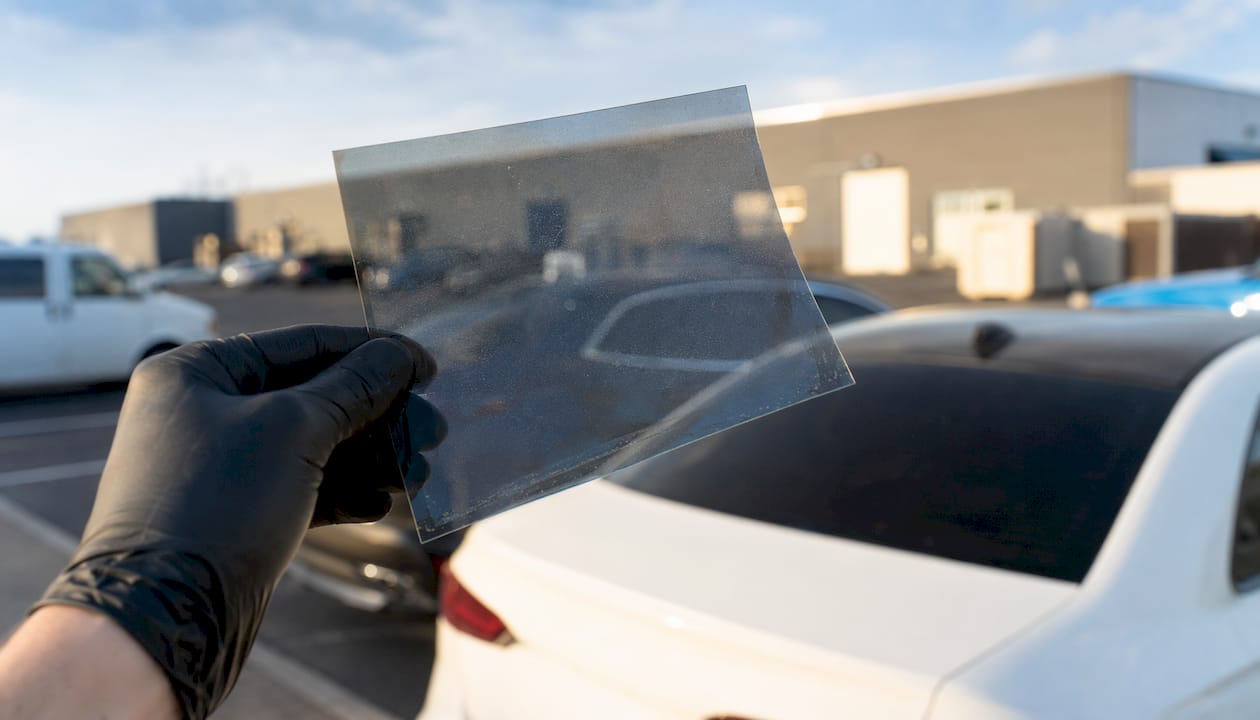
Because the particles are engineered at the molecular level, each one blocks specific wavelengths of solar radiation while letting visible light pass through. That selective blocking is what allows ceramic tint to achieve strong heat rejection at a 35% darkness level, where a dyed film would barely make a dent. Ceramic films maintain 70–80% light transmission while rejecting substantial infrared energy.
Key performance characteristics:
- Infrared heat rejection up to 80–90%
- UV protection up to 99% of harmful rays, protecting skin and interior surfaces
- Non-metallic, non-conductive composition preserves all wireless signals
- Optical clarity maintained indefinitely, no haze or milky appearance
- Color stability for 10 years or longer, backed by many manufacturer warranties
Pro Tip: If you want maximum heat rejection while staying within your state’s legal VLT limit, choose a lighter ceramic shade. A quality ceramic film at 35% VLT rejects far more heat than a dark dyed film at the same shade, so you get the performance without the legal risk.
Ceramic tint vs. regular tint: how do they compare?
| Criteria | Ceramic tint | Regular dyed/metallic tint |
|---|---|---|
| Material composition | Nano-ceramic particles (titanium nitride) | Dye pigments or metal particles |
| Infrared heat rejection | Up to 80–90% | Low to moderate, shade-dependent |
| UV protection | Up to 99% | Moderate; degrades as dye fades |
| Signal interference | None | Metallic films cause signal attenuation |
| Durability | Resists fading, bubbling, discoloration | Dyed films fade; metallic films more stable |
| Visible light transmission | 70–80% at lighter shades | Requires darker shades for similar heat block |
| Cost | Higher upfront | Lower upfront, shorter lifespan |
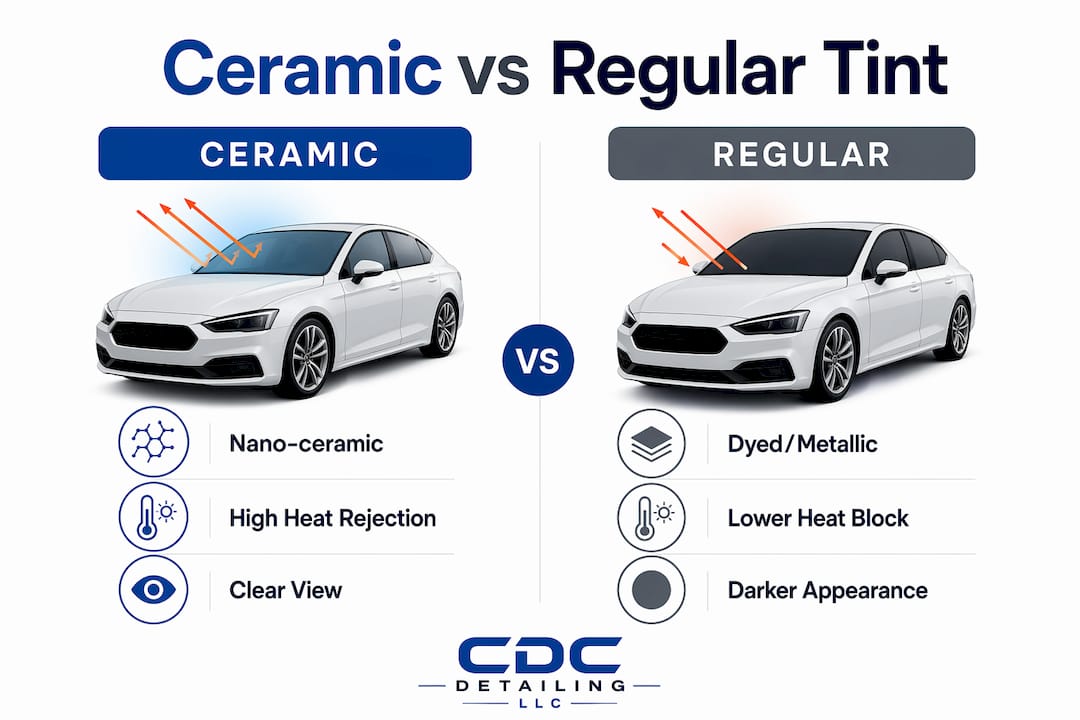
The cost gap is real. Ceramic tint costs more than dyed film at installation. For drivers in hot climates or anyone who relies on GPS and wireless connectivity, the long-term value tends to justify the difference.
Common misconceptions about ceramic tint
The biggest myth is that darker tint equals better heat rejection. Ceramic tint disproves this by delivering high heat blocking at lighter shades, because the performance is embedded in the particle structure, not the darkness of the film.
A few other points worth correcting:
- Ceramic tint does not block signals. Unlike metallic films, ceramic’s non-conductive nature means your phone, GPS, and radio work exactly as they did before.
- It helps your A/C and your EV range. By reducing cabin heat load, ceramic tint lowers the demand on your air conditioning system, which preserves fuel efficiency in gas vehicles and extends battery range in electric ones.
- Interior protection is real. Blocking over 99% of UV rays prevents dashboard cracking, leather fading, and upholstery damage, which directly supports resale value.
- Durability is not marketing language. Because nano-ceramic particles do not degrade under UV exposure the way organic dyes do, the film’s performance stays consistent for the life of the product.
Quality ceramic tints reject a significant portion of total solar energy, including infrared radiation, even at lighter shades where dyed films offer minimal protection.
Professional installation vs. DIY: what you should know
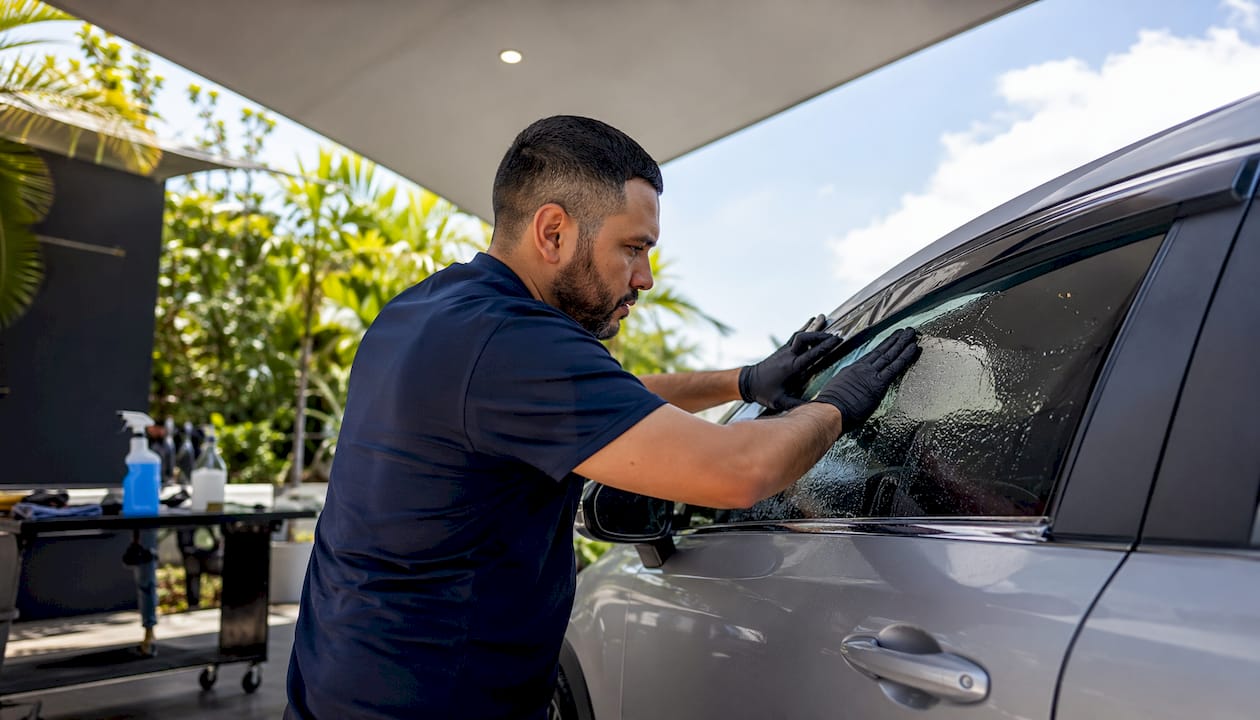
Installing ceramic window film is not a casual weekend project. The film must be cut precisely to each window’s shape, applied with a slip solution, and squeegeed free of bubbles and moisture before it cures. Any contamination during application, dust, fingerprints, or uneven pressure, shows up as permanent defects.
Professional installers use plotters to cut film from digital templates, which eliminates hand-cutting errors on curved glass. Many professional installations come with lifetime warranties on the film itself, which DIY kits do not cover. If the film lifts, bubbles, or peels after a shop install, the shop fixes it at no cost.
DIY kits are available and work reasonably well on flat glass. For rear windshields with complex curves or defroster lines, professional installation is the practical choice. A botched rear window application typically means removing the film entirely and starting over, which costs more than the professional install would have.
Window tinting laws vary by state
Every state sets its own visible light transmission minimums, and they differ by window position. Front side windows typically face stricter limits than rear side windows or the rear windshield. In New Jersey, for example, front side windows must allow at least 70% light transmission, while rear windows have more flexibility. Check your state’s tinting laws before selecting a shade.
A few practical points on compliance:
- VLT percentages measure how much light passes through the film and glass combined, not the film alone.
- Medical exemptions exist in most states for drivers with documented light sensitivity conditions.
- Law enforcement can measure tint darkness with a meter during a traffic stop, and non-compliant tint can result in a fix-it ticket or fine.
- Ceramic film at a legal shade still outperforms darker illegal dyed film on heat rejection, so there is no performance reason to go darker than the law allows.
How to clean and maintain ceramic window tint
Ceramic tint is low maintenance, but a few habits protect the film’s surface and keep it looking sharp. Wait at least three to five days after installation before cleaning the windows. The adhesive needs time to cure fully, and moisture trapped under the film during that period needs to evaporate.
After the cure period, clean with an ammonia-free glass cleaner. Ammonia breaks down the adhesive layer over time and can cause the film to lift at the edges. A microfiber cloth works better than paper towels, which can leave fine scratches on the film’s surface coating. Avoid abrasive pads entirely.
For long-term tint care, keep the windows rolled up for the first few days post-installation. Rolling them down before the film cures can cause the edges to peel. Beyond that, ceramic tint requires no special treatment. Its resistance to fading and discoloration means the film you install today looks the same five years from now.
Cdcautodetailing brings professional ceramic tinting to South Jersey
If you have read this far, you already know ceramic tint is worth doing right the first time. Cdcautodetailing is a mobile detailing service based in Pitman, NJ, that brings professional window tinting directly to your driveway across South Jersey. No shop wait, no leaving your car for a day.
The team handles ceramic window film installation alongside ceramic coatings, paint protection film, and full interior and exterior detailing. Every tint job is done with precision-cut film and professional application, so you get the warranty-backed result without the DIY risk. Book your appointment at cdcautodetailing.com and get ceramic tint installed where you park.
Key Takeaways
Ceramic window tint blocks heat through nano-ceramic particle technology, not darkness, delivering up to 80–90% infrared rejection and 99% UV protection at legally compliant light transmission levels.
| Point | Details |
|---|---|
| Heat rejection mechanism | Nano-ceramic particles reflect infrared radiation rather than absorbing it like dyed films. |
| UV and interior protection | Blocking up to 99% of UV rays prevents fading, cracking, and long-term interior damage. |
| Signal compatibility | Non-metallic composition means GPS, Bluetooth, and cell signals pass through without interference. |
| Legal shade flexibility | Ceramic film at 70–80% visible light transmission rejects far more heat than dark dyed alternatives. |
| Cdcautodetailing | Mobile ceramic tint installation across South Jersey, done professionally at your location. |