
Car tinting levels measure how much visible light passes through your car’s windows, expressed as a Visible Light Transmission (VLT) percentage. A tint with very low VLT blocks most visible light, while a high VLT tint lets most light through. That single number controls your privacy, heat rejection, UV protection, and whether you’ll pass a vehicle inspection.
Here’s a quick snapshot of the most common tint percentages and what they’re actually used for:
- 5% VLT tint (often called “limo tint”): maximum privacy, near-zero visibility from outside. Illegal on front windows in all states.
- 20% VLT tint: popular for rear windows, but legal on front windows only in a few states.
- 35% VLT tint: widely legal for front windows, balances privacy and night visibility well.
- 50% VLT tint: subtle darkening, effective for UV and glare reduction, legal for front windows in all states.
- 70% VLT tint: nearly clear, required on front side windows in the strictest states.
Key stat: State tint laws are based entirely on VLT — and what’s legal in Texas (25% front) can get you a ticket in California (70% required). Always check your state before you tint.
Table of Contents
- ## 1. How window tint percentages affect visibility, privacy, and comfort
- ## 2. State tint laws and legal limits across the United States
- ## 3. How to choose the right tint percentage for your vehicle
- ## 4. Standard vs. ceramic window tint films: which is worth it?
- ## 5. Why professional installation from CDC Auto Detailing makes a difference
- ## 6. How tint levels are measured and verified
- ## 7. How dark tints affect night driving safety
- Cdcautodetailing brings expert window tinting to your driveway in South Jersey
- Key Takeaways
## 1. How window tint percentages affect visibility, privacy, and comfort
VLT is the core metric behind every tinting decision. The number tells you exactly how much light the film lets through — and everything else follows from that. Lower VLT means darker glass, more privacy, more heat rejection, and harder visibility at night.
| VLT % | Privacy | Heat Rejection | Night Visibility | Legal for Front Windows |
|---|---|---|---|---|
| 5% | Excellent | Excellent | Poor | Not legal on front windows |
| 20% | Very Good | Very Good | Fair | Legal in some states |
| 35% | Good | Good | Good | Legal in most states |
| 50% | Fair | Moderate | Very Good | Legal in all states |
| 70% | Minimal | Moderate | Excellent | Legal in all states |
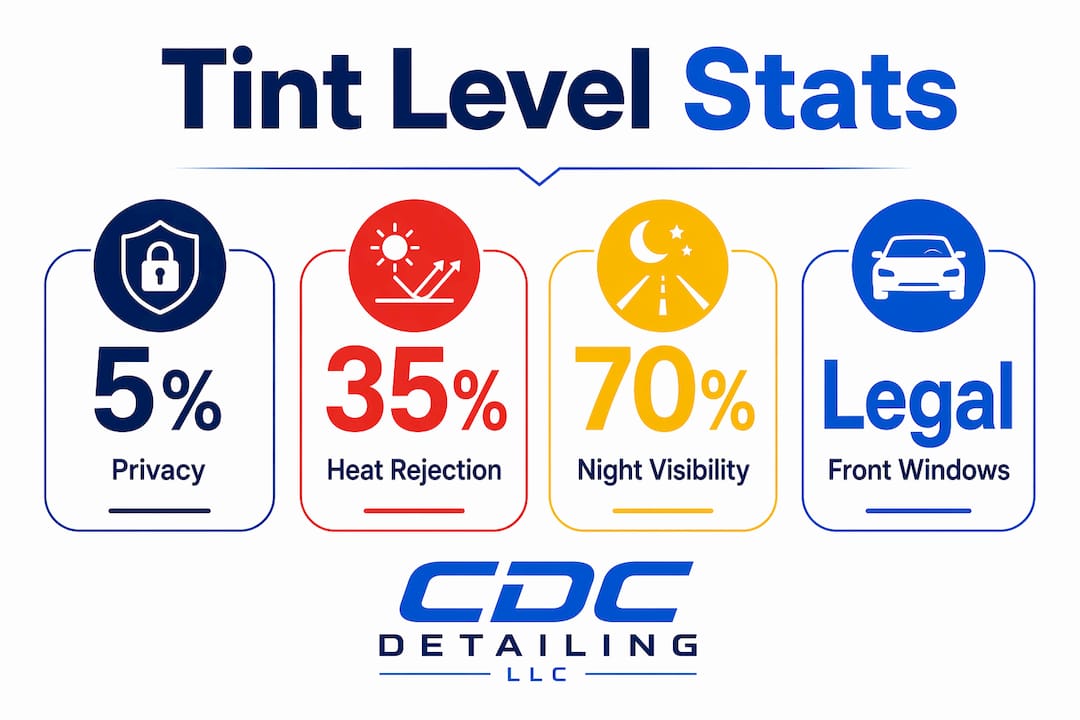
The practical differences between these levels are bigger than most people expect. A 35% VLT tint reduces glare and provides moderate privacy without heavily compromising night visibility, which is why it’s a popular all-around choice. Darker tints make night driving harder, especially on unlit roads.
Heat rejection is where the numbers get interesting. Automotive window film can block a significant portion of the solar heat that builds up in a car, varying by film grade. That directly cuts air conditioning load and keeps interior surfaces from cracking or fading. Window tinting can block a very high percentage of UV rays, and research shows that 53% of skin cancers in the US occur on the left (driver’s) side of the body — a figure that points directly to sun exposure through the driver’s window.
Pro Tip: Don’t choose your tint darkness based on how it looks in the shop. Test your visibility by sitting in a tinted car at night before committing to a percentage — what looks fine at noon can feel dangerously dark at 10 PM on a rural road.
## 2. State tint laws and legal limits across the United States
No federal standard governs window tint percentages for passenger vehicles. Every state sets its own VLT minimums, and the variation is dramatic. California requires front side windows to allow a high level of light transmission. New Mexico permits much darker front window tints. That’s a massive gap, and driving across state lines with a dark tint can mean a ticket even if you were perfectly legal at home.
A few consistent rules apply almost everywhere:
- Front side windows face the strictest limits, because law enforcement needs to see the driver.
- Rear side and rear windows are typically allowed to be much darker.
- Windshields can only be tinted on the top few inches (the “visor strip”) in most states — full windshield tinting is forbidden in nearly all of them.
Here’s a representative sample of state-by-state front side window tint limits showing wide variation, with some states requiring high light transmission and others permitting much darker tints.
Penalties for non-compliance are real. Getting pulled over for excessive tint can result in a fine, a failed vehicle inspection, or a “fix-it” ticket requiring you to remove the film at your own cost. Rolling down your windows when stopped shows cooperation but doesn’t replace legal compliance.
Key takeaways on tint law:
- Always check your state DMV website before installation.
- Factory glass already has some tint built in — adding film on top lowers the combined VLT further.
- Medical exemptions exist in some states for UV-sensitive conditions, but require documentation.
- Tint laws apply to the combined VLT of the glass plus the film, not just the film alone.
## 3. How to choose the right tint percentage for your vehicle
The right tint level depends on four things: where you live, how you drive, what your car already has from the factory, and what you actually want from the tint.

Climate matters more than most people realize. If you’re in South Jersey or anywhere in the mid-Atlantic, summers are hot and humid. A 20% or 35% VLT rear tint meaningfully reduces cabin heat and cuts AC use. In states with mild climates, a 50% VLT film might deliver all the UV protection you need without any visibility trade-off.
Factory tint changes your math. Most modern vehicles come with glass that already sits around 70–80% VLT. When you apply a film on top, the combined VLT is calculated by multiplying the two values. Put a 50% film on 80% factory glass, and your combined VLT is 40% — darker than the film alone suggests. This is a common reason people end up out of compliance without realizing it. You can learn how to choose window tinting that accounts for your factory glass before booking an install.
Considerations when picking your percentage:
- Privacy needs: Rear passengers and valuables left in the car benefit most from 20% or 35% VLT rear tints.
- Daily driving vs. occasional use: If you drive at night frequently, stay at 35% VLT or lighter on front windows.
- Vehicle type: SUVs and trucks often have higher rear window lines, so darker rear tints are less of a visibility issue.
- Resale value: Tints that comply with your state’s laws won’t require removal before sale.
- Aesthetic: Darker tints give a sleeker look, but matching front and rear percentages matters for visual consistency.
Pro Tip: Before installation, ask your installer to measure your existing glass VLT with a tint meter. That reading tells you exactly how dark you can go on each window while staying legal — no guesswork.
## 4. Standard vs. ceramic window tint films: which is worth it?
Not all tint films are the same material, and the difference between standard dyed film and ceramic film is significant enough to affect your decision.
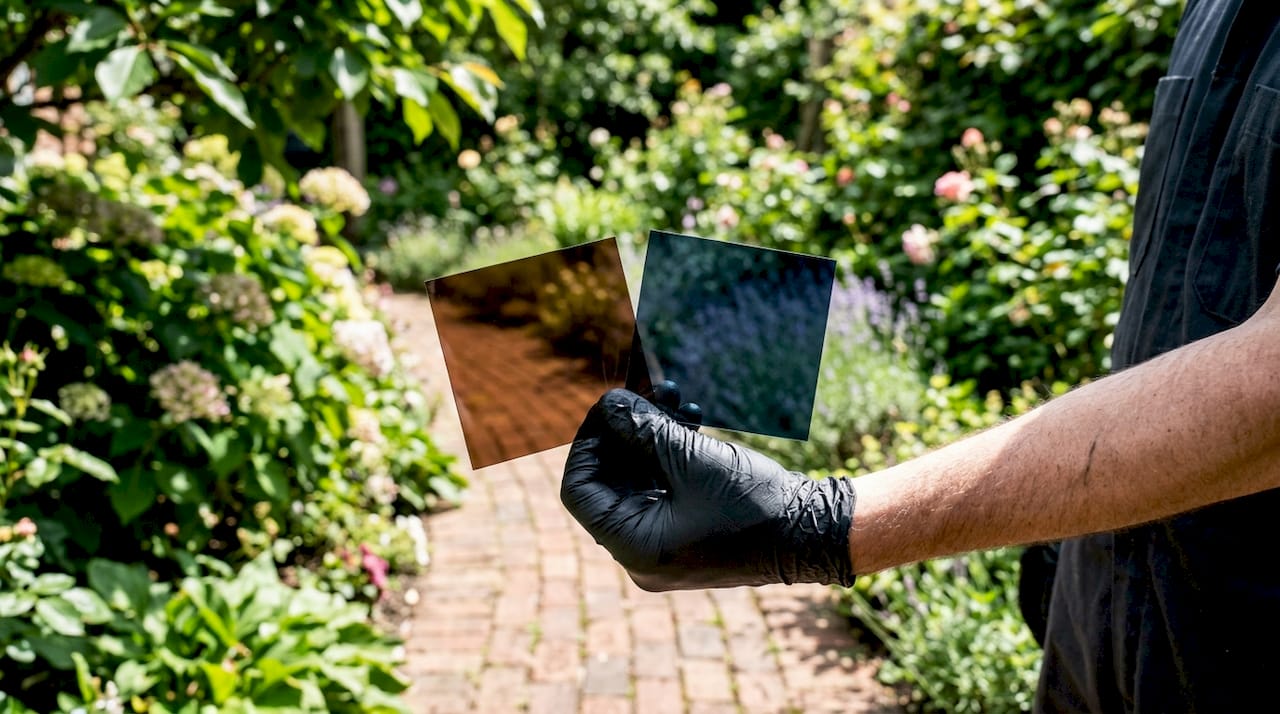
Standard dyed films are the most affordable option. They absorb solar energy to reduce heat and glare, provide decent privacy, and look clean when freshly installed. The trade-off: dyed films can fade over time, sometimes turning purple or developing a hazy appearance after a few years of sun exposure. They also offer less heat rejection than their darkness suggests.
Ceramic tint films use nano-ceramic particles instead of dye. Ceramic tint can block up to 99% of UV rays and reject as much as 70% of solar heat energy — numbers that standard dyed film simply can’t match at the same VLT percentage. A 70% ceramic film can reject more heat than a 35% dyed film, which means you can stay lighter (and legally safer) while still keeping the cabin cool.
Pros and cons at a glance:
Standard dyed film:
- Lower upfront cost
- Good privacy and glare reduction
- Fades over time, especially in high-UV climates
- Less heat rejection per VLT level
- No interference with GPS, cell signals, or radio
Ceramic film:
- Higher cost, but longer lifespan
- Superior heat and UV rejection at any darkness level
- Does not fade or discolor
- No signal interference (unlike older metallic films)
- Worth the premium for daily drivers in hot climates
For most drivers who want real performance, ceramic is the better long-term investment. The higher upfront price pays back in lower AC costs, better interior preservation, and a film that still looks sharp five years later. If budget is tight, a quality dyed film at 35% VLT still delivers meaningful benefits over no tint at all.
## 5. Why professional installation from CDC Auto Detailing makes a difference
Cdcautodetailing serves South Jersey drivers with mobile window tinting that comes to you — no shop wait, no dropping off your car. The team handles everything from film selection to final inspection, and every install is backed by a warranty covering bubbling, peeling, and adhesion failures.
Professional window tint installation eliminates the most common DIY problems: dust trapped under the film, uneven edges, and air bubbles that won’t smooth out. Professionals also guide you on your state’s specific VLT requirements so you don’t end up with a film that fails inspection. That compliance guidance alone is worth the cost for anyone in New Jersey, where the front side window limit is 70% VLT.
What Cdcautodetailing brings to every tint job:
- Film selection matched to your state’s legal limits
- Measurement of existing factory glass VLT before installation
- Ceramic and standard film options for every budget
- Mobile service across South Jersey — no shop visit required
- Warranty coverage on all installations
Professional installation isn’t just about looks. A properly applied ceramic film at the right VLT percentage protects your interior from UV damage, keeps your cabin cooler, and keeps you on the right side of New Jersey’s tint laws — all without a single bubble or lifted edge. That’s the difference between a tint job and a tint job done right.
For anyone weighing DIY against professional installation: professionals provide warranties and ensure legal compliance, making professional installation the more reliable choice for drivers who want the job done once and done correctly. Choosing a reputable installer also means getting advice on auto glass service quality standards that protect your investment long-term.
## 6. How tint levels are measured and verified
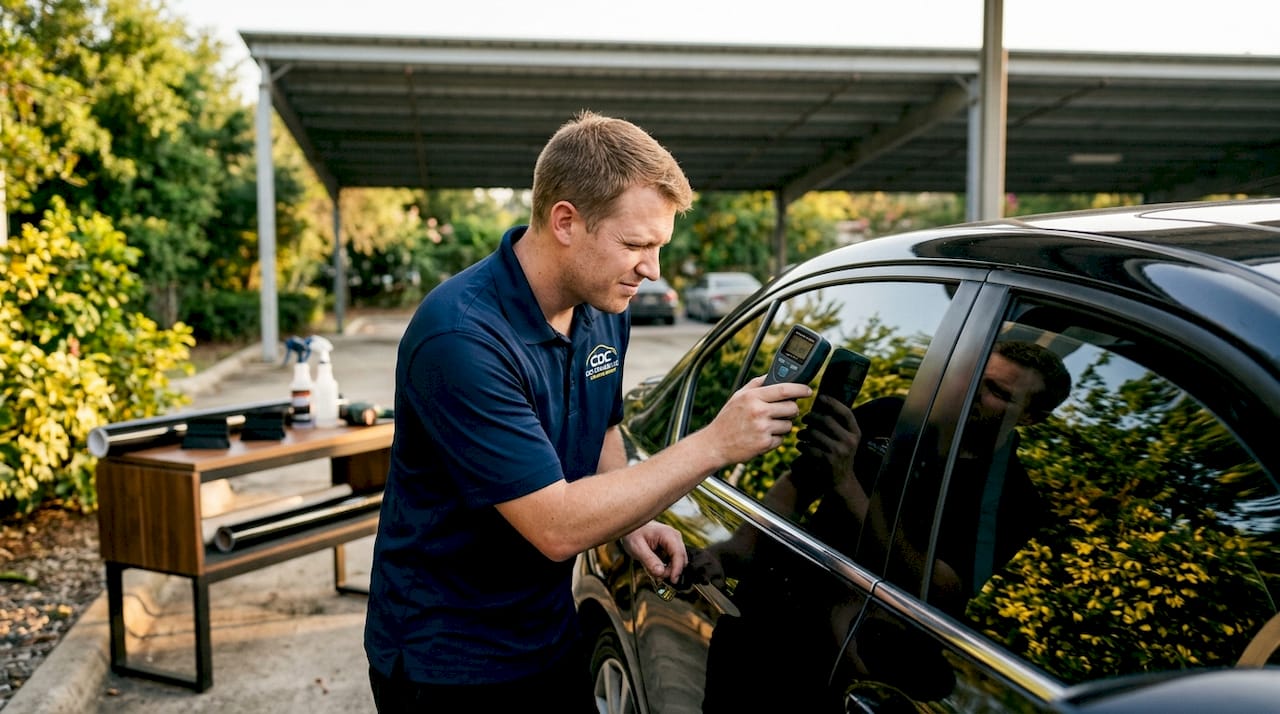
The tool used to verify tint compliance is called a tint meter (also called a VLT meter or light transmission meter). Law enforcement carries these devices, and professional installers use them before and after installation to confirm compliance.
A tint meter works by shining a light source through the glass and measuring how much reaches the sensor on the other side. The reading is expressed as a VLT percentage. Most professional-grade meters, like those from the Solartech or Laser Labs product lines, measure within 1–2% accuracy.
A few practical points about measurement:
- Meters measure the combined VLT of the glass and film together, which is what the law cares about.
- Factory glass typically reads around 70–80% VLT on its own. Adding a 35% VLT film to 80% factory glass produces a combined reading of roughly 28% — potentially illegal in many states.
- If you’re buying a used car with existing tint, get the windows measured before adding more film. You may already be at or near your state’s limit.
- Some states allow officers to use tint meters roadside; others require a formal inspection. Either way, the meter reading is what counts.
Calculating combined VLT yourself is straightforward: multiply the factory glass VLT by the film VLT. For example, 80% factory glass × 50% VLT film = 40% combined VLT. That formula is why understanding your vehicle’s existing tint before adding film is so important.
## 7. How dark tints affect night driving safety
Darker tints reduce the amount of light reaching your eyes, and that matters most when ambient light is already low. At 35% VLT, most drivers adapt without difficulty. At 20% VLT, night driving requires noticeably more attention, particularly on unlit roads or in rain. At 5% VLT, front-window use is illegal everywhere precisely because the visibility impairment is severe enough to be dangerous.
The human eye adjusts to different light levels, but there’s a floor. Lower VLT percentages can impair visibility and increase safety risks, especially for older drivers whose eyes adapt more slowly to low light. Glare from oncoming headlights can also scatter differently through tinted glass, creating a halo effect that’s more disorienting than the tint itself.
A few things worth knowing about tint and nighttime driving:
- Front windows are the critical ones. Rear tints at 20% VLT or darker rarely affect driver visibility in a meaningful way, since you’re looking through the rearview mirror, not the glass directly.
- Ceramic film at 50% VLT often outperforms dyed film at 35% VLT for nighttime clarity, because ceramic doesn’t add the slight haze that some dyed films develop over time.
- Wet weather amplifies the effect. Rain reduces ambient light and adds reflections. A tint that feels fine on a clear night can feel noticeably darker in a downpour.
The safest approach: keep front side windows at 35% VLT or lighter, regardless of what your state technically permits. The legal limit is a floor, not a recommendation. Your window tinting guide from a professional installer should always include a night-driving visibility check before you finalize the darkness level.
Cdcautodetailing brings expert window tinting to your driveway in South Jersey
Most drivers in South Jersey know what tint percentage they want. The harder part is getting it installed correctly, legally, and with a warranty that actually means something.
Cdcautodetailing offers mobile window tinting across South Jersey, handling ceramic and standard film installs at your home or workplace. Every job starts with a VLT measurement of your existing glass, so the final result is both the look you want and compliant with New Jersey’s 70% front-window requirement. No shop drop-off, no guessing on legality, no bubbles six months later.
Whether you’re tinting a daily driver, a fleet vehicle, or a weekend car, the process is the same: professional film selection, clean installation, and a warranty that covers the work. Get a quote or book your appointment at cdcautodetailing.com/window-tinting-guide and see why South Jersey drivers trust Cdcautodetailing for tinting done right the first time.
Key Takeaways
The most important decision in window tinting is matching your VLT percentage to both your state’s legal limit and your actual driving conditions, because a tint that’s legal and safe in one state can fail inspection and impair visibility in another.
| Point | Details |
|---|---|
| VLT is the core metric | A 5% VLT tint blocks most visible light; a 70% VLT tint lets 70% through — lower number means darker glass. |
| State laws vary dramatically | California and New Jersey require 70% VLT on front windows; New Mexico allows as dark as 20% VLT. |
| 35% VLT is the safest front-window choice | Legal in most states, it balances privacy and night visibility without compliance risk. |
| Ceramic film outperforms dyed | Ceramic tint can block up to 99% of UV rays and reject as much as 70% of solar heat energy. |
| Cdcautodetailing for South Jersey installs | Mobile tinting with VLT measurement, ceramic options, and warranty coverage across South Jersey. |