
TL;DR:
- Car window tint film can block up to 99.9% of UV rays through chemistry and nanotechnology. Ceramic and carbon films offer the best UV protection, heat rejection, and signal compatibility, with ceramic films providing near-total UV rejection without interference. Choosing high-quality, professionally installed films ensures long-term health and interior protection, regardless of tint darkness.
Car window tint UV protection is defined as the ability of automotive window film to block ultraviolet radiation before it reaches the vehicle’s cabin. Professional-grade films block up to 99.9% of UVA and UVB rays, delivering protection equivalent to SPF 1000+. Standard factory glass blocks most UVB but transmits up to 90% UVA, the wavelength responsible for photoaging and skin cancer. The Skin Cancer Foundation awards its Seal of Recommendation to films that meet or exceed 99% UV rejection, making quality automotive window film a clinically recognized health product, not just a comfort upgrade.
How does car window tint block UV rays?
Window film blocks UV radiation through chemistry and nanotechnology, not through darkness. The film contains UV-absorbing compounds bonded to a polymer layer that adheres to the inner surface of the glass. These compounds intercept UV photons and convert them into harmless heat before the radiation enters the cabin. The glass itself plays almost no role in this process. That is why a clear film performs identically to a dark one when it comes to UV rejection.
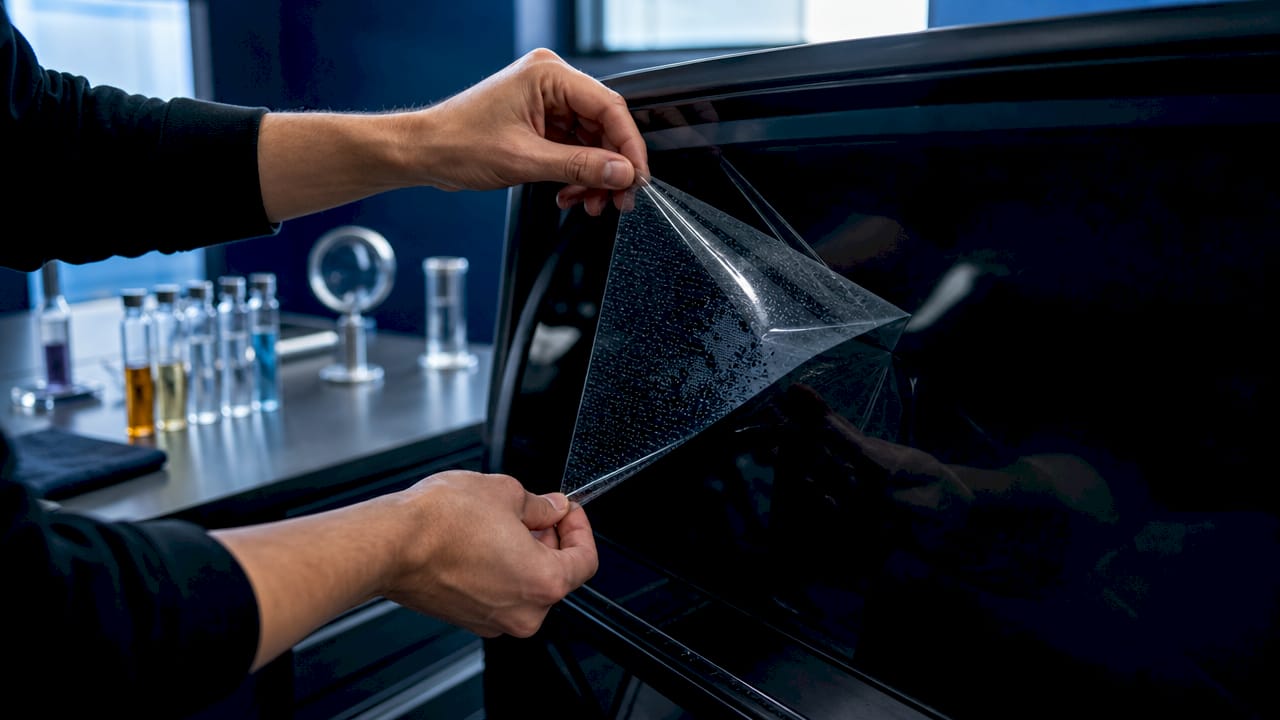
Ceramic and carbon films represent the most advanced technology available. Ceramic films use nano-sized ceramic particles embedded in the polymer matrix. These particles scatter and absorb both UV and infrared radiation without relying on metal or pigment. Carbon films use carbon-based compounds that absorb UV reliably and resist fading over time. Both technologies achieve near-total UV rejection independent of how much visible light they allow through.
Pro Tip: Ask your installer for the film’s UV rejection percentage on the spec sheet, not just the visible light transmission (VLT) number. A film rated at 70% VLT can still block 99%+ of UV rays if the chemistry is right.
The key insight here is that UV protection and window darkness are independent variables. UV blocking comes from film chemistry, which means you can choose a nearly invisible film and still get maximum protection. This matters enormously for drivers who want health benefits without a dark, tinted look or legal complications.
What types of window tint offer the best UV protection?
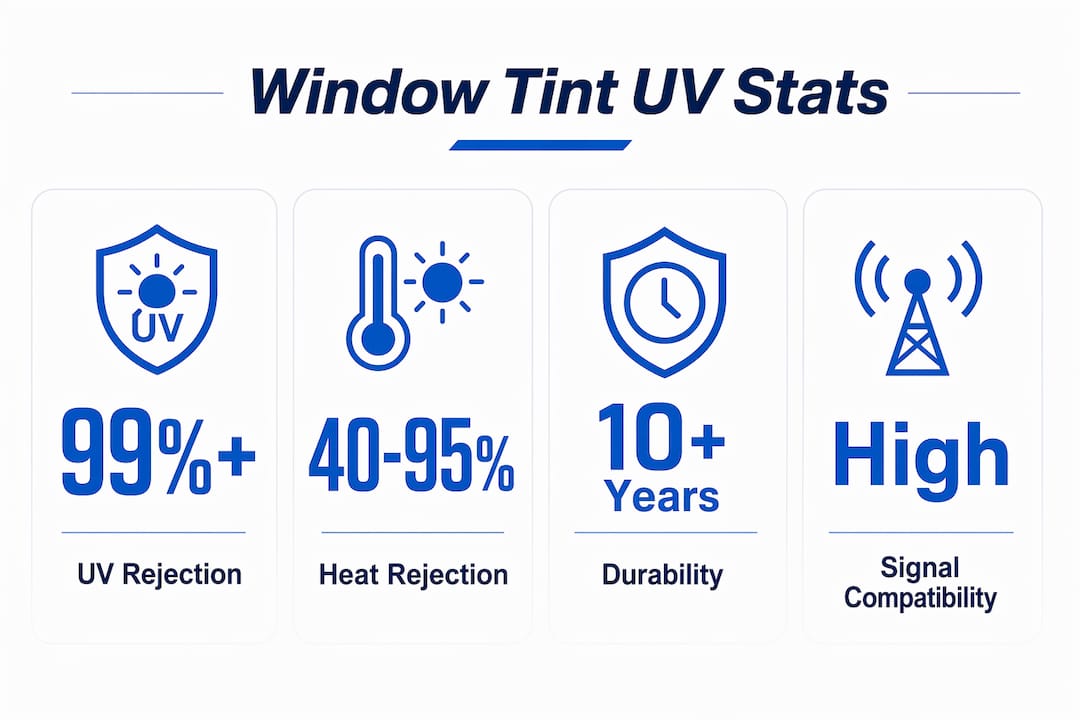
Not all automotive window films perform equally. Film type determines UV rejection, heat control, durability, and compatibility with modern vehicle electronics. The table below compares the four main film categories across the factors that matter most.
| Film type | UV rejection | Heat rejection | Durability | Signal compatibility |
|---|---|---|---|---|
| Ceramic (nano) | 99%+ | 40–95% infrared | 10+ years | No interference |
| Carbon | 99%+ | Good | 7–10 years | No interference |
| Dyed | Variable, degrades | Low | 2–3 years | No interference |
| Metallic | 99%+ | Good | 7–10 years | May disrupt GPS, radio |
Ceramic films are the top choice for UV blocking window tint. They achieve 99%+ UV rejection while rejecting 40–95% of infrared heat, which directly reduces cabin temperature. They contain no metal, so they do not interfere with GPS, satellite radio, or mobile signals. For drivers with modern vehicles loaded with electronics, this matters as much as the UV performance.
Carbon films are a strong second option. They block UV reliably, resist fading better than dyed films, and cost less than ceramic. They do not offer the same infrared heat rejection as ceramic, but they outperform dyed films in every measurable category. Dyed films are the weakest option. They lose UV protection and degrade within 2–3 years, making them a poor investment for anyone prioritizing long-term health protection.
Metallic films block UV effectively but can interfere with GPS, satellite radio, and mobile signals. That interference is a real problem in 2026, when most vehicles rely on connected systems. Clear ceramic films deserve special mention. They deliver the same 99%+ UV block as dark limo tints while maintaining full visibility. For car owners who want protection on windshields or front windows where dark tints are often illegal, clear ceramic is the answer. You can learn more about carbon and ceramic tint performance differences before making a final decision.
How effective is window tint at protecting your health and interior?
The numbers are striking. Ceramic tint reduces UV irradiance inside the cabin from 3.92 mW/cm² to 0.32 mW/cm², a reduction of over 90%. That drop translates directly into lower risk of photoaging, skin cancer, and UV-related eye damage during every commute. UV damage is cumulative, meaning every unprotected drive adds to a lifetime total. A quality film installed once provides a “set and forget” health benefit that works every single day.
Skin protection is the most discussed benefit, but eye protection matters just as much. UVA penetrates standard glass and reaches the lens and retina. Long-term UVA exposure is a recognized risk factor for cataracts and macular degeneration. A film that blocks 99%+ of UVA reduces that risk for both the driver and passengers on every trip.
The interior of your vehicle takes an equal beating. UV radiation breaks down the polymers in dashboards, door panels, and upholstery. Leather cracks, plastics fade, and fabric loses color. Quality window film slows all of that degradation, preserving the interior’s condition and the vehicle’s resale value. This is one of the most underappreciated car tint benefits among first-time buyers.
Premium ceramic films maintain protection for 10+ years with manufacturer warranties backing that claim. Lower-quality dyed films degrade in 2–3 years, often without the driver noticing the UV protection has disappeared. Choosing the right film type at installation is the single most important decision you make for long-term effectiveness. Window film also acts as a protective laminate on glass, holding shattered pieces together after an accident or break-in, adding a safety layer that goes beyond UV.
What should you consider before getting window tint installed?
Several practical factors determine whether your tint investment delivers full value. Work through each one before booking an installation.
- Legal VLT limits vary by state. Visible light transmission requirements differ across the country. Front side windows in many states require 70% VLT or higher. Check your state’s rules before choosing a shade. A legal tint limit guide can help you match protection to compliance.
- Clear ceramic film solves the front-window problem. If your state restricts dark tints on front windows, a clear nano-ceramic film gives you full UV protection without any visible darkening. You stay legal and still protect your skin.
- Metal-free films protect your electronics. Nano-ceramic films avoid signal interference common in metallic films. If your vehicle uses GPS navigation, satellite radio, or a cellular hotspot, choose a metal-free option.
- Professional installation costs $700–$800 for a full vehicle. A full ceramic tint installation at that price point delivers 40–95% infrared heat rejection alongside UV blocking. That combination reduces air conditioning load and improves fuel efficiency, partially offsetting the upfront cost over time.
- Film quality determines longevity. Premium ceramic films carry 10+ year warranties. Budget films may look identical on day one but lose performance within a few years. Always ask for the manufacturer’s warranty documentation before agreeing to any installation.
Pro Tip: Request a sample of the film on a test window before committing to a full installation. Hold a UV meter or UV-sensitive card behind the sample to verify the UV rejection claim yourself.
Professional installation also prevents the peeling and bubbling that ruins DIY jobs. Proper surface preparation, temperature control, and squeegee technique are skills that take time to develop. The warranty on most premium films is valid only with certified professional installation, so cutting corners on labor voids the protection you paid for.
Key Takeaways
Quality automotive window film blocks 99%+ of UVA and UVB rays, making it one of the most effective and passive health protection tools available to car owners.
| Point | Details |
|---|---|
| UV protection is chemistry-based | Film blocks UV through compounds and nanotechnology, not through darkness or pigment. |
| Ceramic film leads all categories | Nano-ceramic tint delivers 99%+ UV rejection, 40–95% heat rejection, and no signal interference. |
| Standard glass leaves you exposed | Factory glass transmits up to 90% UVA, making added film necessary for real protection. |
| Clear film works on front windows | Clear ceramic tint blocks the same UV as dark tints, keeping you legal and fully protected. |
| Professional installation protects your investment | Premium films last 10+ years with warranties, but only when installed by a certified professional. |
Why tint darkness is the wrong thing to focus on
Most car owners walk into a tint shop and ask for the darkest legal shade. I understand the instinct. Darker looks more protective. The problem is that darkness and UV protection have almost nothing to do with each other.
I have seen clear ceramic films outperform dark dyed films on every UV metric. A 70% VLT clear ceramic film blocks 99%+ of UV. A 35% VLT dyed film from a budget brand might block 80% on day one and 60% by year three. The driver with the dark tint thinks they are protected. They are not.
The other mistake I see constantly is choosing metallic films because they look premium. They do block UV well, but the signal interference issue is real and growing. Modern vehicles have more wireless systems than ever. Disrupting GPS or cellular connectivity is not a minor inconvenience. It is a safety issue.
My recommendation is always nano-ceramic, metal-free film installed by a professional who can provide the manufacturer’s spec sheet and warranty. Clear ceramic for front windows, a legal shade of ceramic for rear windows, and documentation proving the UV rejection percentage. That combination gives you maximum protection, full legal compliance, and zero electronics problems. The window tinting guide at Cdcautodetailing covers the technical specs in detail if you want to go deeper before your appointment.
— Charles
Window tinting services at Cdcautodetailing
Car owners in South Jersey who want professional UV protection without the guesswork have a direct option with Cdcautodetailing.
Cdcautodetailing installs professional-grade ceramic window tint with lifetime warranty options, covering both UV and infrared heat rejection. The mobile service comes to your location in Pitman, NJ, and across South Jersey, so you do not need to drop off your vehicle. Every installation uses metal-free nano-ceramic film, protecting your electronics and your skin at the same time. If you are ready to protect your vehicle’s interior and your health on every drive, book your mobile detailing appointment or explore the full range of window tinting services available through Cdcautodetailing today.
FAQ
Does window tint actually block UV rays?
Yes. Professional automotive window films block up to 99.9% of UVA and UVB rays, far exceeding the protection offered by standard factory glass. The Skin Cancer Foundation endorses films that meet the 99% UV rejection threshold.
Does darker tint mean better UV protection?
No. UV protection comes from the film’s chemical composition, not its darkness. Clear ceramic films block the same 99%+ UV as the darkest limo tints because the UV-absorbing compounds work independently of visible light transmission.
How long does window tint UV protection last?
Premium ceramic films maintain UV protection for 10+ years and typically come with manufacturer warranties. Lower-quality dyed films degrade within 2–3 years, losing UV rejection without any visible sign of failure.
Will window tint interfere with my GPS or phone signal?
Metallic films can disrupt GPS, satellite radio, and mobile signals. Nano-ceramic, metal-free films provide the same UV and heat protection without any signal interference, making them the right choice for modern vehicles.
Is window tint legal on all car windows?
Legal visible light transmission limits vary by state and by window position. Front side windows in many states require 70% VLT or higher. Clear ceramic film allows full UV protection on front windows while staying within legal limits. Check your state’s specific rules before installation.